


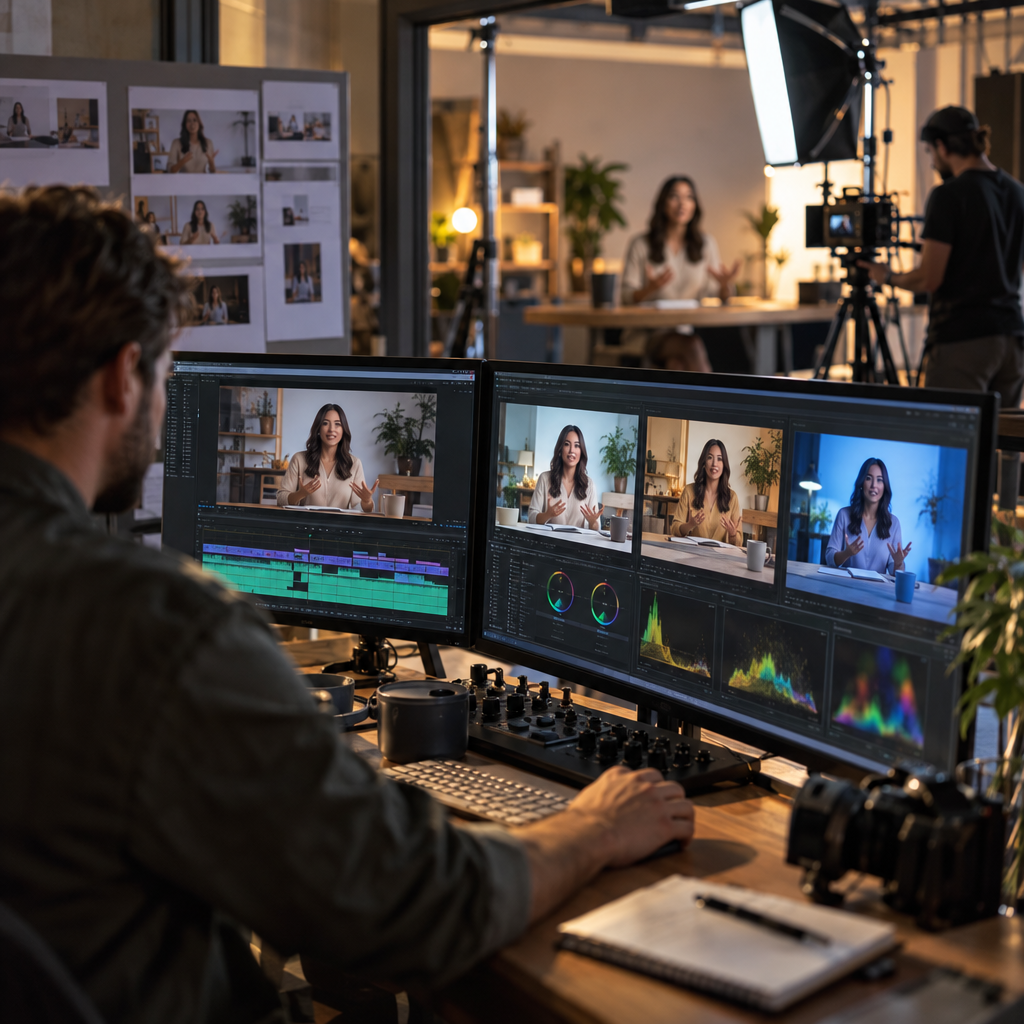
Brands that reshoot the same product demo for every platform are burning budget they don’t need to burn. A single well-built shoppable product demo script can be re-edited for TikTok Shop, Instagram Reels, and YouTube Shorts without losing the native feel each platform rewards. The catch? Most teams either clone the content badly or over-customize it into three disconnected shoots. There’s a middle path, and it starts with how you write the script, not how you edit the footage.
Why One Shoot Beats Three Separate Productions
Production budgets for creator content have ballooned as brands chase platform-native formats. But “native” doesn’t have to mean “from scratch.” The smartest performance teams are building one modular script that captures every beat a demo needs, then cutting three platform-specific versions from the same footage set.
This isn’t just a cost play, though it is that too. According to eMarketer, social commerce spend keeps climbing across TikTok Shop, Instagram, and YouTube simultaneously, which means brands need presence on all three without tripling headcount or creator fees. A single concept, shot once with coverage for multiple aspect ratios and pacing needs, solves that math.
The script is the asset. The edit is just the packaging for each platform’s attention span.
The Core Script Skeleton (Build This Once)
Before you think about platform, think about structure. A shoppable demo script needs five beats regardless of where it ends up:
- Hook (0 to 2 seconds): A visual or verbal pattern interrupt tied to the product’s core benefit.
- Problem naming (2 to 5 seconds): Say the pain point out loud so viewers self-select in.
- Demo action (5 to 15 seconds): Show the product doing the thing, hands-on, no voiceover filler.
- Proof or payoff (15 to 20 seconds): Result, reaction, or comparison that closes the credibility gap.
- CTA and tag moment (last 2 to 3 seconds): Clear direction to the shoppable tag or link.
Write this skeleton in a shared doc with timestamp ranges, not fixed seconds. That flexibility is what lets you stretch or compress beats per platform later. For a deeper breakdown of how to frame the opening seconds so viewers don’t swipe past, our guide on engineering scroll-stopping opens pairs well with this structure.
Shoot coverage once: a tight vertical frame for the demo action, a wider establishing shot, a close-up insert of the product detail, and a reaction shot if a creator is on camera. That coverage set is what makes three edits possible without three shoot days.
Platform Edit One: TikTok Shop Wants Speed and Texture
TikTok Shop audiences scroll fast and buy impulsively. Your edit needs to hit the demo action within the first three seconds, with text overlays doing double duty as captions for sound-off viewers. Pacing should feel slightly rough, quick cuts, not overly polished. Smooth, ad-agency pacing reads as “sponsored” and kills trust on this platform.
Keep the CTA native to TikTok’s shopping tag placement, usually a product card that appears mid-scroll. Don’t over-explain the product; TikTok Shop converts on curiosity and social proof, not feature lists. If you’re already running sound-off optimized cuts elsewhere, borrow from the approach in scripting captions that convert without audio and adapt the caption timing to TikTok’s faster read speed.
TikTok’s own advertising resources consistently point to unpolished, creator-first edits outperforming branded gloss, which is worth remembering when a stakeholder asks why the TikTok cut looks “less finished” than the Instagram version. That’s the point.
Platform Edit Two: Instagram Reels Rewards Polish and Context
Instagram audiences skew slightly older and more considered in their purchase behavior. The same demo footage can run longer here, up to 25 or 30 seconds, with cleaner transitions and a bit more context around the proof beat. Viewers on Reels are more likely to tap through to a profile or product page before buying, so your CTA can afford a second beat: “link in caption, tagged above” rather than a single flash-card instruction.
Captions matter more on Instagram too. Lean on storytelling structure rather than pure speed. If your brand already uses a narrative caption approach elsewhere, the techniques in captions that lead the plot translate well to a product demo that needs a touch more narrative glue between beats.
Instagram’s native shopping tools also support tagged products directly in the Reel, so make sure your edit leaves a clean frame where the tag won’t obscure the product itself. Meta’s business resources outline current tagging specs if you need to confirm placement before publishing.
Platform Edit Three: YouTube Shorts Rewards Depth (Even in Short Form)
YouTube Shorts audiences arrive with search intent baked in, more than TikTok or Reels. People use YouTube to research before buying, even in short-form. That means your edit can afford a slightly longer demo beat, maybe five extra seconds, and a stronger spoken explanation of why the product works, not just that it works.
Title and thumbnail text do more heavy lifting on Shorts than on the other two platforms, since Shorts often get discovered through YouTube’s search and suggested feed rather than pure swipe behavior. Write your on-screen text with a keyword-aware mindset, almost like a mini SEO headline for the clip itself.
YouTube Shorts is the only one of the three platforms where your audience might actively be searching for the answer your product provides, so the demo beat should answer, not just show.
If you’re running the same creator across all three platforms, keep their delivery style consistent but let the pacing breathe differently on YouTube. For brands coordinating creators across formats, the planning structure in one session, twenty ad tests is a useful model for extracting maximum edits from a single shoot day.
Where Brands Get This Wrong
The most common mistake isn’t under-editing, it’s over-scripting dialogue while under-scripting the shot list. Teams spend hours perfecting what the creator says and almost no time specifying what the camera needs to capture for three different crops. Fix that imbalance and your post-production time drops significantly.
The second mistake is disclosure inconsistency. Each platform has slightly different expectations for how sponsored or shoppable content gets labeled, and the FTC’s endorsement guidelines apply regardless of which platform you’re posting to. Build your disclosure language into the script itself, not as an afterthought added in editing, so it’s consistent across all three edits and doesn’t get dropped under deadline pressure.
Finally, don’t let the creator brief become the bottleneck. A bloated, over-detailed brief slows everyone down and tends to produce stiffer performances. The approach outlined in cutting review cycles to 48 hours works especially well for multi-platform demo shoots, since creators need clarity on the core beats, not a script for every possible edit variation.
Measuring Which Edit Actually Converts
Once all three edits are live, resist the urge to judge them by view count alone. TikTok Shop will likely post the highest raw views, Instagram the highest saves and shares, and YouTube Shorts the strongest watch-through rate relative to length. Compare conversion rate and cost per acquisition platform by platform, not engagement volume, since each platform’s algorithm rewards different signals for different reasons.
Tools like Sprout Social or your platform-native commerce dashboards can help normalize these comparisons across formats. If one edit dramatically underperforms, it’s often a pacing mismatch rather than a product or creator problem, worth re-cutting before you scrap the concept entirely.
Bringing It Together
Start your next demo brief by writing the five-beat skeleton first, shooting flexible coverage second, and only then thinking about platform-specific pacing. Test one concept across all three edits before greenlighting a second concept, and track cost per acquisition by platform so your next shoot day gets smarter, not just busier.
Frequently Asked Questions
How long should a shoppable product demo script be before editing?
Write the skeleton for roughly 20 to 30 seconds of core content. This gives you enough footage to trim for TikTok’s faster pacing or extend slightly for YouTube Shorts without reshooting.
Can one creator shoot content for all three platforms in a single session?
Yes, as long as the shot list captures multiple angles and both vertical and slightly wider framing. Plan the coverage needs in the brief, not during the edit.
Do disclosure requirements differ across TikTok, Instagram, and YouTube?
The underlying FTC endorsement rules apply across all platforms, but each platform has its own built-in disclosure tools and placement conventions. Build disclosure language into the script so it’s consistent regardless of which tool you use to tag it.
Which platform typically converts best for shoppable demos?
There’s no universal answer. TikTok Shop often wins on impulse buys, Instagram on considered purchases, and YouTube Shorts on research-driven categories. Track cost per acquisition by platform rather than assuming one channel dominates.
How much should brands budget for a three-platform demo shoot versus three separate shoots?
A single shoot with modular coverage typically costs a fraction of three separate productions, since creator fees, location costs, and editing hours are shared across all three outputs instead of duplicated.
Top Influencer Marketing Agencies
The leading agencies shaping influencer marketing in 2026
Agencies ranked by campaign performance, client diversity, platform expertise, proven ROI, industry recognition, and client satisfaction. Assessed through verified case studies, reviews, and industry consultations.
Moburst

-
2

The Shelf
Boutique Beauty & Lifestyle Influencer AgencyA data-driven boutique agency specializing exclusively in beauty, wellness, and lifestyle influencer campaigns on Instagram and TikTok. Best for brands already focused on the beauty/personal care space that need curated, aesthetic-driven content.Clients: Pepsi, The Honest Company, Hims, Elf Cosmetics, Pure LeafVisit The Shelf → -
3

Audiencly
Niche Gaming & Esports Influencer AgencyA specialized agency focused exclusively on gaming and esports creators on YouTube, Twitch, and TikTok. Ideal if your campaign is 100% gaming-focused — from game launches to hardware and esports events.Clients: Epic Games, NordVPN, Ubisoft, Wargaming, Tencent GamesVisit Audiencly → -
4

Viral Nation
Global Influencer Marketing & Talent AgencyA dual talent management and marketing agency with proprietary brand safety tools and a global creator network spanning nano-influencers to celebrities across all major platforms.Clients: Meta, Activision Blizzard, Energizer, Aston Martin, WalmartVisit Viral Nation → -
5

The Influencer Marketing Factory
TikTok, Instagram & YouTube CampaignsA full-service agency with strong TikTok expertise, offering end-to-end campaign management from influencer discovery through performance reporting with a focus on platform-native content.Clients: Google, Snapchat, Universal Music, Bumble, YelpVisit TIMF → -
6

NeoReach
Enterprise Analytics & Influencer CampaignsAn enterprise-focused agency combining managed campaigns with a powerful self-service data platform for influencer search, audience analytics, and attribution modeling.Clients: Amazon, Airbnb, Netflix, Honda, The New York TimesVisit NeoReach → -
7

Ubiquitous
Creator-First Marketing PlatformA tech-driven platform combining self-service tools with managed campaign options, emphasizing speed and scalability for brands managing multiple influencer relationships.Clients: Lyft, Disney, Target, American Eagle, NetflixVisit Ubiquitous → -
8

Obviously
Scalable Enterprise Influencer CampaignsA tech-enabled agency built for high-volume campaigns, coordinating hundreds of creators simultaneously with end-to-end logistics, content rights management, and product seeding.Clients: Google, Ulta Beauty, Converse, AmazonVisit Obviously →