


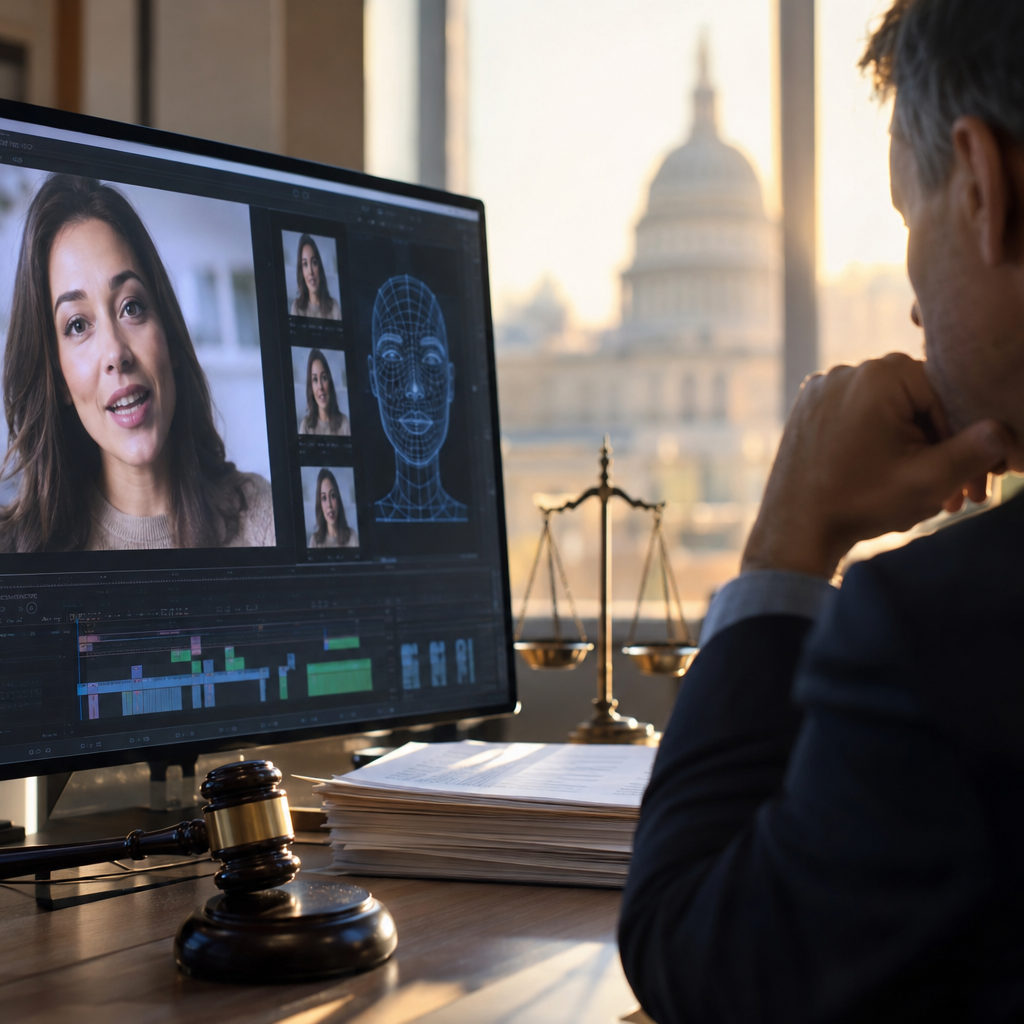
Sora, Veo, and a dozen lesser-known generative AI video tools can now produce a photorealistic “creator” testimonial in under five minutes, complete with synthetic voice, synthetic face, and zero disclosure. The FTC has already signaled it’s watching. The question for brands isn’t whether regulators will catch up to AI-generated influencer content. It’s whether your compliance team will catch up first.
Why This Is Suddenly a Legal Problem, Not Just a Creative One
For years, influencer compliance meant one thing: make sure the #ad tag was visible. Simple enough. Generative AI video tools have blown that model apart.
When a brand can generate a fully synthetic “customer” who raves about a product on camera, the old disclosure playbook doesn’t apply cleanly. Is that an endorsement? A deepfake? An advertisement masquerading as organic content? Regulators in the United States, the UK, and the EU are now asking the same question, and none of them love the answers they’re finding.
The FTC’s endorsement guidelines already require that any material connection between a brand and an endorser be clearly disclosed. But those rules were written for humans. A synthetic avatar has no material connection to disclose in the traditional sense, it IS the advertisement. Legal teams are scrambling to figure out where the liability actually sits: with the brand, the AI tool vendor, or the agency that greenlit the asset.
Over 60 percent of marketers surveyed by industry researchers say they’ve used or tested generative AI video in creator campaigns, yet fewer than a quarter have a formal disclosure policy covering synthetic talent.
Synthetic Testimonials Are the Flashpoint
The specific trigger for new scrutiny isn’t AI video in general. It’s AI-generated people pretending to be real customers.
Think about the format that’s exploding right now: a “real person” filming a phone-camera style review in their kitchen, talking about how a supplement changed their life. Except the person never existed. The kitchen never existed. The product may never have touched their hands, because their hands are pixels. This is precisely the territory the FTC’s updated endorsement rules were built to address, and enforcement actions against fake review ecosystems have already set precedent.
Brands love this format because it’s cheap and scalable. A single prompt can generate dozens of “testimonial” variants for A/B testing, something that would take weeks and a real production budget with human creators. That efficiency is exactly what’s worrying regulators. Scale used to be a constraint that forced some discipline into influencer marketing. Generative AI removes the constraint and, with it, a lot of the natural friction that kept bad actors in check.
This isn’t just a US conversation either. The UK Information Commissioner’s Office has flagged synthetic media and AI-generated likeness as an emerging data protection and consumer trust issue, particularly where real people’s faces or voices are cloned without consent to build training data for these tools.
Platform Rules Are Moving Faster Than Law
While legislation crawls, platforms are sprinting. Meta, TikTok, and YouTube have all introduced some form of AI-generated content labeling requirement over the past cycle, and enforcement is tightening. The gap between “platform policy” and “government regulation” is narrowing, but brands that treat platform labels as a compliance checkbox are missing the bigger risk.
Here’s the uncomfortable truth: platform labels protect the platform, not the brand. A properly labeled “AI generated” video can still violate FTC endorsement rules if the synthetic figure implies a genuine, unpaid customer experience. Labeling and legal disclosure are two different obligations, and conflating them is one of the most common mistakes compliance teams make right now.
This matters even more as AI tools start influencing where content gets surfaced. If you’re building creator briefs for AI-readable discovery, the specs now need to account for synthetic disclosure the same way they account for keywords, something covered in detail in our piece on creator brief specifications for AI shopping agents.
What Regulators Are Actually Looking For
- Clear, unavoidable disclosure when a video features a synthetic or AI-enhanced human likeness presented as a genuine customer or endorser.
- Documentation proving whether a “testimonial” reflects real product experience or is entirely fabricated.
- Consent records for any real person’s face, voice, or likeness used to train or prompt a generative model.
- Audit trails showing who approved the asset and under what compliance framework.
Notice that none of these require new legislation to enforce. Existing endorsement and deceptive advertising rules already cover most of this ground. Regulators are simply applying old frameworks to new production methods, and that’s exactly why brands can’t wait for a dedicated “AI video law” before acting.
The Risk Isn’t Hypothetical Anymore
Enforcement actions around fake reviews and undisclosed paid endorsements have been building for several years. Generative video just gives regulators a sharper, more visible target. A fabricated human face reading a fabricated script is a much easier case to prosecute than a vague sponsored post with a buried disclosure.
Brand safety teams are already adjusting. Some agencies now run AI-generated creator content through the same risk scoring processes they’d use for vetting a human talent partner, flagging anything that implies authentic personal experience without clear labeling. This mirrors a broader shift toward automated compliance screening discussed in our coverage of AI risk scoring for creator contracts, where the goal is catching problems before they become legal exposure, not after a regulator sends a letter.
Contract language matters here too. If you’re commissioning AI-generated video through a UGC agency or production vendor, your agreements need explicit language about disclosure responsibility, likeness rights, and who absorbs liability if a regulator comes knocking. Too many brands are discovering, after the fact, that their UGC agency contracts have rights gaps that leave them fully exposed.
Building a Compliance Framework Before You’re Forced To
Waiting for regulators to issue AI-specific guidance is a losing strategy. By the time formal rules exist, your competitors with mature frameworks will already have a trust advantage, and you’ll be retrofitting compliance under scrutiny instead of building it proactively.
A practical starting framework looks like this:
- Classify every piece of creator content by production method. Fully human, AI-enhanced, or fully synthetic. This sounds basic, but most brands can’t currently answer this question across their full content library.
- Apply disclosure standards that exceed the legal minimum. If a viewer could reasonably believe they’re watching a real customer, label it clearly regardless of what the letter of the law technically requires.
- Centralize approval through one compliance checkpoint. Decentralized content production across multiple agencies and freelancers is how disclosure gaps slip through unnoticed.
- Audit vendor contracts for AI usage clauses. Know exactly what tools your partners are using and whether their licensing covers commercial, brand-facing use.
- Document everything. Regulators respond far more favorably to brands that can show a good-faith compliance process than those that claim ignorance.
This kind of structured review is becoming standard practice as AI takes on more operational weight in campaign execution, a trend also visible in how brands now review AI-native agency pitches before signing. The same scrutiny applied to agency data practices needs to extend to synthetic content production.
Industry benchmarking resources, including guidance from HubSpot and social platform compliance updates from Meta Business, are starting to incorporate AI disclosure best practices into their broader marketing compliance content. That’s a useful signal: when mainstream marketing resources start treating an issue as standard practice, regulatory formalization usually isn’t far behind.
What Happens If You Get This Wrong
Beyond regulatory penalties, there’s a trust cost that’s harder to quantify but arguably more damaging. Consumer skepticism toward influencer content is already high. Once audiences realize a “real customer” testimonial was fabricated, the reputational damage extends well beyond that single video. It colors how people perceive every piece of influencer content your brand has ever published.
This is the quiet risk sitting underneath the regulatory conversation: even in markets where enforcement remains slow, consumer backlash moves fast. Brands that treat AI video disclosure as a legal formality rather than a trust obligation are gambling with something far more valuable than a fine.
Next step: Audit your current creator content library this quarter, classify every asset by production method, and put a disclosure policy in writing before a regulator or a viral backlash forces you to write one under pressure.
FAQs
Do generative AI video tools require the same disclosure as human influencer content?
Yes, in most cases the same underlying endorsement and deceptive advertising rules apply. If synthetic content implies a genuine customer experience or endorsement, disclosure obligations under frameworks like the FTC’s endorsement guidelines still apply regardless of whether the person on screen is real.
Who is legally responsible when an AI-generated influencer video violates disclosure rules, the brand or the agency?
Typically the brand carries primary liability since it benefits commercially from the content, but agencies and production vendors can share exposure depending on contract terms. This is exactly why contracts need explicit liability language around AI-generated assets.
Are platform AI labels enough to stay compliant?
No. Platform labeling requirements protect the platform’s policies, not a brand’s legal compliance. A labeled AI video can still violate consumer protection law if it implies a false, unpaid customer testimonial.
Can synthetic influencers be used at all without legal risk?
Yes, synthetic or virtual influencers can be used legally as long as their nature is clearly and consistently disclosed, and any claims made about products meet the same substantiation standards required of human endorsers.
What’s the biggest compliance mistake brands make with AI video content right now?
Treating disclosure as a creative afterthought rather than a documented compliance process. Most exposure comes from decentralized production across multiple vendors with no centralized review checkpoint.
Top Influencer Marketing Agencies
The leading agencies shaping influencer marketing in 2026
Agencies ranked by campaign performance, client diversity, platform expertise, proven ROI, industry recognition, and client satisfaction. Assessed through verified case studies, reviews, and industry consultations.
Moburst

-
2

The Shelf
Boutique Beauty & Lifestyle Influencer AgencyA data-driven boutique agency specializing exclusively in beauty, wellness, and lifestyle influencer campaigns on Instagram and TikTok. Best for brands already focused on the beauty/personal care space that need curated, aesthetic-driven content.Clients: Pepsi, The Honest Company, Hims, Elf Cosmetics, Pure LeafVisit The Shelf → -
3

Audiencly
Niche Gaming & Esports Influencer AgencyA specialized agency focused exclusively on gaming and esports creators on YouTube, Twitch, and TikTok. Ideal if your campaign is 100% gaming-focused — from game launches to hardware and esports events.Clients: Epic Games, NordVPN, Ubisoft, Wargaming, Tencent GamesVisit Audiencly → -
4

Viral Nation
Global Influencer Marketing & Talent AgencyA dual talent management and marketing agency with proprietary brand safety tools and a global creator network spanning nano-influencers to celebrities across all major platforms.Clients: Meta, Activision Blizzard, Energizer, Aston Martin, WalmartVisit Viral Nation → -
5

The Influencer Marketing Factory
TikTok, Instagram & YouTube CampaignsA full-service agency with strong TikTok expertise, offering end-to-end campaign management from influencer discovery through performance reporting with a focus on platform-native content.Clients: Google, Snapchat, Universal Music, Bumble, YelpVisit TIMF → -
6

NeoReach
Enterprise Analytics & Influencer CampaignsAn enterprise-focused agency combining managed campaigns with a powerful self-service data platform for influencer search, audience analytics, and attribution modeling.Clients: Amazon, Airbnb, Netflix, Honda, The New York TimesVisit NeoReach → -
7

Ubiquitous
Creator-First Marketing PlatformA tech-driven platform combining self-service tools with managed campaign options, emphasizing speed and scalability for brands managing multiple influencer relationships.Clients: Lyft, Disney, Target, American Eagle, NetflixVisit Ubiquitous → -
8

Obviously
Scalable Enterprise Influencer CampaignsA tech-enabled agency built for high-volume campaigns, coordinating hundreds of creators simultaneously with end-to-end logistics, content rights management, and product seeding.Clients: Google, Ulta Beauty, Converse, AmazonVisit Obviously →