


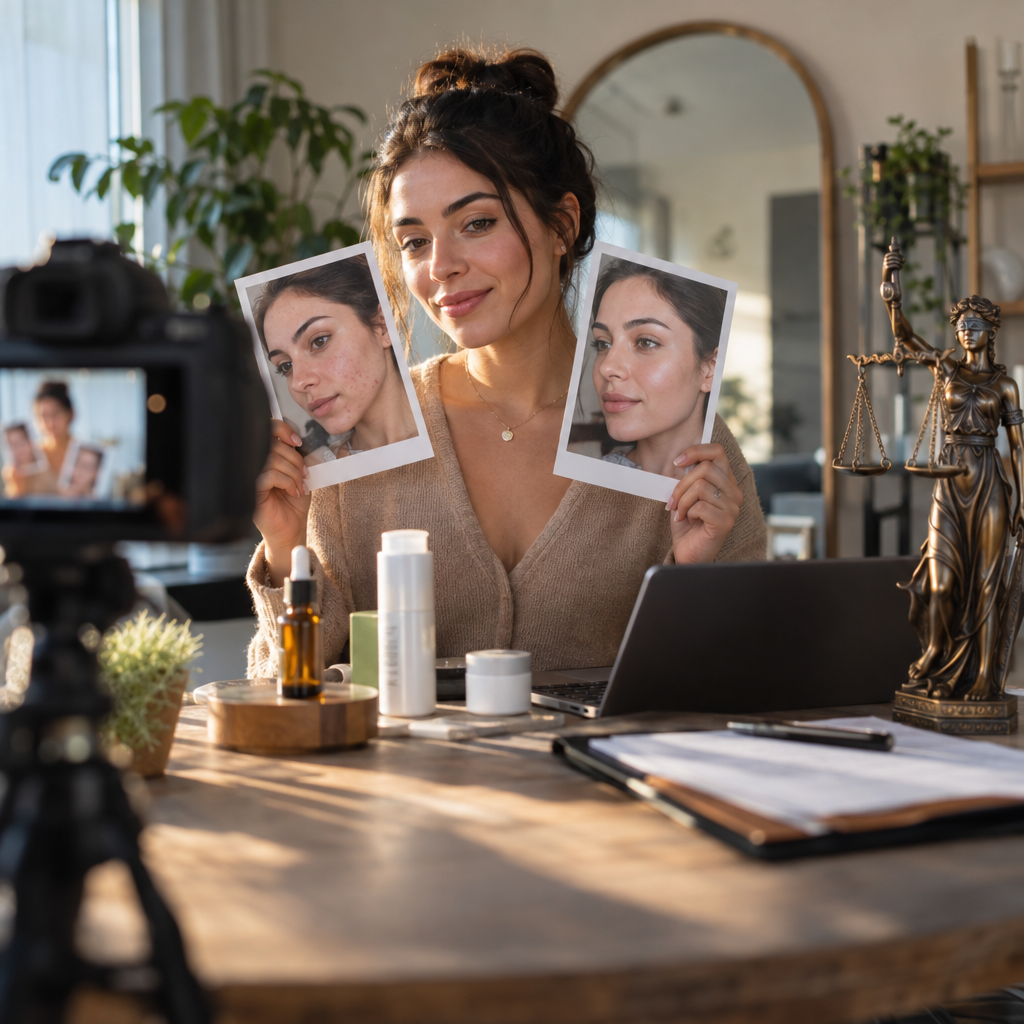
Seventy percent of consumers say they’ve bought a product after seeing a before and after post, and that same format is one of the FTC’s most-cited categories in enforcement actions. Before and after transformation content converts like nothing else, but it’s also a compliance minefield that most brand teams walk into blind. If your influencer program leans on visible results, this is the framework that keeps the conversions without the warning letter.
Why Before and After Content Keeps Triggering FTC Scrutiny
The FTC isn’t anti-transformation. It’s anti-deception. The agency’s Endorsement Guides care about two things: whether the results shown are typical, and whether the audience knows a payment or product relationship exists behind the post. Before and after content fails on both counts more often than any other format, because the entire genre is built on a dramatic contrast that’s rarely representative of the average user experience.
Think about it from the regulator’s chair. A 60-day skin transformation video posted without a timeframe, without a disclosure, and without any mention of diet, lighting changes, or filters isn’t marketing anymore. It’s an implied claim. And implied claims are still claims under FTC law, whether they’re spoken, written, or just visually suggested through a dramatic split screen.
The FTC treats an undisclosed “before and after” the same way it treats a false statement: both mislead a reasonable consumer about what they can expect.
This isn’t theoretical. The agency has gone after weight loss brands, skincare companies, and supplement sellers for exactly this pattern: dramatic visual proof, vague or missing substantiation, and creators who never mention they were paid or gifted the product.
The Four Elements the FTC Actually Looks For
Strip away the legal language and compliance review for before and after content comes down to four checkpoints. Miss any one of them and you’ve got exposure.
- Material connection disclosure. If the creator was paid, gifted, or has any brand relationship, that has to be clear and conspicuous, not buried in a hashtag string at the bottom of a caption.
- Typicality. If the results shown aren’t what a typical user can expect, you need a clear and visible statement saying so, not a tiny disclaimer in 8-point font for half a second.
- Substantiation. You need evidence the results are real and attributable to the product, not diet, exercise, filters, lighting, or time elapsed for unrelated reasons.
- Timeframe honesty. If results took 90 days, the content can’t imply it happened in two weeks. Compression without disclosure is a classic deception trigger.
Most brands get disclosure right and ignore the other three. That’s the gap enforcement actions exploit.
Build Your Disclosure Into the Shot List, Not the Caption
Here’s the operational mistake almost every brand makes: treating compliance as a caption problem. Legal reviews the written disclosure, marketing approves the video, and nobody checks whether the disclosure is actually visible on screen long enough to register. The FTC has explicitly said that disclosures buried below the fold, flashed too quickly, or contradicted by platform UI (like a “tap to shop” overlay covering the text) don’t count as clear and conspicuous.
The fix is to script the disclosure as a visual beat, not an afterthought. Put it on screen at the moment the transformation is revealed, not just in the opening three seconds before anyone’s paying attention. This approach mirrors the logic in our split screen compliance framework, where the disclosure has to survive the exact moment viewers are most engaged, not just exist somewhere in the asset.
Same logic applies to typicality statements. “Results not typical” needs to appear when the after shot appears, held long enough to read, in a font size that doesn’t require a magnifying glass.
Typicality Statements: The Line Most Brands Skip
Ask ten brand marketers what “clear and conspicuous” means and you’ll get ten different answers. The FTC’s own guidance says disclosures should be as prominent as the claim they’re qualifying. If your transformation reveal is a dramatic zoom with music swelling, your disclaimer can’t be a gray sentence that fades in for one second.
A workable standard: if a viewer has to pause the video to read your disclaimer, it’s not conspicuous enough. Test this internally before anything goes live. Have someone outside the project watch the content once, at normal speed, and ask them what they understood about typical results. If they can’t repeat it back, redo the edit.
This is also where results documentation earns its keep. Pair transformation content with structured proof, the kind covered in our before and after scripting guide, so the claim is backed by something more durable than a single creator’s anecdotal timeline.
What Counts as Substantiation (And What Doesn’t)
A single creator’s personal experience is not substantiation. It’s a testimonial, and testimonials require their own disclaimer about individual results varying. If your brand wants to make an implied efficacy claim through a before and after post, you need data behind it: a clinical study, a controlled user trial, or at minimum a documented pattern across a meaningful sample size.
Brands that skip this step are betting that no one asks for the receipts. That’s a bad bet in 2026, when social listening tools make it trivial for competitors, journalists, or regulators to flag suspicious before and after claims and demand proof. If you can’t produce the study behind the claim within a day of being asked, you shouldn’t be running the claim.
If a legal team can’t produce the data behind a transformation claim within 24 hours, that claim shouldn’t be live.
For brands building genuine proof pipelines, pairing creator content with screenshot-based evidence, like the format outlined in our receipts format UGC breakdown, gives you a layered defense: visual transformation plus documented timeline plus real user commentary.
A Compliance Checklist Before You Hit Publish
Run every before and after asset through this list before it goes live. It takes five minutes and saves months of regulatory headache.
- Is the material connection disclosed in text on screen, not just in a caption or bio link?
- Does the disclosure appear at or before the moment the result is revealed?
- Is there a typicality statement if the results shown aren’t average?
- Can the brand produce documentation for the timeframe and the result shown?
- Does the editing (cuts, lighting, filters) materially misrepresent the transformation?
- Would a first-time viewer, watching once at normal speed, walk away with an accurate impression?
If any answer is no, the content isn’t ready. Push the deadline. A delayed post costs you a few days of reach. A regulatory inquiry costs you the campaign, the agency relationship, and possibly a formal consent order.
Measuring Performance Without Losing Compliance Ground
Brands often assume compliance friction kills conversion. It doesn’t have to. Clear, well-placed disclosures and typicality statements don’t meaningfully hurt watch time or purchase intent when they’re integrated into the storytelling rather than slapped on as a legal afterthought. Use the same retention benchmarks you’d apply to any other format, the kind detailed in our thumb stop metrics framework, to confirm compliant versions still hold attention through the reveal.
And if you’re running paid amplification behind creator transformation content, platforms like TikTok Ads Manager and Meta Business Suite both have their own ad policy layers on top of FTC rules. A compliant organic post can still get flagged for paid review if the health or beauty claim trips automated moderation, so budget extra time for ad approval when scaling a transformation campaign.
Research from eMarketer consistently shows transformation and comparison formats outperform standard product demos on engagement, which is exactly why they draw regulatory attention disproportionate to their share of total content. High performance plus high scrutiny means this is the last place to cut compliance corners.
What Happens When You Get It Wrong
Penalties aren’t limited to FTC fines. Platforms are increasingly removing undisclosed transformation content proactively, and brand safety teams at retail partners are starting to audit influencer content before approving co-marketing budgets. The reputational cost often outlasts any financial penalty: a viral “fake before and after” callout thread can undo a quarter’s worth of brand trust in a weekend.
If you’re building a library of transformation content at scale, standardize the review process the way you would any other claims-heavy format, similar to how brands approach comparison format reviews. Consistency in the review workflow is what actually prevents the embarrassing retraction, not a single well-intentioned legal sign-off.
Visible FAQ
Frequently Asked Questions
What makes before and after content risky under FTC rules?
The format inherently implies a typical result through dramatic visual contrast, which the FTC treats as a claim. Without disclosure of material connections and clear typicality statements, that implied claim can be deemed deceptive.
Does a disclaimer in the caption satisfy FTC disclosure requirements?
Usually not. The FTC requires disclosures to be clear and conspicuous at the point the claim is made. A caption buried below hashtags or cut off by “see more” doesn’t meet that standard for a video-first format.
How do I know if my results are “typical”?
You need data across a representative sample of users, not a single standout case. If the result shown is better than what most users experience, you must disclose that clearly, near the moment the result is shown.
Can I use before and after content with gifted products, not paid partnerships?
Yes, but gifting still counts as a material connection under FTC guidelines. The disclosure requirement applies regardless of whether money, product, or any other benefit changed hands.
What documentation should I keep for substantiation?
Keep timestamped photos or video, a documented timeframe, any relevant study or user trial data, and records of the creator’s actual usage pattern. Store this before the content goes live, not after a complaint arrives.
Visible FAQ (structured)
Frequently Asked Questions
What makes before and after content risky under FTC rules?
The format inherently implies a typical result through dramatic visual contrast, which the FTC treats as a claim. Without disclosure of material connections and clear typicality statements, that implied claim can be deemed deceptive.
Does a disclaimer in the caption satisfy FTC disclosure requirements?
Usually not. The FTC requires disclosures to be clear and conspicuous at the point the claim is made. A caption buried below hashtags or cut off by “see more” doesn’t meet that standard for a video-first format.
How do I know if my results are “typical”?
You need data across a representative sample of users, not a single standout case. If the result shown is better than what most users experience, you must disclose that clearly, near the moment the result is shown.
Can I use before and after content with gifted products, not paid partnerships?
Yes, but gifting still counts as a material connection under FTC guidelines. The disclosure requirement applies regardless of whether money, product, or any other benefit changed hands.
What documentation should I keep for substantiation?
Keep timestamped photos or video, a documented timeframe, any relevant study or user trial data, and records of the creator’s actual usage pattern. Store this before the content goes live, not after a complaint arrives.
Build the disclosure and typicality statement into your shot list before the first frame is filmed, not into the legal review after the edit is locked. That single sequencing change is what separates brands that scale transformation content safely from the ones writing apology posts six months later.
Top Influencer Marketing Agencies
The leading agencies shaping influencer marketing in 2026
Agencies ranked by campaign performance, client diversity, platform expertise, proven ROI, industry recognition, and client satisfaction. Assessed through verified case studies, reviews, and industry consultations.
Moburst

-
2

The Shelf
Boutique Beauty & Lifestyle Influencer AgencyA data-driven boutique agency specializing exclusively in beauty, wellness, and lifestyle influencer campaigns on Instagram and TikTok. Best for brands already focused on the beauty/personal care space that need curated, aesthetic-driven content.Clients: Pepsi, The Honest Company, Hims, Elf Cosmetics, Pure LeafVisit The Shelf → -
3

Audiencly
Niche Gaming & Esports Influencer AgencyA specialized agency focused exclusively on gaming and esports creators on YouTube, Twitch, and TikTok. Ideal if your campaign is 100% gaming-focused — from game launches to hardware and esports events.Clients: Epic Games, NordVPN, Ubisoft, Wargaming, Tencent GamesVisit Audiencly → -
4

Viral Nation
Global Influencer Marketing & Talent AgencyA dual talent management and marketing agency with proprietary brand safety tools and a global creator network spanning nano-influencers to celebrities across all major platforms.Clients: Meta, Activision Blizzard, Energizer, Aston Martin, WalmartVisit Viral Nation → -
5

The Influencer Marketing Factory
TikTok, Instagram & YouTube CampaignsA full-service agency with strong TikTok expertise, offering end-to-end campaign management from influencer discovery through performance reporting with a focus on platform-native content.Clients: Google, Snapchat, Universal Music, Bumble, YelpVisit TIMF → -
6

NeoReach
Enterprise Analytics & Influencer CampaignsAn enterprise-focused agency combining managed campaigns with a powerful self-service data platform for influencer search, audience analytics, and attribution modeling.Clients: Amazon, Airbnb, Netflix, Honda, The New York TimesVisit NeoReach → -
7

Ubiquitous
Creator-First Marketing PlatformA tech-driven platform combining self-service tools with managed campaign options, emphasizing speed and scalability for brands managing multiple influencer relationships.Clients: Lyft, Disney, Target, American Eagle, NetflixVisit Ubiquitous → -
8

Obviously
Scalable Enterprise Influencer CampaignsA tech-enabled agency built for high-volume campaigns, coordinating hundreds of creators simultaneously with end-to-end logistics, content rights management, and product seeding.Clients: Google, Ulta Beauty, Converse, AmazonVisit Obviously →