


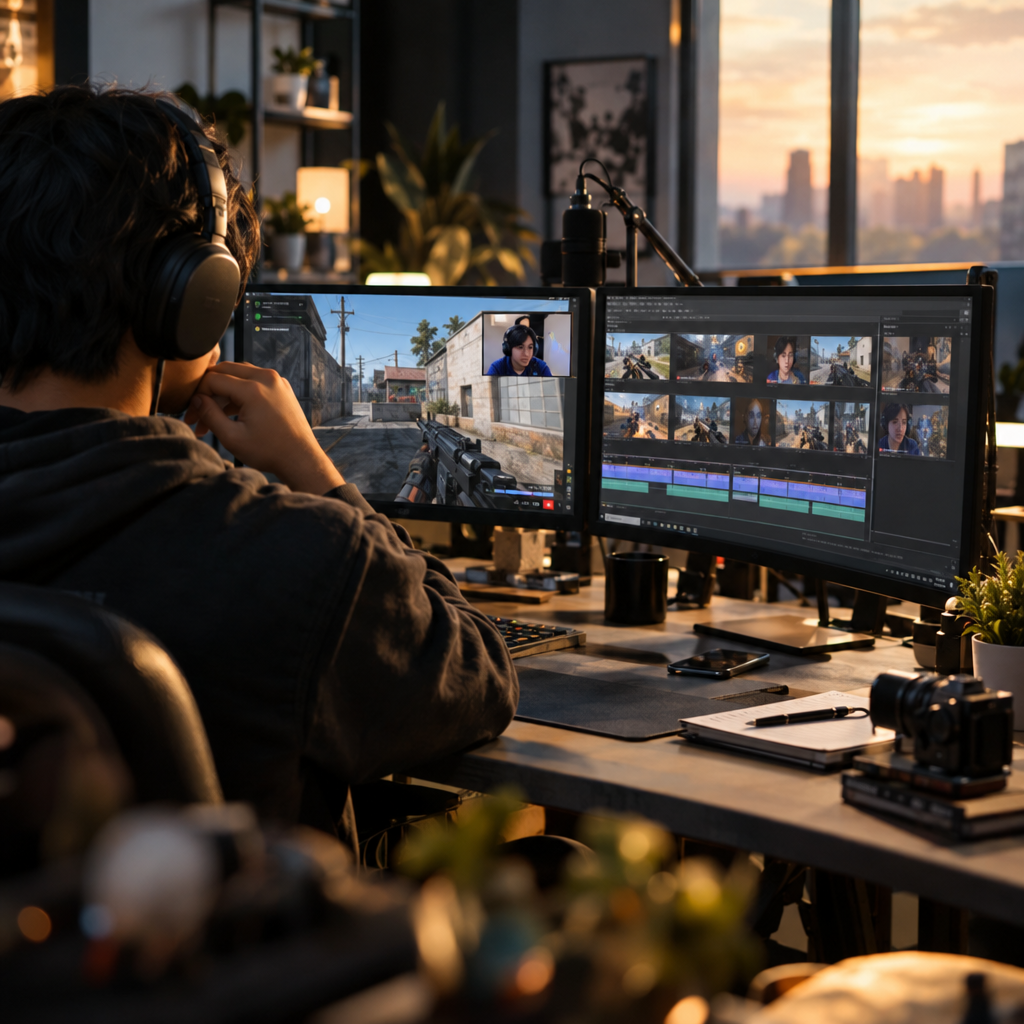
Twitch clips get re-uploaded to TikTok within minutes of going live. A brand-sponsored stream segment ends up as a YouTube Short with a different creator’s face reacting over it. Nobody asked permission. Nobody paid anyone. And if your brand’s product placement is sitting inside that clip, you may have just inherited a stream clipping rights problem you never budgeted for. Who actually owns that footage once it leaves the original platform? The honest answer: it’s rarely clear, and that ambiguity is now a budget line item.
Who Actually Owns a Clip?
Start with the uncomfortable truth: most platform terms of service grant the platform a broad license to host and distribute content, while the creator retains underlying copyright. That sounds tidy until a third party clips a thirty-second segment, slaps their own commentary over it, and posts it somewhere else entirely. Is that fair use? Is it a derivative work? Is it a violation of the creator’s contract with your brand?
In most jurisdictions, copyright in a live stream belongs to the person who created it, typically the streamer, unless a work-for-hire agreement says otherwise. But clipping tools built into Twitch, Kick, and YouTube Live explicitly allow viewers to create short-form cuts. That built-in functionality muddies the ownership picture further, because the platform is technically authorizing a form of repurposing the moment the creator hits “go live.”
If your influencer contract only covers the original stream and doesn’t mention downstream clips, you have no enforceable claim over how that content gets reused, remixed, or monetized by someone else.
The Streaming Platform Layer Nobody Reads
Every platform handles this differently, and brands treating them as interchangeable are setting themselves up for a compliance headache. Twitch’s clip feature lets any viewer generate a shareable snippet, and Twitch’s terms grant it a license to sublicense that footage. Kick operates similarly but with far less mature enforcement infrastructure. YouTube’s Content ID system can catch reuploads but wasn’t built with live stream clipping in mind, so sponsored segments slip through constantly.
This matters because a single stream might touch three ownership regimes at once: the platform’s terms, the creator’s contract with your brand, and whatever rights a third-party clipper claims when they repost. We’ve covered this layered exposure before in the context of cross-platform usage rights, and the clipping problem is the same dynamic turned up to eleven. One clause written for Instagram simply doesn’t translate to a live, unscripted, clip-ready broadcast.
The Three-Way Rights Collision
Picture a sponsored Twitch stream where your product sits on the creator’s desk for two hours. A fan clips the moment the creator mentions your brand, posts it to TikTok with a trending sound, and it pulls four million views overnight. Great exposure, right? Maybe. But now ask:
- Did the original contract authorize repurposing into short-form content, or only the live broadcast?
- Does the fan who clipped it have any commercial rights, or is this a straightforward infringement your legal team should flag?
- Can your brand legally reuse that viral clip in paid social without a separate release from the original creator?
Most brand teams discover the answer to all three is “we don’t know” only after the clip is already trending. That’s not a legal strategy, that’s damage control. According to Sprout Social’s research on social content trends, short clips consistently outperform long-form video in engagement, which means the incentive to clip (and the volume of unauthorized reuse) is only going up.
Does Repurposing Count as a New Use?
This is the question that trips up even experienced marketing counsel. Repurposing creator content, whether it’s your team cutting a stream into Reels or a third party doing it without consent, almost always constitutes a “new use” under copyright law if it changes the format, audience, or commercial context of the original work. That distinction matters enormously for contract drafting.
We’ve seen this exact gap before with bundled usage rights clauses that brands assumed covered everything. As detailed in our breakdown of bundled usage rights audits, vague contract language that says “brand may use content across digital channels” does not automatically cover clipping, remixing, or AI-assisted repurposing into entirely new formats. Streaming adds another wrinkle: the content isn’t pre-produced and approved, it’s live, unscripted, and generated in real time, so there’s no “final asset” to attach rights language to in the first place.
Brands running influencer programs that lean on livestreaming (gaming, QVC-style commerce streams, Twitch co-streams) need contract language that anticipates clipping as a default outcome, not an edge case.
Building Clipping Rights Into Contracts
Here’s where operational discipline pays off. A few concrete moves:
- Define “derivative clip” explicitly. Don’t rely on generic “content” language. Spell out that short-form cuts, screenshots, and remixes of the live stream fall under the same usage terms as the original broadcast.
- Assign repurposing rights up front. Decide whether your brand can repurpose stream segments into paid ads, and get that in writing before the stream airs, not after a clip goes viral.
- Address third-party clipping separately. Your contract with the creator can’t control random viewers, but it can specify who’s responsible for issuing takedowns or licensing requests when unauthorized clips surface.
- Loop in your disclosure obligations. If a repurposed clip strips out the original disclosure (#ad, #sponsored), you may have a new FTC exposure point entirely separate from the ownership question. We’ve written extensively about how disclosure contract clauses need to travel with the content, not just live on the original post.
None of this is theoretical. The FTC has been explicit that disclosure obligations attach to the content itself, regardless of how many times it’s reposted or by whom. A clip that loses its disclosure in translation is still a compliance problem, even if your brand didn’t create the clip.
What About AI-Generated Recaps and Highlight Reels?
Add one more layer: AI tools now auto-generate highlight reels from full streams, picking “peak moments” based on chat activity and audio spikes. These tools don’t know or care about your sponsorship terms. If an AI recap tool clips the exact segment where your product appears and that recap ends up on a third-party channel, you’re looking at the same ownership ambiguity, minus any human judgment about context or brand safety.
This isn’t a hypothetical future problem. Platforms are already integrating AI editing into creator dashboards, and HubSpot’s marketing research shows brands increasingly rely on automated repurposing to stretch content budgets further. The efficiency gain is real. So is the rights exposure if nobody updates the contract to account for machine-driven clipping. If you’re vetting any AI vendor touching your creator content pipeline, our guide on AI video vendor vetting is a useful starting point before you sign anything.
There’s also a quieter risk here: exclusivity. If a creator’s AI-clipped highlight reel ends up on a competitor’s sponsored stream recap, you may be staring down a conflict that your exclusivity clauses never anticipated because nobody thought to define “stream” broadly enough.
The Bottom Line on Ownership
Stream clipping isn’t going away, and honestly, it shouldn’t. Clips drive discovery, extend campaign lifespan, and often outperform the original broadcast in reach. The problem isn’t the clipping itself, it’s brands treating livestream sponsorships like static content deals when the format fundamentally works differently. Static posts have a defined lifecycle. Streams generate an unpredictable volume of derivative content the moment they go live, and your legal exposure scales with that volume whether you planned for it or not.
Data from Statista shows livestreaming viewership continuing to climb across Twitch, YouTube Live, and TikTok Live, which means this isn’t a niche concern limited to gaming brands. Any brand running commerce streams, product demos, or live Q&As is building a clip-generation machine, intentionally or not.
Audit every active livestream sponsorship contract this quarter and confirm whether clipping, repurposing, and AI-generated recaps are explicitly addressed. If the answer is no, you’re not protected, you’re just lucky so far.
Frequently Asked Questions
Who owns a clip taken from a sponsored livestream?
Ownership typically stays with the original creator under copyright law, but platform terms of service often grant broad distribution licenses, and third-party clippers may claim fair use. Brands should never assume they have automatic rights to repurpose clips without explicit contract language.
Can a brand use a viral fan-made clip in paid advertising?
Generally no, not without securing a license or release from both the original creator and, in some cases, the person who created the clip. Using unlicensed footage in paid media carries real legal exposure beyond ownership disputes.
Does a repurposed clip need its own FTC disclosure?
Yes. If a clip strips out the original sponsorship disclosure, the FTC still expects the material connection to be clear wherever the content appears. This applies even if your brand didn’t create or distribute the repurposed version.
How should influencer contracts handle AI-generated highlight reels?
Contracts should explicitly define automated or AI-assisted repurposing as a covered use, not leave it to implication. Without that language, AI-clipped content exists in the same legal gray area as manual third-party clipping.
What’s the biggest mistake brands make with stream clipping rights?
Treating livestream sponsorships like standard content deals. Static posts have a fixed lifecycle, but live content generates unpredictable derivative clips the moment it airs, and most brand contracts simply weren’t written to anticipate that volume.
Top Influencer Marketing Agencies
The leading agencies shaping influencer marketing in 2026
Agencies ranked by campaign performance, client diversity, platform expertise, proven ROI, industry recognition, and client satisfaction. Assessed through verified case studies, reviews, and industry consultations.
Moburst

-
2

The Shelf
Boutique Beauty & Lifestyle Influencer AgencyA data-driven boutique agency specializing exclusively in beauty, wellness, and lifestyle influencer campaigns on Instagram and TikTok. Best for brands already focused on the beauty/personal care space that need curated, aesthetic-driven content.Clients: Pepsi, The Honest Company, Hims, Elf Cosmetics, Pure LeafVisit The Shelf → -
3

Audiencly
Niche Gaming & Esports Influencer AgencyA specialized agency focused exclusively on gaming and esports creators on YouTube, Twitch, and TikTok. Ideal if your campaign is 100% gaming-focused — from game launches to hardware and esports events.Clients: Epic Games, NordVPN, Ubisoft, Wargaming, Tencent GamesVisit Audiencly → -
4

Viral Nation
Global Influencer Marketing & Talent AgencyA dual talent management and marketing agency with proprietary brand safety tools and a global creator network spanning nano-influencers to celebrities across all major platforms.Clients: Meta, Activision Blizzard, Energizer, Aston Martin, WalmartVisit Viral Nation → -
5

The Influencer Marketing Factory
TikTok, Instagram & YouTube CampaignsA full-service agency with strong TikTok expertise, offering end-to-end campaign management from influencer discovery through performance reporting with a focus on platform-native content.Clients: Google, Snapchat, Universal Music, Bumble, YelpVisit TIMF → -
6

NeoReach
Enterprise Analytics & Influencer CampaignsAn enterprise-focused agency combining managed campaigns with a powerful self-service data platform for influencer search, audience analytics, and attribution modeling.Clients: Amazon, Airbnb, Netflix, Honda, The New York TimesVisit NeoReach → -
7

Ubiquitous
Creator-First Marketing PlatformA tech-driven platform combining self-service tools with managed campaign options, emphasizing speed and scalability for brands managing multiple influencer relationships.Clients: Lyft, Disney, Target, American Eagle, NetflixVisit Ubiquitous → -
8

Obviously
Scalable Enterprise Influencer CampaignsA tech-enabled agency built for high-volume campaigns, coordinating hundreds of creators simultaneously with end-to-end logistics, content rights management, and product seeding.Clients: Google, Ulta Beauty, Converse, AmazonVisit Obviously →