


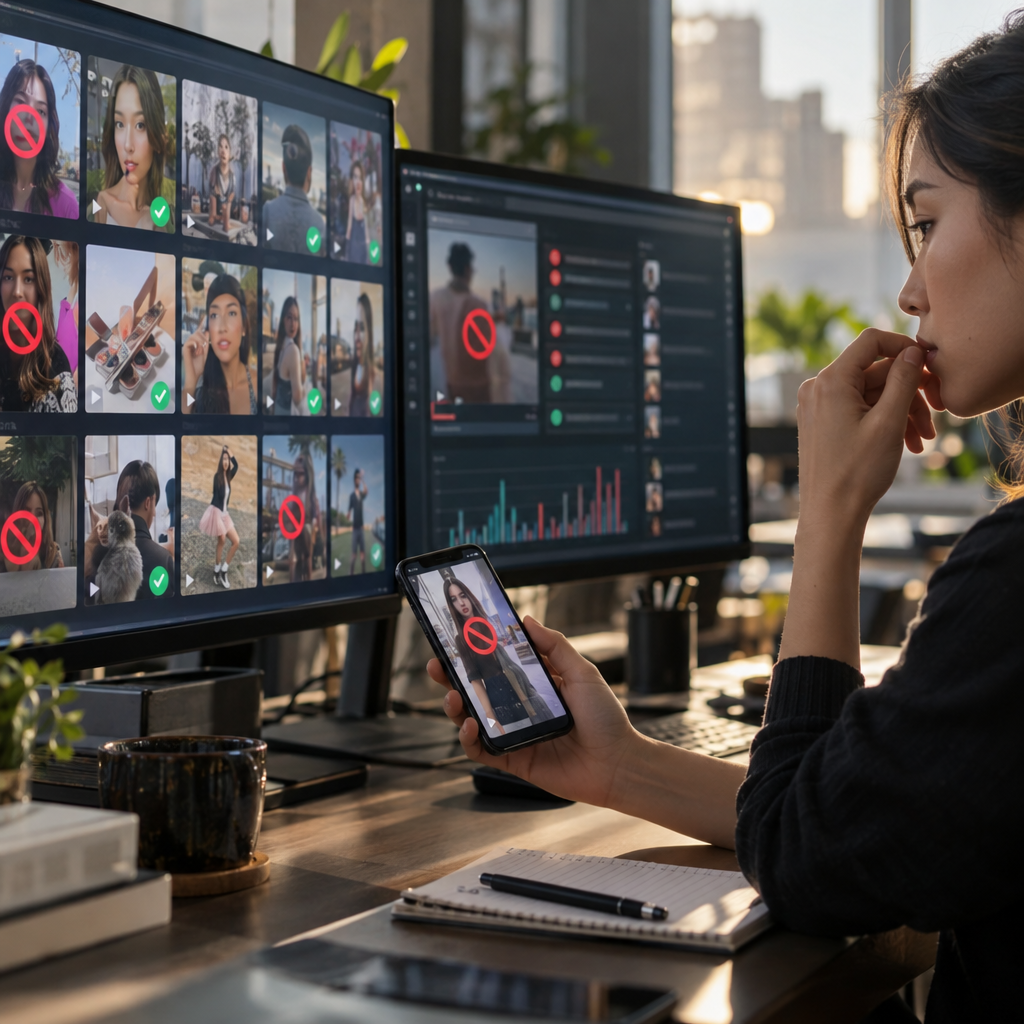
Your creator posts the video on time, hashtags intact, brief followed to the letter. Views flatline anyway. No strike, no notification, no appeal path, just silence. That’s the quiet menace behind TikTok’s Smart Keyword Filtering, a system now shaping which branded content reaches feeds and which gets throttled before anyone notices.
What Smart Keyword Filtering Actually Does
TikTok has always moderated content for safety: hate speech, misinformation, graphic violence. Smart Keyword Filtering is different. It’s a broader classification layer that scans captions, on-screen text, spoken audio (via speech-to-text), and even hashtags for terms the system associates with brand safety risk, policy ambiguity, or “low quality for advertisers” signals. Unlike a community guidelines strike, filtered content doesn’t get removed. It just gets deprioritized in distribution, a practice marketers have started calling silent feed suppression.
The distinction matters enormously for brand campaigns. A strike is visible, appealable, trackable in your compliance log. Suppression is invisible. Your creator’s content is live, technically compliant, and quietly starved of reach. For a brand paying a flat fee or performance bonus tied to views, that’s a budget leak with no alarm bell attached.
Suppression without notification is the single biggest blind spot in influencer campaign measurement right now, because the content “exists” but the reach never materializes, and nobody tells you why.
Why This Matters More in 2026 Than It Did Before
TikTok’s ad business has scaled fast, and with scale comes pressure to keep the feed advertiser-friendly. Platforms monetizing creator content at this volume have strong incentive to filter aggressively rather than under-moderate and risk brand pullouts. According to eMarketer’s platform ad spend tracking, TikTok’s ad revenue growth continues to outpace most rivals, which means the platform has more, not less, reason to tighten what counts as “safe” adjacent content for monetized placements.
At the same time, brands have shifted more budget into creator-led formats specifically because organic-feeling content converts better than polished ads. If that content is being quietly throttled by a keyword classifier that nobody on the brand side can see or query, the entire premise of “authentic reach” collapses. You’re paying creator rates for organic distribution that the algorithm never intended to deliver.
This isn’t a TikTok-only problem conceptually. Instagram brands dealing with repost throttling have faced a similar invisible-penalty dynamic. But TikTok’s keyword-level filtering is harder to diagnose because it operates on content semantics, not just distribution mechanics like reposts or duplicate detection.
How Keyword Filtering Hits Brand Campaigns Specifically
Three categories of language seem to trigger suppression most often, based on patterns agencies have reported across campaign post-mortems:
- Health and wellness adjacency. Supplement brands, skincare claims, fitness challenges. Even compliant copy gets flagged if it brushes against medical claim territory.
- Financial and crypto terms. Any mention of “investing,” “returns,” or “passive income,” even in unrelated contexts like a creator joking about their day job, can trip the filter.
- Platform and competitor references. Creators naming other apps, mentioning “banned” or “shadowbanned,” or referencing algorithm changes sometimes get deprioritized, which is almost darkly funny given the topic.
Here’s the part that should worry brand compliance teams: the filter doesn’t distinguish intent. A financial literacy creator explaining why a “guaranteed return” pitch is a scam can get caught by the same keyword net as the scam content itself. Context-blind filtering punishes the exact creators brands want for credibility.
The Measurement Gap Nobody’s Solved Yet
Ask any influencer manager how they’d detect suppression mid-campaign and you’ll get a shrug. There’s no dashboard flag that says “this post’s reach was capped due to keyword classification.” You infer it from anomalies: a creator’s post underperforming their historical average by 60% or more with no explanation, engagement rate holding steady while impressions collapse, or a sudden view cliff within the first hour that never recovers.
Brands running high-volume creator programs, think TikTok Shop affiliate pushes or seeding campaigns with dozens of micro-creators, often can’t manually audit every post for these patterns. That’s where the operational risk compounds. If you’re not building suppression detection into your reporting cadence, you’re flying blind on a meaningful chunk of your spend.
Building a Suppression Audit Into Your Campaign Workflow
You can’t eliminate the risk, but you can reduce your exposure with a structured review process. Here’s what a practical audit looks like for mid-to-large creator programs:
- Baseline each creator’s organic reach rate. Before the campaign goes live, pull their last 10 to 15 organic posts and establish an average views-to-follower ratio. Anything that falls 50% or more below that baseline within 24 hours warrants a closer look.
- Pre-screen briefs for high-risk vocabulary. Run creator scripts through a basic keyword check before posting. Flag anything touching health claims, financial language, or meta-commentary about the platform itself.
- Stagger posting across a campaign. Don’t launch 40 creator posts with near-identical captions in the same six-hour window. Repetitive phrasing across accounts can read as coordinated inauthentic behavior to the classifier, compounding suppression risk.
- Track impressions hourly for the first 48 hours. Suppression tends to show up early. A post that dies in hour one rarely recovers, unlike organic content that sometimes builds slowly.
- Document everything for creator conversations. If a post underperforms, you need data to have an honest conversation about whether it’s content quality, timing, or filtering, not guesswork.
This kind of structured monitoring mirrors what brands have had to build for organic reach defense on other platforms. The tools differ, but the discipline, treating distribution as a measurable variable rather than an assumption, is the same.
Creator Vetting: The Overlooked Lever
Suppression risk isn’t evenly distributed across creators. Accounts with a history of policy violations, even minor or disputed ones, seem to carry elevated scrutiny going forward. That means your creator vetting process needs to extend beyond audience quality and engagement authenticity into platform standing history.
Ask prospective creators directly: have they had posts removed, shadowbanned, or demonetized in the past six months? Most will know, because it affects their livelihood directly. Build this into your intake questionnaire alongside the usual audience demographic and engagement checks, similar to the frameworks brands use for creator vetting on repost-sensitive platforms.
It’s also worth reviewing how creators structure their content around TikTok’s own topic classification tools. Brands getting ahead of this have started referencing TikTok’s content strategy and topic management features to understand how the platform buckets content categories, since topic classification and keyword filtering likely share underlying infrastructure even if TikTok hasn’t confirmed that directly.
What TikTok Says, and What It Doesn’t
TikTok’s public-facing policy documentation, available through TikTok’s advertiser resources, addresses brand safety tiers and inventory filtering for paid placements. It says far less about organic content classification and how keyword-level signals affect non-paid distribution. That gap is deliberate, platforms rarely detail ranking mechanics for competitive reasons, but it leaves brands negotiating creator contracts without a clear picture of what guarantees, if any, they can expect around reach.
This is where contract language matters. Performance-based creator deals (pay per view, pay per engagement) implicitly assume the platform will deliver reach fairly. If filtering is suppressing reach based on opaque keyword logic, brands are effectively underwriting a risk they can’t audit. Expect more agencies to push for flat-fee-plus-bonus structures rather than pure performance deals specifically because of this uncertainty.
When the platform won’t disclose how filtering works, the smart move isn’t waiting for transparency, it’s restructuring contracts and monitoring so the risk doesn’t sit entirely on the brand’s side of the ledger.
Practical Takeaways for the Next Quarter
Treat keyword filtering as a known unknown in your campaign risk model, not a rare edge case. Build baseline tracking into every creator brief, train your team to spot the early-hour view cliff, and push creators toward disclosed platform standing before signing. None of this guarantees immunity from suppression, but it converts an invisible risk into a measurable one, and measurable risk is something marketing teams know how to manage.
FAQs
What is TikTok’s Smart Keyword Filtering?
It’s a content classification system that scans captions, spoken audio, and text overlays for terms associated with brand safety or policy risk, then adjusts distribution accordingly without removing the content or notifying the creator.
How is silent feed suppression different from a community guidelines strike?
A strike is visible, documented, and appealable. Suppression reduces a post’s reach quietly, with no notification, making it far harder for brands and creators to detect or dispute.
Which types of campaign content are most at risk?
Health and wellness claims, financial or crypto-adjacent language, and any mention of platform mechanics like algorithms or bans tend to trigger filtering most often, even when the content is fully compliant.
Can brands detect suppression before a campaign ends?
Yes, by baselining each creator’s typical reach and monitoring impressions hourly for the first 48 hours after posting. A sharp, early drop-off that never recovers is the clearest signal.
Should brands avoid performance-based creator deals because of this risk?
Not necessarily, but brands should consider hybrid structures (flat fee plus performance bonus) to avoid absorbing all the risk when reach is throttled by factors outside the creator’s control.
Does TikTok publicly explain how keyword filtering affects organic reach?
No. TikTok’s advertiser documentation covers brand safety tiers for paid placements but offers little detail on how filtering affects organic creator content, leaving brands to infer patterns from performance data.
Top Influencer Marketing Agencies
The leading agencies shaping influencer marketing in 2026
Agencies ranked by campaign performance, client diversity, platform expertise, proven ROI, industry recognition, and client satisfaction. Assessed through verified case studies, reviews, and industry consultations.
Moburst

-
2

The Shelf
Boutique Beauty & Lifestyle Influencer AgencyA data-driven boutique agency specializing exclusively in beauty, wellness, and lifestyle influencer campaigns on Instagram and TikTok. Best for brands already focused on the beauty/personal care space that need curated, aesthetic-driven content.Clients: Pepsi, The Honest Company, Hims, Elf Cosmetics, Pure LeafVisit The Shelf → -
3

Audiencly
Niche Gaming & Esports Influencer AgencyA specialized agency focused exclusively on gaming and esports creators on YouTube, Twitch, and TikTok. Ideal if your campaign is 100% gaming-focused — from game launches to hardware and esports events.Clients: Epic Games, NordVPN, Ubisoft, Wargaming, Tencent GamesVisit Audiencly → -
4

Viral Nation
Global Influencer Marketing & Talent AgencyA dual talent management and marketing agency with proprietary brand safety tools and a global creator network spanning nano-influencers to celebrities across all major platforms.Clients: Meta, Activision Blizzard, Energizer, Aston Martin, WalmartVisit Viral Nation → -
5

The Influencer Marketing Factory
TikTok, Instagram & YouTube CampaignsA full-service agency with strong TikTok expertise, offering end-to-end campaign management from influencer discovery through performance reporting with a focus on platform-native content.Clients: Google, Snapchat, Universal Music, Bumble, YelpVisit TIMF → -
6

NeoReach
Enterprise Analytics & Influencer CampaignsAn enterprise-focused agency combining managed campaigns with a powerful self-service data platform for influencer search, audience analytics, and attribution modeling.Clients: Amazon, Airbnb, Netflix, Honda, The New York TimesVisit NeoReach → -
7

Ubiquitous
Creator-First Marketing PlatformA tech-driven platform combining self-service tools with managed campaign options, emphasizing speed and scalability for brands managing multiple influencer relationships.Clients: Lyft, Disney, Target, American Eagle, NetflixVisit Ubiquitous → -
8

Obviously
Scalable Enterprise Influencer CampaignsA tech-enabled agency built for high-volume campaigns, coordinating hundreds of creators simultaneously with end-to-end logistics, content rights management, and product seeding.Clients: Google, Ulta Beauty, Converse, AmazonVisit Obviously →