


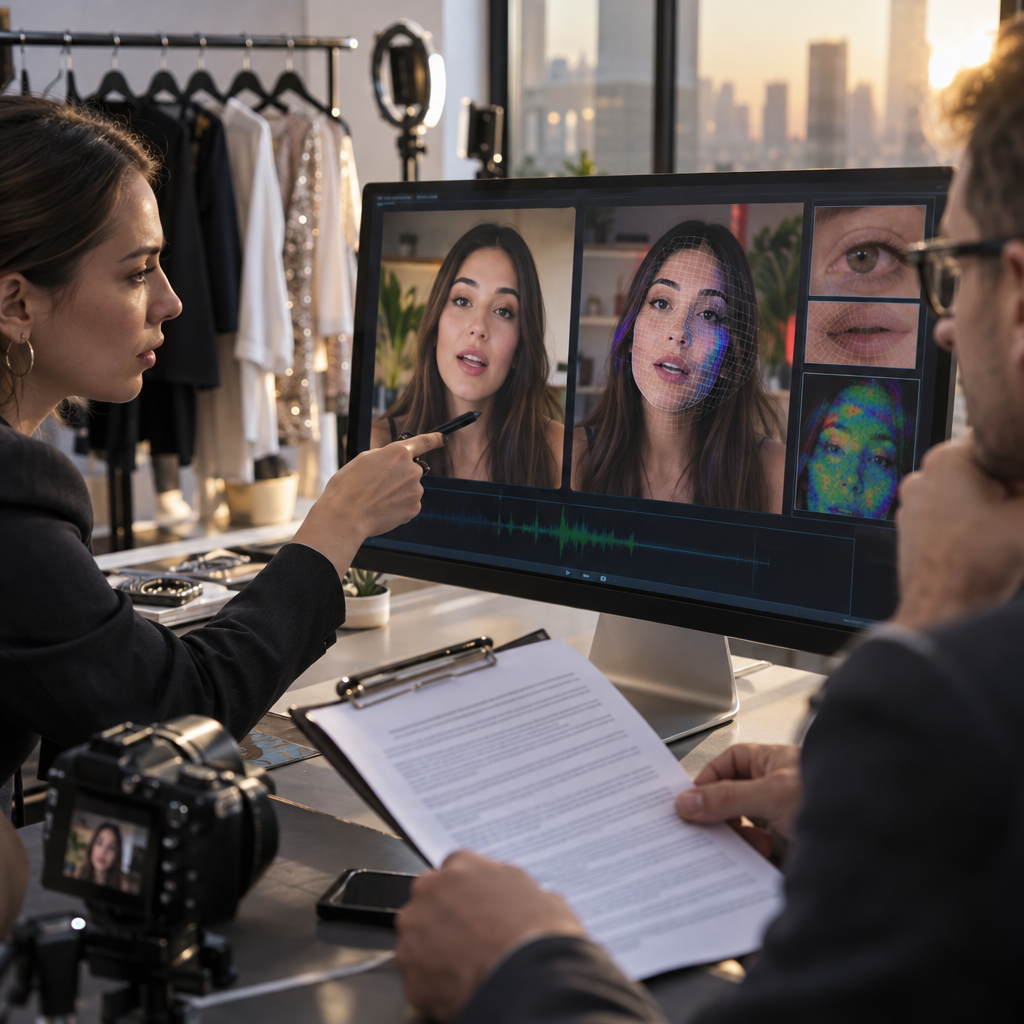
One synthetic video of a “trusted” creator endorsing a crypto scam can erase years of brand equity in under 48 hours. By the time legal drafts a cease and desist, the clip has already been screenshotted, re-uploaded, and monetized by accounts you’ve never heard of. That’s the reality driving a surge in deepfake detection tools for influencer content, and the vendor landscape has gotten crowded, confusing, and in some cases, oversold. This evaluation cuts through the noise for brand and agency teams who need to choose fast, but choose right.
Why This Problem Got Urgent, Not Just Trendy
Generative video tools have crossed a quality threshold. Lip sync, voice cloning, and facial reenactment no longer require a VFX team, just a laptop and a few minutes of source footage scraped from a creator’s public feed. Fraud rings have noticed. Finance and crypto verticals have been hit hardest, with fabricated endorsements from recognizable creators used to drive scam traffic.
The operational risk isn’t theoretical anymore. If a brand’s ambassador appears in a fake ad, the brand often gets dragged into the cleanup, the press cycle, and sometimes the regulatory inquiry, even when it had nothing to do with the fake. That’s a liability problem, not just a reputational one.
Detection speed matters more than detection accuracy in isolation. A 98% accurate tool that flags content 72 hours late is less useful than a 90% accurate tool that flags it in under an hour, because virality doesn’t wait for your review queue.
What “Detection” Actually Means in Practice
Vendors in this space aren’t selling one thing. They’re selling at least three distinct capabilities, often bundled, sometimes not:
- Content authentication: analyzing a specific video or audio clip to assess the probability it was synthetically generated or manipulated.
- Web monitoring and discovery: continuously scanning platforms, ad networks, and the open web for unauthorized use of a creator’s or spokesperson’s likeness.
- Provenance verification: confirming that content originated from an approved source using cryptographic watermarking or metadata standards, rather than guessing after the fact.
Most brands actually need all three working together. A tool that only authenticates clips you already found does nothing if you never find the fake in the first place. This is the same lesson we’ve seen play out in AI content moderation platforms for UGC, where detection without discovery just means you’re reacting to complaints instead of catching problems upstream.
The Accuracy Problem Nobody Wants to Advertise
Here’s the uncomfortable truth: no commercial deepfake detector is close to perfect, and vendors rarely lead with their false positive rates. Academic benchmarking from groups tracking generative media has repeatedly shown that detection models trained on one generation technique (say, a specific diffusion model) degrade sharply against newer or less common generators. It’s a cat and mouse dynamic, and the mouse is currently winning on novelty.
Ask any vendor you’re evaluating for their performance against content generated by tools released in the last two quarters, not their marketing-deck numbers from older benchmarks. If they can’t answer, that’s a signal.
This mirrors a pattern we flagged in AI sentiment analysis tools and false positive risk: any classifier operating at scale will produce errors, and the real evaluation criteria is how the vendor handles the error, not whether errors exist.
Vendor Categories: Who’s Actually Building What
The market breaks into roughly four camps, and knowing which camp a vendor belongs to tells you what you’re actually buying.
Forensic analysis specialists focus on frame-level and audio-level artifacts, things like unnatural blink patterns, inconsistent lighting on skin texture, or spectral anomalies in cloned voices. These tools are strong on individual asset review but weak on proactive discovery. They’re best deployed as the verification layer after a monitoring tool flags something.
Brand protection and web monitoring firms that have extended into synthetic media detection bring crawling infrastructure built originally for counterfeit and trademark enforcement. Their strength is coverage breadth across ad networks, marketplaces, and social platforms. Their weakness: the detection models bolted onto that infrastructure are sometimes third-party licensed rather than purpose-built, which can mean lagging accuracy on newer generation methods.
Platform-native tools built directly into social networks offer convenience but limited scope. They typically only catch content on their own platform, which is a problem when fakes spread across TikTok, YouTube Shorts, and programmatic display simultaneously.
Provenance and watermarking consortiums take a different approach entirely: rather than detecting fakes after the fact, they embed verifiable origin data into authentic content at creation. The Coalition for Content Provenance and Authenticity (C2PA) standard is the most notable effort here, and adoption among camera makers and editing software is growing, though it’s still far from universal among creators.
Evaluation Criteria That Actually Predict Vendor Fit
Skip the feature checklist for a minute. Here’s what separates a vendor that performs in a live crisis from one that just performs in a sales demo.
- Time to detection: measured from upload to alert, not from scan initiation. Ask for median and 95th percentile numbers, not averages, since averages hide the long tail.
- Cross-platform coverage: does the tool monitor paid media placements, not just organic posts? Fraudulent ads running through legitimate ad networks are a growing vector.
- Audio deepfake capability: voice cloning scams are rising faster than video fakes in some categories because they’re cheaper to produce. A tool that only analyzes video is only solving half the problem.
- Chain of custody for evidence: if you need to pursue takedowns or legal action, can the tool produce documentation that holds up with platforms and, if necessary, in court?
- False positive handling workflow: what happens when the tool flags a legitimate creator’s authentic content? Is there a fast human review path, or does it sit in a queue for days while the creator’s account gets suspended?
- Integration with existing rights and licensing systems: detection is more useful when it’s cross-referenced against your actual approved creator roster and licensing terms, rather than operating as a standalone silo.
That last point connects directly to infrastructure many brands already have in place. If your team is managing creator agreements through a UGC rights management platform, the detection tool should ideally plug into that system so flagged content gets cross-checked against known, licensed assets automatically instead of creating a parallel manual process.
Pricing Models and the Hidden Cost of Scale
Most vendors price on a combination of monitored asset volume and alert tier, which sounds reasonable until you realize that pricing scales with exactly the thing you can’t predict: how much fraudulent content targeting your brand will appear next quarter. Enterprise contracts in this space commonly start in the mid five figures annually for meaningful coverage, climbing fast once you add audio analysis, real-time alerting, and multi-market monitoring.
Budget for the review labor too. Even strong detection tools generate flags that need human judgment, and understaffing that review function is one of the most common reasons brands abandon detection tools within the first year, not because the tool failed, but because nobody was resourced to act on what it found.
Industry data on brand safety spend has consistently shown that detection technology costs are dwarfed by the operational cost of response. According to research tracked by Statista, brand safety and content verification spending has climbed steadily as marketers shift budget from reactive crisis management to proactive monitoring infrastructure.
Compliance Angle: Why Legal and Marketing Need to Share This Budget Line
Deepfake detection sits at an awkward intersection between marketing operations and legal risk, which means it often gets stuck in budget limbo while each department assumes the other owns it. Don’t let that happen. The Federal Trade Commission has signaled increasing scrutiny of AI-generated endorsements and deceptive synthetic media, and regulatory bodies like the ICO in the UK have published guidance touching on synthetic media and personal likeness rights. Brands that can demonstrate active monitoring and rapid response protocols are in a materially better position if regulators or platforms come asking questions.
Treat the vendor contract as a shared line item between brand safety, legal, and influencer marketing teams. Siloed ownership is how good tools end up underused.
What to Pilot Before You Commit
Run a 60 to 90 day pilot with real creator assets from your actual roster, not vendor-supplied sample data. Specifically:
- Submit a mix of authentic content and known synthetic samples (many vendors can provide test fakes, or you can use publicly documented deepfake examples) to measure true accuracy against your content types.
- Test the alert-to-human-review turnaround with your actual team, not the vendor’s success team doing a guided demo.
- Confirm the tool’s coverage includes the specific platforms where your influencer spend concentrates, whether that’s TikTok, Instagram Reels, or YouTube.
- Check how the vendor handles a false positive against a top creator’s content. This is the scenario that will test the relationship most.
This pilot discipline mirrors the approach we recommended for AI discovery signal scoring tools: vendor claims and production performance are frequently two different things, and the only way to know which you’re getting is to test against your own data before signing a multi-year contract.
Next Step
Don’t buy detection coverage for the whole internet when you only need coverage for the handful of creators and spokespeople carrying your brand’s name. Scope the pilot narrow, measure real response time, and expand only after the vendor proves it can catch a fake faster than your audience can screenshot it.
Frequently Asked Questions
What is deepfake detection software for influencer marketing?
It’s technology that analyzes video, image, and audio content to determine the likelihood it was synthetically generated or manipulated, typically combined with web monitoring to find unauthorized or fraudulent uses of a creator’s likeness across platforms and ad networks.
How accurate are current deepfake detection tools?
Accuracy varies significantly based on the generation method used to create the fake. Tools perform well against known, widely studied generation techniques but often degrade against newer or less common methods, which is why vendors should be evaluated on recent performance data, not older benchmarks.
Can these tools detect voice cloning as well as video deepfakes?
Some can, but not all. Audio deepfake detection requires separate analysis capability from video forensics, and brands should confirm a vendor’s audio detection is a core feature rather than an afterthought, especially since voice cloning scams are growing quickly.
Who should own the budget for deepfake detection tools, marketing or legal?
Both, ideally through a shared budget line. Marketing typically owns the monitoring relationship day to day, while legal needs visibility for takedown action and regulatory compliance, so siloed ownership tends to leave the tool underused.
How much do deepfake detection platforms typically cost?
Enterprise-grade coverage commonly starts in the mid five figures annually and scales with monitored asset volume, platform coverage, and added capabilities like real-time alerting or audio analysis.
What is content provenance and how does it differ from detection?
Provenance verifies content origin at the point of creation using embedded metadata or watermarking, such as the C2PA standard, rather than analyzing content after the fact to guess whether it’s fake. The two approaches work best in combination.
Top Influencer Marketing Agencies
The leading agencies shaping influencer marketing in 2026
Agencies ranked by campaign performance, client diversity, platform expertise, proven ROI, industry recognition, and client satisfaction. Assessed through verified case studies, reviews, and industry consultations.
Moburst

-
2

The Shelf
Boutique Beauty & Lifestyle Influencer AgencyA data-driven boutique agency specializing exclusively in beauty, wellness, and lifestyle influencer campaigns on Instagram and TikTok. Best for brands already focused on the beauty/personal care space that need curated, aesthetic-driven content.Clients: Pepsi, The Honest Company, Hims, Elf Cosmetics, Pure LeafVisit The Shelf → -
3

Audiencly
Niche Gaming & Esports Influencer AgencyA specialized agency focused exclusively on gaming and esports creators on YouTube, Twitch, and TikTok. Ideal if your campaign is 100% gaming-focused — from game launches to hardware and esports events.Clients: Epic Games, NordVPN, Ubisoft, Wargaming, Tencent GamesVisit Audiencly → -
4

Viral Nation
Global Influencer Marketing & Talent AgencyA dual talent management and marketing agency with proprietary brand safety tools and a global creator network spanning nano-influencers to celebrities across all major platforms.Clients: Meta, Activision Blizzard, Energizer, Aston Martin, WalmartVisit Viral Nation → -
5

The Influencer Marketing Factory
TikTok, Instagram & YouTube CampaignsA full-service agency with strong TikTok expertise, offering end-to-end campaign management from influencer discovery through performance reporting with a focus on platform-native content.Clients: Google, Snapchat, Universal Music, Bumble, YelpVisit TIMF → -
6

NeoReach
Enterprise Analytics & Influencer CampaignsAn enterprise-focused agency combining managed campaigns with a powerful self-service data platform for influencer search, audience analytics, and attribution modeling.Clients: Amazon, Airbnb, Netflix, Honda, The New York TimesVisit NeoReach → -
7

Ubiquitous
Creator-First Marketing PlatformA tech-driven platform combining self-service tools with managed campaign options, emphasizing speed and scalability for brands managing multiple influencer relationships.Clients: Lyft, Disney, Target, American Eagle, NetflixVisit Ubiquitous → -
8

Obviously
Scalable Enterprise Influencer CampaignsA tech-enabled agency built for high-volume campaigns, coordinating hundreds of creators simultaneously with end-to-end logistics, content rights management, and product seeding.Clients: Google, Ulta Beauty, Converse, AmazonVisit Obviously →