


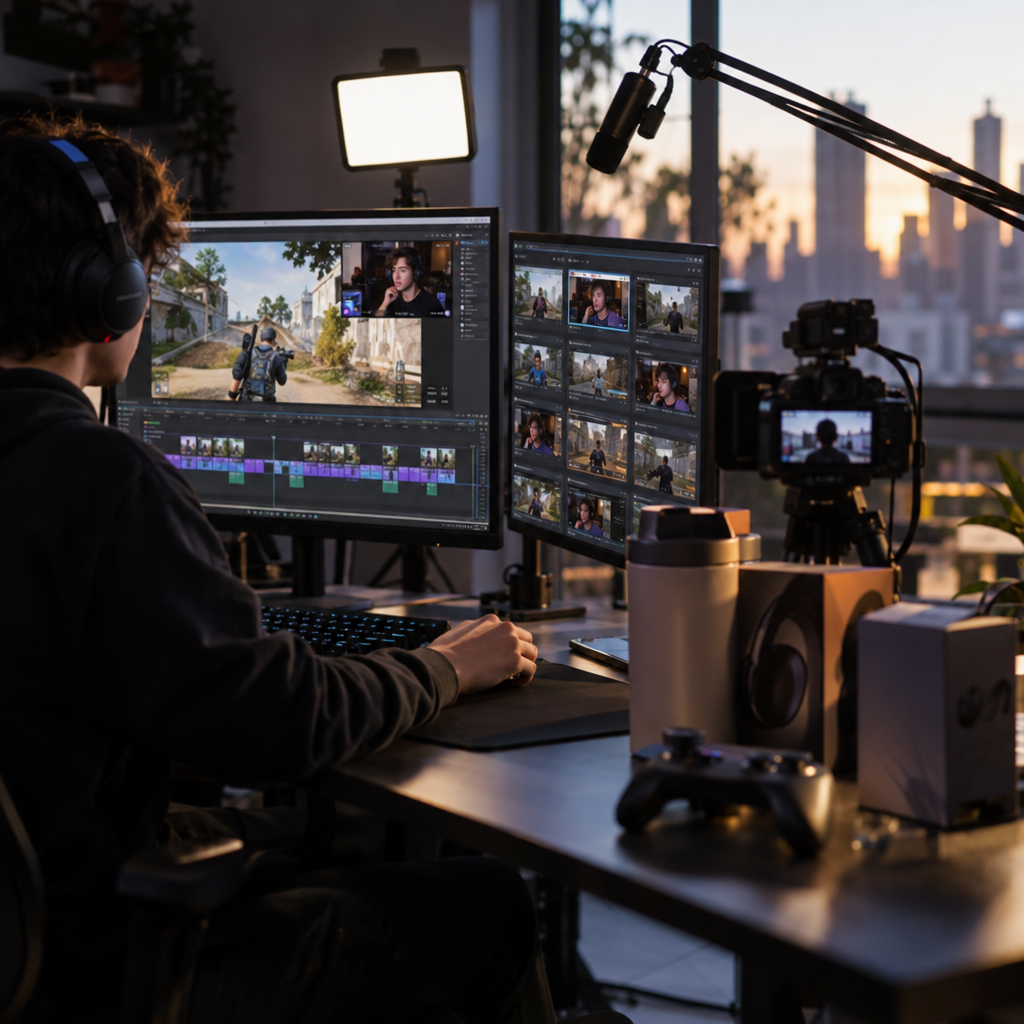
Twitch ad blocks average six minutes per hour on partner channels. YouTube live ad breaks interrupt viewers mid sentence. So creators and brands found a workaround: cut the stream into clips, post them natively, and skip the ad break entirely. Stream clipping has quietly become one of the fastest growing distribution tactics in influencer marketing, and most legal and compliance teams haven’t caught up to what it means for brand deals.
What Stream Clipping Actually Is
Stream clipping takes long form live content (gaming streams, podcasts, webinars, live shopping events) and chops it into short, shareable segments. These clips get posted to TikTok, YouTube Shorts, Instagram Reels, and X, often within minutes of the original broadcast. Some clipping happens manually by community members. Increasingly, it’s automated: AI tools scan a stream for high engagement moments (laughter, chat spikes, a product mention) and auto generate the cut.
The appeal for creators is obvious. Clips route around mid roll ad interruptions, feed hungry short form algorithms, and drive viewers back to the main channel. For brands, it’s a different kind of appeal: a sponsorship mention that would otherwise get buried in a three hour stream suddenly has a second life as a 30 second clip with its own distribution curve.
Why Ad Restrictions Are Pushing Brands Toward Clips
Platform ad policy has gotten stricter, not looser. YouTube limits ad density on live content and restricts monetization in certain categories. Twitch’s ad load has drawn creator backlash for years. Meanwhile, entire verticals (gambling, alcohol, crypto, supplements, political advocacy) face outright ad restrictions or heavy review on paid placements across most major platforms.
Brands in those categories have been hunting for alternative distribution for a while. Stream clipping offers a path that looks like organic content rather than a paid placement, because technically, in many cases, it is organic content made by a third party clipper, not a brand-run ad unit.
A sponsorship mention buried at minute 47 of a stream is worthless. The same mention clipped and reposted can rack up more views than the original broadcast, without touching a single ad unit.
This is especially visible in gaming and iGaming adjacent categories, where clipping farms have turned ad category restrictions into a content supply chain. Influencers Time covered this shift in depth in its look at iGaming clipping farms, which found entire operations built around harvesting stream moments and redistributing them at scale, often faster than brand teams can track where their name is showing up.
The Growth Numbers Behind the Trend
Short form video already dominates marketer attention. Influencers Time’s own research found short form video capturing 77 percent of marketer ROI votes in recent surveys, and YouTube Shorts alone has become a volume play that’s reshaping ad economics, as detailed in coverage of Shorts scale creating cheaper reach windows. Clipping sits right at the intersection of those two trends: it feeds the short form appetite using content that was never produced for short form in the first place.
Platform algorithm changes are reinforcing the behavior too. The recent wave of algorithm updates rewarding depth over reach has made clippers more selective, favoring segments with genuine engagement signals rather than just chopping a stream at random intervals. That selectivity is exactly what makes clips attractive as a brand distribution channel: the content that gets clipped tends to be the content that was already resonating.
Where This Gets Risky for Brands
Here’s the part legal teams need to sit with. Clipping operates in a gray zone on three fronts: usage rights, disclosure, and brand safety.
- Usage rights. Who owns a clip pulled from a sponsored stream segment? If your contract with the streamer covers “the stream,” does it cover derivative clips made by third parties, by the streamer’s own team, or by an AI clipping tool the streamer licenses? Most influencer agreements written even two years ago don’t address this cleanly.
- Disclosure. The FTC requires clear and conspicuous disclosure of material connections in endorsements, and that obligation doesn’t disappear because the content got re-cut by someone else. A clip that strips the original “#ad” tag or sponsor card is a disclosure failure waiting to happen, and it’s the brand’s problem as much as the creator’s, per FTC endorsement guidance.
- Brand safety. Clippers select for engagement, not for brand fit. A clip optimized for shock value or controversy can attach your logo to a moment your team never approved, on a channel you’ve never vetted.
This is the same pattern Influencers Time flagged in its coverage of UGC moderation becoming core to brand risk management: as more content gets created outside brand control, moderation and monitoring stop being nice to have and become operational necessities.
Building a Clipping Strategy Without Losing Control
Brands don’t need to avoid clipping. They need to govern it. A few practical moves:
- Update contracts now. Add explicit language covering derivative content, including AI generated clips, and specify whether disclosure tags must persist through any edit or re-cut.
- Work with vetted clipping networks. Rather than hoping fan clippers behave, some brands now contract directly with clipping agencies who guarantee disclosure compliance and content review before publishing. This mirrors the broader trend of vetting vendors harder as the creator supply chain consolidates.
- Set monitoring in place. Use social listening or rights management tools to track where your sponsored content is being clipped and reposted. You can’t govern what you can’t see.
- Pair clips with performance tracking. Views on a clip mean little without a connection to actual outcomes. The broader industry shift toward pairing attention with purchase data applies directly here: track whether clipped content drives traceable conversions, not just view counts.
Some brands are also renegotiating how they pay for the format entirely, treating clip rights as a separate line item rather than an afterthought bundled into the original streaming deal. That approach tracks with the shift toward production fee deals restructuring usage rights costs, where brands pay upfront for broader usage clarity instead of negotiating rights after the fact.
Measurement Is the Weak Link
Attribution gets messy fast. A stream clip might get reposted by a dozen accounts, each with different follower counts, different captions, and wildly inconsistent disclosure. Standard influencer reporting dashboards weren’t built for this kind of fragmented, derivative distribution. Platforms like Sprout Social and listening tools can help trace reposts, but most brand teams are still reconciling clip performance manually, which doesn’t scale.
Expect this to be a growth area for measurement vendors over the next year. Until then, treat clip performance data with some skepticism. Aggregate view counts across dozens of reposts look impressive in a slide deck, but they rarely map cleanly to reach, frequency, or actual purchase intent. The caution here echoes what Influencers Time reported when examining why a widely cited 77 percent ROI stat is sentiment, not proof: big numbers need scrutiny before they justify budget.
What This Means for Platform Relationships
Platforms aren’t blind to clipping. YouTube’s own creator and ad policy guidance continues to evolve around monetization of derivative and repurposed content, and enforcement has tightened in categories where ad restrictions originally pushed brands toward clipping in the first place. Meta’s advertising standards, available through Meta Business, apply the same restricted category rules to organic branded content as they do to paid ads in several regions, closing some of the loophole brands thought they’d found.
Translation: clipping is a workaround today, but it’s not a permanent loophole. Platforms update policy in response to exactly this kind of behavior pattern, usually within a year or two of it becoming mainstream enough to show up in earnings calls.
Next Step for Brand Teams
Audit every active creator contract for derivative content language before your next campaign cycle, and if it’s silent on clipping rights and disclosure persistence, fix it now rather than after a clip goes viral without your sponsor tag attached.
FAQs
What is stream clipping in influencer marketing?
Stream clipping is the practice of cutting short, high engagement segments out of longer live streams or broadcasts and redistributing them as standalone short form content on platforms like TikTok, YouTube Shorts, and Instagram Reels.
Why are brands using stream clipping to get around ad restrictions?
Many platforms restrict paid ad placements in categories like gambling, alcohol, and crypto. Clips of sponsored stream mentions often distribute as organic content rather than paid ads, letting brand mentions reach audiences without triggering the same ad review process.
Is stream clipping legal or compliant with FTC rules?
Clipping itself isn’t illegal, but disclosure obligations under FTC endorsement guidance still apply. If a clip strips out sponsorship disclosure that existed in the original stream, both the creator and the brand can face compliance exposure.
Who owns the rights to a clipped piece of sponsored content?
It depends entirely on the original contract. Many older influencer agreements don’t address derivative or AI generated clips, which is why brands are now updating contract language to explicitly cover clip rights and usage.
How can brands track where their sponsored content is being clipped?
Social listening tools and rights management platforms can help trace reposts and derivative clips, though full attribution remains difficult because clips spread across many accounts with inconsistent formatting and disclosure.
Top Influencer Marketing Agencies
The leading agencies shaping influencer marketing in 2026
Agencies ranked by campaign performance, client diversity, platform expertise, proven ROI, industry recognition, and client satisfaction. Assessed through verified case studies, reviews, and industry consultations.
Moburst

-
2

The Shelf
Boutique Beauty & Lifestyle Influencer AgencyA data-driven boutique agency specializing exclusively in beauty, wellness, and lifestyle influencer campaigns on Instagram and TikTok. Best for brands already focused on the beauty/personal care space that need curated, aesthetic-driven content.Clients: Pepsi, The Honest Company, Hims, Elf Cosmetics, Pure LeafVisit The Shelf → -
3

Audiencly
Niche Gaming & Esports Influencer AgencyA specialized agency focused exclusively on gaming and esports creators on YouTube, Twitch, and TikTok. Ideal if your campaign is 100% gaming-focused — from game launches to hardware and esports events.Clients: Epic Games, NordVPN, Ubisoft, Wargaming, Tencent GamesVisit Audiencly → -
4

Viral Nation
Global Influencer Marketing & Talent AgencyA dual talent management and marketing agency with proprietary brand safety tools and a global creator network spanning nano-influencers to celebrities across all major platforms.Clients: Meta, Activision Blizzard, Energizer, Aston Martin, WalmartVisit Viral Nation → -
5

The Influencer Marketing Factory
TikTok, Instagram & YouTube CampaignsA full-service agency with strong TikTok expertise, offering end-to-end campaign management from influencer discovery through performance reporting with a focus on platform-native content.Clients: Google, Snapchat, Universal Music, Bumble, YelpVisit TIMF → -
6

NeoReach
Enterprise Analytics & Influencer CampaignsAn enterprise-focused agency combining managed campaigns with a powerful self-service data platform for influencer search, audience analytics, and attribution modeling.Clients: Amazon, Airbnb, Netflix, Honda, The New York TimesVisit NeoReach → -
7

Ubiquitous
Creator-First Marketing PlatformA tech-driven platform combining self-service tools with managed campaign options, emphasizing speed and scalability for brands managing multiple influencer relationships.Clients: Lyft, Disney, Target, American Eagle, NetflixVisit Ubiquitous → -
8

Obviously
Scalable Enterprise Influencer CampaignsA tech-enabled agency built for high-volume campaigns, coordinating hundreds of creators simultaneously with end-to-end logistics, content rights management, and product seeding.Clients: Google, Ulta Beauty, Converse, AmazonVisit Obviously →