


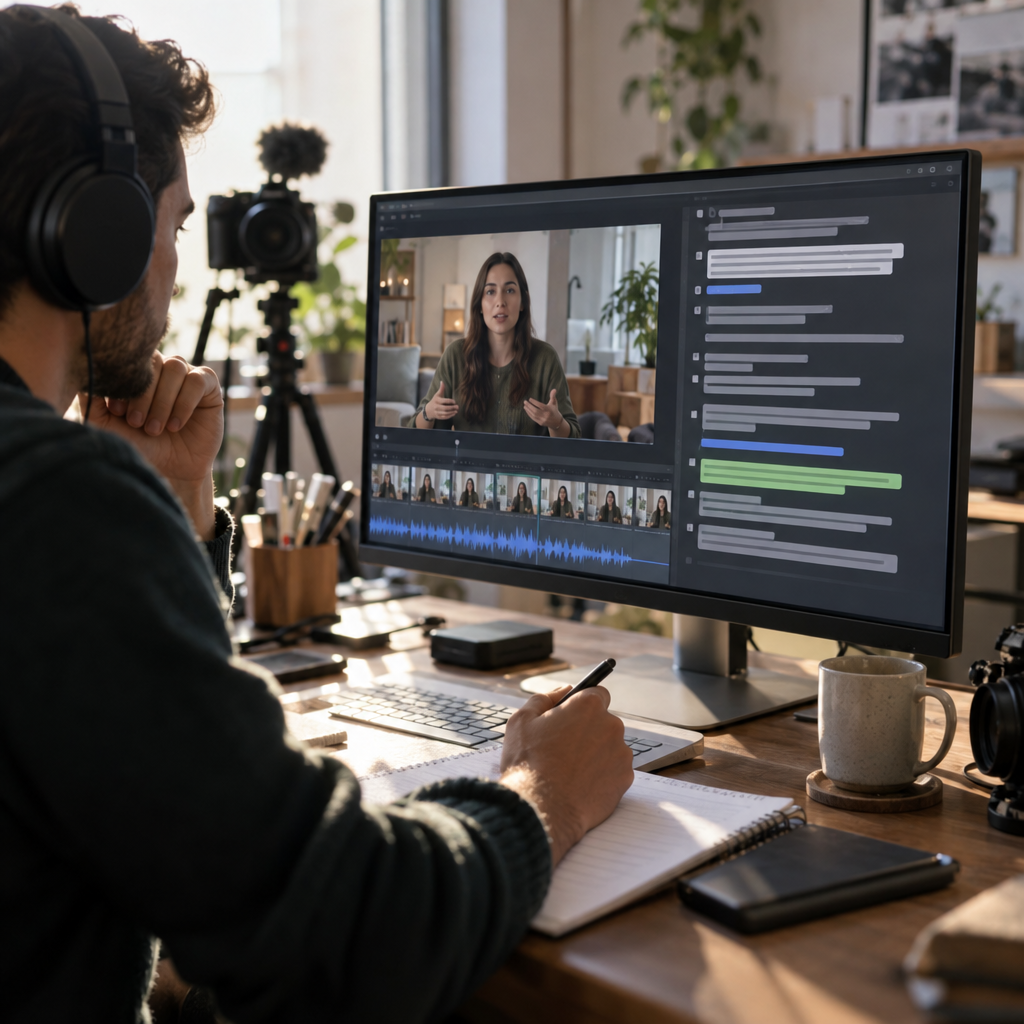
Eighty five percent of video is watched with the sound off in feed environments, according to Sprout Social research on social video consumption. If your captions are wrong, late, or missing entirely, you are not losing a nice-to-have accessibility feature. You are losing the majority of your audience before the hook even lands. Evaluating AI transcription and captioning tools for multi platform creator video is no longer a back office task. It is a performance lever.
Most brand and agency teams pick a captioning tool once, during onboarding, and never revisit the decision. That is a mistake. Platform requirements shift, accuracy varies wildly by accent and niche vocabulary, and the cost model that looked cheap at 50 videos a month looks brutal at 500. Here is how to actually evaluate these tools instead of defaulting to whatever your editor already has a login for.
Why Accuracy Claims Are Mostly Marketing
Every transcription vendor publishes an accuracy number. Ninety five percent. Ninety eight percent. Near human. These figures are almost always measured against clean studio audio with a single speaker and no background noise. That is not creator content. Creator content has overlapping speakers, kitchen noise, car wind, ring light hum, and slang that no general language model was trained on.
Run your own test before signing anything. Pull ten representative clips from your actual creator roster, the messy ones, not the polished brand deal footage, and run them through each shortlisted tool. Count the actual word error rate yourself. You will find that tools performing at 97% on a benchmark dataset can drop to the high 80s on a beauty creator talking fast with product names and regional slang mixed in.
A five point drop in transcription accuracy on product-heavy content can mean every third sponsored mention gets mangled or omitted, which directly undermines FTC disclosure compliance and brand name attribution.
Niche vocabulary is the real differentiator. Gaming terminology, pharma and supplement claims language, finance jargon, these all trip up general purpose models. If your vertical has specialized terms, ask vendors directly whether they support custom dictionaries or glossary training. Most enterprise tiers do. Most self-serve tiers do not, and that gap matters more than the headline accuracy percentage.
Multi Language Support Is Where Tools Diverge Fast
If your creator program runs across US, UK, LATAM, and Southeast Asia, your captioning tool needs to handle code switching gracefully, not just translate between two clean monolingual tracks. A creator who mixes English and Spanish mid-sentence, which is extremely common in bilingual creator content, will break tools built for single-language detection. Test this specifically if your audience spans multiple regions. Do not assume because a tool lists forty supported languages that it handles mixed-language speech within a single clip.
Speed Versus Review: The Real Operational Tradeoff
Automated captioning tools now generate transcripts in near real time, often faster than a human editor can even watch the raw footage. That speed is genuinely valuable when you are turning around time-sensitive content, event coverage, or trend-jacking clips where a six hour delay kills relevance. But speed without a review layer introduces risk, particularly around brand names, claims language, and disclosure phrasing.
The teams getting this right are not choosing between fully automated and fully manual. They are building a tiered workflow: AI generates the first pass, a lightweight human review catches claims and compliance language, and only flagged clips get full manual correction. This mirrors the approach many ops teams use for content moderation review gaps, where full automation looks efficient until the error cases pile up in legal’s inbox.
- High volume, low risk content: fully automated captioning is usually fine. Lifestyle b-roll, unboxing filler, low-stakes entertainment clips.
- Sponsored or claims-heavy content: route through human review every time. A mistranscribed supplement claim or an omitted “#ad” tag is a compliance exposure, not a typo.
- Multi platform repurposing: re-verify captions after reformatting. A caption that was accurate at 16:9 can shift timing or truncate when reflowed into a 9:16 burned-in format.
Platform Native Requirements Nobody Reads Until It’s Too Late
TikTok, Instagram Reels, YouTube Shorts, and LinkedIn video all have different caption file specifications, different character limits per line, and different default styling for auto-generated captions. A tool that exports clean SRT files for YouTube might choke when you need burned-in, stylized captions matching a specific brand font for a TikTok spark ad.
Before you commit to a tool, map your actual distribution footprint. If 80% of your creator video ends up as paid social via creator whitelisting arrangements, check how the captioning tool integrates with your whitelisting and media buy testing workflow. Captions that look fine organically can look amateurish or get cut off once a platform applies its own ad unit cropping.
Check these platform-specific details directly against TikTok’s ads resources and Meta’s business platform documentation, since specs change more often than most captioning vendors update their export templates.
Cost Models That Scale Honestly (Or Don’t)
Per-minute pricing looks simple until you run the math at actual creator program volume. A tool charging $0.25 per minute seems trivial for a single 60 second clip. At 400 clips a month averaging 90 seconds each, that is roughly $150 just for transcription, before translation add-ons, before speaker diarization, before the premium tier required for custom vocabulary.
Watch for these cost traps specifically:
- Translation as a separate line item. Some tools bundle transcription and translation, others charge per target language, which compounds fast across a multi-region program.
- Export format gating. Burned-in caption styling, custom fonts, or branded templates are often locked behind the top pricing tier.
- Storage and retention limits. Some platforms archive transcripts for compliance and dispute resolution, others delete after thirty days, which matters if you need to prove disclosure language existed in a creator contract dispute.
Run a twelve month volume projection, not a current month snapshot, before signing an annual contract. Creator programs tend to scale output faster than teams anticipate, and caption costs scale with it linearly in most pricing models.
Compliance Is the Quiet Reason This Decision Matters
Captions are not just an accessibility and engagement feature. They are increasingly a compliance record. If a regulator or platform trust and safety team asks whether a sponsored post disclosed its paid relationship clearly, an accurate, timestamped transcript is your evidence. A garbled or missing caption is a liability, not a neutral failure.
This connects directly to broader disclosure obligations under FTC endorsement guidelines, which require clear and conspicuous disclosure regardless of whether the audience is watching with sound on or off. If your caption tool drops “#ad” or “#sponsored” from an auto-generated overlay because it treated the hashtag as noise, that is a real exposure, not a cosmetic bug.
Teams managing this at scale are increasingly folding caption accuracy checks into the same governance layer they use for compliance at scale across their creator ops stack, rather than treating captioning as a disconnected post-production step. It should live in the same audit trail as contracts and content approvals, not sit off to the side in an editor’s personal tool subscription.
Where This Intersects With Asset Reuse
If you repurpose creator footage across multiple campaigns or extend licensing windows, your captions need to travel with the asset’s metadata, not live as a separate orphaned file. Teams that treat captions as disposable often end up recaptioning the same clip three times across three platforms, burning time that a properly structured asset metadata system would eliminate entirely.
A Practical Scorecard for Shortlisting Tools
Skip the vendor comparison chart that only lists features. Score shortlisted tools against your actual workflow using these five criteria:
- Measured word error rate on your own sample clips, not vendor benchmarks.
- Custom vocabulary support for your vertical’s product names, brand terms, and jargon.
- Platform export compatibility across every channel in your current distribution mix.
- Human review workflow integration, meaning how easily flagged clips route to a reviewer without breaking the production pipeline.
- Total cost at projected twelve month volume, including translation, styling, and storage add-ons.
Weight these based on your program’s actual risk profile. A creator network running mostly lifestyle UGC with minimal claims exposure can lean toward speed and low cost. A program running regulated category content (finance, health, supplements) needs to weight human review integration and compliance record-keeping far more heavily, even if it costs more per minute.
The cheapest captioning tool and the cheapest compliance incident rarely coexist. Price the review layer into your decision, not just the per-minute transcription rate.
It also helps to benchmark against broader industry shifts in how marketers are using AI tooling across production. The eMarketer data on AI adoption in content workflows consistently shows that teams underestimate review and QA time when they first automate a production step, then overcorrect by adding too much manual oversight a year later. Build the review layer in from day one instead of retrofitting it after an error ships.
If your editing stack already leans on AI for cuts and pacing, it is worth evaluating caption tooling alongside your broader AI video editing platform choice, since several vendors now bundle captioning directly into the editing suite rather than requiring a separate tool.
Next Step
Pull ten of your messiest recent creator clips this week, run them through your top two or three shortlisted tools, and score the actual word error rate yourself before renewing or signing anything. The vendor’s benchmark number is marketing. Your own test is the only data that predicts what will happen in your next campaign cycle.
Frequently Asked Questions
How accurate are AI transcription tools for creator video compared to traditional media?
Accuracy drops noticeably on creator content compared to studio-produced media because of background noise, overlapping speech, and informal or niche vocabulary. Vendor benchmarks often cite 95 to 98 percent accuracy on clean audio, but real-world creator footage, especially fast-talking or multi-speaker clips, can see word error rates climb significantly higher. Always test on your own sample content before trusting a published accuracy figure.
Should brands use fully automated captioning or human review for sponsored content?
For sponsored or claims-heavy content, a hybrid approach works best. Let AI generate the first-pass transcript for speed, then route flagged clips, particularly anything with disclosure language, product claims, or brand names, through a quick human review. Fully automated captioning without review creates real compliance exposure around FTC disclosure requirements.
Do caption file formats differ across platforms like TikTok, Instagram, and YouTube?
Yes. Each platform has different specifications for burned-in versus file-based captions, character limits per line, and default styling for auto-captions. A caption export that works cleanly on YouTube may need reformatting for TikTok’s vertical crop or Instagram’s Reels overlay, so confirm export compatibility before committing to a single tool across your whole distribution mix.
What is the biggest hidden cost in AI captioning tools for high volume creator programs?
Translation and multi-language support are the most common hidden costs, since many tools charge per target language on top of base transcription pricing. Export format gating (burned-in styling, custom fonts) and transcript storage retention limits are the other two costs teams frequently underestimate until they scale past a few hundred clips per month.
Can inaccurate captions create legal or compliance risk for brands?
Yes. If an auto-generated caption drops or garbles a required disclosure tag like “#ad,” it can undermine a brand’s ability to demonstrate clear and conspicuous disclosure under FTC endorsement guidelines. Accurate, timestamped transcripts also serve as a practical record in creator contract disputes, so caption accuracy should be treated as part of the broader compliance workflow, not a standalone production task.
Top Influencer Marketing Agencies
The leading agencies shaping influencer marketing in 2026
Agencies ranked by campaign performance, client diversity, platform expertise, proven ROI, industry recognition, and client satisfaction. Assessed through verified case studies, reviews, and industry consultations.
Moburst

-
2

The Shelf
Boutique Beauty & Lifestyle Influencer AgencyA data-driven boutique agency specializing exclusively in beauty, wellness, and lifestyle influencer campaigns on Instagram and TikTok. Best for brands already focused on the beauty/personal care space that need curated, aesthetic-driven content.Clients: Pepsi, The Honest Company, Hims, Elf Cosmetics, Pure LeafVisit The Shelf → -
3

Audiencly
Niche Gaming & Esports Influencer AgencyA specialized agency focused exclusively on gaming and esports creators on YouTube, Twitch, and TikTok. Ideal if your campaign is 100% gaming-focused — from game launches to hardware and esports events.Clients: Epic Games, NordVPN, Ubisoft, Wargaming, Tencent GamesVisit Audiencly → -
4

Viral Nation
Global Influencer Marketing & Talent AgencyA dual talent management and marketing agency with proprietary brand safety tools and a global creator network spanning nano-influencers to celebrities across all major platforms.Clients: Meta, Activision Blizzard, Energizer, Aston Martin, WalmartVisit Viral Nation → -
5

The Influencer Marketing Factory
TikTok, Instagram & YouTube CampaignsA full-service agency with strong TikTok expertise, offering end-to-end campaign management from influencer discovery through performance reporting with a focus on platform-native content.Clients: Google, Snapchat, Universal Music, Bumble, YelpVisit TIMF → -
6

NeoReach
Enterprise Analytics & Influencer CampaignsAn enterprise-focused agency combining managed campaigns with a powerful self-service data platform for influencer search, audience analytics, and attribution modeling.Clients: Amazon, Airbnb, Netflix, Honda, The New York TimesVisit NeoReach → -
7

Ubiquitous
Creator-First Marketing PlatformA tech-driven platform combining self-service tools with managed campaign options, emphasizing speed and scalability for brands managing multiple influencer relationships.Clients: Lyft, Disney, Target, American Eagle, NetflixVisit Ubiquitous → -
8

Obviously
Scalable Enterprise Influencer CampaignsA tech-enabled agency built for high-volume campaigns, coordinating hundreds of creators simultaneously with end-to-end logistics, content rights management, and product seeding.Clients: Google, Ulta Beauty, Converse, AmazonVisit Obviously →