


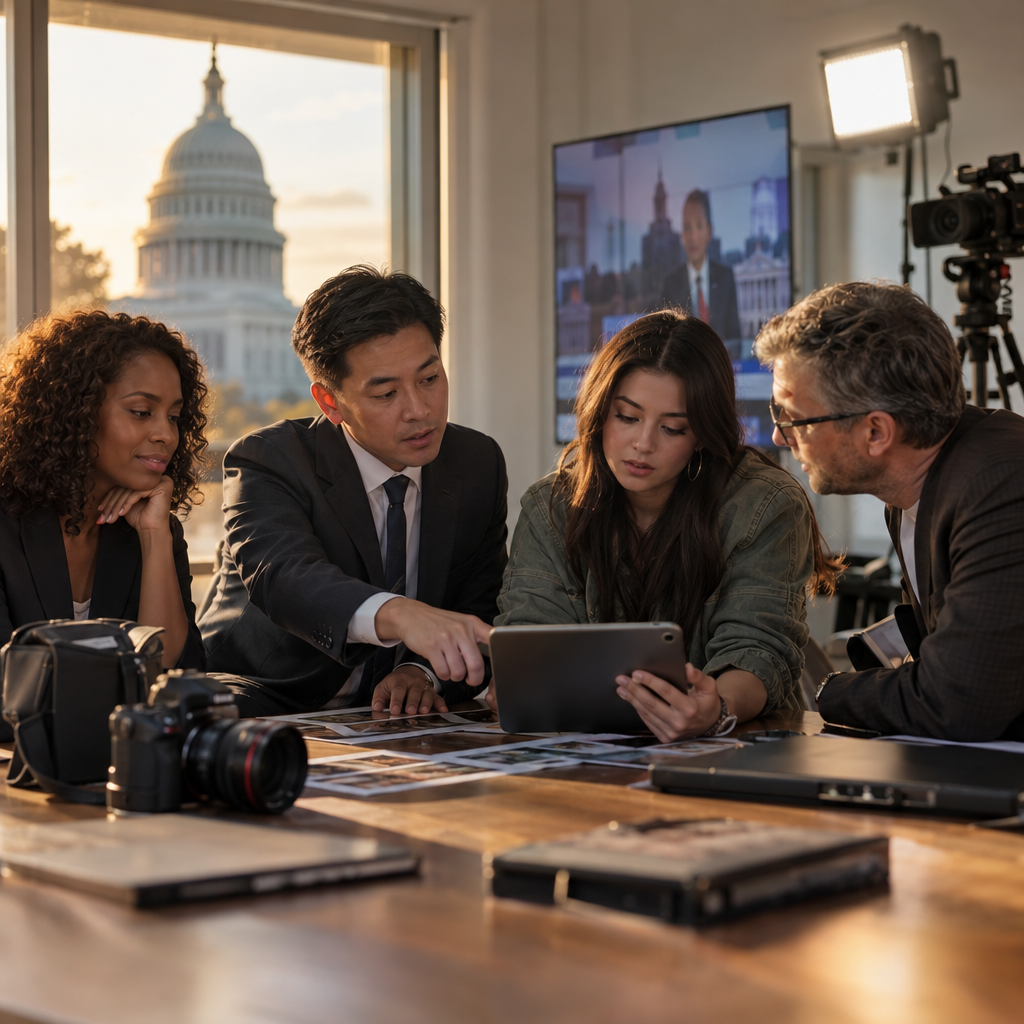
Federal agencies posted more creator and social media roles in the past year than most retail brands did. If that sentence surprises you, you haven’t been watching the job boards closely enough. The creator economy hiring race has quietly pulled in two unlikely contestants: government agencies and broadcast media companies, both scrambling to hire the same TikTok-native talent that banks and beauty brands have been fighting over for two years.
This isn’t a novelty hire or a PR stunt. It’s a structural shift in how public institutions and legacy media reach audiences who no longer watch the evening news or read a press release.
Why Public Agencies Suddenly Need Creators on Payroll
Government communications used to mean a press secretary, a website update, and maybe a Facebook post. That model is dead for reaching anyone under 40. Health departments learned this the hard way during public health campaigns that failed to land because the messaging lived on platforms nobody in the target demographic opened.
Now agencies at the federal, state, and municipal level are building internal creator functions. Job titles like “digital content strategist,” “multimedia specialist,” and even “TikTok content producer” have appeared across public sector postings for health departments, transportation authorities, and recruiting arms of the military. The Department of Defense in particular has leaned hard into creator-style recruitment content, competing with civilian employers for attention using the exact same short-form video tactics as a sneaker brand.
When a military recruiting office and a skincare brand are bidding for the same video editor with TikTok experience, you know the labor market has fundamentally reorganized around platform fluency, not industry pedigree.
Public health agencies are a particularly interesting case. After watching misinformation outpace official guidance during past health crises, agencies realized that a sterile press release cannot compete with a relatable creator explaining the same information in 45 seconds. That realization led directly to budget lines for creator talent, something unheard of in government communications five years ago.
Broadcasters Are Fighting for the Same Candidates
Local and national broadcast newsrooms are facing their own version of this problem. Linear TV viewership keeps sliding, and YouTube’s growing share of TV viewing has made it impossible for broadcast executives to ignore where the audience actually lives now. News directors who once measured success in Nielsen ratings are now hiring producers whose entire job is turning broadcast segments into vertical video that performs on Instagram Reels and TikTok.
Major networks and local affiliates alike have created roles like “social video producer” and “platform-first reporter,” essentially hiring journalists who think like creators first and broadcasters second. Some newsrooms are going further, recruiting creators with no traditional journalism background specifically because they understand hook structure, retention curves, and caption writing better than a career anchor ever will.
This mirrors a pattern already playing out in corporate hiring. Amazon, Visa, and JPMorgan have built in-house creator teams over the past two years, and banks have led a similar hiring wave despite the compliance headaches that come with regulated industries. Government and broadcast are simply the latest sectors to realize that owning creator talent in-house beats renting it through agencies every time reach and speed matter.
What These Job Postings Actually Demand
Look closely at the listings and a pattern emerges fast. Agencies and broadcasters aren’t asking for traditional communications degrees anymore. They want:
- Demonstrated short-form video editing skill, usually requiring a portfolio or personal channel
- Understanding of platform-specific algorithms across TikTok, Instagram, and YouTube Shorts
- Comfort appearing on camera, even for roles officially labeled “behind the scenes”
- Experience with rapid turnaround content, often same-day publishing cycles
- Basic crisis communication instincts, since public sector content can go viral for the wrong reasons fast
Compare this to the hiring criteria uncovered in a recent review of 4,000 creator job postings across industries, and the overlap is striking. Government and broadcast listings now read almost identically to retail and finance postings. The job title changed, but the skill requirement converged on the same core competency: make content that performs on a phone screen in under three seconds of attention.
The Compliance Problem Nobody Budgeted For
Here’s where it gets complicated. A bank hiring a creator has to worry about financial disclosure rules and FTC endorsement guidelines. A government agency hiring a creator has to worry about those same disclosure concerns, plus public records law, equal access requirements, and the fact that anything an official account posts can be read as government speech with legal weight.
That’s a much higher bar than a brand managing influencer disclosures for a skincare launch.
Broadcast media has its own wrinkle. Journalistic standards around sourcing, editorial independence, and on-air talent conduct don’t disappear just because the content moved to a vertical video format. A reporter turned creator still answers to editorial standards that a lifestyle influencer never had to think about. Newsrooms are having to write entirely new internal policies covering what a staff creator can say, sponsor, or appear in outside of work hours, essentially building the same kind of governance structure that Fortune 500 creator VPs have been fighting to secure inside major corporations.
Public sector legal teams are scrambling to catch up. Procurement rules written for traditional advertising contracts don’t map cleanly onto creator partnerships, usage rights, or performance-based payment structures. Agencies accustomed to RFPs for television buys are now negotiating with individual creators or small creator collectives, and the contract templates simply didn’t exist a few years ago.
What This Means for Brands Already Competing for Creator Talent
If you’re a brand marketer reading this wondering why your creator sourcing pipeline suddenly feels slower, government and broadcast hiring is part of the answer. Every public health department and local news affiliate now bidding for the same mid-tier TikTok editor that your brand wants is one more competitor pulling from a finite talent pool.
This matters for budget planning. Salaries for in-house creator roles have climbed as public and quasi-public employers enter the market with stable government pay scales and benefits packages that most agencies and freelance arrangements can’t match. A skilled video editor weighing a freelance brand gig against a steady government salary with health insurance might take the steady paycheck, even at a lower day rate.
It also changes the competitive landscape for brand visibility. As creator spend triples across industries and European brands plan significant budget increases, the talent supply isn’t growing fast enough to match demand. Government and broadcast entering the race intensifies that squeeze further, particularly in the mid-tier creator segment where most of this hiring is concentrated.
Every new sector that builds in-house creator teams shrinks the available pool for everyone else. Brands that haven’t locked in creator relationships are now competing with recruiters who have government pay scales and media company benefits behind them.
For brand strategists, the practical takeaway is to stop treating creator hiring as something that happens only in marketing and retail. The talent pool is now shared across sectors as different as federal health communications and local news. Marketing teams that want to secure reliable creator relationships should be moving toward longer-term retainers rather than one-off campaign deals, a shift already visible in how creator holding companies have flipped leverage in brand negotiations.
Where This Goes Next
Expect more public sector creator hiring, not less. Health agencies, transportation authorities, and even courts systems are beginning to explore creator partnerships for public information campaigns. Broadcasters will keep absorbing creator talent as linear viewership continues its decline, with data from firms like eMarketer consistently showing short-form video eating into traditional TV ad budgets.
The agencies and brands that treat this as a temporary blip will lose ground to competitors who accept it as the new baseline. Talent markets don’t reverse once institutional buyers enter at scale. Ask anyone who tried to hire a performance marketer in 2021 how that played out.
FAQs
Frequently Asked Questions
Why are government agencies hiring creators instead of using traditional PR channels?
Traditional press releases and official statements fail to reach younger demographics who get information primarily through short-form video. Agencies hire creators to produce content that performs on the platforms where their target audiences actually spend time, particularly for public health, safety, and recruiting campaigns.
How does government creator hiring affect private sector recruiting costs?
Government and broadcast employers entering the market compete for the same limited pool of skilled short-form video talent that brands and agencies rely on. This added competition has pushed up salaries and day rates, especially for mid-tier creators and editors with proven platform expertise.
What compliance risks are unique to government creator programs?
Government creator content can be treated legally as official government speech, which raises concerns around public records law, equal access rules, and endorsement disclosure that go beyond standard FTC guidelines applied to brand influencer partnerships.
Are broadcast journalists becoming creators a threat to editorial standards?
Not inherently, but newsrooms are having to build new internal policies covering sponsorships, outside content, and on-air conduct for staff who now operate as creators across social platforms, since existing journalistic ethics guidelines didn’t anticipate this blended role.
Should brands change their creator hiring strategy because of this trend?
Yes. Brands should move toward longer-term creator retainers rather than one-off deals to secure talent before government and media competitors absorb more of the available pool, and should budget for rising rates in the mid-tier creator segment.
The takeaway: Brands that treat creator hiring as a marketing-only competition are already behind. Lock in longer-term creator relationships now, because government agencies and broadcasters aren’t exiting this market anytime soon.
Top Influencer Marketing Agencies
The leading agencies shaping influencer marketing in 2026
Agencies ranked by campaign performance, client diversity, platform expertise, proven ROI, industry recognition, and client satisfaction. Assessed through verified case studies, reviews, and industry consultations.
Moburst

-
2

The Shelf
Boutique Beauty & Lifestyle Influencer AgencyA data-driven boutique agency specializing exclusively in beauty, wellness, and lifestyle influencer campaigns on Instagram and TikTok. Best for brands already focused on the beauty/personal care space that need curated, aesthetic-driven content.Clients: Pepsi, The Honest Company, Hims, Elf Cosmetics, Pure LeafVisit The Shelf → -
3

Audiencly
Niche Gaming & Esports Influencer AgencyA specialized agency focused exclusively on gaming and esports creators on YouTube, Twitch, and TikTok. Ideal if your campaign is 100% gaming-focused — from game launches to hardware and esports events.Clients: Epic Games, NordVPN, Ubisoft, Wargaming, Tencent GamesVisit Audiencly → -
4

Viral Nation
Global Influencer Marketing & Talent AgencyA dual talent management and marketing agency with proprietary brand safety tools and a global creator network spanning nano-influencers to celebrities across all major platforms.Clients: Meta, Activision Blizzard, Energizer, Aston Martin, WalmartVisit Viral Nation → -
5

The Influencer Marketing Factory
TikTok, Instagram & YouTube CampaignsA full-service agency with strong TikTok expertise, offering end-to-end campaign management from influencer discovery through performance reporting with a focus on platform-native content.Clients: Google, Snapchat, Universal Music, Bumble, YelpVisit TIMF → -
6

NeoReach
Enterprise Analytics & Influencer CampaignsAn enterprise-focused agency combining managed campaigns with a powerful self-service data platform for influencer search, audience analytics, and attribution modeling.Clients: Amazon, Airbnb, Netflix, Honda, The New York TimesVisit NeoReach → -
7

Ubiquitous
Creator-First Marketing PlatformA tech-driven platform combining self-service tools with managed campaign options, emphasizing speed and scalability for brands managing multiple influencer relationships.Clients: Lyft, Disney, Target, American Eagle, NetflixVisit Ubiquitous → -
8

Obviously
Scalable Enterprise Influencer CampaignsA tech-enabled agency built for high-volume campaigns, coordinating hundreds of creators simultaneously with end-to-end logistics, content rights management, and product seeding.Clients: Google, Ulta Beauty, Converse, AmazonVisit Obviously →