


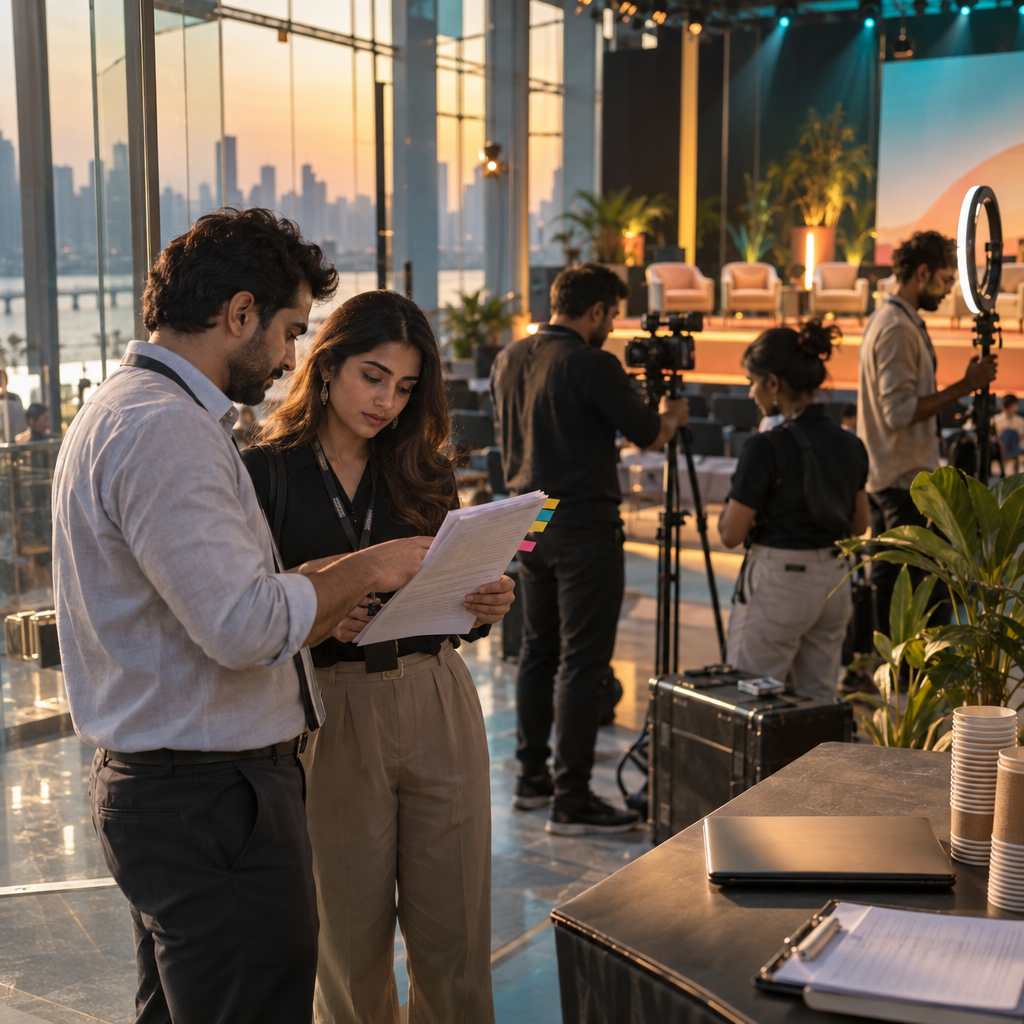
Ninety-four percent of Indian marketers expect to raise sponsorship and event spending, the highest of any market Nielsen surveyed. That does mean most of your competitors are heading for the same inventory. For the India live event creator boom, the winners will be the brands that budget with discipline before rates climb.
What the 94 percent figure actually says
Read the headline carefully, because it is easy to misquote. Per Nielsen’s annual marketing report as covered by MediaNews4U, 94% of marketers in India expect to increase sponsorship and event media spending over the next 12 to 24 months. The survey, titled Top 10 Signals Shaping Marketing Budgets, covered six markets. The US and Italy trailed India on the share of marketers planning higher event and sponsorship investment.
So the number measures intent, not a growth rate in rupees. Your finance team will ask about the difference. Have the answer ready.
Two other findings in the same report matter more for planning:
- Creator confidence is high. Indian marketers rate influencer and creator content as very or extremely effective at a far higher rate than their US peers, and the Nielsen coverage puts the gap at 27 percentage points, the widest of any channel measured.
- Measurement is weak. Indian marketers were the least likely of the markets discussed to measure ROI holistically across traditional and digital media, with only 42% doing so.
High belief in creators plus low measurement discipline is how budgets get inflated, then cut. Build the measurement before you build the media plan.
Why live events are pulling creators in
The supply side is moving too. FICCI-EY data on India’s live events economy shows the segment grew 44% in 2025, and the country logged over 130 concert days with attendance of 10,000 or more per day. The same report notes a shift from ad-funded formats toward ticketed events, a significant change from the pre-COVID-19 era.
For a brand, that means more stages, more fan communities and more places for a creator to show up in person. It also means more sponsors competing for the same creator calendar. Rates follow scarcity. If you want a model for that, our guide to creator rate inflation applies directly.
The framework: four buckets, three gates
Here is the structure I would put in front of a CFO. The percentages are my starting recommendation, not an industry benchmark. Adjust them to your category and risk appetite.
- Rights and access (largest share). The sponsorship fee itself, plus any exclusivity in the venue or category.
- Creator activation (second-largest share). Fees for creators who attend, host, stream or recap the event.
- Content and measurement (a deliberate, protected share). Capture crews, editing, usage rights, tracking links, and a pre-agreed analytics plan.
- Reserve (a small, fixed holdback). Held back for rate spikes, last-minute lineup changes and trend-driven opportunities.
Notice that measurement has its own line. Given that fewer than half of Indian marketers measure ROI holistically, funding it explicitly is a competitive edge, not overhead.
Gate one: audience fit before fee
Do not sign a sponsorship until you can name the creators who will make it work and show that their audiences overlap with the event’s. A cricket-adjacent fan fest and a stand-up comedy tour attract very different people. FICCI-EY lists sports, music, spirituality and comedy as top ticket-sales contributors, so pick the vertical first.
Gate two: pilot before scale
Release the activation bucket in two tranches. Fund a first wave with a small creator group at one event. Release the second wave only if the first clears your hurdle on cost per qualified action. This is the logic behind zero-based creator budgets, and it works especially well for events because each one gives you a clean test window.
Gate three: rights before reuse
Event content has a long tail. A creator’s backstage clip can fuel paid social for months, but only if your contract allows it. Decide upfront between a buyout and a license using a total cost of ownership view. Retrofitting rights after a clip goes viral is expensive and awkward.
How do you measure a live event without a perfect attribution model?
You will not get one. Instead, agree on three measurement layers before the event:
- On-site: QR scans, sampling redemptions, booth dwell time, and app installs from event-specific links.
- Creator-level: unique codes or links per creator, plus saves and shares of event content rather than raw views.
- Brand-level: branded search lift and direct traffic in the two weeks after the event, compared with a matched non-event period.
Then tie each layer to a decision. If a creator’s code drives redemptions at half your target cost, that creator moves to the next event’s shortlist. If not, they drop off. The vertical-specific KPI scorecards help here because a music event and a food festival should not be judged by the same numbers.
Be honest about what you can’t prove. Event-driven brand lift is real but noisy. Report ranges, not false precision, and your finance partners will trust the rest of your numbers more.
Compliance is part of the budget
Live formats raise disclosure risk because creators are posting fast, from the floor, often without a review step. India’s advertising self-regulator spells out the rules in its ASCI social media disclosure guidelines. A material connection includes free products, discounts and perks, not just cash. Live stream disclosures should be announced at the start and end of the broadcast. Responsibility sits with both the advertiser and the influencer.
That last point is the one brand teams miss. If a creator forgets the label at a sponsored after-party, you share the problem. Build a pre-event briefing, a labeling cheat sheet and a fast-lane review into the plan. Our piece on creator approval workflows shows how to keep that review quick enough that creators will actually use it.
Common traps
Buying the biggest name. Headliner creators command premiums at peak events. A tiered roster, with one anchor and several mid-tier or micro creators, usually delivers more qualified reach per rupee.
Ignoring the next 10 cities. FICCI-EY notes ticket sales were concentrated in the top 10 metros, while the report’s headline points to growth spreading beyond them. Early presence in emerging cities may be cheaper than fighting for metro slots.
Treating the event as a one-off. The best returns come from creators you work with repeatedly. Plan the bench now, using the principles in creator program succession planning, so you are not scrambling when your lead creator signs an exclusive with a rival.
Take one event on your calendar this quarter and run it through the four buckets and three gates on a single page. If you cannot name the measurement plan and the rights terms, do not release the second tranche.
FAQs
Does the 94 percent figure mean event budgets will grow 94 percent?
No. It means most surveyed Indian marketers expect to increase sponsorship and event media spending over the next 12 to 24 months, according to Nielsen. It reflects how many marketers plan to spend more, not the size of the increase.
How much of a live event sponsorship budget should go to creators?
There is no published industry benchmark. As a starting point, make creator activation your second-largest line, and protect a separate line for content and measurement, which works for many brands. Adjust based on pilot results and how much of the event’s value depends on social reach.
How should brands measure ROI on creator-led event sponsorships?
Use three layers: on-site actions such as QR scans and redemptions, creator-level codes and links, and brand-level lift in search and direct traffic after the event. Set targets before signing, and tie each layer to a keep-or-cut decision.
Who is responsible if a creator skips the ad disclosure at an event?
Under ASCI’s guidelines, responsibility for disclosure lies with both the advertiser and the influencer. Brands should brief creators on labeling before the event and be able to request edits when disclosures are missing or unclear.
Should brands pay creators a flat fee or performance pay for event coverage?
Most event deals work best as a hybrid: a flat fee for attendance and deliverables, plus performance pay tied to codes or links. A weighted scorecard helps you choose the mix by event type and creator tier.
Why hold a reserve in the budget?
Live events change fast. Lineups shift, creators cancel, and rates rise as events approach. A fixed reserve lets you replace talent or capture an unexpected moment without cutting measurement or compliance spend.
Top Influencer Marketing Agencies
The leading agencies shaping influencer marketing in 2026
Agencies ranked by campaign performance, client diversity, platform expertise, proven ROI, industry recognition, and client satisfaction. Assessed through verified case studies, reviews, and industry consultations.
Moburst

-
2

The Shelf
Boutique Beauty & Lifestyle Influencer AgencyA data-driven boutique agency specializing exclusively in beauty, wellness, and lifestyle influencer campaigns on Instagram and TikTok. Best for brands already focused on the beauty/personal care space that need curated, aesthetic-driven content.Clients: Pepsi, The Honest Company, Hims, Elf Cosmetics, Pure LeafVisit The Shelf → -
3

Audiencly
Niche Gaming & Esports Influencer AgencyA specialized agency focused exclusively on gaming and esports creators on YouTube, Twitch, and TikTok. Ideal if your campaign is 100% gaming-focused — from game launches to hardware and esports events.Clients: Epic Games, NordVPN, Ubisoft, Wargaming, Tencent GamesVisit Audiencly → -
4

Viral Nation
Global Influencer Marketing & Talent AgencyA dual talent management and marketing agency with proprietary brand safety tools and a global creator network spanning nano-influencers to celebrities across all major platforms.Clients: Meta, Activision Blizzard, Energizer, Aston Martin, WalmartVisit Viral Nation → -
5

The Influencer Marketing Factory
TikTok, Instagram & YouTube CampaignsA full-service agency with strong TikTok expertise, offering end-to-end campaign management from influencer discovery through performance reporting with a focus on platform-native content.Clients: Google, Snapchat, Universal Music, Bumble, YelpVisit TIMF → -
6

NeoReach
Enterprise Analytics & Influencer CampaignsAn enterprise-focused agency combining managed campaigns with a powerful self-service data platform for influencer search, audience analytics, and attribution modeling.Clients: Amazon, Airbnb, Netflix, Honda, The New York TimesVisit NeoReach → -
7

Ubiquitous
Creator-First Marketing PlatformA tech-driven platform combining self-service tools with managed campaign options, emphasizing speed and scalability for brands managing multiple influencer relationships.Clients: Lyft, Disney, Target, American Eagle, NetflixVisit Ubiquitous → -
8

Obviously
Scalable Enterprise Influencer CampaignsA tech-enabled agency built for high-volume campaigns, coordinating hundreds of creators simultaneously with end-to-end logistics, content rights management, and product seeding.Clients: Google, Ulta Beauty, Converse, AmazonVisit Obviously →