


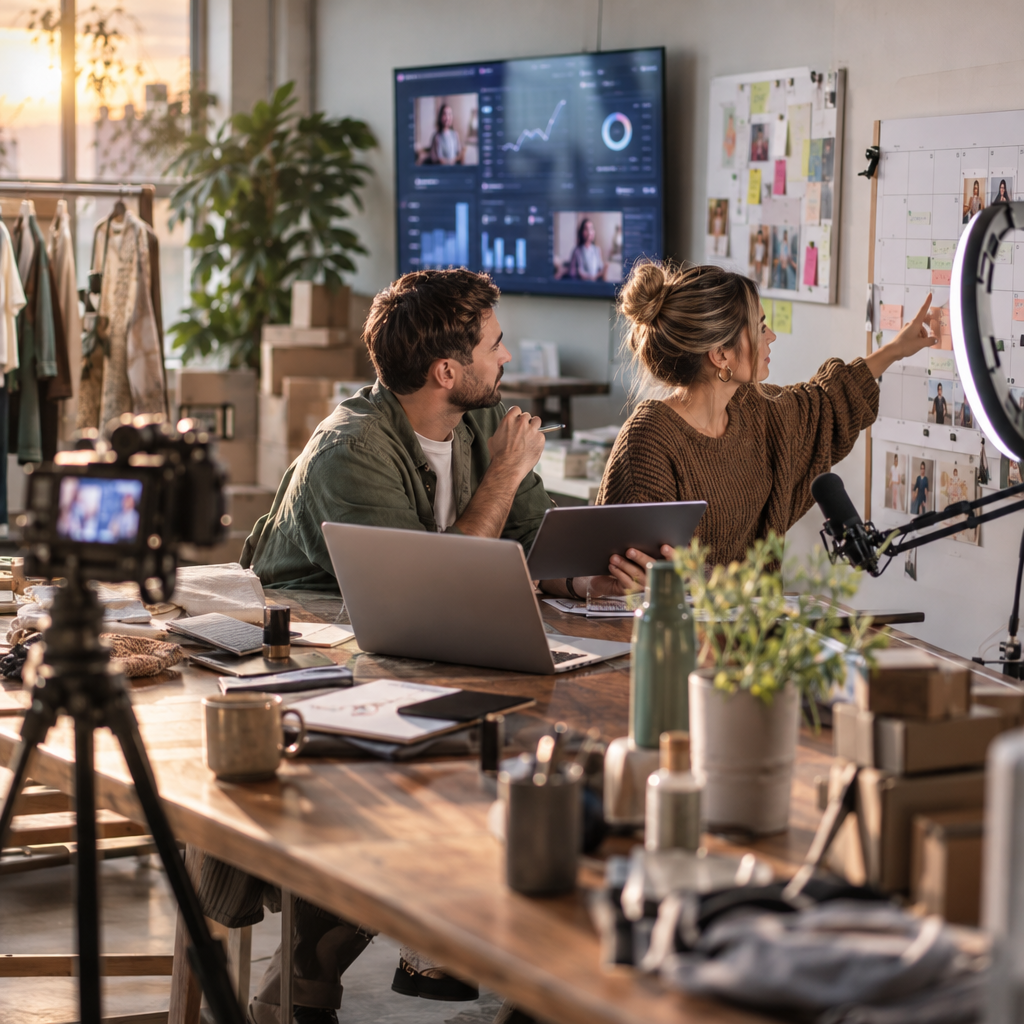
UK live shopping is scaling fast, with TikTok Shop reporting 55% growth in LIVE sales and more than 6,000 sessions a day in the UK. That figure comes from Retail Times’ report on TikTok Shop’s UK data. For US brands, UK live shopping is a preview of your own planning problem. Live commerce is turning from experiment into a line item.
What the UK numbers actually say
Start with what the source covers. Start with what the source covers: TikTok Shop says LIVE sales grew 55% over the last year, with more than 6,000 sessions a day in the UK. The same report says over 300,000 small UK businesses now sell on the platform.
This is platform-reported data, released alongside a milestone announcement. Treat it as a directional signal, not an audited benchmark. It does not give conversion rates, average order values or return rates, and those are the numbers a CFO will ask for.
Still, the case studies are instructive. The same article says London jewellery brand L’ERA made six figures in LIVE sales in 2025 by hosting four sessions a week. The cadence is the lesson, not the sales number. Live works when it is a rhythm, not a launch stunt.
The UK signal for US planners is not “live is big.” It is “live is frequent.” Brands winning there treat it as a weekly operating cadence with staff, scripts and inventory behind it.
Is the US ahead or behind?
Neither, exactly. The US is scaling faster in absolute terms, and the evidence is peak-season volume. EMARKETER reported that TikTok Shop’s US sales topped $500 million over Black Friday to Cyber Monday. Per EMARKETER’s account of that period, brands and sellers hosting livestreams saw 84% sales growth against the prior year’s four-day period, as shoppers tuned into more than 760,000 sessions.
The same EMARKETER piece notes that shoppers spent over $75 million on Whatnot on Black Friday, roughly three times the prior year’s total. So this is not a single-platform story.
Put the two markets side by side and a pattern emerges. The UK shows steady, everyday session volume. The US shows spiky, event-driven surges. A US brand that only goes live at Black Friday is playing the high-variance version of the game. It pays the highest competition costs, with the least rehearsed team.
Where the budget goes (it is not just media)
Live commerce does not behave like a paid social flight. Costs sit in places most influencer budgets ignore.
- Host talent: creators or in-house hosts, often paid a base plus commission.
- Production and ops: lighting, moderation, a second person watching chat and inventory.
- Offers: bundles and limited-time pricing that cut margin.
- Fulfilment capacity: a strong session can compress days of orders into hours.
- Usage rights: clips cut from the stream become paid media assets.
On compensation, the old flat fee fits poorly. A host who sells for three hours should be paid on what happens in those three hours. Our breakdown of incentive tier structures shows how to build that, and the logic of hybrid pay applies directly. A modest base secures reliability, and commission rewards performance.
Then there is cadence. If four sessions a week is the model, you are no longer buying posts. You are buying availability. That is the argument for funding always-on creators instead of one-off bursts.
Compliance does not pause for live
Live is the hardest format to police. You cannot edit a stream after it airs, and a host can ad-lib a claim in the heat of a sales moment.
The FTC’s guidance is explicit on one point. It says that in a live stream, the disclosure should be repeated periodically so viewers who join midway still see it. The agency also defines a “material connection” to include payment or free products. A single “#ad” in the title will not carry a three-hour session.
Practical controls that work:
- Put a disclosure line in the on-screen overlay for the full session.
- Give hosts a script card with approved claims and banned phrases.
- Assign a moderator who can flag a problem statement in real time.
- Archive every session for audit and for rights tracking.
On that last point, replays and clips are assets. If you do not tag rights on creator videos from day one, you will discover the limits when you try to run a clip as an ad.
How to measure it without fooling yourself
Live sales are easy to count and hard to interpret. A big session might simply pull forward demand that would have come through your site anyway. TikTok describes a “Halo Effect,” where launching on the platform lifts sales on other channels too. That is plausible, but it is the platform’s own framing, so test it yourself.
A simple design: run live sessions in some regions or product lines and hold others back. Compare total sales across all channels, not just in-platform GMV. If you cannot isolate the lift, you cannot defend the budget, which is why we keep arguing that brands should fund measurement first. Clean creator data matters here too, as covered in our piece on fixing creator data.
Track these at minimum:
- Orders and revenue per session hour
- Average viewer-to-buyer conversion
- Discount depth and resulting margin
- Return and cancellation rates on live orders
- Cross-channel sales lift versus holdout
A pilot plan for the next quarter
Do not copy the UK numbers. Copy the discipline. Pick one platform and one product line with healthy margin and deep stock. Commit to a fixed weekly slot for eight weeks, long enough to see trends rather than a single lucky night.
Pre-agree the commission, the disclosure script and the rights terms. Hold a holdout region if you can. After eight weeks, decide on evidence whether to scale the cadence or cut it.
Treat live as a staffed weekly channel with a measurement plan, and a fast-growing market becomes your tailwind. Treat it as a holiday gimmick, and it becomes your competitors’ advantage.
FAQs
What does the UK live shopping data show?
According to Retail Times’ report, TikTok Shop’s UK LIVE sales grew 55% over the last year, with more than 6,000 sessions running daily, but the figures are platform-reported, so use them as a directional signal rather than an independent benchmark. The figures are platform-reported, so use them as a directional signal rather than an independent benchmark.
Does UK live shopping growth predict the same for US brands?
It is a useful signal but not a forecast. US data from EMARKETER shows strong livestream growth during Black Friday to Cyber Monday, so the format is clearly scaling in both markets. Your own results will depend on category, margin and host quality.
How should brands pay live shopping hosts?
Most brands do best with a hybrid structure: a base fee for reliability plus commission tied to session sales. Add bonuses for hitting conversion or sell-through targets, and spell out usage rights for any clips in the contract.
What are the FTC rules for live stream endorsements?
The FTC says endorsers must make material connections to a brand obvious, including payment or free products. For live streams, it advises repeating the disclosure periodically so late joiners still see it. Brands remain responsible for monitoring host behavior.
How do I measure whether live shopping is incremental?
Use a holdout design. Run sessions in some regions or product lines, keep others as controls, and compare total sales across all channels. In-platform GMV alone can overstate the impact.
How many live sessions should a brand start with?
Start with one fixed weekly slot for about eight weeks. That gives you enough data to judge trends. Scale to more sessions only if the economics hold after discounts, fulfilment and returns.
Next step: this week, book one eight-week weekly live slot, write the disclosure script and commission terms, and define your holdout before the first session airs.
Top Influencer Marketing Agencies
The leading agencies shaping influencer marketing in 2026
Agencies ranked by campaign performance, client diversity, platform expertise, proven ROI, industry recognition, and client satisfaction. Assessed through verified case studies, reviews, and industry consultations.
Moburst

-
2

The Shelf
Boutique Beauty & Lifestyle Influencer AgencyA data-driven boutique agency specializing exclusively in beauty, wellness, and lifestyle influencer campaigns on Instagram and TikTok. Best for brands already focused on the beauty/personal care space that need curated, aesthetic-driven content.Clients: Pepsi, The Honest Company, Hims, Elf Cosmetics, Pure LeafVisit The Shelf → -
3

Audiencly
Niche Gaming & Esports Influencer AgencyA specialized agency focused exclusively on gaming and esports creators on YouTube, Twitch, and TikTok. Ideal if your campaign is 100% gaming-focused — from game launches to hardware and esports events.Clients: Epic Games, NordVPN, Ubisoft, Wargaming, Tencent GamesVisit Audiencly → -
4

Viral Nation
Global Influencer Marketing & Talent AgencyA dual talent management and marketing agency with proprietary brand safety tools and a global creator network spanning nano-influencers to celebrities across all major platforms.Clients: Meta, Activision Blizzard, Energizer, Aston Martin, WalmartVisit Viral Nation → -
5

The Influencer Marketing Factory
TikTok, Instagram & YouTube CampaignsA full-service agency with strong TikTok expertise, offering end-to-end campaign management from influencer discovery through performance reporting with a focus on platform-native content.Clients: Google, Snapchat, Universal Music, Bumble, YelpVisit TIMF → -
6

NeoReach
Enterprise Analytics & Influencer CampaignsAn enterprise-focused agency combining managed campaigns with a powerful self-service data platform for influencer search, audience analytics, and attribution modeling.Clients: Amazon, Airbnb, Netflix, Honda, The New York TimesVisit NeoReach → -
7

Ubiquitous
Creator-First Marketing PlatformA tech-driven platform combining self-service tools with managed campaign options, emphasizing speed and scalability for brands managing multiple influencer relationships.Clients: Lyft, Disney, Target, American Eagle, NetflixVisit Ubiquitous → -
8

Obviously
Scalable Enterprise Influencer CampaignsA tech-enabled agency built for high-volume campaigns, coordinating hundreds of creators simultaneously with end-to-end logistics, content rights management, and product seeding.Clients: Google, Ulta Beauty, Converse, AmazonVisit Obviously →