


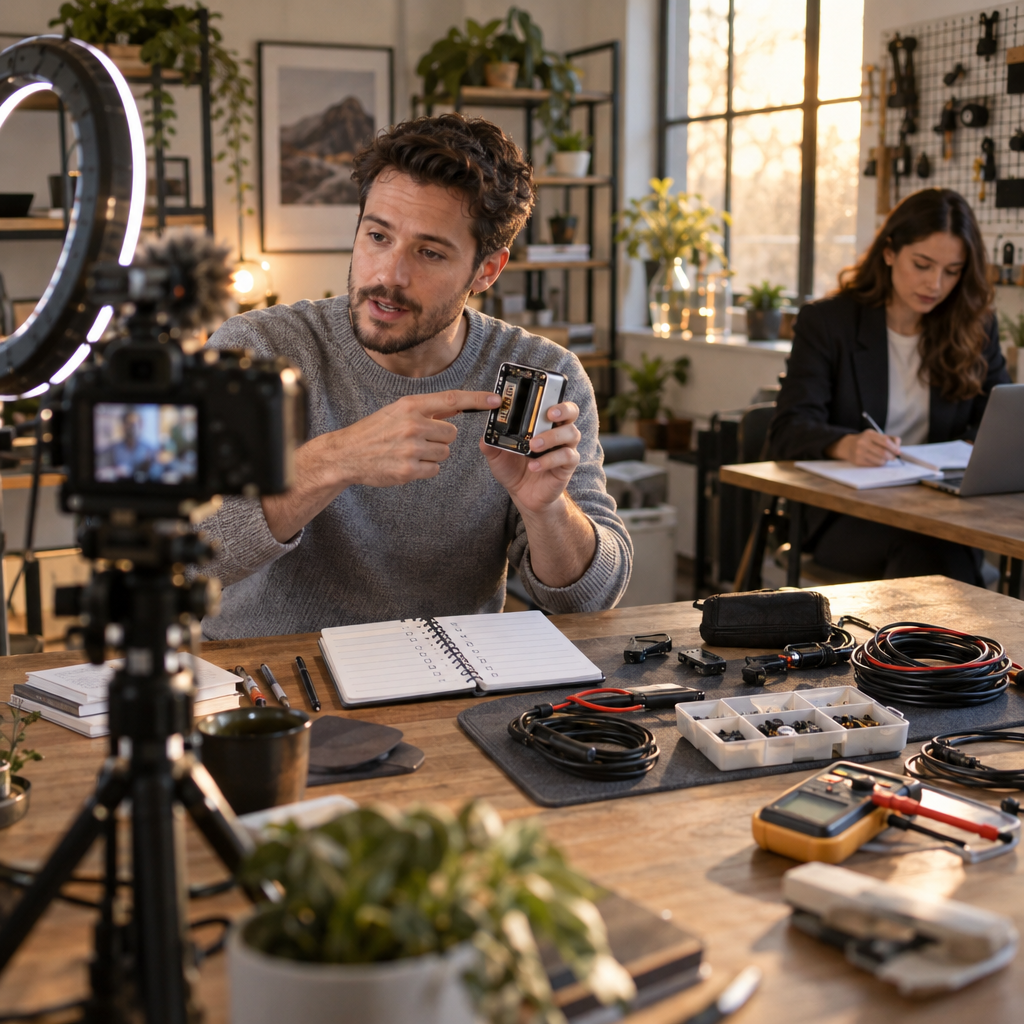
Your support queue is full of content your audience already wants. Why are you hiding it? Creator hosted troubleshooting videos take the most unglamorous moment in ownership, the thing that stopped working, and turn it into proof that your product and your people can be trusted. Done well, they cut tickets and build credibility. Done badly, they create liability.
Why diagnostics beat another unboxing
Unboxings show a product on its best day. Troubleshooting shows it on its worst, and that is where buyers decide whether to believe you.
Edelman’s brand trust research found that 80% of people trust brands they use, more than they trust business, media or government. Trust is earned through use. A video that walks a customer through a fix is a rehearsal of use, filmed before the customer has even bought.
Edelman also found that among the 55 percent who use generative AI platforms, 91 percent use them for shopping in some way, including researching brands and summarizing reviews. That matters here. Step-by-step diagnostic content with clear titles and spoken instructions is exactly what answer engines can parse and cite.
A troubleshooting video is the only branded content where admitting a product can fail makes the product more believable.
What a good diagnostic video actually contains
Forget the sizzle reel. The format has a spine, and your brief should enforce it.
- The symptom, named in the viewer’s words. “My router keeps dropping” beats “connectivity optimization.”
- The most likely cause first. Creators who start with the rare edge case lose viewers in ten seconds.
- The fix, filmed in real time. No jump cuts over the step that takes ninety seconds.
- The honest limit. When this does not work, here is when to contact support or claim the warranty.
- The disclosure, in frame. More on that below.
Step four is the one brands resist. Resist the resistance. A creator who says “if this fails, the unit is faulty and you should get a replacement” earns more trust than ten testimonials.
Choosing the creator: expertise over reach
Here the usual influencer selection logic flips. You want the person who has actually repaired, set up or lived with this category. A mid-tier technician with a loyal workshop audience will outperform a lifestyle celebrity reading a script.
Vet for three things:
- Demonstrated competence. Look at past tutorials. Do their fixes work in the comments?
- Comfort with imperfection. They must be willing to show the failure on camera.
- Independence. If every video ends in praise, viewers will smell it.
This is also where Experience in EEAT becomes operational. Google’s helpfulness guidance rewards first-hand use, and a creator with a real bench setup is first-hand experience you cannot manufacture in a studio.
Briefing without scripting the life out of it
Over-briefing kills the format. Under-briefing creates claims you cannot defend. The middle path is to brief outcomes and boundaries, not lines.
Give the creator a verified diagnostic tree from your support team, a list of approved and prohibited claims, and the safety notes (anything involving batteries, power or chemicals). Then let them explain it their way. If you need to structure the shoot for multiple cuts, a modular script lets one filming session produce a full walkthrough, a 30-second short and a clip for your help center.
Pair the format with sound argument structure too. The logic of a whiteboard explainer (cause, test, result) maps neatly onto diagnostics, and it keeps the creator honest about what the evidence shows.
Claims you must pre-clear
Anything that sounds like a performance promise needs substantiation. “This fixes it every time” is a claim. “This fixed it on the three units I tested” is a report. Teach creators the difference, and borrow the discipline from manufacturing transparency work, where every statement has to survive an audit.
Disclosure: the part legal will ask about first
A troubleshooting video can feel like pure education, so teams forget it is still an endorsement. If the creator was paid or received product, the FTC expects disclosure. Its influencer guidance says a material connection includes a financial relationship such as free or discounted products.
Placement matters as much as wording. The same guidance says that for video, the disclosure should be in the video and not just in the description. Put it early, say it aloud and show it on screen.
Brands are not off the hook either. The FTC’s Q&A on the Endorsement Guides discusses how an endorser’s relationship to the marketer must be made clear or the ad is misleading. Build disclosure checks into your approval workflow and keep a monitoring log. If your program is large, assign one person to own it.
Risk: when the fix goes wrong
This is the section most competitors skip. A viewer who follows a creator’s advice and damages a device (or themselves) will point at your brand.
- Safety review. Have your product team sign off on every physical step.
- Warranty language. If a fix involves opening the unit, state clearly whether that affects coverage.
- Pinned comment. Link to official support and a contact route.
- Update protocol. Firmware changes make fixes obsolete. Set a review date and a takedown trigger.
Myths are a related hazard. Many troubleshooting topics are riddled with folklore (“always drain the battery fully”). Use the same evidence-first approach as myth busting content, and have the creator show the test, not just assert the answer.
Production: lo-fi on purpose
You do not need a studio. You need a clear overhead shot, readable audio and a visible workspace. Over-polishing signals “ad,” which defeats the point. The balance is covered in our piece on credible polish: clean enough to follow, rough enough to believe.
Budget for the creator’s time to test the fix beforehand. A rehearsed failure that resolves on the first try looks staged, and viewers can tell.
Measuring what matters
Views are the weakest metric here. Track what ties to money and risk:
- Support deflection. Ticket volume on the covered issue before and after publication.
- Completion rate at the fix step. It shows whether viewers stuck around for the answer.
- Comment resolution. Share of comments saying “this worked.”
- Assisted conversion. Pre-purchase viewers who watched a diagnostic before buying.
- Return rate. Does it fall for products covered by a video?
Run a simple test: publish videos for your top three ticket drivers, and compare those categories with three similar ones left uncovered over 90 days. Finance will understand that result.
FAQs
What are creator hosted troubleshooting videos?
They are videos in which an independent creator diagnoses and fixes a common product problem on camera. The brand supplies the verified information and the creator supplies the voice, the demonstration and the credibility.
Do these videos need an FTC disclosure?
Yes, if the creator has a material connection to the brand, such as payment or free product. The FTC says the disclosure should appear in the video itself, not only in the description, and that audio plus on-screen text is more likely to be noticed.
Will showing product failures hurt sales?
Rarely, when the failures are common and fixable. Buyers already expect products to have problems. Seeing a clear path to resolution reduces purchase anxiety. Misleading omissions are the real risk.
Who should approve the technical content?
Your product or support team should sign off on every step before publication, and legal should review claims and safety language. The creator should keep editorial control over delivery.
How often should these videos be reviewed?
Review them whenever the product, firmware or policy changes, and at least twice a year. Retire or annotate any video where the fix is outdated.
How do I measure success?
Look at support ticket deflection, return rates, fix-step completion and assisted conversions, not just views. Compare covered issues against a similar uncovered set.
Next step: pull your five most frequent support tickets this week, ask support to write the verified fix for each, and brief one expert creator to film the top issue with the disclosure built in.
Top Influencer Marketing Agencies
The leading agencies shaping influencer marketing in 2026
Agencies ranked by campaign performance, client diversity, platform expertise, proven ROI, industry recognition, and client satisfaction. Assessed through verified case studies, reviews, and industry consultations.
Moburst

-
2

The Shelf
Boutique Beauty & Lifestyle Influencer AgencyA data-driven boutique agency specializing exclusively in beauty, wellness, and lifestyle influencer campaigns on Instagram and TikTok. Best for brands already focused on the beauty/personal care space that need curated, aesthetic-driven content.Clients: Pepsi, The Honest Company, Hims, Elf Cosmetics, Pure LeafVisit The Shelf → -
3

Audiencly
Niche Gaming & Esports Influencer AgencyA specialized agency focused exclusively on gaming and esports creators on YouTube, Twitch, and TikTok. Ideal if your campaign is 100% gaming-focused — from game launches to hardware and esports events.Clients: Epic Games, NordVPN, Ubisoft, Wargaming, Tencent GamesVisit Audiencly → -
4

Viral Nation
Global Influencer Marketing & Talent AgencyA dual talent management and marketing agency with proprietary brand safety tools and a global creator network spanning nano-influencers to celebrities across all major platforms.Clients: Meta, Activision Blizzard, Energizer, Aston Martin, WalmartVisit Viral Nation → -
5

The Influencer Marketing Factory
TikTok, Instagram & YouTube CampaignsA full-service agency with strong TikTok expertise, offering end-to-end campaign management from influencer discovery through performance reporting with a focus on platform-native content.Clients: Google, Snapchat, Universal Music, Bumble, YelpVisit TIMF → -
6

NeoReach
Enterprise Analytics & Influencer CampaignsAn enterprise-focused agency combining managed campaigns with a powerful self-service data platform for influencer search, audience analytics, and attribution modeling.Clients: Amazon, Airbnb, Netflix, Honda, The New York TimesVisit NeoReach → -
7

Ubiquitous
Creator-First Marketing PlatformA tech-driven platform combining self-service tools with managed campaign options, emphasizing speed and scalability for brands managing multiple influencer relationships.Clients: Lyft, Disney, Target, American Eagle, NetflixVisit Ubiquitous → -
8

Obviously
Scalable Enterprise Influencer CampaignsA tech-enabled agency built for high-volume campaigns, coordinating hundreds of creators simultaneously with end-to-end logistics, content rights management, and product seeding.Clients: Google, Ulta Beauty, Converse, AmazonVisit Obviously →