


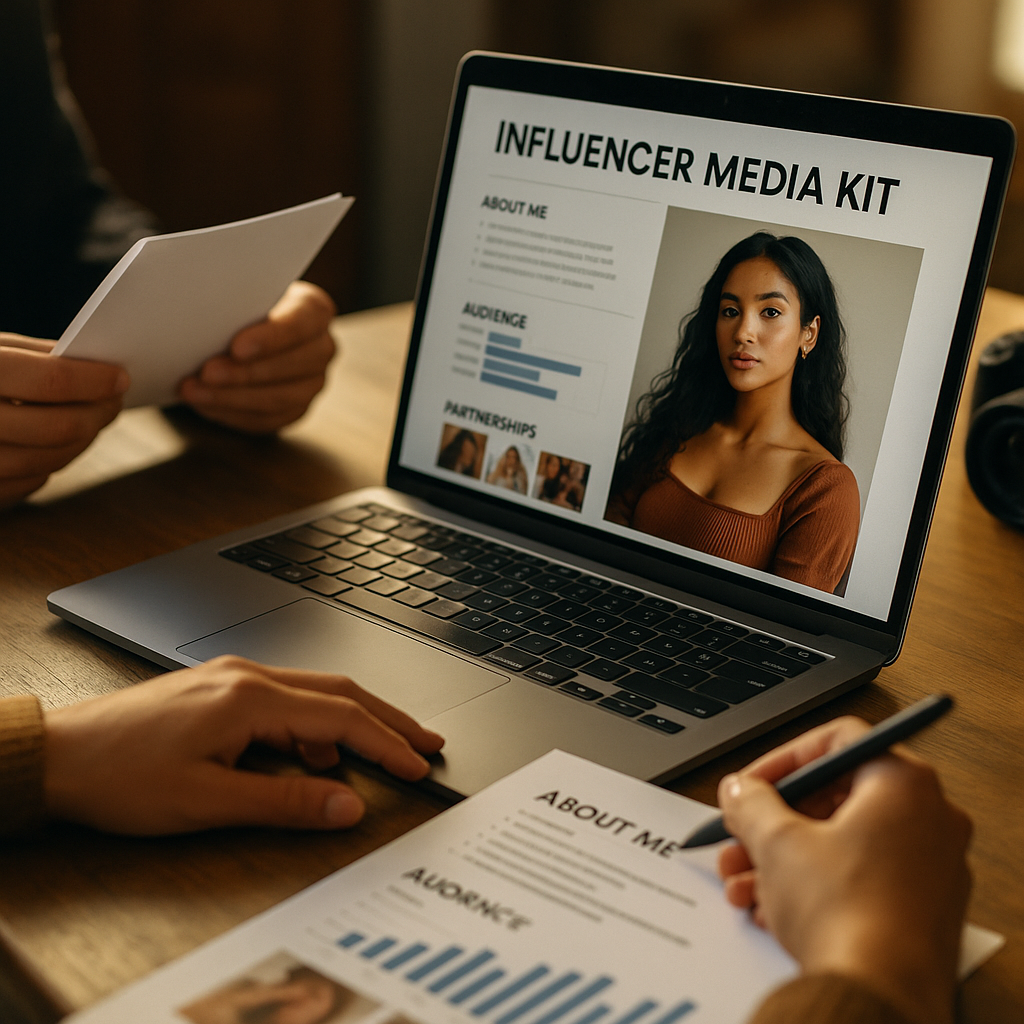
Are you ready to attract more brand deals and collaborations? Creating an influencer media kit for your own brand is the essential first step toward receiving more inbound requests. Learn how to craft an effective, professional media kit that showcases your unique value—and compels brands to contact you first.
Why Every Influencer Needs a Professional Media Kit
With influencer marketing spend projected to grow steadily in 2025, brands are searching for authentic partners. A professional influencer media kit creates a compelling first impression and saves time by answering brands’ key questions up front. Your media kit is much more than a résumé; it’s a well-designed portfolio that opens doors to paid collaborations and lasting partnerships.
A recent Influencer Marketing Hub survey found that 85% of brands require a media kit before considering collaborations. If you want to stand out and receive more inbound partnership requests, your media kit must be up-to-date, visually engaging, and genuine.
Essential Components of an Influencer Media Kit Template
To maximize inbound requests, your media kit should include the following comprehensive sections:
- Personal Introduction: Start the kit with a brief, engaging bio summarizing your story and niche. Use a friendly, confident tone.
- Social Media Statistics: Include recent follower counts, engagement rates, reach, demographics, and growth trends. Reliable first-party screenshots and up-to-date analytics boost credibility.
- Audience Insights: Illustrate who your audience is using demographic breakdowns—age, location, interests, and buying behaviors. Brands want to know who they’ll reach.
- Content Highlights: Showcase high-performing posts, campaign examples, and testimonials. Attach visual samples—images, links, or embedded videos.
- Brand Collaborations: List recognizable partnerships (with permission) and highlight resulting success stories or media features.
- Service Offerings & Rates: Clearly outline partnership options such as sponsored posts, takeovers, reviews, and rates (if desired). Transparency streamlines negotiation.
- Contact Information: Make it easy for brands to reach you—add a direct email, social profiles, and website URL.
Each element should validate your professionalism and align with Google’s EEAT (Experience, Expertise, Authoritativeness, Trustworthiness) principles to build brand confidence.
Design Tips for a Standout Influencer Brand Media Kit
Visual presentation is as critical as the content. Use a clean, consistent style that mirrors your personal brand. High-resolution photography, simple color palettes, and easy-to-read fonts ensure instant impact. Incorporate your logo and signature color schemes to reinforce branding.
Interactive PDFs and mobile-friendly formats allow agencies and brands to review your media kit on any device. Keep it succinct—typically two to four pages—avoiding clutter but including links to content portfolios or landing pages if needed.
- Avoid generic stock images; use authentic, high-quality photos.
- Keep the brand voice consistent throughout every section.
- Use infographics or charts for audience data to enhance readability.
Real testimonials and verified statistics will distinguish your kit from generic templates and generic influencer presentations.
How to Get More Inbound Brand Requests With Your Media Kit
Once your influencer media kit is ready, attracting brand inbound requests requires active distribution and ongoing updates. Here’s how to maximize visibility:
- Feature it on Your Website: Dedicate a visible “Work With Me” page featuring your downloadable or viewable media kit.
- Update Regularly: Refresh stats, audience details, and collaborations quarterly to maintain accuracy and trust.
- Promote in Email Signatures: Link your kit in your business email signature to showcase your professionalism.
- Pin to Social Profiles: Add a media kit link in your Instagram bio, Twitter, and LinkedIn profiles.
Also, be proactive: reach out with customized kits to targeted brands. Ask for feedback from previous partners and continuously improve your kit’s effectiveness.
Measuring Success: Tracking and Improving Your Media Kit’s Impact
The success of your influencer media kit can be quantified through the number of inbound requests, quality of partnership offers, and your conversion rate from request to signed collaboration. Track how brands discover you—direct traffic to your “Work With Me” page or click analytics on your downloadable kit.
Survey prospective partners about what stood out or was missing. Keep refining the media kit using their input and your performance data, which strengthens your perceived expertise. Set goals: increase average deal size, attract more premium brands, or boost your acceptance rate.
Common Media Kit Mistakes to Avoid for Better Brand Collaborations
Even experienced influencers make avoidable errors when assembling their kits. Watch out for these pitfalls:
- Using outdated analytics (update at least every three months)
- Over-inflating statistics or misrepresenting your audience
- Failing to include testimonials or previous campaign examples
- Lacking clear contact details or calls-to-action
- Neglecting to proofread for grammar and design consistency
Authenticity and clarity establish trust, while attention to detail reassures brands of your professionalism. A little extra effort on your influencer media kit template can lead to long-term, fruitful collaborations.
FAQs About Creating an Influencer Media Kit for Your Brand
-
What is an influencer media kit?
An influencer media kit is a visual résumé or portfolio that summarizes your personal brand, audience, achievements, and collaboration opportunities for potential partners and brands.
-
How often should I update my influencer media kit?
Update your media kit at least every three months or whenever you achieve significant milestones, audience growth, or campaign results.
-
Should I include rates in my media kit?
If you prefer transparency and quick negotiations, include your rates or pricing structure. Otherwise, you can state that rates are available upon request to allow room for discussion.
-
What’s the ideal length for a media kit?
Most effective influencer media kits are two to four pages in length. Stay concise while ensuring all essential information is present.
-
How do I make my media kit stand out?
Use authentic branding, unique storytelling, verified analytics, high-quality visuals, and real-world campaign outcomes. Regularly seek feedback and iterate to stay ahead.
In summary, a dynamic influencer media kit for your own brand is your gateway to more inbound requests and long-lasting partnerships. Prioritize authenticity, clear insights, and regular updates to ensure your media kit compels brands to connect with you first—then watch your inbox fill with collaboration opportunities.
Top Influencer Marketing Agencies
The leading agencies shaping influencer marketing in 2026
Agencies ranked by campaign performance, client diversity, platform expertise, proven ROI, industry recognition, and client satisfaction. Assessed through verified case studies, reviews, and industry consultations.
Moburst

-
2

The Shelf
Boutique Beauty & Lifestyle Influencer AgencyA data-driven boutique agency specializing exclusively in beauty, wellness, and lifestyle influencer campaigns on Instagram and TikTok. Best for brands already focused on the beauty/personal care space that need curated, aesthetic-driven content.Clients: Pepsi, The Honest Company, Hims, Elf Cosmetics, Pure LeafVisit The Shelf → -
3

Audiencly
Niche Gaming & Esports Influencer AgencyA specialized agency focused exclusively on gaming and esports creators on YouTube, Twitch, and TikTok. Ideal if your campaign is 100% gaming-focused — from game launches to hardware and esports events.Clients: Epic Games, NordVPN, Ubisoft, Wargaming, Tencent GamesVisit Audiencly → -
4

Viral Nation
Global Influencer Marketing & Talent AgencyA dual talent management and marketing agency with proprietary brand safety tools and a global creator network spanning nano-influencers to celebrities across all major platforms.Clients: Meta, Activision Blizzard, Energizer, Aston Martin, WalmartVisit Viral Nation → -
5

The Influencer Marketing Factory
TikTok, Instagram & YouTube CampaignsA full-service agency with strong TikTok expertise, offering end-to-end campaign management from influencer discovery through performance reporting with a focus on platform-native content.Clients: Google, Snapchat, Universal Music, Bumble, YelpVisit TIMF → -
6

NeoReach
Enterprise Analytics & Influencer CampaignsAn enterprise-focused agency combining managed campaigns with a powerful self-service data platform for influencer search, audience analytics, and attribution modeling.Clients: Amazon, Airbnb, Netflix, Honda, The New York TimesVisit NeoReach → -
7

Ubiquitous
Creator-First Marketing PlatformA tech-driven platform combining self-service tools with managed campaign options, emphasizing speed and scalability for brands managing multiple influencer relationships.Clients: Lyft, Disney, Target, American Eagle, NetflixVisit Ubiquitous → -
8

Obviously
Scalable Enterprise Influencer CampaignsA tech-enabled agency built for high-volume campaigns, coordinating hundreds of creators simultaneously with end-to-end logistics, content rights management, and product seeding.Clients: Google, Ulta Beauty, Converse, AmazonVisit Obviously →