


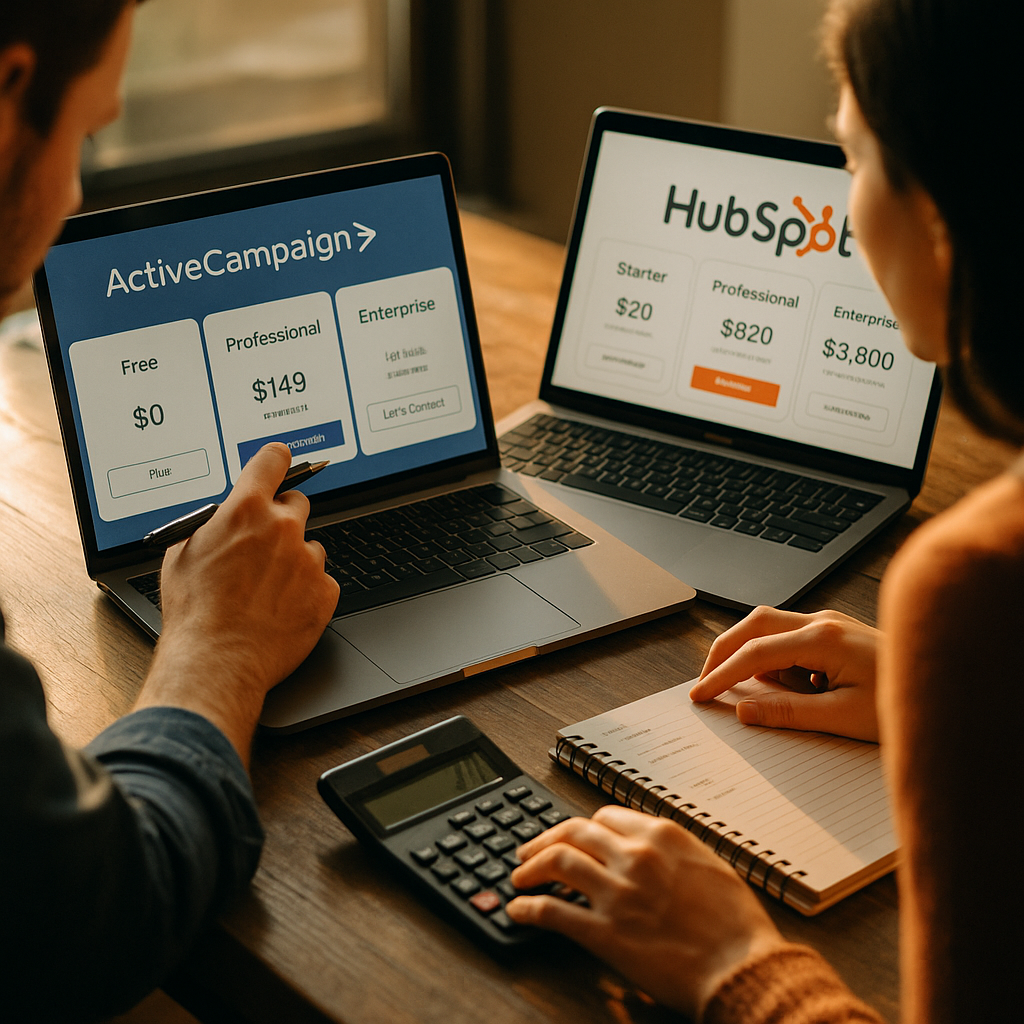
Here’s a number that should make every creator marketing lead flinch: HubSpot’s Marketing Hub Professional tier runs roughly $890 a month before you add a single seat for your influencer coordinator. ActiveCampaign’s comparable plan starts under $200. Same automation logic, wildly different invoices. If your team is choosing ActiveCampaign vs HubSpot for managing creator outreach, contracts, and payout workflows, the sticker price is only the beginning of the story.
Why Creator Teams Even Need Marketing Automation
Influencer programs used to run on spreadsheets and Slack DMs. That worked when a brand managed a dozen creators. It falls apart at 200. Modern creator marketing teams need automation for contract reminders, content approval sequences, payment triggers, and nurture flows that keep micro and nano creators engaged between campaigns.
That’s where CRM and marketing automation platforms built for e-commerce and lead gen, not creator relationships specifically, get pulled into service. ActiveCampaign and HubSpot weren’t designed for influencer management. But their workflow engines, tagging systems, and email automation have become the default backbone for agencies and in-house teams who can’t justify a dedicated influencer CRM on top of everything else.
The Real Cost Breakdown, Not Just the List Price
List prices tell you almost nothing useful. What matters is cost per contact, cost per seat, and what happens when your creator database grows past the plan’s ceiling.
- ActiveCampaign: Plus plan starts near $49/month for 1,000 contacts, scaling with contact volume. Automation workflows, CRM, and sales pipeline features are bundled in at the Plus tier, which is where most lean creator teams land.
- HubSpot: Marketing Hub Starter begins around $20/month but caps functionality hard. Professional tier, where you actually get workflow branching and custom reporting, jumps to roughly $890/month with a required onboarding fee that can exceed $3,000.
- Contact-based pricing: Both platforms charge more as your creator roster grows. A brand managing 5,000 active creator contacts will pay significantly more on HubSpot than on ActiveCampaign at equivalent automation depth.
Add in marketing user seats, which HubSpot still gates behind additional fees at certain tiers, and the gap widens further. ActiveCampaign includes more users per plan by default, which matters for agencies where account managers, payment ops, and content reviewers all need workflow visibility.
A 15 person creator marketing team managing 3,000 active creator relationships can expect to pay 3 to 4 times more annually on HubSpot Professional than on ActiveCampaign Plus, for largely overlapping automation functionality.
Automation Depth: Where HubSpot Actually Wins
Price isn’t the whole argument. HubSpot’s automation builder handles complex branching logic better than ActiveCampaign once you’re running multi-stage creator onboarding with conditional approval gates (think: different flows for nano creators versus macro talent with legal review requirements). Its native integration with Salesforce and enterprise data warehouses also matters if your creator program reports into a broader CRM stack your finance team already trusts.
HubSpot’s reporting dashboards are more polished out of the box too. If your CMO wants a clean executive summary of creator email engagement without a custom report build, HubSpot gets there faster. That polish costs money, and for teams that already compared the two platforms on raw automation power, our earlier breakdown of which AI stack books more jobs found HubSpot’s AI-assisted workflow suggestions edge out ActiveCampaign’s in complex multi-touch sequences.
But “better” and “worth the premium” are different questions. Most creator marketing teams don’t need enterprise-grade branching logic. They need reliable tagging, segmentation by creator tier, and automated payment status updates. ActiveCampaign does all three without the Professional-tier price tag.
What About Hidden Operational Costs?
Onboarding time is the cost nobody puts in the pricing table. HubSpot’s learning curve, especially for the workflow and reporting modules, typically takes new hires two to three weeks to get comfortable with. ActiveCampaign’s interface is leaner and most marketing coordinators are productive within a few days.
Integration costs matter too. If your creator payment system lives in a separate tool (think affiliate platforms or unique link trackers), you’ll want to check how each CRM handles API connections. Teams evaluating attribution tools alongside their CRM choice should look at how platforms like those covered in affiliate attribution tool comparisons sync contact data back into the CRM without manual CSV exports. A clunky integration adds hours of admin work every month, which is its own hidden cost regardless of which CRM you pick.
Which Platform Fits Which Team Size?
This is less about brand size and more about creator program complexity.
- Lean teams (under 10 people, under 500 active creators): ActiveCampaign wins on cost and simplicity almost every time. You get solid automation, decent segmentation, and a price that doesn’t require a budget review every renewal cycle.
- Mid-size programs (10 to 40 people, 500 to 5,000 creators): This is the genuine toss-up zone. If you need multi-department reporting or sales pipeline integration beyond creator management, HubSpot’s Professional tier starts earning its keep. If you’re purely running email nurture and tagging, ActiveCampaign still covers it for less.
- Enterprise creator programs (40+ people, multi-market rosters): HubSpot’s Enterprise tier and its deeper permissioning, audit trails, and data governance features become harder to replicate in ActiveCampaign. At this scale, the price gap matters less than the operational risk of outgrowing your tool mid-contract.
Data Ownership and Where Creator Info Should Actually Live
One question that comes up constantly in our conversations with brand marketing leads: should creator relationship data even live inside a general marketing CRM, or does it belong in a dedicated customer data platform that can merge creator performance with broader customer records? We’ve covered this tension in depth in where creator partnership data should live, and the short answer is: it depends on whether you need creator data joined with purchase history at the individual customer level. Neither ActiveCampaign nor HubSpot was built as a true CDP, and teams scaling fast sometimes end up paying for both a CRM and a separate data layer anyway.
That’s a cost most pricing comparisons ignore entirely. If your creator program is tightly linked to e-commerce attribution, you may need to budget for a CDP layer on top of whichever CRM you choose, similar to the stacking decisions explored in comparing AI creator data layers.
The cheapest CRM on paper can become the most expensive choice in practice if it forces you to buy a second tool just to connect creator data to revenue.
Compliance and Risk Considerations
Automation platforms also carry compliance weight. Disclosure tracking, consent records for creator communications, and audit trails for payment approvals all need to live somewhere defensible if regulators come knocking. The FTC’s endorsement guidance puts the compliance burden on brands, not creators, which means your CRM’s record-keeping and reporting functions aren’t just nice-to-haves. HubSpot’s audit logs are more robust in Enterprise tiers. ActiveCampaign can get there with custom fields and tagging discipline, but it requires more manual setup from your team.
According to eMarketer’s recent creator economy spending data, brands are increasing influencer budgets faster than headcount, which means automation tools are absorbing more operational load per marketer. That trend favors whichever platform reduces manual admin fastest, not necessarily the one with the most features.
So Which One Should You Pick?
If your creator program is lean, cost-sensitive, and focused on email nurture plus basic CRM tagging, ActiveCampaign delivers 80% of HubSpot’s functionality at a quarter of the cost. If you’re running a multi-department program that needs deep reporting, sales handoff, and enterprise governance, HubSpot’s premium justifies itself, provided you’ve budgeted for the onboarding fee and the eventual Professional-tier jump.
Run the math on contacts, not features. Most teams overpay by sizing their CRM to the platform they wish they had, not the one their current creator roster actually requires. Review your contact growth projections for the next 12 months with HubSpot’s own pricing calculator and ActiveCampaign’s plan comparison side by side before signing anything.
Frequently Asked Questions
Is ActiveCampaign cheaper than HubSpot for creator marketing teams?
Yes, for most lean to mid-size teams. ActiveCampaign’s Plus plan typically costs a fraction of HubSpot’s Professional tier for comparable automation depth, especially once you factor in HubSpot’s onboarding fees and per-seat charges.
Does HubSpot offer better automation than ActiveCampaign?
HubSpot’s workflow builder handles complex, multi-stage branching logic more smoothly, which matters for programs running conditional approval flows across creator tiers. For simpler tagging and nurture sequences, ActiveCampaign performs comparably at a lower cost.
Can either platform handle creator payment tracking?
Neither is a native payment processor, but both support custom fields, tags, and API integrations that can sync status updates from payment or affiliate platforms into contact records.
Which platform scales better for enterprise creator programs?
HubSpot’s Enterprise tier offers deeper permissioning, audit trails, and data governance features that larger, multi-market creator programs tend to need as compliance requirements grow.
Do I need a separate CDP alongside my CRM?
If you need creator engagement data joined with individual customer purchase history, possibly. Neither ActiveCampaign nor HubSpot functions as a true customer data platform, so fast-scaling teams sometimes add a CDP layer on top.
Bottom line: size your CRM decision to your current creator contact volume and reporting needs, not your five-year roadmap, then revisit the comparison annually as your program grows.
FAQs
Is ActiveCampaign cheaper than HubSpot for creator marketing teams?
Yes, for most lean to mid-size teams. ActiveCampaign’s Plus plan typically costs a fraction of HubSpot’s Professional tier for comparable automation depth, especially once you factor in HubSpot’s onboarding fees and per-seat charges.
Does HubSpot offer better automation than ActiveCampaign?
HubSpot’s workflow builder handles complex, multi-stage branching logic more smoothly, which matters for programs running conditional approval flows across creator tiers. For simpler tagging and nurture sequences, ActiveCampaign performs comparably at a lower cost.
Can either platform handle creator payment tracking?
Neither is a native payment processor, but both support custom fields, tags, and API integrations that can sync status updates from payment or affiliate platforms into contact records.
Which platform scales better for enterprise creator programs?
HubSpot’s Enterprise tier offers deeper permissioning, audit trails, and data governance features that larger, multi-market creator programs tend to need as compliance requirements grow.
Do I need a separate CDP alongside my CRM?
If you need creator engagement data joined with individual customer purchase history, possibly. Neither ActiveCampaign nor HubSpot functions as a true customer data platform, so fast-scaling teams sometimes add a CDP layer on top.
Top Influencer Marketing Agencies
The leading agencies shaping influencer marketing in 2026
Agencies ranked by campaign performance, client diversity, platform expertise, proven ROI, industry recognition, and client satisfaction. Assessed through verified case studies, reviews, and industry consultations.
Moburst

-
2

The Shelf
Boutique Beauty & Lifestyle Influencer AgencyA data-driven boutique agency specializing exclusively in beauty, wellness, and lifestyle influencer campaigns on Instagram and TikTok. Best for brands already focused on the beauty/personal care space that need curated, aesthetic-driven content.Clients: Pepsi, The Honest Company, Hims, Elf Cosmetics, Pure LeafVisit The Shelf → -
3

Audiencly
Niche Gaming & Esports Influencer AgencyA specialized agency focused exclusively on gaming and esports creators on YouTube, Twitch, and TikTok. Ideal if your campaign is 100% gaming-focused — from game launches to hardware and esports events.Clients: Epic Games, NordVPN, Ubisoft, Wargaming, Tencent GamesVisit Audiencly → -
4

Viral Nation
Global Influencer Marketing & Talent AgencyA dual talent management and marketing agency with proprietary brand safety tools and a global creator network spanning nano-influencers to celebrities across all major platforms.Clients: Meta, Activision Blizzard, Energizer, Aston Martin, WalmartVisit Viral Nation → -
5

The Influencer Marketing Factory
TikTok, Instagram & YouTube CampaignsA full-service agency with strong TikTok expertise, offering end-to-end campaign management from influencer discovery through performance reporting with a focus on platform-native content.Clients: Google, Snapchat, Universal Music, Bumble, YelpVisit TIMF → -
6

NeoReach
Enterprise Analytics & Influencer CampaignsAn enterprise-focused agency combining managed campaigns with a powerful self-service data platform for influencer search, audience analytics, and attribution modeling.Clients: Amazon, Airbnb, Netflix, Honda, The New York TimesVisit NeoReach → -
7

Ubiquitous
Creator-First Marketing PlatformA tech-driven platform combining self-service tools with managed campaign options, emphasizing speed and scalability for brands managing multiple influencer relationships.Clients: Lyft, Disney, Target, American Eagle, NetflixVisit Ubiquitous → -
8

Obviously
Scalable Enterprise Influencer CampaignsA tech-enabled agency built for high-volume campaigns, coordinating hundreds of creators simultaneously with end-to-end logistics, content rights management, and product seeding.Clients: Google, Ulta Beauty, Converse, AmazonVisit Obviously →