


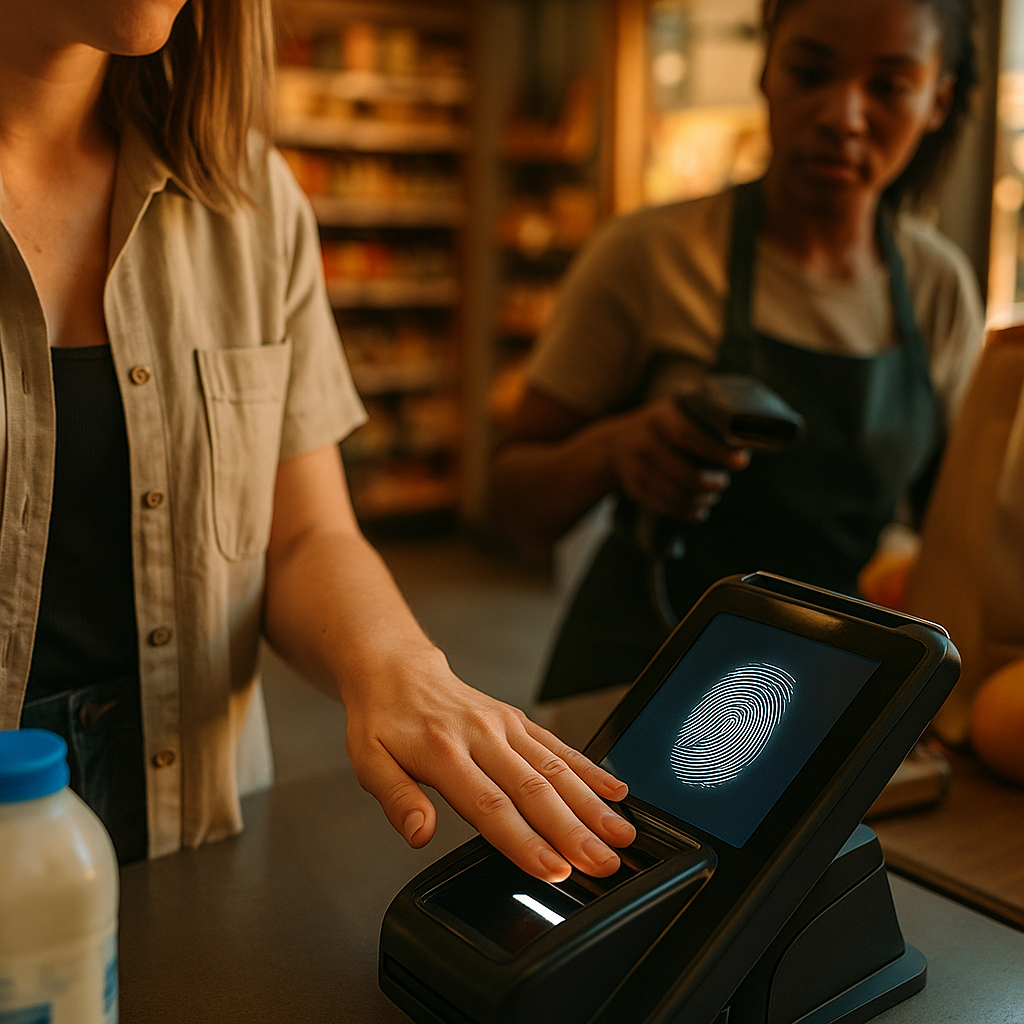
Understanding Regulatory Shifts In Biometric Data Collection For Retailers has become essential in 2025 as face scans, voice prints, and fingerprint-enabled logins expand across stores and apps. Regulators now treat biometric identifiers as high-risk personal data, with stricter consent, retention, and security expectations. Retailers that adapt can reduce legal exposure while preserving customer trust and operational value. What changed, and what should you do next?
Biometric privacy laws in 2025: what changed and why it matters
Biometrics moved from “innovative convenience” to “regulated high-impact data” because biometric identifiers are difficult to replace once compromised and can enable persistent tracking. In 2025, regulators and courts increasingly expect retailers to prove that biometric collection is necessary, transparent, and proportionate to the goal (loss prevention, frictionless checkout, employee timekeeping, personalized service, or account security).
Several themes define the current regulatory shift:
- Stronger consent expectations: Where consent is the lawful basis, it must be informed, specific, and freely given. “By entering the store you agree” signs are often challenged as insufficient for sensitive processing.
- Purpose limitation and data minimization: Retailers must demonstrate why biometrics are needed versus less intrusive alternatives (badges, PINs, device-based authentication, non-biometric analytics).
- Retention and deletion requirements: Regulators increasingly look for a clear retention schedule tied to the stated purpose, plus auditable deletion workflows.
- Accountability and documentation: Expect requests for risk assessments, vendor due diligence, training evidence, and incident response readiness.
If your biometric program was designed around operational convenience rather than defensible necessity, you may now face compliance gaps, enforcement risk, and reputational harm. The good news: a few design decisions can significantly reduce exposure while keeping the business value.
Retail facial recognition compliance: consent, notice, and customer choice
Facial recognition in retail typically appears in three scenarios: (1) identifying known fraud or safety risks, (2) VIP or loyalty recognition, and (3) frictionless entry or checkout experiences. Each scenario triggers different risk levels and expectations, but all require clear, accessible disclosure and strict controls.
Practical steps that align with common regulatory expectations in 2025:
- Use layered notice: Provide an in-store notice at entrances and near cameras, plus a detailed online policy that explains what biometric data is collected, why, who receives it, retention timelines, and how to exercise rights.
- Build a real opt-in where feasible: For loyalty or personalization, opt-in consent is typically the safest route. Make the non-biometric alternative equally functional so consent is truly voluntary.
- Separate safety uses from marketing uses: Combining loss prevention with marketing personalization increases scrutiny. Keep programs distinct, with separate purposes, access controls, and retention schedules.
- Limit watchlist scope and error impact: False matches can lead to serious harms. Use threshold tuning, human review, and clear escalation protocols before any action (such as denying entry).
- Document necessity: Be prepared to explain why facial recognition is required, what alternatives were considered, and how you tested for accuracy and bias.
Retailers often ask, “Can we rely on legitimate interests instead of consent?” In many jurisdictions and frameworks, biometrics may be treated as sensitive data requiring heightened safeguards and, in some cases, explicit consent unless a specific exception applies. Treat this as a legal decision that must be validated per location and use case, then engineered into the customer experience.
Biometric consent requirements: designing opt-in, opt-out, and proof
Consent is not a checkbox; it is a process you must be able to prove. In 2025, enforcement actions frequently focus on whether customers or employees understood what they were agreeing to and whether they had a meaningful choice.
To make consent durable and defensible:
- Use plain language: Explain the biometric type (face geometry template, voiceprint, fingerprint template), the purpose, and the retention period in short sentences.
- Capture affirmative action: Use a clear “I agree” step for enrollment and store a consent record linked to a time, method, and version of the notice.
- Make withdrawal easy: Provide a simple path in an app, website, or customer service channel to revoke consent and request deletion, and explain what changes in service will result.
- Avoid bundling: Do not tie biometrics to unrelated benefits. If biometrics power faster checkout, offer an alternative checkout method without penalty.
- Handle employee consent carefully: Employee “consent” can be questioned due to power imbalance. Where possible, rely on another lawful basis supported by policy, necessity, and safeguards, and provide alternatives for accommodations.
Follow-up question retailers face: “Do we need consent for templates if we don’t store raw images?” Often, yes. Templates can still be biometric identifiers and remain sensitive. Minimization helps, but it does not eliminate compliance obligations.
Data protection impact assessment for biometrics: reducing risk before rollout
A well-executed impact assessment is one of the strongest EEAT signals you can demonstrate to regulators and business stakeholders: you evaluated the risk, involved the right experts, and designed safeguards upfront. For biometric programs, a data protection impact assessment (or similar risk assessment) should not be a one-time form; it should drive architecture decisions.
Include these core elements:
- Use-case definition: What problem does biometrics solve, and what happens if you don’t use it?
- Data mapping: What data is captured (images, audio, template), where it flows (camera to edge device to cloud), and who can access it.
- Necessity and proportionality: Compare biometric processing to alternatives, and justify why biometrics are proportionate.
- Risk analysis: Evaluate misidentification, discrimination impact, stalking/harassment risk, function creep, insider access, and breach consequences.
- Mitigations: Human-in-the-loop review, threshold controls, encryption, segmentation, access logging, deletion automation, and vendor restrictions.
- Testing and monitoring: Accuracy validation in your environment, bias testing where applicable, and ongoing drift monitoring.
Answering a common internal question: “How detailed must the assessment be?” Detailed enough that an independent reviewer could understand the system, see the decision logic, and verify that mitigations match the risks. If the assessment is too vague to guide engineering, it will be too vague to satisfy scrutiny.
Vendor management for biometric systems: contracts, audits, and accountability
Many retailers do not build biometric matching engines; they procure them. In 2025, regulators increasingly view third-party risk as the retailer’s risk, especially when vendors process biometric identifiers on the retailer’s behalf. Strong vendor governance is therefore central to compliance and trust.
Key controls to implement:
- Contract terms that match your promises: Ensure the vendor cannot reuse biometric data for its own product training or other clients unless you have an explicit, legally supported basis and have clearly disclosed it.
- Clear roles and instructions: Define whether the vendor is a processor/service provider and what processing is permitted, prohibited, and logged.
- Security assurances: Require encryption in transit and at rest, key management practices, least-privilege access, and breach notification timelines aligned to your incident response plan.
- Subprocessor controls: Identify any subprocessors, require approval rights, and ensure flow-down obligations.
- Audit and evidence: Obtain recent independent security reports where available, and require the right to audit or receive targeted assurance evidence for biometric handling.
- Data lifecycle commitments: Confirm retention limits, deletion verification, and secure disposal after contract termination.
Retail leaders often ask, “Is a security certification enough?” It helps, but it is not sufficient. You also need privacy assurances: purpose limitation, no secondary use, and technical design choices that keep biometric identifiers from becoming vendor assets.
Biometric data security and retention: building a defensible program
Security and retention are where “policy compliance” becomes operational reality. A defensible biometric program in 2025 focuses on reducing the blast radius of any incident and proving disciplined lifecycle management.
Implement these program foundations:
- Collect the minimum: Store templates rather than raw images when possible, reduce template precision where feasible, and avoid centralized storage unless necessary.
- Prefer on-device or edge processing: When the business case allows, process and match locally to reduce transfers and third-party exposure.
- Harden access: Enforce role-based access, strong authentication, and strict separation between store operations teams and biometric administrative access.
- Encrypt and segment: Use modern encryption and segment biometric systems from general corporate networks; treat biometric stores as high-sensitivity vaults.
- Log and review: Maintain immutable logs for enrollment, matching queries, exports, and deletions; perform regular reviews for anomalies.
- Set retention by purpose: For example, employee timekeeping templates may need a different retention period than a customer opt-in experience. Tie retention to clear triggers (account closure, consent withdrawal, contract end, incident closure).
- Practice deletion: Conduct periodic deletion drills and verify deletions with metrics and sampling, not just “we have a policy.”
Another frequent question: “Can we keep biometrics indefinitely for ‘security’?” Indefinite retention is difficult to defend. Regulators increasingly expect a time-bound rationale and periodic review. If your purpose can be met with shorter retention, that is the safer default.
FAQs
What counts as biometric data for retailers?
Biometric data includes identifiers derived from physical or behavioral traits used to uniquely identify someone, such as facial geometry templates, fingerprints, hand geometry, iris patterns, and voiceprints. In retail, it can appear in fraud prevention, access control, time and attendance, and personalized experiences.
Do we need consent to use facial recognition in stores?
Often, yes, especially when facial recognition is used for loyalty, personalization, or other non-essential purposes. For safety and loss prevention, requirements vary by jurisdiction and context, but you still need strong notice, necessity justification, and safeguards. Treat consent and lawful basis decisions as location-specific legal determinations.
Is a face template safer than storing customer photos?
A template can reduce some risks compared to storing raw images, but it is still sensitive biometric data in many legal frameworks. You still need security controls, retention limits, and a lawful basis for processing.
How should retailers handle biometric opt-outs?
Provide an easy, reliable path to opt out or withdraw consent without degrading core service access. Confirm the request, delete associated biometric identifiers within your stated timeframe, and document completion in an auditable way.
What are the biggest compliance risks in biometric programs?
Common risks include inadequate notice and consent, excessive retention, secondary use by vendors, weak access controls, inaccurate matching leading to harmful outcomes, and lack of documented risk assessments and governance.
How often should we review a biometric compliance program?
Review whenever you change the use case, vendor, model, or data flows, and also on a regular cadence as part of privacy and security governance. Ongoing monitoring is critical because systems drift, business goals expand, and regulations evolve.
Regulatory pressure in 2025 treats biometric identifiers as high-impact data, so retailers must shift from “deploy and disclose” to “justify, minimize, and prove.” Strong notice, defensible consent workflows, documented risk assessments, and strict vendor controls now define compliant biometric programs. If you can’t explain necessity, retention, and safeguards in plain language, redesign the system before expanding it. Compliance becomes easier when privacy is built in.