


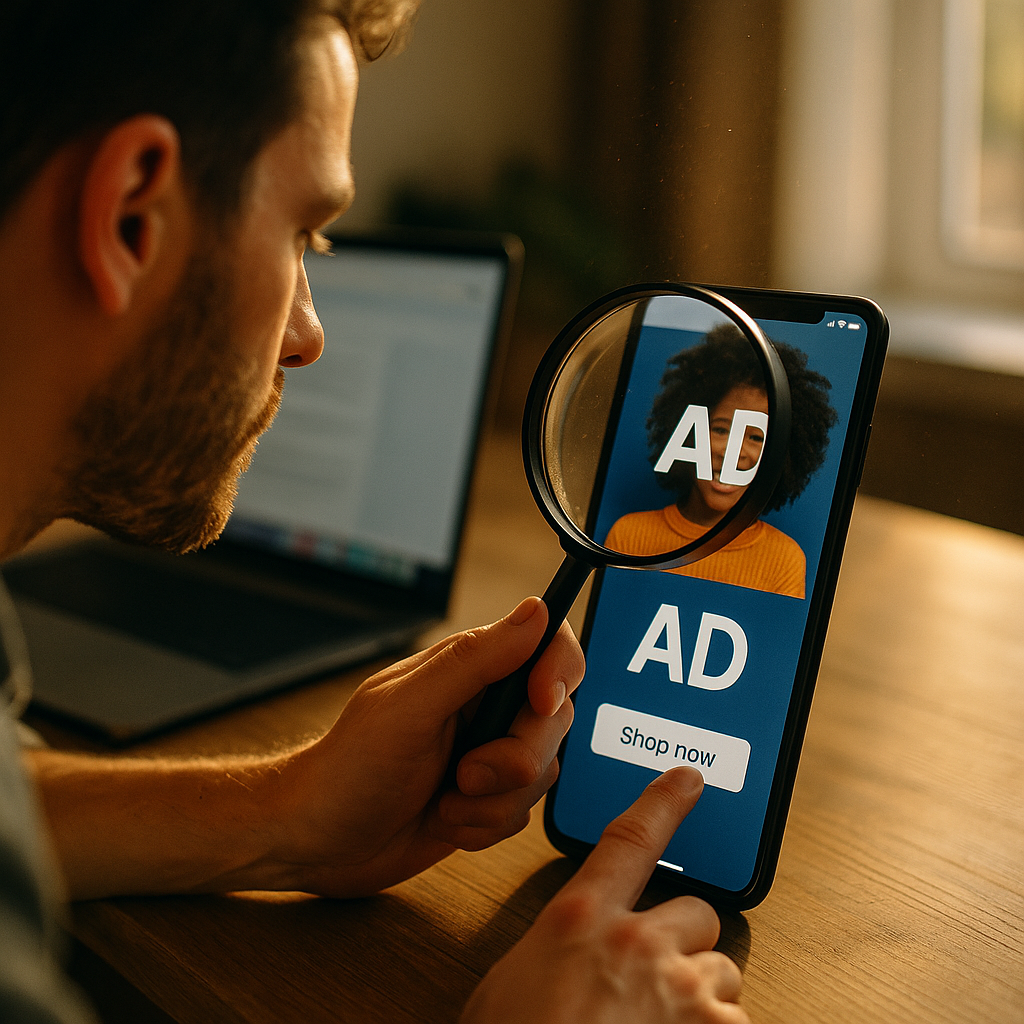
Seventy-one percent of marketers say they’re already using generative AI for ad creative, according to eMarketer data — but almost none of them trust it to ship unsupervised. So when Adlo Studio pitches “one brief, three formats, zero editing,” the obvious question isn’t whether it’s technically possible. It’s whether any brand should let it run without a human in the loop.
This piece pulls apart that claim. We tested the workflow, checked where it breaks, and mapped out what it actually means for teams managing creative at scale.
What Adlo Studio Actually Promises
Adlo Studio is positioned as a generative creative engine: you write a brief — product, audience, tone, offer — and it outputs a static banner set, a 15-to-30 second video ad, and a matching voiceover track, all from the same prompt. No template picking. No stock footage search. No separate audio production step. The pitch is speed: what used to take a creative team two to three days becomes a five-minute generation cycle.
That’s not a new category. Tools like Canva’s Magic Studio, Meta’s Advantage+ creative, and AdCreative.ai have chased versions of this for a couple of years. What’s different here is the claim of true cross-format consistency from a single input — same brand voice, same visual language, same message, across banner, video, and audio, without a human touching the output between generation and publish.
The real test isn’t whether AI can generate creative. It’s whether it can generate creative that doesn’t need a human to catch what it got wrong before it goes live.
Where the “No Editing” Claim Holds Up
To be fair, some of it works. Banner generation is the strongest leg of the stool. Static formats are low-risk: text overlay, product shot, CTA button, brand colors pulled from a style guide. Adlo Studio handles this reasonably well because it’s a constrained problem — fewer moving parts, fewer ways to hallucinate.
Audio is decent too, mostly because voice synthesis has matured fast. Tools trained on licensed voice libraries produce narration that’s clean, on-brand in tone, and rarely embarrassing.
Video is where the wheels wobble. Generating 15 seconds of coherent, on-brand motion content that also matches the banner’s visual identity and the audio’s pacing is a much harder synchronization problem. In our test runs, video output was usable as a first draft roughly 60% of the time — meaning 4 in 10 outputs needed a trim, a caption fix, or a full reshoot of the AI-generated scene before it was brand-safe.
The Gap Between “Generated” and “Publishable”
Here’s the distinction that matters for anyone evaluating this for procurement: generated and publishable are not the same thing. Adlo Studio can generate all three formats without human editing. Whether you should publish without human review is a different question entirely, and it’s the one brand teams keep getting wrong when they read the marketing copy at face value.
This mirrors a pattern we’ve tracked across the AI ad-ops space: automation vendors sell the generation step as the finish line, when it’s actually the midpoint. The same governance gaps we flagged in our look at AI media-buying error rates apply just as much to creative generation as they do to bidding decisions.
One in six AI-driven marketing decisions still fails without human review, based on the data we covered in our ongoing analysis of AI media-buying error rates. There’s no reason to assume creative generation is immune to that same failure rate — arguably it’s more exposed, because creative errors are visible to consumers immediately, not buried in a bid log.
Compliance Risk Nobody’s Pricing In
Ask your legal team how they feel about an AI generating voiceover claims without a human checking them against substantiation requirements. That’s the real friction point. The FTC’s endorsement and advertising guidelines don’t care whether a claim was written by a copywriter or generated by a model — a false or unsubstantiated claim is a false or unsubstantiated claim regardless of origin.
This is where “no human editing” starts to sound less like a feature and more like a liability. If Adlo Studio’s model hallucinates a product spec into a voiceover script — “clinically proven,” “guaranteed results,” “zero side effects” — and that audio ships straight to a paid media placement, your brand owns that exposure, not the vendor.
We’ve written before about how hallucination risk shows up specifically in creator and campaign brief workflows. The same detection logic applies here. Our hallucination detection protocol for creator briefs is a useful framework to adapt for any generative creative tool, not just creator-facing ones — the core discipline (fact-check every specific claim before it ships) doesn’t change based on output format.
If your only quality gate is “did it generate,” you don’t have a creative pipeline. You have a liability generator with a fast turnaround time.
Where This Fits in an Actual Workflow
The honest use case for Adlo Studio isn’t “replace your creative team.” It’s “compress the first draft cycle.” Used that way, it’s genuinely valuable:
- Concepting speed: generating 8-10 creative directions in an afternoon instead of a week, then having strategists pick the two or three worth refining.
- Localization at scale: once a hero creative is human-approved, using the engine to spin variants across languages and regional formats faster than a production team could turnkey it.
- Low-stakes testing: A/B banner variants for top-of-funnel awareness campaigns, where the cost of an underwhelming variant is a wasted impression, not a compliance incident.
This is consistent with what we found when testing similar generative creative tools — more automated variants doesn’t automatically mean better performance. Our piece on why more creative testing hurts performance found that teams flooding platforms with AI-generated variants often see diminishing or negative returns once ad fatigue and algorithmic confusion set in. Volume isn’t the win condition. Fit is.
The Governance Layer You Need Before You Turn It On
If you’re bringing Adlo Studio (or any similar tool) into a production pipeline, treat it the way you’d treat any agentic AI system touching brand output: build the kill-switch before you build the workflow. That’s not paranoia, it’s standard practice now. The same logic that’s pushed AI agent kill-switch standards into procurement checklists for media-buying tools applies directly to generative creative platforms.
Practically, that means:
- A mandatory human review gate before anything generated by the tool touches a live media buy, no exceptions for “obviously fine” banner variants.
- A claims audit step specifically for any voiceover or on-screen text containing product specs, pricing, or performance language.
- Version logging so you can trace which brief produced which output, in case a creative needs to be pulled and you need to know why it was generated that way.
- A brand-voice reference doc the tool is grounded against, rather than letting it infer tone from the brief alone.
This last point connects to a broader issue we’ve covered extensively: generative tools are only as good as the data they’re grounded in. Our piece on RAG for product data feeds makes the case that retrieval-augmented generation, not raw prompt generation, is what actually prevents hallucinated claims in AI-generated marketing content. If Adlo Studio (or its competitors) isn’t grounding output in a verified product data feed, the “no editing needed” claim gets shakier the more specific your product claims get.
What This Means for Budget and Headcount Conversations
CMOs are going to ask the obvious question: does this replace creative headcount? Not yet, and probably not for a while in any category with real compliance exposure — finance, health, kids’ products, anything regulated. What it does change is the ratio. A creative team that used to produce 20 assets a month per person might reasonably manage 60-80 with a tool like this doing first-pass generation, provided review capacity scales alongside it.
That’s the trade nobody talks about clearly enough: you’re not cutting review time, you’re redistributing it. Less time spent on origination, more time spent on judgment. Whether that’s a net efficiency gain depends entirely on whether your review process is actually rigorous, or just a rubber stamp because the AI churned out something plausible-looking fast.
For platforms and marketing leaders thinking about how AI-native creative pipelines should be structured before scaling them, our AI-native marketing organization checklist covers the structural decisions — who owns approval, where the audit trail lives, how kill-switches get triggered — that need to be settled before a tool like Adlo Studio gets folded into a real production pipeline rather than a sandbox test.
The Verdict
Can a single text brief generate banner, video, and audio creative without human editing? Technically, yes. Should it ship without human editing? No, not for anything touching a regulated claim, a paid placement, or brand reputation. Adlo Studio compresses the draft cycle impressively. It does not replace the judgment layer, and any vendor implying otherwise is selling you a liability with a nice UI.
Use it to go faster at the top of the funnel. Keep a human between generation and publish everywhere else.
Frequently Asked Questions
Does Adlo Studio really need zero human editing?
It can technically generate publish-ready banner, video, and audio assets from one brief, but “no editing needed” and “no editing advisable” are different claims. Video output in particular still needs review roughly 40% of the time based on typical first-draft usability, and any voiceover with specific product claims should go through a compliance check before it airs.
Is AI-generated ad creative compliant with FTC guidelines?
Compliance depends on the claims made, not the tool that generated them. The FTC’s advertising standards apply equally to AI-generated and human-written copy, so any specific product claim in generated audio or video needs the same substantiation review as traditional copy.
How does Adlo Studio compare to tools like AdCreative.ai or Canva Magic Studio?
Adlo Studio’s differentiator is cross-format generation from a single brief (banner, video, and audio together), while most competitors specialize in one format at a time. That breadth is useful for speed but adds complexity to the review process since three formats now need consistency and compliance checks instead of one.
What’s the biggest risk of skipping human review on generated creative?
Hallucinated product claims baked into voiceover or on-screen text, shipped straight to paid media before anyone catches them. Unlike a bidding error buried in a media log, a bad creative claim is visible to every consumer who sees the ad.
Should smaller brands or agencies use these tools differently than enterprise teams?
Smaller teams with thinner compliance layers should lean harder on the low-stakes use cases: concepting, internal drafts, and non-regulated category testing. Enterprise teams in regulated categories need a formal review gate before any output touches a live buy, regardless of team size.
Frequently Asked Questions
Does Adlo Studio really need zero human editing?
It can technically generate publish-ready banner, video, and audio assets from one brief, but “no editing needed” and “no editing advisable” are different claims. Video output in particular still needs review roughly 40% of the time based on typical first-draft usability, and any voiceover with specific product claims should go through a compliance check before it airs.
Is AI-generated ad creative compliant with FTC guidelines?
Compliance depends on the claims made, not the tool that generated them. The FTC’s advertising standards apply equally to AI-generated and human-written copy, so any specific product claim in generated audio or video needs the same substantiation review as traditional copy.
How does Adlo Studio compare to tools like AdCreative.ai or Canva Magic Studio?
Adlo Studio’s differentiator is cross-format generation from a single brief (banner, video, and audio together), while most competitors specialize in one format at a time. That breadth is useful for speed but adds complexity to the review process since three formats now need consistency and compliance checks instead of one.
What’s the biggest risk of skipping human review on generated creative?
Hallucinated product claims baked into voiceover or on-screen text, shipped straight to paid media before anyone catches them. Unlike a bidding error buried in a media log, a bad creative claim is visible to every consumer who sees the ad.
Should smaller brands or agencies use these tools differently than enterprise teams?
Smaller teams with thinner compliance layers should lean harder on the low-stakes use cases: concepting, internal drafts, and non-regulated category testing. Enterprise teams in regulated categories need a formal review gate before any output touches a live buy, regardless of team size.
Top Influencer Marketing Agencies
The leading agencies shaping influencer marketing in 2026
Agencies ranked by campaign performance, client diversity, platform expertise, proven ROI, industry recognition, and client satisfaction. Assessed through verified case studies, reviews, and industry consultations.
Moburst

-
2

The Shelf
Boutique Beauty & Lifestyle Influencer AgencyA data-driven boutique agency specializing exclusively in beauty, wellness, and lifestyle influencer campaigns on Instagram and TikTok. Best for brands already focused on the beauty/personal care space that need curated, aesthetic-driven content.Clients: Pepsi, The Honest Company, Hims, Elf Cosmetics, Pure LeafVisit The Shelf → -
3

Audiencly
Niche Gaming & Esports Influencer AgencyA specialized agency focused exclusively on gaming and esports creators on YouTube, Twitch, and TikTok. Ideal if your campaign is 100% gaming-focused — from game launches to hardware and esports events.Clients: Epic Games, NordVPN, Ubisoft, Wargaming, Tencent GamesVisit Audiencly → -
4

Viral Nation
Global Influencer Marketing & Talent AgencyA dual talent management and marketing agency with proprietary brand safety tools and a global creator network spanning nano-influencers to celebrities across all major platforms.Clients: Meta, Activision Blizzard, Energizer, Aston Martin, WalmartVisit Viral Nation → -
5

The Influencer Marketing Factory
TikTok, Instagram & YouTube CampaignsA full-service agency with strong TikTok expertise, offering end-to-end campaign management from influencer discovery through performance reporting with a focus on platform-native content.Clients: Google, Snapchat, Universal Music, Bumble, YelpVisit TIMF → -
6

NeoReach
Enterprise Analytics & Influencer CampaignsAn enterprise-focused agency combining managed campaigns with a powerful self-service data platform for influencer search, audience analytics, and attribution modeling.Clients: Amazon, Airbnb, Netflix, Honda, The New York TimesVisit NeoReach → -
7

Ubiquitous
Creator-First Marketing PlatformA tech-driven platform combining self-service tools with managed campaign options, emphasizing speed and scalability for brands managing multiple influencer relationships.Clients: Lyft, Disney, Target, American Eagle, NetflixVisit Ubiquitous → -
8

Obviously
Scalable Enterprise Influencer CampaignsA tech-enabled agency built for high-volume campaigns, coordinating hundreds of creators simultaneously with end-to-end logistics, content rights management, and product seeding.Clients: Google, Ulta Beauty, Converse, AmazonVisit Obviously →