


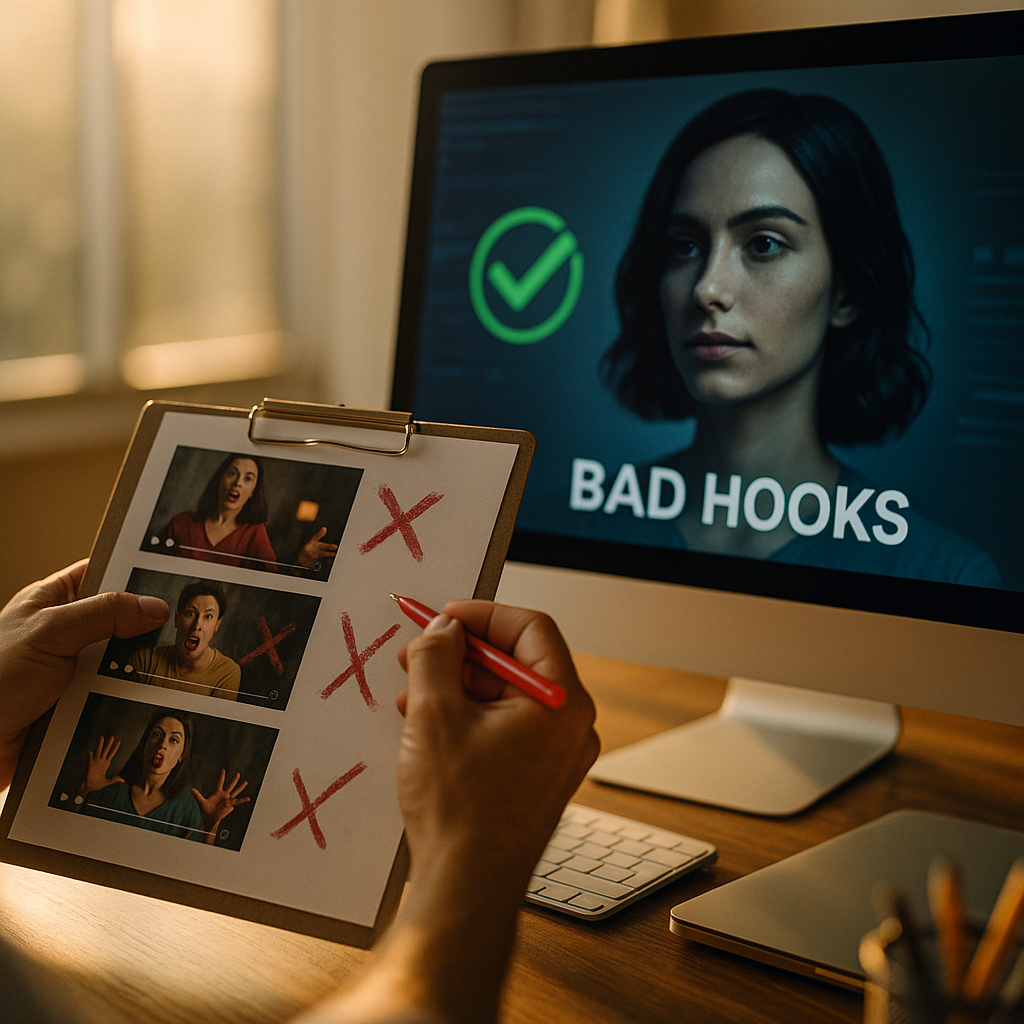
Ninety three percent of the average TikTok ad budget gets spent before a marketer even knows which hook is winning, according to internal benchmarks cited across the paid social industry. That lag is disappearing. Agentic AI creative testing now lets autonomous agents generate hook variants, launch them into live auctions, read the signal, and kill the losers, often before a human has finished their morning coffee. The question for brand teams isn’t whether this works. It’s whether anyone is watching what the agents decide.
What Agentic AI Creative Testing Actually Means
Forget the buzzword soup for a second. Agentic AI creative testing is a system where software doesn’t just analyze performance data, it acts on it. Traditional A/B testing tools tell a marketer “hook B is outperforming hook A by 22%.” An agentic system skips the notification. It reallocates budget, pauses the underperformer, and spins up a new variant based on what it just learned, all without a human clicking approve.
The distinction matters because it changes who is accountable. A dashboard is a tool. An agent is a decision maker. When Meta’s Advantage+ or TikTok’s Smart+ campaigns optimize creative delivery in real time, they’re operating with agentic characteristics already, even if most brand teams still think of them as “just the algorithm.” Layer in dedicated hook testing agents from vendors building on top of GPT and Gemini models, and you get systems making dozens of creative calls per hour across a single account.
Why Manual Hook Testing Can’t Keep Up Anymore
Here’s the uncomfortable math. A mid-size DTC brand running six creators, three platforms, and four offer angles needs roughly 72 hook variants to properly test a single campaign concept. Manually briefing, filming, editing, and tagging that volume takes a creative team two to three weeks. By the time results come in, the trend that inspired the hooks is already dead.
Short-form platforms reward speed, not craft. A hook that would have had a week-long shelf life two years ago now has roughly 48 to 72 hours before saturation sets in, based on patterns tracked in our own coverage of viral hook turnaround. Manual testing cycles simply can’t operate inside that window. This is the gap agentic systems were built to close, and it’s why platforms like the ones covered in our piece on creative testing at scale have moved from novelty to default infrastructure for performance teams.
The brands winning right now aren’t the ones with the best creative. They’re the ones whose systems can identify the best creative fastest and kill everything else without hesitation.
How Autonomous Agents Actually Choose Winning Hooks
The mechanics are less mysterious than the marketing copy suggests. Most agentic hook testing systems run on a loop that looks something like this:
- Generation: An LLM produces hook variants based on a brief, past top performers, and trending audio or format patterns scraped from the platform.
- Deployment: Variants get pushed into small-budget test cells, often $20 to $50 per hook, across a live ad account.
- Signal reading: The agent monitors hook rate, three-second view rate, and early click-through within a defined window, sometimes as short as four hours.
- Action: Winners get budget. Losers get paused. The agent generates new variants informed by what just worked, and the loop restarts.
This isn’t fundamentally different from what human media buyers do. The difference is volume and speed. A human can reasonably manage 15 to 20 active test cells. An agent can run hundreds simultaneously, and it doesn’t get attached to a favorite hook or push back when the data says the client’s preferred angle is a dud. Tools built on this logic overlap closely with what we’ve written about in AI hook generation before filming even starts, where the same predictive scoring gets applied pre-production instead of post-launch.
The Scoring Models Behind the Curtain
Most agentic testing platforms weight three signals heavily: early retention curves, comment sentiment (yes, agents now read comments for sarcasm and confusion, not just volume), and cost per thousand-view completions. Some platforms, including tools built on Meta’s Marketing API and TikTok’s Business API, also factor in creator-level historical performance as a prior, meaning a hook from a creator with strong past hook rates gets a head start in the scoring model before a single impression serves.
None of this is perfect. Sentiment models still misread irony a fair amount of the time, and early retention curves can be gamed by bots or low-quality traffic pools if targeting isn’t locked down. That’s why serious operations pair agentic scoring with a human spot-check layer, even if that layer only reviews the top and bottom deciles rather than everything in between.
The ROI Case, Stated Plainly
Speed is the headline benefit, but it’s not the only one. Brands running agentic hook testing report three consistent gains:
- Faster time to signal. What used to take two weeks now takes 24 to 72 hours, depending on ad spend velocity.
- Lower wasted spend. Agents kill losing hooks before they burn through meaningful budget, often within the first few hundred dollars of a test cell rather than the first few thousand.
- Higher creative throughput. Teams can test more angles per quarter without proportionally increasing production headcount, since script and hook generation gets automated on the front end too, similar to the shift documented in automated script production.
Industry data backs the directional trend even if exact figures vary by vertical. eMarketer has repeatedly flagged short-form video ad spend as the fastest-growing line item in social budgets, and that growth only makes sense if brands can produce and test creative fast enough to justify the spend. Nobody is pouring incremental dollars into a channel where testing cycles crawl.
Where This Breaks: Governance and Brand Safety Gaps
Here’s where the enthusiasm needs a hard stop. An agent optimizing purely for hook rate and retention doesn’t know what your brand can’t say. It doesn’t know that a competitor just got sued for a claim it’s now testing verbatim. It doesn’t know that a hook mimicking a trending sound might trip a music licensing issue.
This is the same governance gap we’ve flagged in coverage of creator selection agents choosing talent without human sign-off. Read the parallel case in autonomous creator selection risk, because the underlying problem is identical: autonomy without a compliance layer is a liability generator, not just an efficiency win.
Practical risk areas to lock down before letting agents run unsupervised hook tests:
- Health, finance, and legal claim language, which regulators watch closely (see the FTC’s endorsement and advertising guidance)
- Music and audio licensing on trending sounds pulled into generated hooks
- Tone drift on sensitive topics, especially in comment-baiting hooks designed to spark controversy for engagement
- Data handling if the testing platform pulls first-party audience data into its scoring models
Vendor audits matter enormously here. Before handing an agent the keys to live ad spend, brand teams should be asking the same questions we outlined in our piece on vendor audits at AI handoffs. Where does the training data come from? What’s the kill-switch process if the agent starts making calls that violate brand guidelines? Who signs off on the scoring criteria before the loop goes live?
Building a Testing Stack That Doesn’t Blow Up on You
A workable structure for most mid-size to enterprise brands looks like a tiered permission model rather than full autonomy or full manual control. Give agents free rein on budget reallocation and hook pausing within pre-approved creative pools. Require human review for anything touching claims language, new creators, or spend above a set threshold. This mirrors the approach detailed in our coverage of tiered automation limits, and it’s the difference between an agent that saves you money and one that quietly torches your brand reputation while hitting its optimization target perfectly.
Reporting cadence matters too. Weekly human review of agent decisions, not just outcomes, catches pattern problems early. If an agent keeps favoring a specific tone or claim type because it’s scoring well short-term, that’s worth a conversation before it becomes a habit baked into the model’s future outputs.
Sprout Social’s research on social team structures consistently shows that brands with clear escalation paths between automated tools and human reviewers report fewer public missteps, which tracks with what we’re seeing across agentic marketing tools broadly, not just creative testing.
Frequently Asked Questions
What is agentic AI creative testing?
It’s a system where autonomous software agents generate ad hook variants, launch them into live campaigns, analyze early performance signals, and reallocate budget or kill underperformers without requiring human approval at each step.
How is this different from standard A/B testing?
Standard A/B testing surfaces data for a human to act on. Agentic testing closes the loop itself, making budget and creative decisions in real time based on the data it collects, often within hours rather than days.
Is agentic hook testing safe for regulated industries?
Not without added guardrails. Agents optimizing purely for engagement don’t inherently understand claims restrictions or compliance requirements, so regulated brands need a human review layer for any hook touching health, financial, or legal claims.
How much budget do agentic testing platforms need to work well?
Most platforms recommend small test cells, often in the $20 to $50 range per hook variant, which means the systems generally need enough overall daily spend to run dozens of simultaneous test cells without starving any one of them of signal.
Can agentic creative testing replace a creative team?
No. It replaces the manual testing and optimization workload, not the strategic and production work of developing concepts, filming with creators, and maintaining brand voice, which still requires human judgment.
Frequently Asked Questions
Start small: pick one campaign, cap agent authority at budget reallocation and hook pausing only, and review its decision log weekly for the first month before expanding scope. The brands that win with agentic creative testing are the ones that build the guardrails before the agent proves it needs them.
Top Influencer Marketing Agencies
The leading agencies shaping influencer marketing in 2026
Agencies ranked by campaign performance, client diversity, platform expertise, proven ROI, industry recognition, and client satisfaction. Assessed through verified case studies, reviews, and industry consultations.
Moburst

-
2

The Shelf
Boutique Beauty & Lifestyle Influencer AgencyA data-driven boutique agency specializing exclusively in beauty, wellness, and lifestyle influencer campaigns on Instagram and TikTok. Best for brands already focused on the beauty/personal care space that need curated, aesthetic-driven content.Clients: Pepsi, The Honest Company, Hims, Elf Cosmetics, Pure LeafVisit The Shelf → -
3

Audiencly
Niche Gaming & Esports Influencer AgencyA specialized agency focused exclusively on gaming and esports creators on YouTube, Twitch, and TikTok. Ideal if your campaign is 100% gaming-focused — from game launches to hardware and esports events.Clients: Epic Games, NordVPN, Ubisoft, Wargaming, Tencent GamesVisit Audiencly → -
4

Viral Nation
Global Influencer Marketing & Talent AgencyA dual talent management and marketing agency with proprietary brand safety tools and a global creator network spanning nano-influencers to celebrities across all major platforms.Clients: Meta, Activision Blizzard, Energizer, Aston Martin, WalmartVisit Viral Nation → -
5

The Influencer Marketing Factory
TikTok, Instagram & YouTube CampaignsA full-service agency with strong TikTok expertise, offering end-to-end campaign management from influencer discovery through performance reporting with a focus on platform-native content.Clients: Google, Snapchat, Universal Music, Bumble, YelpVisit TIMF → -
6

NeoReach
Enterprise Analytics & Influencer CampaignsAn enterprise-focused agency combining managed campaigns with a powerful self-service data platform for influencer search, audience analytics, and attribution modeling.Clients: Amazon, Airbnb, Netflix, Honda, The New York TimesVisit NeoReach → -
7

Ubiquitous
Creator-First Marketing PlatformA tech-driven platform combining self-service tools with managed campaign options, emphasizing speed and scalability for brands managing multiple influencer relationships.Clients: Lyft, Disney, Target, American Eagle, NetflixVisit Ubiquitous → -
8

Obviously
Scalable Enterprise Influencer CampaignsA tech-enabled agency built for high-volume campaigns, coordinating hundreds of creators simultaneously with end-to-end logistics, content rights management, and product seeding.Clients: Google, Ulta Beauty, Converse, AmazonVisit Obviously →