


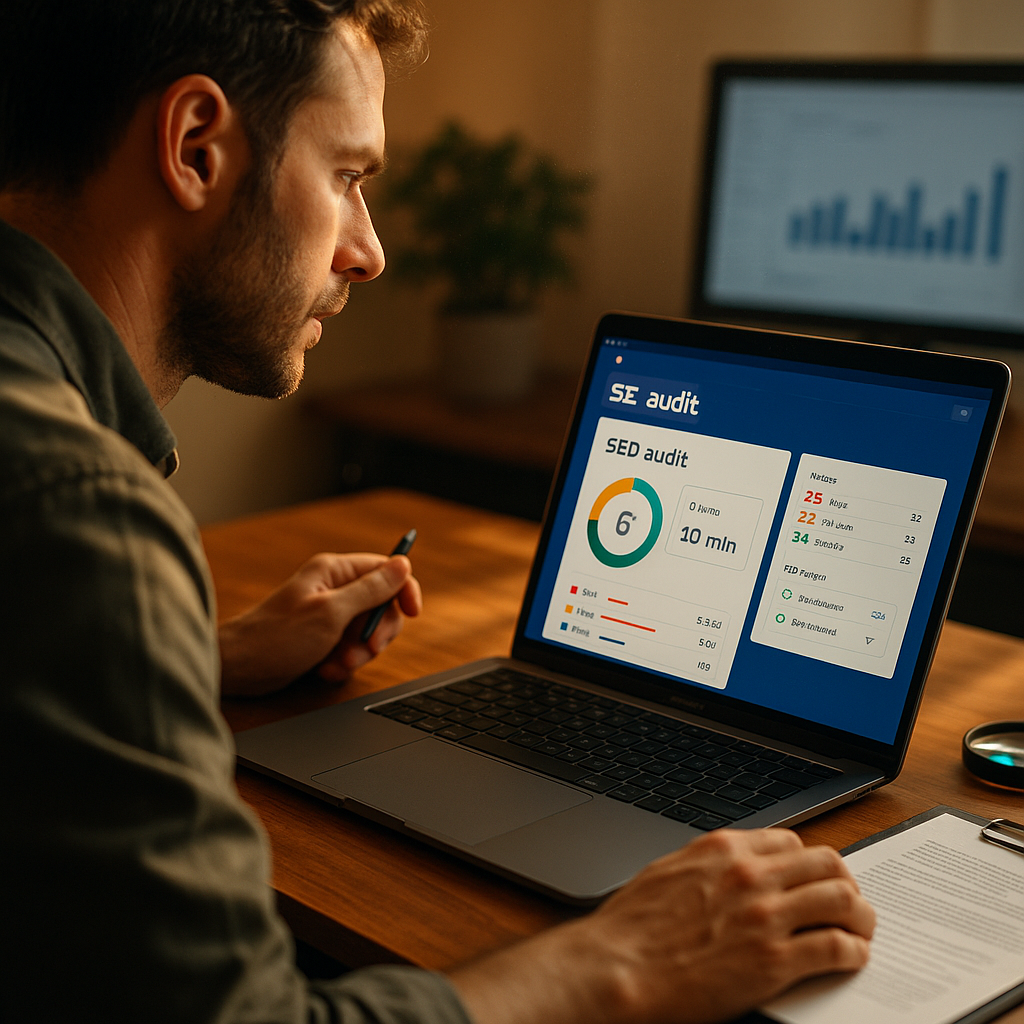
Ahrefs says its new agentic workspace, Letaido, can audit a site in the time it takes to eat lunch. That’s a bold claim in an industry where a proper technical SEO audit has historically eaten a week of an analyst’s calendar. So we put the pitch under a microscope: can a 60-minute site audit from an AI agent genuinely replace 40 hours of human SEO diagnostic work, or is this another case of automation theater dressed up as transformation?
What Letaido Actually Does
Letaido is Ahrefs’ answer to the agentic AI wave sweeping martech. Instead of the traditional dashboard-and-export workflow — where a human pulls crawl data, cross-references it with Search Console, and manually writes recommendations — Letaido runs autonomously. It crawls the site, pulls backlink and keyword data from Ahrefs’ existing index, checks Core Web Vitals, flags duplicate content and orphaned pages, and then generates a prioritized action plan in natural language.
The pitch is straightforward: fewer billable hours, faster turnaround, and a report a CMO can actually read without a glossary. For agencies juggling dozens of client accounts, that’s catnip. Time is margin. If an agent can compress a 40-hour audit into an hour, the economics of retainer-based SEO work shift dramatically.
The 40-Hour Baseline: Where Does That Number Come From?
Before evaluating whether Letaido replaces 40 hours, it’s worth interrogating the baseline. A comprehensive technical SEO audit for a mid-size site (think: 5,000 to 50,000 URLs) typically involves crawling, log file analysis, content gap assessment, backlink profile review, competitive benchmarking, and a written strategy document. Agencies commonly quote 30-50 hours for this scope, according to industry pricing norms tracked by HubSpot’s marketing benchmarks and corroborated by freelance SEO rate surveys.
That 40-hour figure isn’t marketing fluff. It reflects real labor: crawling takes time, but interpreting the crawl — deciding which 404s matter, which redirect chains are actually hurting rankings, which content should be pruned versus consolidated — is where the hours go. Machines have always been fast at the crawl. The bottleneck was never data collection. It was judgment.
The real question isn’t whether AI can crawl a site faster than a human. It’s whether AI can replicate the judgment calls that separate a useful audit from a 200-page PDF nobody reads.
Where Letaido Genuinely Saves Time
Give credit where it’s due. Letaido excels at the mechanical layer of auditing:
- Crawl-to-insight compression: It ingests crawl data and immediately flags anomalies (broken canonicals, thin content clusters, index bloat) without a human manually filtering spreadsheets.
- Cross-referencing data sources: Pulling backlink toxicity scores alongside keyword cannibalization issues in one pass is genuinely faster than toggling between five tools.
- First-draft prioritization: The agent ranks issues by estimated impact, giving strategists a starting point rather than a blank page.
- Natural-language summaries: Non-technical stakeholders get a readable brief instead of a raw export.
For teams drowning in stack sprawl — and plenty are, as we’ve covered in our look at agentic martech stack sprawl — a tool that consolidates crawl, backlink, and content analysis into one workflow is a legitimate efficiency win. It’s not nothing.
Where It Falls Short
Here’s the uncomfortable part. Letaido, like every agentic SEO tool on the market right now, struggles with context that lives outside the crawl.
It doesn’t know your Q3 product launch is going to shift keyword priorities. It doesn’t know your legal team just flagged three pages for compliance review. It doesn’t understand that the “duplicate content” it flagged on a franchise site is intentional, localized copy required for regional SEO. These are judgment calls rooted in business context, not crawl data, and no agent — however well-trained — has access to the Slack thread where that decision got made.
There’s also the accuracy question. Ahrefs’ own index, while extensive, isn’t infallible. Backlink data lags reality by days or weeks. Search intent shifts, especially with the rise of AI-driven search behavior, faster than any crawler updates. A 60-minute audit built entirely on Ahrefs’ index inherits every blind spot that index has.
And then there’s the elephant in the room: generative search. As we’ve noted in coverage of native AEO monitoring across major platforms, traditional technical SEO audits increasingly miss how content performs in AI Overviews, ChatGPT, and Perplexity results. Letaido’s audit is still fundamentally optimized for classic Google SERP mechanics. It’s not clear it accounts for how brands need to prepare for answer-engine discovery, a gap that matters more every quarter.
Does It Replace the Analyst, or the Grunt Work?
This is the framing that matters most for budget owners. Letaido doesn’t replace an SEO strategist. It replaces the analyst-hours spent on data assembly and first-pass triage.
That’s a meaningful distinction for agencies pricing retainers. If 25 of those 40 hours were spent on crawl cleanup, cross-tool reconciliation, and drafting the initial report structure, and Letaido compresses that to an hour, the remaining 15 hours of genuine strategic judgment are where the real value — and the real billing — should concentrate. Agencies that pitch “we replaced our audit process with AI” without adjusting their value proposition are going to have an awkward conversation with clients who ask why the invoice didn’t shrink.
Compressing the audit timeline doesn’t eliminate the need for a strategist. It just moves the billable hours from data-wrangling to decision-making — and clients will expect that shift to show up in pricing.
This mirrors a pattern we’ve seen across agentic AI tools in adjacent categories. In our review of agentic AI media buying claims, the same theme surfaced: vendors sell full automation, but the actual gain is usually in the operational middle layer, not the strategic top layer. SEO auditing is following the same trajectory.
Vetting Vendor Claims: A Practical Checklist
If you’re evaluating Letaido or any competing agentic SEO tool for your team, don’t take the “40 hours to 60 minutes” claim at face value. Run it through a few filters:
- Ask what “audit” means in their benchmark. A 40-hour audit that includes stakeholder interviews and competitive strategy isn’t comparable to a 60-minute technical crawl summary.
- Test it on a site you already know intimately. Run the audit and see if it catches the issues your team already flagged manually. Gaps will surface fast.
- Check how it handles ambiguity. Does it flag uncertain calls for human review, or does it confidently prioritize issues it might be wrong about?
- Confirm data freshness. Ask directly how current the backlink and crawl data is at the point of report generation.
- Evaluate the output for AEO readiness. Does the audit address how content surfaces in AI-generated answers, or only classic organic rankings?
This same due-diligence framework applies broadly across agentic marketing tools, not just SEO. We outlined a similar vetting approach for evaluating AI fraud detection vendors, and the logic transfers: demand a live demo on your own data before you trust a benchmark stat pulled from a vendor’s case study.
The Compliance and Accuracy Angle
There’s a risk-mitigation dimension brands shouldn’t skip. If Letaido’s recommendations get pushed live without human review — say, bulk redirect changes or canonical rewrites across thousands of URLs — a misjudged automation could tank rankings before anyone notices. Agentic tools that execute changes, not just recommend them, need a human-in-the-loop checkpoint. Treat AI-generated SEO recommendations the way you’d treat AI-generated ad spend decisions: verify before you deploy, every time.
Independent data on this remains thin since agentic SEO tools are so new, but early sentiment tracked by eMarketer suggests marketing teams are still cautious about full automation in technical SEO, favoring “AI-assisted” over “AI-autonomous” workflows for anything touching live site infrastructure.
So, Does It Replace 40 Hours?
Partially, and honestly, that’s the more useful answer than a flat yes or no. Letaido compresses the mechanical portion of an audit — crawling, flagging, cross-referencing — into a fraction of the time it used to take. That part of the claim holds up under scrutiny.
What it doesn’t replace is strategic judgment, business context, and the increasingly important layer of answer-engine optimization that sits outside classic crawl-based auditing. Teams that treat Letaido as a first-pass triage tool, freeing analysts to spend their hours on strategy instead of spreadsheets, will get real ROI. Teams that treat it as a full replacement for human SEO expertise are setting themselves up for a rude awakening when an “optimization” the agent recommended tanks a high-traffic page.
Next step: run Letaido (or a comparable agentic SEO tool) against a site your team has already audited manually within the last quarter, compare the outputs side by side, and use the gaps to define exactly where human review stays mandatory before you rewrite your retainer pricing.
FAQs
Can Letaido fully replace an in-house SEO analyst?
No. It automates data collection and first-pass triage effectively but still requires human judgment for business context, prioritization tradeoffs, and execution decisions on live sites.
How accurate is a 60-minute AI-generated audit compared to a manual one?
Accuracy depends heavily on the freshness of the underlying crawl and backlink index. For mechanical issues like broken links or duplicate content, it’s comparable. For strategic judgment calls, it lags human analysis.
Should agencies change their pricing if they adopt agentic audit tools?
Yes. If tools like Letaido eliminate the data-assembly hours, agencies should reallocate billing toward strategic work rather than charging the same rate for a compressed process.
Does Letaido account for AI search and answer engine optimization?
Current agentic SEO audit tools, including Letaido, are primarily built around classic crawl-based SEO signals and may not fully capture how content performs in AI-generated search answers.
What’s the biggest risk of relying on agentic SEO audits?
The main risk is deploying AI-recommended changes, like bulk redirects or canonical edits, without human review, which could negatively impact rankings if the agent misjudges context.
Top Influencer Marketing Agencies
The leading agencies shaping influencer marketing in 2026
Agencies ranked by campaign performance, client diversity, platform expertise, proven ROI, industry recognition, and client satisfaction. Assessed through verified case studies, reviews, and industry consultations.
Moburst

-
2

The Shelf
Boutique Beauty & Lifestyle Influencer AgencyA data-driven boutique agency specializing exclusively in beauty, wellness, and lifestyle influencer campaigns on Instagram and TikTok. Best for brands already focused on the beauty/personal care space that need curated, aesthetic-driven content.Clients: Pepsi, The Honest Company, Hims, Elf Cosmetics, Pure LeafVisit The Shelf → -
3

Audiencly
Niche Gaming & Esports Influencer AgencyA specialized agency focused exclusively on gaming and esports creators on YouTube, Twitch, and TikTok. Ideal if your campaign is 100% gaming-focused — from game launches to hardware and esports events.Clients: Epic Games, NordVPN, Ubisoft, Wargaming, Tencent GamesVisit Audiencly → -
4

Viral Nation
Global Influencer Marketing & Talent AgencyA dual talent management and marketing agency with proprietary brand safety tools and a global creator network spanning nano-influencers to celebrities across all major platforms.Clients: Meta, Activision Blizzard, Energizer, Aston Martin, WalmartVisit Viral Nation → -
5

The Influencer Marketing Factory
TikTok, Instagram & YouTube CampaignsA full-service agency with strong TikTok expertise, offering end-to-end campaign management from influencer discovery through performance reporting with a focus on platform-native content.Clients: Google, Snapchat, Universal Music, Bumble, YelpVisit TIMF → -
6

NeoReach
Enterprise Analytics & Influencer CampaignsAn enterprise-focused agency combining managed campaigns with a powerful self-service data platform for influencer search, audience analytics, and attribution modeling.Clients: Amazon, Airbnb, Netflix, Honda, The New York TimesVisit NeoReach → -
7

Ubiquitous
Creator-First Marketing PlatformA tech-driven platform combining self-service tools with managed campaign options, emphasizing speed and scalability for brands managing multiple influencer relationships.Clients: Lyft, Disney, Target, American Eagle, NetflixVisit Ubiquitous → -
8

Obviously
Scalable Enterprise Influencer CampaignsA tech-enabled agency built for high-volume campaigns, coordinating hundreds of creators simultaneously with end-to-end logistics, content rights management, and product seeding.Clients: Google, Ulta Beauty, Converse, AmazonVisit Obviously →