


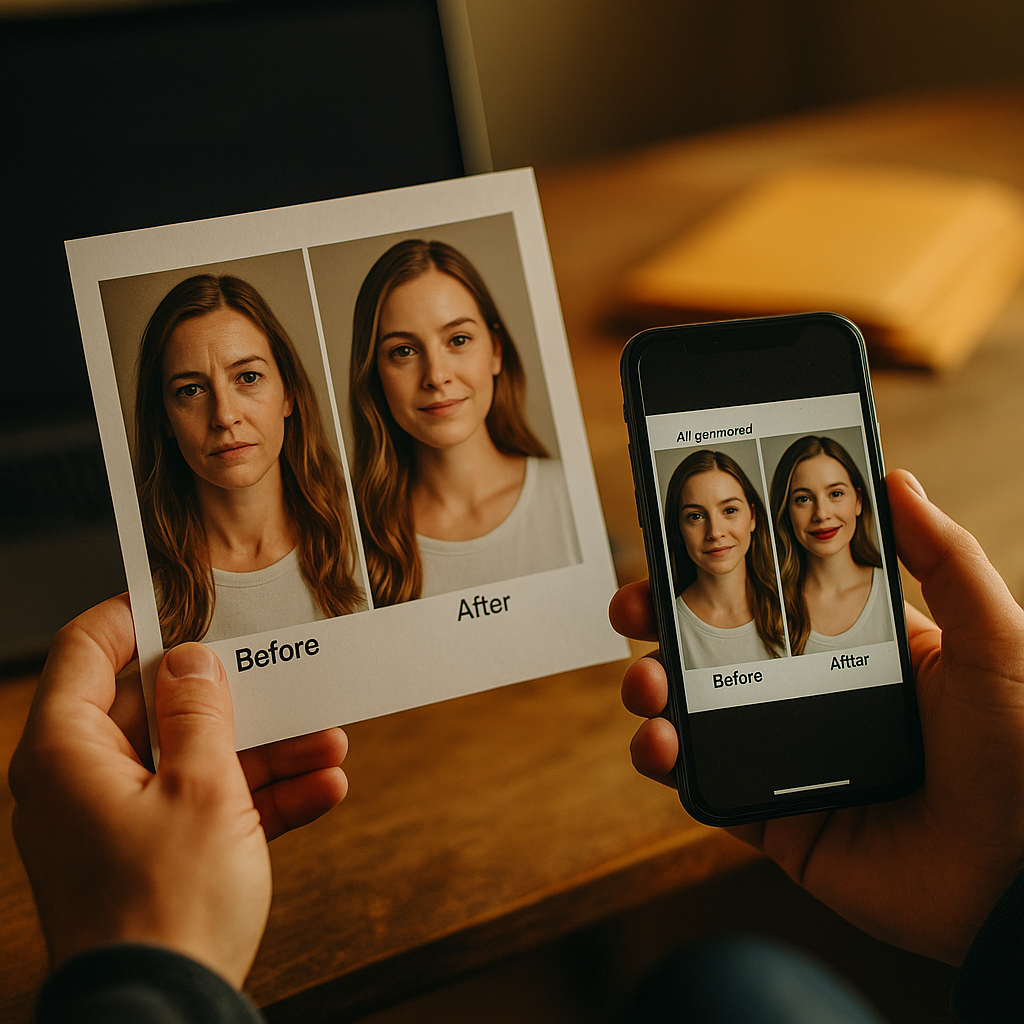
Sixty percent of “results” you see in skincare and fitness creator content may not be real results at all — they’re AI-enhanced approximations of what a brand hopes will happen. The FTC’s stance on AI-generated before-and-after imagery is no longer theoretical. It’s an active enforcement priority, and brands that treat retouching apps as a creative afterthought are building campaigns on legal quicksand.
Before-and-after content has always lived in a gray zone. Lighting changes, better angles, a good night’s sleep — all of it nudges the “after” photo toward flattering. But generative AI tools now let creators smooth skin, add muscle definition, or simulate six weeks of progress in six seconds. That’s a different category of problem, and the FTC has made clear it’s watching.
Why This Suddenly Matters More Than It Did Two Years Ago
The FTC’s Guides Concerning the Use of Endorsements and Testimonials require that any claim implying typical results be substantiated by real, typical outcomes — not best-case scenarios, and certainly not synthetic ones. Historically, enforcement focused on cherry-picked results (“this is the best transformation we’ve ever seen, presented as normal”). AI adds a second layer: content that doesn’t depict an actual outcome at all.
Skincare and fitness are uniquely exposed here. Both categories live and die by visual proof. A serum brand without a dramatic before-and-after is just another bottle on a shelf. A fitness program without a transformation photo is a workout plan nobody trusts. That commercial pressure is exactly why regulators are paying closer attention — the incentive to fake it is highest where the product category depends most on visible change.
If a brand cannot produce documentation showing a before-and-after image reflects an actual, unaltered outcome from actual product use, the FTC can treat the claim as unsubstantiated — regardless of whether the creator or the brand made the edit.
The FTC’s own guidance has repeatedly emphasized that liability doesn’t stop at the creator. Brands that draft the brief, approve the content, or run paid amplification share exposure. “The influencer did it” has never been a valid defense, and it’s even less credible when the brand supplied the product and the campaign goals that created the pressure to exaggerate.
What Counts as “AI-Generated” in This Context?
This is where a lot of brand teams get sloppy. AI-generated doesn’t just mean a fully synthetic image built from a prompt. In FTC terms, it plausibly covers:
- Skin-smoothing or blemish-removal filters applied to a genuine “before” or “after” photo
- AI body-reshaping tools (think Facetune-style muscle enhancement or waist slimming)
- Generative fill used to extend, brighten, or “clean up” a background in a transformation photo
- Fully synthetic composite images presented as a real customer’s documented journey
- AI upscaling or “enhance” tools that materially change apparent skin texture or muscle tone
Notice that the first three items are things creators do routinely, often without thinking of them as “AI.” That’s the compliance trap. Nobody feels like they’re fabricating a claim when they run a photo through a one-tap smoothing filter. Regulators don’t care about intent that much — they care about the net effect on a consumer’s perception of typical results.
The Substantiation Standard, Translated for Marketers
Substantiation isn’t a new concept, but AI raises the evidentiary bar. Brands need to be able to answer three questions for every before-and-after asset running in market:
- Is this a real customer or creator, using the product as directed? Not a composite, not a stock photo, not a hypothetical.
- Does the “after” image reflect an unaltered representation of the outcome, or has any editing tool changed skin texture, tone, muscle definition, or body proportions?
- Is the result typical, or does it require a disclosure that most users won’t see comparable results?
If the answer to question two involves any AI-assisted retouching beyond basic exposure/color correction, the brand should assume it needs either (a) a redo with unedited imagery, or (b) a very explicit, unmissable disclosure that the image was digitally altered and does not represent actual or typical results. Most legal teams will tell you option (a) is safer. Consumers, and regulators, have little patience for disclosure language buried in a caption’s ninth hashtag.
Here’s the uncomfortable truth for performance marketers: a stunning AI-enhanced transformation photo will almost always outperform the real, less-dramatic version in click-through and conversion testing. That’s precisely why the FTC is focused here — the commercial incentive to fake it is baked into the format.
Building an Actual Substantiation File
Documentation is the difference between a defensible campaign and an FTC investigation. A substantiation file for before-and-after creator content should include, at minimum:
- Original, unedited source images or video, timestamped and stored before any creator or brand editing occurs
- A written statement from the creator confirming the timeline (how many days/weeks between before and after) and confirming no AI retouching tools were used, or disclosing exactly which were
- Product usage records — did the creator actually use the product for the claimed duration, at the claimed frequency?
- Internal sign-off showing legal or compliance reviewed the asset prior to publication
- A record of any typical-results disclaimer language and where it appeared
This isn’t paperwork for paperwork’s sake. In an investigation, the FTC asks for exactly this kind of file. Brands that can produce it quickly tend to resolve inquiries faster and with less reputational damage. Brands that can’t are the ones that end up in consent decrees. For a deeper look at building this kind of evidentiary trail into your creator briefs, see our guide on documenting AI tool usage in briefs.
Where Health Claims and Image Claims Collide
Skincare before-and-afters frequently cross from “aesthetic” into “health claim” territory without anyone noticing. A caption like “cleared my cystic acne in 10 days” isn’t just an image claim — it’s a therapeutic claim that may trigger FDA overlap alongside FTC scrutiny. AI-enhanced imagery paired with health-adjacent language is a compounding risk, not a simple addition of two separate issues. Brands running dermatology-adjacent or wellness campaigns should cross-reference our health claims checklist for AI-assisted content before greenlighting any transformation-style creative.
Fitness content has its own version of this collision: supplement-adjacent claims (“this protein powder is why I gained 8 lbs of muscle in a month”) paired with AI-enhanced physique photos. Even if the supplement itself is fine, the visual exaggeration becomes the actionable deception.
What Brands Should Put in the Brief, Not Just the Contract
Contracts alone don’t prevent this problem. By the time legal reviews a signed agreement, the creator may have already posted an AI-smoothed transformation reel that’s racked up 200,000 views. The fix has to live upstream, in the brief.
Specific brief language should:
- Prohibit AI beauty filters, body-reshaping tools, and generative fill on any before-and-after content tied to product claims
- Require creators to submit raw, unedited files alongside the final published asset
- Define “typical results” language the creator must include if their outcome is above average
- Specify a pre-publication review window for any transformation-style content
- Include audit rights so the brand (or its agency) can request original files at any point post-publication
That last point matters more than most brands realize. Verbal assurances from a creator that “no filters were used” don’t hold up well in an FTC inquiry. Written audit rights, similar to what’s outlined in our piece on right-to-audit clauses, give brands a mechanism to actually verify compliance rather than just hope for it.
A brief that bans “misleading edits” without defining the specific tools and techniques is not a compliance control. It’s a suggestion — and suggestions don’t hold up in an FTC investigation.
Platform Enforcement Is Inconsistent, So Don’t Rely On It
Meta and TikTok have both introduced AI-content labeling requirements, and Meta’s advertising standards increasingly flag digitally altered imagery in regulated categories. TikTok’s commerce policies do similarly for shop-linked content. But platform labels aren’t a substitute for FTC compliance, and they’re inconsistently enforced across markets and content formats.
Relying on TikTok’s “AI-generated” tag to satisfy your disclosure obligation is a mistake. The FTC evaluates deception from the reasonable consumer’s perspective, not from whether a small platform-generated badge happened to render correctly on every device. Brands running paid amplification on transformation content should also revisit disclosure placement using frameworks like our cross-platform disclosure matrix, since caption-only disclosures often fail visibility standards on video-first formats like Reels and TikTok.
Industry data backs up why this category draws outsized scrutiny. eMarketer has tracked accelerating creator spend in beauty and wellness verticals for several years running, and that spend concentration is exactly what draws regulatory attention — big markets, big claims, big consumer complaint volume when things go wrong.
A Quick Gut-Check for Marketing Teams
Before approving any before-and-after asset this quarter, ask: would this claim survive if the FTC asked for the raw file tomorrow? If the honest answer is “we’re not sure” or “we’d have to check with the creator,” that’s your signal to fix the process now, not after a complaint lands.
FAQs
Frequently Asked Questions
Does the FTC specifically regulate AI-generated before-and-after images?
The FTC doesn’t have a standalone rule naming “AI before-and-after images,” but its existing Endorsement Guides and general deception authority cover them fully. Any image implying a product result must be substantiated and typical, and AI-altered images that misrepresent an outcome fall squarely under existing unfair-and-deceptive-practices enforcement.
Who is liable if a creator uses an AI filter without the brand’s knowledge?
Both parties can face exposure. Brands are expected to have reasonable monitoring and approval processes in place; simply not knowing what a creator did isn’t a strong defense if the brand never asked for raw files or set clear no-AI-editing terms in the brief.
Is disclosing “this image was AI-enhanced” enough to stay compliant?
Not necessarily. Disclosure has to be clear, conspicuous, and unavoidable — not buried in a caption or a linked terms page. In many cases, especially where health or therapeutic claims are implied, brands are safer avoiding AI-altered transformation imagery entirely rather than relying on a disclaimer to fix it.
What documentation should brands keep for before-and-after creator content?
At minimum: unedited original images with timestamps, a creator statement on editing tools used, product usage records confirming the claimed timeline, internal compliance sign-off, and a record of any disclaimer language used and where it appeared.
Does this apply to UGC and organic creator content, or only paid partnerships?
It applies to both. If a brand reposts, amplifies, whitelists, or otherwise benefits commercially from creator content, it can share liability for deceptive imagery even if the original post was organic or unpaid.
How is this different from FDA oversight of skincare and supplement claims?
FTC oversight focuses on deceptive marketing and substantiation of results; FDA oversight focuses on drug and therapeutic claims for regulated products. Skincare and fitness content frequently triggers both agencies simultaneously when AI-enhanced imagery is paired with health-adjacent language.
Next step: audit your last three months of live before-and-after creator content, pull the raw files, and confirm you can actually produce a substantiation file today — not after a demand letter forces the question.
Top Influencer Marketing Agencies
The leading agencies shaping influencer marketing in 2026
Agencies ranked by campaign performance, client diversity, platform expertise, proven ROI, industry recognition, and client satisfaction. Assessed through verified case studies, reviews, and industry consultations.
Moburst

-
2

The Shelf
Boutique Beauty & Lifestyle Influencer AgencyA data-driven boutique agency specializing exclusively in beauty, wellness, and lifestyle influencer campaigns on Instagram and TikTok. Best for brands already focused on the beauty/personal care space that need curated, aesthetic-driven content.Clients: Pepsi, The Honest Company, Hims, Elf Cosmetics, Pure LeafVisit The Shelf → -
3

Audiencly
Niche Gaming & Esports Influencer AgencyA specialized agency focused exclusively on gaming and esports creators on YouTube, Twitch, and TikTok. Ideal if your campaign is 100% gaming-focused — from game launches to hardware and esports events.Clients: Epic Games, NordVPN, Ubisoft, Wargaming, Tencent GamesVisit Audiencly → -
4

Viral Nation
Global Influencer Marketing & Talent AgencyA dual talent management and marketing agency with proprietary brand safety tools and a global creator network spanning nano-influencers to celebrities across all major platforms.Clients: Meta, Activision Blizzard, Energizer, Aston Martin, WalmartVisit Viral Nation → -
5

The Influencer Marketing Factory
TikTok, Instagram & YouTube CampaignsA full-service agency with strong TikTok expertise, offering end-to-end campaign management from influencer discovery through performance reporting with a focus on platform-native content.Clients: Google, Snapchat, Universal Music, Bumble, YelpVisit TIMF → -
6

NeoReach
Enterprise Analytics & Influencer CampaignsAn enterprise-focused agency combining managed campaigns with a powerful self-service data platform for influencer search, audience analytics, and attribution modeling.Clients: Amazon, Airbnb, Netflix, Honda, The New York TimesVisit NeoReach → -
7

Ubiquitous
Creator-First Marketing PlatformA tech-driven platform combining self-service tools with managed campaign options, emphasizing speed and scalability for brands managing multiple influencer relationships.Clients: Lyft, Disney, Target, American Eagle, NetflixVisit Ubiquitous → -
8

Obviously
Scalable Enterprise Influencer CampaignsA tech-enabled agency built for high-volume campaigns, coordinating hundreds of creators simultaneously with end-to-end logistics, content rights management, and product seeding.Clients: Google, Ulta Beauty, Converse, AmazonVisit Obviously →