


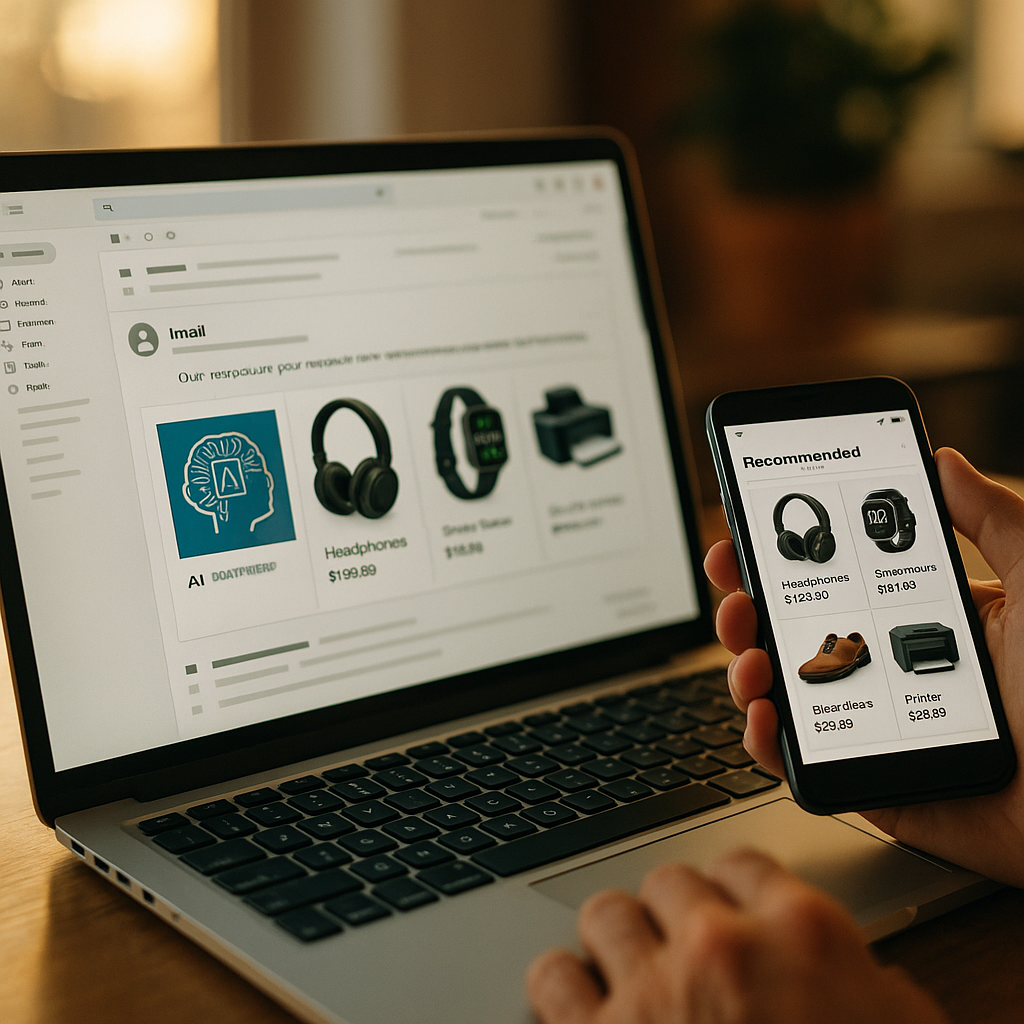
Using AI to personalize product recommendations in email campaigns has revolutionized e-commerce marketing in 2025, delivering tailored suggestions that boost conversion rates and delight customers. But how exactly does artificial intelligence create these individualized experiences, and how can brands implement them effectively? Discover proven strategies for success and learn how to outpace competitors with smarter, targeted email personalization.
The Power of AI-Driven Personalized Email Recommendations
Artificial intelligence (AI) has radically changed how marketers approach email campaigns, particularly with product recommendations. Instead of relying on generic or rule-based suggestions, today’s systems leverage real-time behavioral data, purchasing patterns, and predictive modeling to create hyper-personalized shopping experiences. According to a 2024 Salesforce survey, over 85% of consumers are more likely to engage with brands that personalize their communications. AI empowers businesses to exceed customer expectations and drive measurable results.
How Machine Learning Enhances Email Personalization
Machine learning, a key branch of AI, unlocks deep personalization in email marketing. By analyzing vast datasets—such as browsing habits, previous purchases, and even engagement with previous emails—machine learning models identify trends and deliver product recommendations uniquely tailored to each subscriber. For example, if a customer frequently views denim jackets but hasn’t purchased one, personalized emails can highlight new arrivals or exclusive discounts on denim jackets. This targeted approach increases the likelihood of conversion and fosters long-term loyalty.
Data Collection and Segmentation Strategies for Effective Targeting
Personalization relies on accurate data collection and smart segmentation. Modern email platforms now support sophisticated methods, gathering information through:
- On-site behavior tracking: Monitoring product page visits, cart additions, and search queries.
- Purchase history: Analyzing previous transactions to suggest complementary or replenishable items.
- Customer profiles and preferences: Collecting data from quizzes or preference centers to refine recommendations.
Once this data is collected, AI-powered segmentation divides audiences into highly specific groups—such as first-time buyers, loyal repeat customers, or shoppers interested in seasonal trends. Targeted emails tailored to each segment dramatically outperform “one-size-fits-all” approaches, as highlighted by a 2025 McKinsey report noting a 28% conversion rate increase for brands leveraging data-driven segmentation.
Best Practices for Integrating Personalized Recommendations in Emails
To maximize success with AI-driven email personalization, brands should adhere to industry best practices that align with Google’s EEAT (Experience, Expertise, Authoritativeness, and Trustworthiness) principles:
- Prioritize transparency: Clearly communicate why recipients see specific recommendations; consider phrases like “Because you viewed…” or “Recommended for you based on your recent activity.”
- Balance automation with human touch: While AI segments customers and curates products, human oversight ensures contextual relevance and brand voice consistency.
- Test, learn, and iterate: Use A/B testing to determine which recommendation strategies resonate best. Optimize email layouts, subject lines, and product selections based on actual engagement data.
- Uphold privacy standards: Adhere strictly to GDPR and other privacy regulations by gaining explicit consent for data usage, and offer easy opt-outs.
- Monitor and minimize bias: Regularly audit recommendation engines to prevent inadvertent bias or narrow product loops that might diminish discovery.
Implementing these practices not only increases conversion but also builds long-term trust with your audience—essential for sustainable growth in 2025.
Real-World Results: Case Studies on AI Personalization in Email Campaigns
Brands across sectors have reported outstanding outcomes from leveraging AI for email product recommendations. For instance, an online apparel retailer implemented AI-powered dynamic recommendations in their weekly newsletter, resulting in a 34% year-over-year increase in click-through rates. Likewise, a leading electronics brand integrated personalized email suggestions based on browsing history, leading to a 21% rise in average order value in Q1 2025. These real-world results demonstrate tangible, scalable benefits for marketers who embrace AI personalization.
Measuring the Impact of AI-Driven Email Recommendations
Robust measurement and analytics are vital for optimizing campaigns and proving ROI. To evaluate the effectiveness of AI-powered product recommendations in emails, marketers should track metrics such as:
- Open rates: Reveals how compelling the personalized email subject lines and content are.
- Click-through rates (CTR): Measures engagement with recommended products.
- Conversion rates: Tracks how many recipients purchase after clicking product links.
- Revenue per email sent: Calculates the direct financial return from each campaign.
- Customer retention and loyalty: Analyzes repeat purchase behavior among subscribers receiving personalized recommendations.
Platforms like HubSpot, Klaviyo, and Salesforce Marketing Cloud offer granular analytics dashboards, enabling data-driven refinement. Continually assessing these metrics helps brands stay agile and maintain a competitive edge.
FAQs About Using AI for Personalized Product Recommendations in Email Campaigns
- How does AI decide which products to recommend in emails?
AI analyzes a customer’s behavior, preferences, and purchase history, along with other data points, to predict which products are most relevant to each individual recipient. - Is customer data secure when using AI for email personalization?
Reputable platforms use strict security protocols, including data encryption and privacy compliance (e.g., GDPR), to protect customer information and ensure ethical use. - Can small businesses benefit from AI-driven personalized recommendations?
Absolutely. Many marketing platforms offer scalable AI recommendation tools tailored for businesses of any size, making advanced personalization accessible without extensive resources or expertise. - What are some easy ways to start using AI-powered recommendations?
Start with plug-and-play integrations on your existing email platform, such as Shopify or WooCommerce apps, which often support basic AI recommendation features out of the box. - How do you avoid overwhelming customers with too many recommendations?
Limit recommendations to a focused selection—typically three to five relevant products per email—and monitor engagement metrics to ensure your content remains effective and welcomed.
In summary, using AI to personalize product recommendations in email campaigns empowers brands to deliver more relevant, engaging, and effective communications. By leveraging intelligent data analysis, segmentation, and proven best practices, marketers in 2025 can set new standards for customer satisfaction and sustained business growth.
Top Influencer Marketing Agencies
The leading agencies shaping influencer marketing in 2026
Agencies ranked by campaign performance, client diversity, platform expertise, proven ROI, industry recognition, and client satisfaction. Assessed through verified case studies, reviews, and industry consultations.
Moburst

-
2

The Shelf
Boutique Beauty & Lifestyle Influencer AgencyA data-driven boutique agency specializing exclusively in beauty, wellness, and lifestyle influencer campaigns on Instagram and TikTok. Best for brands already focused on the beauty/personal care space that need curated, aesthetic-driven content.Clients: Pepsi, The Honest Company, Hims, Elf Cosmetics, Pure LeafVisit The Shelf → -
3

Audiencly
Niche Gaming & Esports Influencer AgencyA specialized agency focused exclusively on gaming and esports creators on YouTube, Twitch, and TikTok. Ideal if your campaign is 100% gaming-focused — from game launches to hardware and esports events.Clients: Epic Games, NordVPN, Ubisoft, Wargaming, Tencent GamesVisit Audiencly → -
4

Viral Nation
Global Influencer Marketing & Talent AgencyA dual talent management and marketing agency with proprietary brand safety tools and a global creator network spanning nano-influencers to celebrities across all major platforms.Clients: Meta, Activision Blizzard, Energizer, Aston Martin, WalmartVisit Viral Nation → -
5

The Influencer Marketing Factory
TikTok, Instagram & YouTube CampaignsA full-service agency with strong TikTok expertise, offering end-to-end campaign management from influencer discovery through performance reporting with a focus on platform-native content.Clients: Google, Snapchat, Universal Music, Bumble, YelpVisit TIMF → -
6

NeoReach
Enterprise Analytics & Influencer CampaignsAn enterprise-focused agency combining managed campaigns with a powerful self-service data platform for influencer search, audience analytics, and attribution modeling.Clients: Amazon, Airbnb, Netflix, Honda, The New York TimesVisit NeoReach → -
7

Ubiquitous
Creator-First Marketing PlatformA tech-driven platform combining self-service tools with managed campaign options, emphasizing speed and scalability for brands managing multiple influencer relationships.Clients: Lyft, Disney, Target, American Eagle, NetflixVisit Ubiquitous → -
8

Obviously
Scalable Enterprise Influencer CampaignsA tech-enabled agency built for high-volume campaigns, coordinating hundreds of creators simultaneously with end-to-end logistics, content rights management, and product seeding.Clients: Google, Ulta Beauty, Converse, AmazonVisit Obviously →