


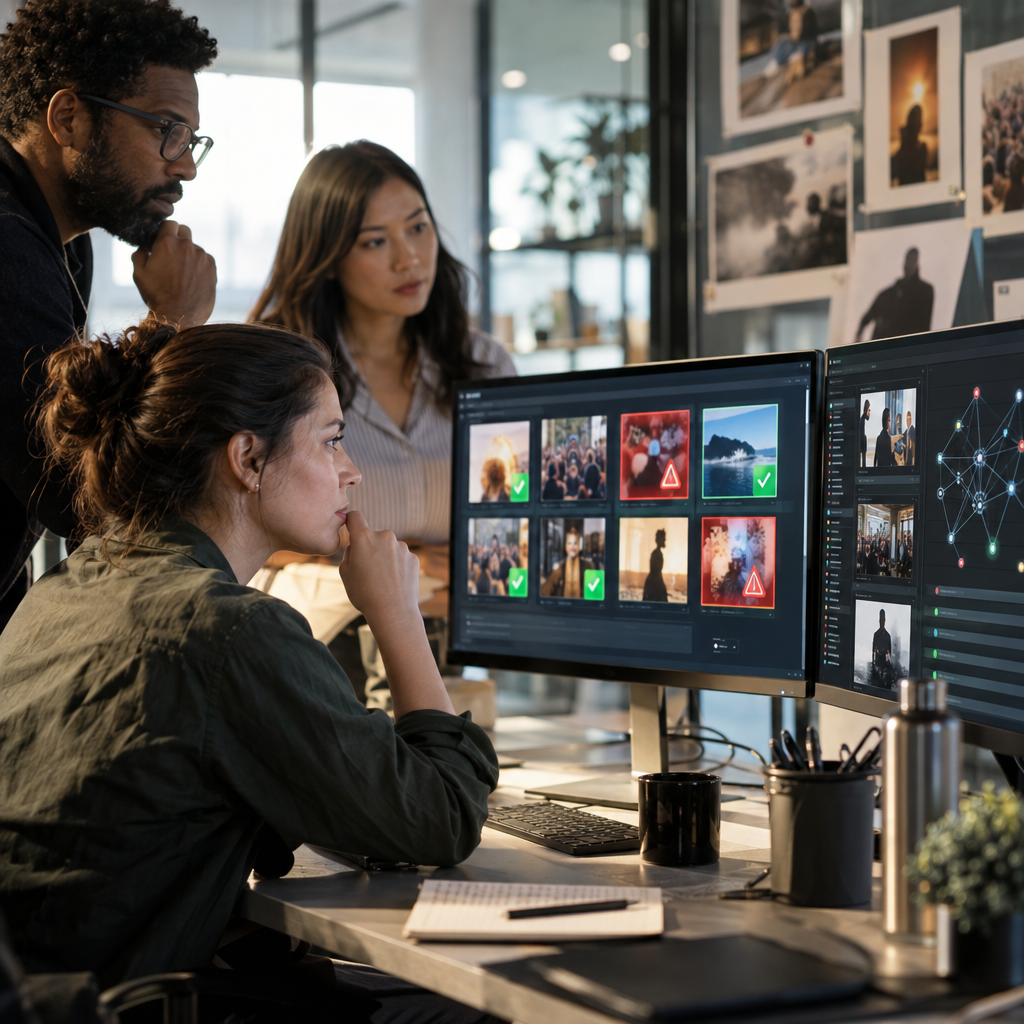
One leaked clip, one old tweet, one off-platform rant, and a seven-figure campaign is dead on arrival. AI brand safety screening tools promise to catch that risk before contracts get signed, but most brands are buying these platforms without actually vetting what they screen, how far back they look, or whether a human ever reviews the output. That gap is where the real exposure lives.
Why “We Checked Their Instagram” Doesn’t Cut It Anymore
Five years ago, brand safety meant a junior strategist scrolling a creator’s last twenty posts. That approach is laughably inadequate now. Creators maintain presence across TikTok, Instagram, YouTube, X, Twitch, Discord, and increasingly niche platforms like Substack or Bluesky. A single influencer might have a decade of content spread across four defunct accounts and three name changes.
AI screening tools exist to close that gap by scanning historical content, flagging sentiment shifts, and surfacing controversy patterns a manual review would miss. But “AI powered” has become a marketing label slapped on everything from basic keyword filters to genuine large language model analysis. Knowing the difference before you sign a vendor contract matters just as much as knowing it before you sign a creator.
A tool that only scans public posts from the last twelve months will miss the exact content most likely to blow up: the deleted tweet, the old YouTube video, the comment thread from a creator’s early, less-filtered days.
What These Tools Actually Claim To Do
Most AI brand safety vendors pitch a version of the same core promise: automated, scalable risk scoring across a creator’s digital footprint. In practice, that breaks down into a few distinct capabilities, and not every platform does all of them well.
- Content archaeology: crawling historical posts, including deleted or archived content, across multiple platforms.
- Sentiment and context scoring: using NLP to flag tone shifts, hate speech, political volatility, or controversial affiliations.
- Network analysis: mapping who a creator engages with, amplifies, or has been publicly tied to.
- Real-time monitoring: ongoing alerts after a contract is signed, not just a pre-sign snapshot.
- Visual and audio scanning: detecting flagged imagery, logos, or language inside video and image content, not just text captions.
That last point trips up a lot of buyers. Plenty of tools claim comprehensive screening but only index text. If a creator said something risky mid-podcast or buried it in a video caption instead of the post text, a text-only scanner walks right past it. Ask vendors directly whether their model processes audio transcripts and image recognition, or just scrapes captions and bios.
The False Positive Problem Nobody Talks About
Here’s the uncomfortable part: aggressive AI screening generates a lot of noise. Flag every joke, every sarcastic comment, every bit of edgy humor, and you’ll end up rejecting creators who never posed any real risk while burning your team’s time chasing ghosts. This isn’t unique to brand safety tools either. It mirrors the exact tradeoff teams run into with sentiment analysis tools, where overcorrecting for risk kills the signal you actually need.
The fix isn’t abandoning automation. It’s demanding transparency on how a vendor calibrates its models and whether you can adjust sensitivity thresholds by category (political content, adult content, substance references, competitor mentions) rather than getting one blunt risk score.
Vetting Checklist: Questions to Ask Before You Sign a Vendor
Treat the vendor selection process with the same rigor you’d apply to the creator deal itself. A few questions separate serious platforms from glorified keyword filters.
- How far back does the historical scan go, and does it include deleted content? Some tools only index what’s currently live.
- Does the tool cover audio and video, or only text and captions? This is where most gaps hide.
- What’s the false positive rate, and can you see sample flagged content before trusting the score? Ask for a demo run on a creator you already know well.
- Is there human review in the loop, or is it fully automated end to end? For high-budget partnerships, a human-in-the-loop model is non-negotiable.
- Does it monitor post-signing, or only pre-signing? Risk doesn’t stop the day the contract gets executed.
- How does it handle multiple languages and regional context? A phrase that’s benign in one market can be a landmine in another.
- What data sources feed the model, and are they disclosed? Vague answers here are a red flag in themselves.
This checklist overlaps heavily with the discipline brands already apply to content moderation platforms for UGC, where the same human-review-gap question keeps surfacing. The pattern is consistent: automation accelerates screening, but unchecked automation creates its own liability.
The Deepfake Wrinkle
There’s a newer layer of risk that most legacy brand safety tools weren’t built to catch: synthetic content. A creator’s likeness can now be cloned into a video they never made, saying things they never said, and that fabricated clip can circulate before anyone notices it’s fake. Standard sentiment and keyword scanning won’t flag a convincing deepfake, because the content itself might read as perfectly on-brand.
This is why forward-looking brand safety stacks are starting to pair sentiment and history scanning with dedicated deepfake detection tools as a second layer of defense. If a creator’s reputation (and by extension, your campaign) can be sabotaged by synthetic media, your vetting process needs to account for content that was never actually theirs.
Contracts Need to Catch Up With the Tooling
Screening tools only protect you if the findings are backed by enforceable contract language. A clean AI risk score at signing doesn’t help if your creator contract terms don’t include morality clauses, ongoing monitoring obligations, or clear remediation steps if something surfaces mid-campaign. Brand safety and contract management need to be treated as one workflow, not two separate departments that occasionally talk to each other.
Build in language that requires the creator to disclose known controversies, defines what triggers a pause or termination, and specifies who pays for crisis response if a flagged issue was knowable at signing but missed. These aren’t hypothetical clauses. The FTC’s influencer disclosure guidance already puts brands on the hook for creator conduct in ways many marketing teams underestimate.
Budget Reality: What This Actually Costs
Enterprise AI brand safety platforms generally price on a per-creator-scan or seat-license basis, and costs scale fast if you’re vetting hundreds of micro-creators for an always-on program versus a handful of macro partnerships. Smaller teams often start with hybrid models: automated first-pass screening for volume, followed by manual deep-dive review only for creators who clear a certain spend threshold or get flagged with borderline scores.
That tiered approach mirrors how smart teams already handle fraud and payout risk in clipping programs: automate the volume, reserve human judgment for the dollars that matter most. There’s no universal “right” budget here, but a rough rule of thumb is that brand safety screening should cost somewhere between 1 and 3 percent of total creator spend if you’re doing it properly across a mid-size program.
Industry data backs up why this spend is justified. Research from eMarketer has repeatedly shown influencer marketing budgets climbing year over year, and Sprout Social‘s brand research consistently finds that consumer trust erodes fast after a public creator controversy, often dragging brand sentiment down with it even when the brand had no direct involvement in the misconduct.
Where This Fits Into the Bigger Vetting Stack
Brand safety screening shouldn’t operate in isolation from the rest of your creator due diligence. The strongest programs layer it alongside CRM data hygiene checks so that risk scores, performance history, and payment status all live in one decisioning system rather than three disconnected spreadsheets. When brand safety flags are siloed from the data your media and finance teams rely on, you end up making decisions on incomplete information, which defeats the purpose of automating the screen in the first place.
It’s also worth remembering that screening tools are probabilistic, not prophetic. No AI model can predict what a creator will post next month. What a good tool gives you is a defensible, documented process: evidence that you did reasonable diligence before signing, which matters enormously if a partnership goes sideways and you need to show you acted in good faith.
Next step: before renewing or signing any brand safety vendor contract, run a blind test. Feed the tool three creators you already know well (one clean, one borderline, one with known history) and see if the output matches your own judgment. If it doesn’t, you’re not buying screening. You’re buying a false sense of security.
Frequently Asked Questions
What is AI brand safety screening in influencer marketing?
It’s the use of automated tools, typically powered by natural language processing and computer vision, to scan a creator’s historical and current content across platforms for reputational, legal, or brand alignment risks before and during a partnership.
How far back should a brand safety tool scan a creator’s content?
Ideally, as far back as the creator’s public presence extends, including deleted or archived posts. Risky content from years ago resurfaces constantly, and tools that only index the last twelve months miss a significant share of real exposure.
Can AI screening tools replace human review entirely?
No. The strongest programs use AI for first-pass volume screening and reserve human review for borderline flags or high-spend partnerships. Fully automated decisioning without any human check increases the risk of both missed context and costly false positives.
Do brand safety tools catch deepfakes or synthetic content?
Most general-purpose brand safety platforms don’t. Catching fabricated video or audio content typically requires a dedicated deepfake detection layer run alongside standard sentiment and history scanning.
How much should a brand budget for AI brand safety screening?
A reasonable benchmark is 1 to 3 percent of total creator program spend for a properly layered screening process, though costs vary based on creator volume and whether you need ongoing post-signing monitoring versus a one-time pre-sign check.
What happens if a creator’s past controversy surfaces after signing?
This is why contract language matters as much as the screening tool itself. Morality clauses, disclosure requirements, and defined remediation steps should be built into every creator agreement so the brand has a clear, enforceable path if new risk emerges mid-campaign.
Top Influencer Marketing Agencies
The leading agencies shaping influencer marketing in 2026
Agencies ranked by campaign performance, client diversity, platform expertise, proven ROI, industry recognition, and client satisfaction. Assessed through verified case studies, reviews, and industry consultations.
Moburst

-
2

The Shelf
Boutique Beauty & Lifestyle Influencer AgencyA data-driven boutique agency specializing exclusively in beauty, wellness, and lifestyle influencer campaigns on Instagram and TikTok. Best for brands already focused on the beauty/personal care space that need curated, aesthetic-driven content.Clients: Pepsi, The Honest Company, Hims, Elf Cosmetics, Pure LeafVisit The Shelf → -
3

Audiencly
Niche Gaming & Esports Influencer AgencyA specialized agency focused exclusively on gaming and esports creators on YouTube, Twitch, and TikTok. Ideal if your campaign is 100% gaming-focused — from game launches to hardware and esports events.Clients: Epic Games, NordVPN, Ubisoft, Wargaming, Tencent GamesVisit Audiencly → -
4

Viral Nation
Global Influencer Marketing & Talent AgencyA dual talent management and marketing agency with proprietary brand safety tools and a global creator network spanning nano-influencers to celebrities across all major platforms.Clients: Meta, Activision Blizzard, Energizer, Aston Martin, WalmartVisit Viral Nation → -
5

The Influencer Marketing Factory
TikTok, Instagram & YouTube CampaignsA full-service agency with strong TikTok expertise, offering end-to-end campaign management from influencer discovery through performance reporting with a focus on platform-native content.Clients: Google, Snapchat, Universal Music, Bumble, YelpVisit TIMF → -
6

NeoReach
Enterprise Analytics & Influencer CampaignsAn enterprise-focused agency combining managed campaigns with a powerful self-service data platform for influencer search, audience analytics, and attribution modeling.Clients: Amazon, Airbnb, Netflix, Honda, The New York TimesVisit NeoReach → -
7

Ubiquitous
Creator-First Marketing PlatformA tech-driven platform combining self-service tools with managed campaign options, emphasizing speed and scalability for brands managing multiple influencer relationships.Clients: Lyft, Disney, Target, American Eagle, NetflixVisit Ubiquitous → -
8

Obviously
Scalable Enterprise Influencer CampaignsA tech-enabled agency built for high-volume campaigns, coordinating hundreds of creators simultaneously with end-to-end logistics, content rights management, and product seeding.Clients: Google, Ulta Beauty, Converse, AmazonVisit Obviously →