


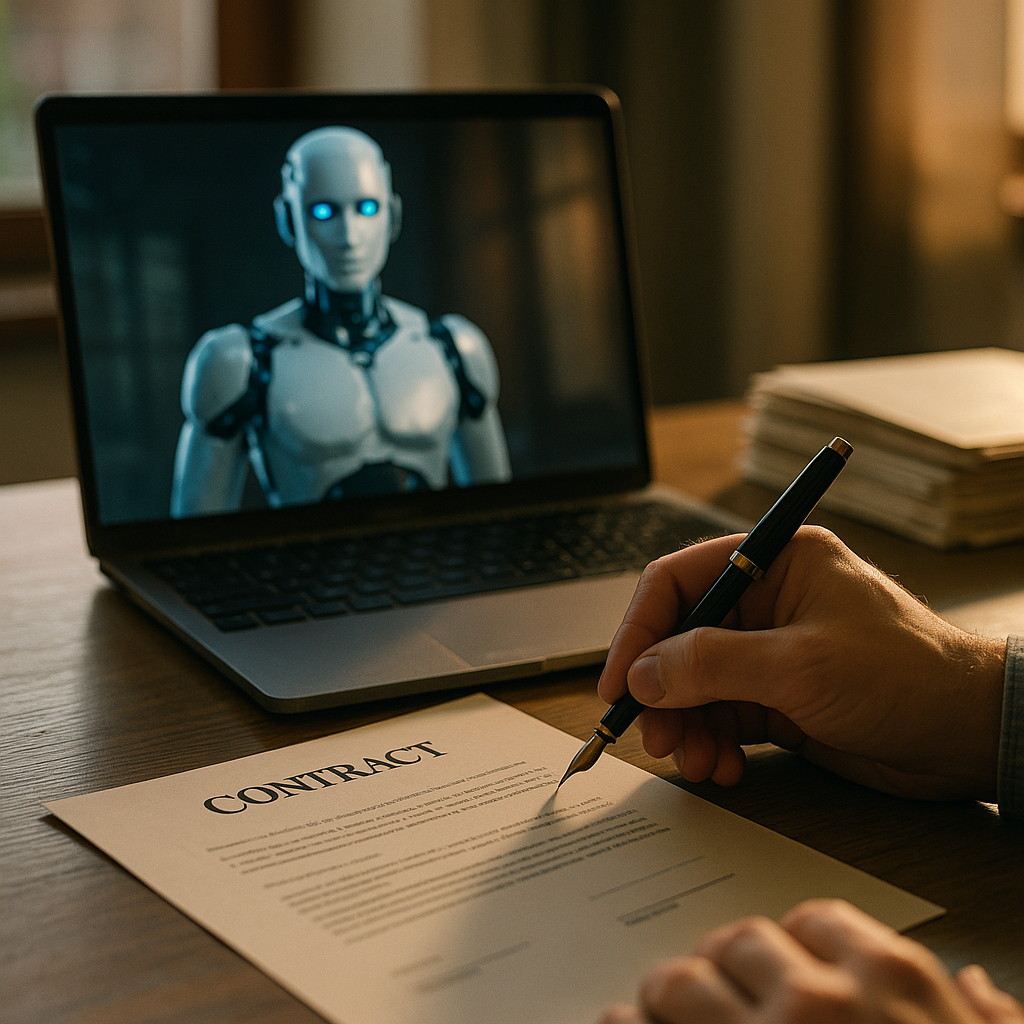
A creator contract auto-renewed for $180,000 last quarter — and nobody at the brand noticed until the invoice hit finance. That’s not a hypothetical. It’s happening inside procurement and influencer teams that adopted AI contract agents without building a single guardrail around them. Silent renewal isn’t a bug in these systems. It’s the default behavior, and most marketing teams don’t know it yet.
Why AI Contract Agents Are Suddenly Everywhere
Influencer programs have quietly become contract-heavy operations. A mid-size DTC brand running 200 creator partnerships a year isn’t just managing content calendars anymore — it’s managing 200 legal instruments with different renewal windows, usage rights, exclusivity clauses, and payment triggers. That volume is exactly what pushed procurement and legal-ops teams toward AI agents that draft, track, and now renew creator contracts autonomously.
The pitch is obvious: fewer missed deadlines, fewer lapsed exclusivity terms, fewer creators quietly working with a competitor because nobody flagged the expiration date. Vendors selling agentic contract platforms promise this reduces admin load by 60-80%. That’s a real efficiency gain. It’s also exactly why nobody’s watching closely enough.
This mirrors a pattern we’ve already seen in other corners of AI-driven marketing ops. Just as media-buying agents need guardrails to stop runaway spend, contract agents need the same discipline. The difference is that a bad bid gets caught in hours. A bad contract renewal can lock you in for a year.
What “Silent Renewal” Actually Means
Silent renewal is when a contract agent extends, re-executes, or auto-approves a creator agreement without a human decision point in the loop. The agent isn’t malicious. It’s doing exactly what it was configured to do: monitor the contract’s renewal clause, detect the trigger date, and act. The problem is that “act” often means committing budget, locking exclusivity, or re-upping rates that no longer reflect market value — all without anyone reviewing whether the creator’s performance still justifies the deal.
Consider the mechanics. Most creator agreements include an auto-renewal clause as boilerplate — a holdover from traditional talent contracts. An AI agent tasked with “contract lifecycle management” reads that clause literally. No opt-out flag, no performance threshold, no spend cap check? The agent renews. It’s not overriding your intent. It’s executing the letter of a contract nobody updated for an AI-managed world.
The riskiest AI agents aren’t the ones that make mistakes — they’re the ones that execute flawlessly on outdated instructions.
The compliance exposure nobody’s pricing in
Auto-renewed contracts create disclosure and FTC compliance risk too. If a creator’s contract silently renews with old disclosure language, or a usage-rights clause that predates a platform’s updated ad policies, your brand inherits that gap. The FTC’s endorsement guidelines don’t care that an AI agent, not a human, extended the deal. Liability sits with the brand.
How Big Is the Actual Risk?
Nobody’s publishing hard numbers on “AI-driven silent renewals in influencer contracts” yet — it’s too new. But adjacent data points paint the picture. Gartner has flagged contract lifecycle management as one of the fastest-growing agentic AI use cases in enterprise procurement, with adoption accelerating well past governance maturity. That gap — adoption outpacing oversight — is a pattern Influencers Time has tracked repeatedly across creator-marketing AI tools, from brief generation stalling on approvals to spend-cap governance gaps in creator budgets.
Here’s the uncomfortable math: if your influencer program runs 150+ active contracts and even 5% carry auto-renewal clauses an agent can trigger without review, that’s 7-8 contracts per cycle renewing on autopilot. At an average creator retainer of $15,000-$40,000, that’s real money moving without a sign-off.
Where the failure mode actually shows up
- Rate creep: A creator’s engagement dropped 40% year-over-year, but the contract renews at last year’s premium rate because nobody re-evaluated performance.
- Exclusivity lock-in: An auto-renewed exclusivity clause blocks you from signing a better-fit creator in the same category for another 12 months.
- Stale disclosure terms: Renewed contracts carry outdated FTC disclosure language that no longer matches current platform requirements.
- Budget cannibalization: Renewed retainers consume Q3 budget that was earmarked for a new creator cohort.
Building the Governance Framework
You don’t fix this by banning AI contract agents. That ship has sailed, and the efficiency gains are too real to walk away from. You fix it by treating contract renewal the same way sharp teams now treat automated media buying: with explicit thresholds, checkpoints, and override authority baked into the workflow, not bolted on after a bad renewal.
1. Mandatory human checkpoints before any renewal executes
No contract above a defined dollar threshold — say, $10,000 — should renew without a named human approver. This isn’t about distrust of the AI. It’s about accountability. Someone needs to be able to answer “why did we renew this?” with more than “the system did it.”
2. Performance-linked renewal gates
Configure the agent to check performance data against a floor before it can even queue a renewal for approval. If a creator’s engagement rate, conversion contribution, or content-delivery reliability dropped below an agreed benchmark, the renewal should route to a full review, not a rubber stamp. This is the same logic already applied in AI marketing-mix modeling for creator programs — performance data should gate spend decisions, not just report on them after the fact.
3. A 30/60/90 notice cascade
Set the agent to surface upcoming renewals at 90, 60, and 30 days out — not just at the trigger date. This gives procurement and brand teams time to renegotiate terms, shop competitive rates, or decide to let the deal lapse intentionally. Silent renewal thrives on last-minute triggers; a notice cascade kills that dynamic.
4. Contract clause audits, not just contract tracking
Most CLM tools track dates. Fewer audit clause language for staleness. Run a quarterly audit specifically for auto-renewal clauses, exclusivity terms, and disclosure language across your active creator roster. Flag anything that hasn’t been updated in 12+ months for manual review before the next renewal window.
If your contract agent can’t tell you why a renewal is a good idea — not just that it’s due — it’s a scheduling tool wearing an AI label.
5. Spend-cap integration with finance systems
Renewal agents should never operate in a silo from budget systems. Tie renewal authority to remaining quarterly budget in real time. This is the same circuit-breaker logic Influencers Time has covered around media-buying error rates — an agent that can commit spend needs a hard ceiling it cannot cross without escalation.
6. Vendor accountability in the contract itself
When you’re evaluating the AI vendor managing your contract lifecycle, ask directly: does the platform support conditional renewal logic, or does it default to blanket auto-renew? Get this in writing. Treat it as a non-negotiable line item, the way you’d evaluate any AI tool against a proper vendor evaluation rubric instead of taking sales-deck claims at face value.
What This Means for Legal and Marketing Alignment
The teams getting this right aren’t the ones with the fanciest AI stack. They’re the ones where legal, finance, and marketing actually talk to each other about contract governance instead of treating it as three separate silos each assuming someone else is watching.
Practically, that means a shared dashboard — not three dashboards — showing every contract’s renewal status, performance trigger, and required approver. It means legal writes renewal clauses with explicit opt-out language and performance conditions from day one, instead of relying on an AI agent to interpret ambiguous boilerplate. And it means marketing ops owns the performance-data feed that gates the renewal decision, because legal shouldn’t be guessing whether a creator’s numbers still justify the spend.
Data quality matters more here than most teams assume. An agent making a renewal recommendation off stale or fragmented performance data is arguably worse than no automation at all — it creates false confidence. That’s the same root issue behind why AI marketing underperforms broadly: the model isn’t the weak link, the input pipeline is.
The Bottom Line
AI contract agents aren’t going away, and they shouldn’t. They eliminate genuinely tedious work and catch renewal deadlines humans miss. But “autonomous” doesn’t mean “unsupervised.” The brands that will avoid a six-figure surprise invoice are the ones building checkpoints now — before the next renewal cycle runs quietly in the background.
Audit your active creator contracts this week. Find every auto-renewal clause, assign a human owner to each one above your risk threshold, and set a 90-day notice trigger before the next cycle hits.
Frequently Asked Questions
What is a silent renewal in a creator contract?
A silent renewal happens when a creator contract automatically extends or re-executes without a human reviewing the decision — typically because an AI agent or CLM system detects a renewal trigger date and acts on it per the contract’s existing clause, without checking performance, budget, or updated terms first.
Why are AI agents increasing this risk instead of reducing it?
AI agents execute instructions literally and at scale. If a contract’s auto-renewal clause has no built-in opt-out or performance condition, the agent will renew it exactly as written, faster and more consistently than a human ever would — which means bad clauses get executed more reliably, not less.
Who is legally responsible if an AI agent auto-renews a non-compliant contract?
The brand is. Regulators like the FTC hold brands accountable for creator disclosure and compliance regardless of whether a human or an AI system executed the renewal. Automation doesn’t shift liability.
What’s the simplest first step to prevent silent renewals?
Set a dollar threshold above which no contract can auto-renew without a named human approver, and configure 90/60/30-day advance notices for every upcoming renewal so someone has time to intervene.
Should brands stop using AI for contract management altogether?
No. The efficiency gains are real. The fix is adding governance — performance gates, spend-cap integration, and mandatory checkpoints — not abandoning automation entirely.
Frequently Asked Questions
What is a silent renewal in a creator contract?
A silent renewal happens when a creator contract automatically extends or re-executes without a human reviewing the decision — typically because an AI agent or CLM system detects a renewal trigger date and acts on it per the contract’s existing clause, without checking performance, budget, or updated terms first.
Why are AI agents increasing this risk instead of reducing it?
AI agents execute instructions literally and at scale. If a contract’s auto-renewal clause has no built-in opt-out or performance condition, the agent will renew it exactly as written, faster and more consistently than a human ever would — which means bad clauses get executed more reliably, not less.
Who is legally responsible if an AI agent auto-renews a non-compliant contract?
The brand is. Regulators like the FTC hold brands accountable for creator disclosure and compliance regardless of whether a human or an AI system executed the renewal. Automation doesn’t shift liability.
What’s the simplest first step to prevent silent renewals?
Set a dollar threshold above which no contract can auto-renew without a named human approver, and configure 90/60/30-day advance notices for every upcoming renewal so someone has time to intervene.
Should brands stop using AI for contract management altogether?
No. The efficiency gains are real. The fix is adding governance — performance gates, spend-cap integration, and mandatory checkpoints — not abandoning automation entirely.
Top Influencer Marketing Agencies
The leading agencies shaping influencer marketing in 2026
Agencies ranked by campaign performance, client diversity, platform expertise, proven ROI, industry recognition, and client satisfaction. Assessed through verified case studies, reviews, and industry consultations.
Moburst

-
2

The Shelf
Boutique Beauty & Lifestyle Influencer AgencyA data-driven boutique agency specializing exclusively in beauty, wellness, and lifestyle influencer campaigns on Instagram and TikTok. Best for brands already focused on the beauty/personal care space that need curated, aesthetic-driven content.Clients: Pepsi, The Honest Company, Hims, Elf Cosmetics, Pure LeafVisit The Shelf → -
3

Audiencly
Niche Gaming & Esports Influencer AgencyA specialized agency focused exclusively on gaming and esports creators on YouTube, Twitch, and TikTok. Ideal if your campaign is 100% gaming-focused — from game launches to hardware and esports events.Clients: Epic Games, NordVPN, Ubisoft, Wargaming, Tencent GamesVisit Audiencly → -
4

Viral Nation
Global Influencer Marketing & Talent AgencyA dual talent management and marketing agency with proprietary brand safety tools and a global creator network spanning nano-influencers to celebrities across all major platforms.Clients: Meta, Activision Blizzard, Energizer, Aston Martin, WalmartVisit Viral Nation → -
5

The Influencer Marketing Factory
TikTok, Instagram & YouTube CampaignsA full-service agency with strong TikTok expertise, offering end-to-end campaign management from influencer discovery through performance reporting with a focus on platform-native content.Clients: Google, Snapchat, Universal Music, Bumble, YelpVisit TIMF → -
6

NeoReach
Enterprise Analytics & Influencer CampaignsAn enterprise-focused agency combining managed campaigns with a powerful self-service data platform for influencer search, audience analytics, and attribution modeling.Clients: Amazon, Airbnb, Netflix, Honda, The New York TimesVisit NeoReach → -
7

Ubiquitous
Creator-First Marketing PlatformA tech-driven platform combining self-service tools with managed campaign options, emphasizing speed and scalability for brands managing multiple influencer relationships.Clients: Lyft, Disney, Target, American Eagle, NetflixVisit Ubiquitous → -
8

Obviously
Scalable Enterprise Influencer CampaignsA tech-enabled agency built for high-volume campaigns, coordinating hundreds of creators simultaneously with end-to-end logistics, content rights management, and product seeding.Clients: Google, Ulta Beauty, Converse, AmazonVisit Obviously →