


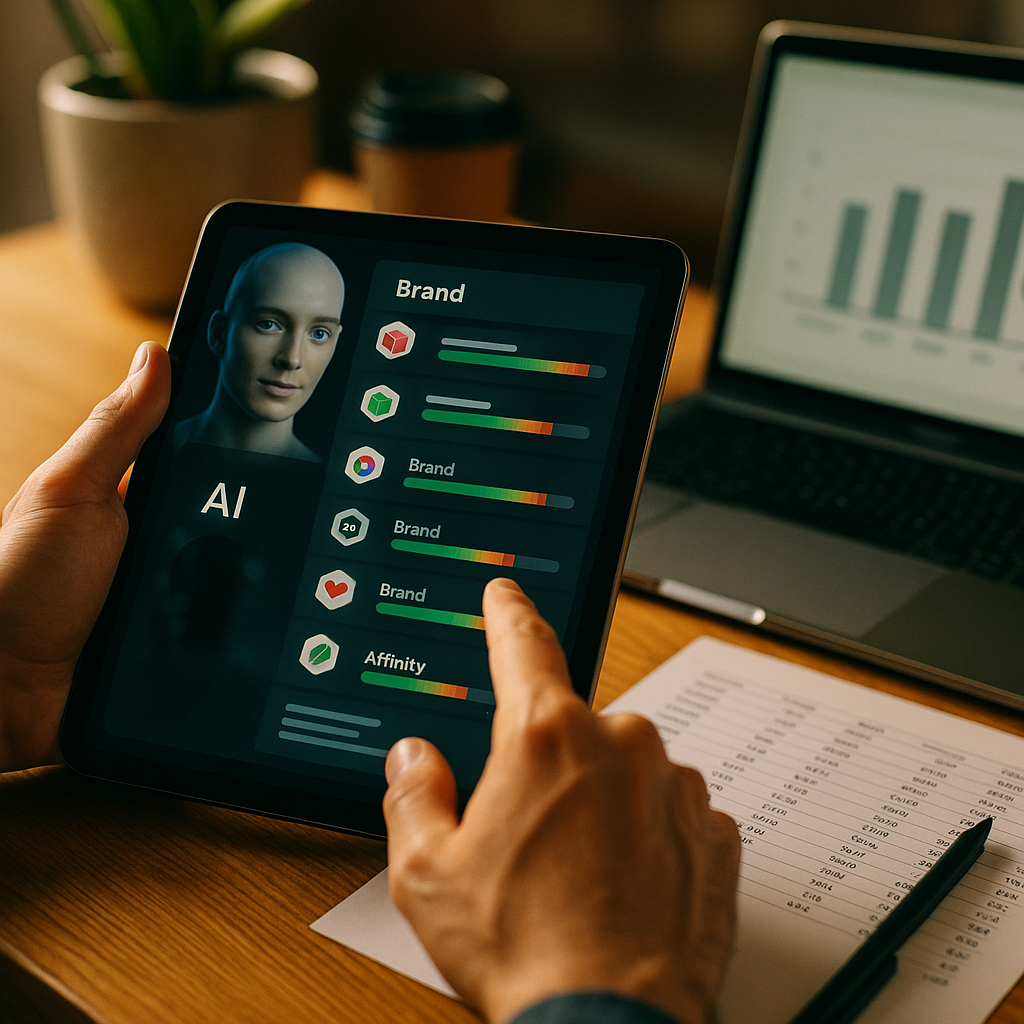
73% of marketers say finding the right creator is the hardest part of influencer marketing — harder than negotiating rates, harder than measuring ROI. So why are most brands still matching creators to campaigns using follower counts and audience age brackets? A new wave of platforms claims AI-powered creator-brand matching can predict affinity better than any media planner’s gut instinct. We put that claim under a microscope.
The Promise: Affinity Over Audience Overlap
For a decade, creator discovery meant filtering by follower count, engagement rate, and rough demographic alignment. Does the creator’s audience skew 25-34? Female? Urban? Good enough, ship the brief. That approach worked when influencer marketing was a bolt-on tactic. It doesn’t work when a brand is running fifty creator partnerships a quarter and needs to know which ones will actually move product.
The new platforms — think Aspire’s predictive layer, CreatorIQ’s Affinity models, Grin’s audience intelligence add-ons, and a crop of venture-backed challengers like Influ2 and Loop — argue that demographic data is a weak proxy for what actually drives conversion: contextual and behavioral alignment. A creator whose audience skews the “wrong” age bracket but consistently engages with sustainability content might outperform a demographically perfect match promoting a fast-fashion brand.
The core pitch of AI-powered creator-brand matching is simple: stop matching who the audience is, start matching what the audience actually cares about and does.
That’s the theory. Machine learning models trained on historical campaign performance, content-level sentiment, comment analysis, and purchase-intent signals are supposed to surface creators whose audiences behave like buyers, not just people who match a media plan spreadsheet. It’s a compelling pitch. It’s also one that deserves the same scrutiny brands are learning to apply to any AI vendor claim — see the broader reckoning documented in AI adoption outpacing performance across marketing tech generally.
What “Affinity Scoring” Actually Measures
Strip away the marketing copy and most affinity-scoring platforms are doing some combination of the following:
- Content semantic analysis — NLP models parsing caption text, video transcripts, and comment threads to build a topic and sentiment profile for each creator, well beyond hashtag matching.
- Historical performance regression — training on thousands of past brand-creator pairings to identify which content attributes (tone, pacing, product placement style) correlate with conversion lift.
- Audience behavioral overlap — using panel data or clean-room matching to see whether a creator’s followers already engage with, search for, or purchase from adjacent brands.
- Brand-safety and tonal fit — flagging creators whose historical content contradicts brand values, which doubles as a risk-mitigation layer.
None of this is magic. It’s applied statistics wearing an AI label, which is fine — as long as vendors are transparent about training data and confidence intervals. Many aren’t. Ask any vendor demoing an “affinity score” what data set it was trained on and how often it’s refreshed. If the answer is vague, treat the score as a hypothesis, not a fact.
Vendor Landscape: Who’s Actually Doing What
Here’s a working breakdown of how the major players position their matching technology, based on public documentation and buyer conversations. This isn’t exhaustive, and vendors update capabilities fast, but it reflects the current state of competitive positioning.
- CreatorIQ — leans on its scale (largest proprietary database of historical campaign data) to power regression-based affinity scoring. Strong for enterprise brands running high creator volume, weaker for niche verticals with thin historical data.
- Aspire — combines content-level NLP with e-commerce integration, useful for DTC brands that want affinity scores tied directly to attributed sales, not just engagement proxies.
- Grin — audience intelligence layered onto its existing relationship-management tooling; matching quality depends heavily on how much first-party data the brand feeds in.
- Upfluence — positions its AI matching around influencer-as-customer discovery (finding creators who already buy from the brand), a genuinely different affinity signal than pure content analysis.
- Emerging challengers (Influ2, Loop, and several stealth-stage tools) — pitching real-time affinity scoring using LLM-based content classification, promising faster refresh cycles than legacy platforms built on older ML architectures.
The honest takeaway: no single vendor has “solved” affinity matching. Each has a different data advantage and a different blind spot. Brands buying these tools should treat the vendor’s core data asset (what they’re uniquely positioned to see) as the real product, and the “AI” framing as the delivery mechanism.
Where the Models Break
Predictive matching tools are only as good as the signal they’re trained on, and there are three recurring failure modes worth knowing before you sign a contract.
Cold-start creators. New or fast-rising creators have thin historical data. Models trained on past performance systematically underrate them, even when they’re the best current fit. If your matching platform keeps surfacing the same mid-tier, well-documented creators, that’s not a coincidence — it’s the model regressing to what it knows.
Category leakage. A creator who performed brilliantly for a beauty brand doesn’t necessarily transfer that affinity to a fintech client, but some models over-generalize “high engagement” as if it were category-agnostic. Ask vendors directly how they handle cross-category transfer, because a vague answer usually means they don’t.
Training data recency. Platform algorithm changes (a Reels ranking update, an Instagram feed shift) can invalidate performance patterns within a single quarter. A model trained on last year’s engagement dynamics might confidently recommend creators whose format no longer performs. This is the same fragility problem showing up across martech stacks built on fragmented data — stale training data quietly degrades output quality long before anyone notices.
An affinity score is a snapshot of historical correlation, not a guarantee of future performance. Treat it as one input into the brief, not the brief itself.
The ROI Question Brands Actually Care About
Does better matching translate to better campaign performance, or just faster shortlisting? Both matter, but they’re not the same value proposition, and vendors sometimes blur the line.
Faster shortlisting is real and measurable: teams report cutting creator discovery time from weeks to days when AI-assisted filtering replaces manual scrolling through discovery tools. That’s an operational efficiency win worth quantifying in your own procurement math, similar to the cost comparisons brands are now running on build-vs-buy AI tooling decisions elsewhere in the stack.
Performance lift is harder to prove. Vendors love to cite conversion lift percentages from case studies, but ask for the methodology. Was there a control group of demographically-matched-only creators run in parallel? Most published case studies don’t include one, which means the lift claim is unfalsifiable. Insist on a pilot structure with a holdout group before committing full budget to affinity-driven selection.
According to eMarketer, influencer marketing spend continues to climb even as brands report measurement as their top unresolved challenge — which means the appetite for a better matching signal is real, but so is the risk of buying an unproven one at scale.
A Practical Evaluation Framework
If you’re evaluating one of these platforms for procurement, run this checklist before the contract, not after:
- Ask for training data provenance. Is the affinity model trained on the vendor’s own campaign history, third-party panel data, or licensed social data? Each has different bias risks.
- Request a holdout test. Run one campaign with AI-recommended creators and a parallel one with your team’s traditional picks. Compare cost-per-result, not just engagement rate.
- Check refresh cadence. How often is the model retrained against current platform algorithm behavior? Quarterly is minimum viable; monthly is better.
- Interrogate cold-start handling. Ask specifically how the platform surfaces emerging creators without long track records.
- Confirm brand-safety integration. Affinity and safety scoring should be separate layers you can weight independently, not a single blended score that hides risk.
- Clarify data compliance. If the platform ingests audience data from creators’ followers, confirm it’s compliant with relevant privacy frameworks — a live concern regulators are watching, per FTC guidance on endorsement and data practices.
Governance matters here as much as performance. Any AI system making budget-adjacent recommendations should sit inside the same oversight structure you’d apply to autonomous media-buying agents — documented decision logic, human review checkpoints, and an audit trail for why a creator was recommended or rejected.
Where This Is Heading
Expect consolidation. The vendors with the deepest proprietary performance data (CreatorIQ, Aspire) have a durable advantage over point-solution challengers, because affinity models are fundamentally data-hungry. Expect more brands to demand explainability — not just a score, but a reason. “This creator scored 87 because their audience shows high behavioral overlap with your existing customer base” is a materially more useful output than a bare number.
Also expect this to intersect with the broader shift toward autonomous marketing execution. If AI marketing pilots are any indication, the next step isn’t just AI recommending creators — it’s AI negotiating rates and drafting briefs too, a trajectory already visible in agents negotiating media rates directly. Creator matching won’t stay a standalone tool for long; it’ll fold into the same agentic workflows reshaping the rest of the media plan.
For now, treat every affinity score as a well-informed opinion, not a verdict. The platforms are genuinely useful for narrowing a field of thousands down to a workable shortlist. They are not yet reliable enough to replace human judgment on final creator selection, especially for high-stakes campaigns where brand safety and cultural nuance matter more than a regression coefficient.
Frequently Asked Questions
What is AI-powered creator-brand matching?
It’s the use of machine learning models to recommend creator partnerships based on content analysis, historical performance data, and audience behavior patterns, rather than relying solely on demographic overlap between a creator’s audience and a brand’s target market.
Is AI creator matching more accurate than manual selection?
It depends on the use case. AI matching is generally faster and better at surfacing a large shortlist from thin data, but manual selection by experienced strategists still outperforms on nuanced brand-safety and cultural-fit judgments that models struggle to quantify.
Which platforms offer affinity-based creator matching?
CreatorIQ, Aspire, Grin, and Upfluence all offer some form of AI-driven affinity or audience-intelligence scoring, alongside newer entrants like Influ2 and Loop that focus on real-time content classification.
How do I know if an affinity score is trustworthy?
Ask the vendor for training data provenance, refresh cadence, and whether the score has been validated against a holdout group in a real campaign. Vague or unverifiable answers are a red flag.
Does better creator matching actually improve campaign ROI?
It can, primarily by reducing wasted spend on poorly-fit creators and shortening discovery time. But performance lift claims should be tested with a controlled pilot before scaling budget, since most vendor case studies lack a proper control group.
Frequently Asked Questions
What is AI-powered creator-brand matching?
It’s the use of machine learning models to recommend creator partnerships based on content analysis, historical performance data, and audience behavior patterns, rather than relying solely on demographic overlap between a creator’s audience and a brand’s target market.
Is AI creator matching more accurate than manual selection?
It depends on the use case. AI matching is generally faster and better at surfacing a large shortlist from thin data, but manual selection by experienced strategists still outperforms on nuanced brand-safety and cultural-fit judgments that models struggle to quantify.
Which platforms offer affinity-based creator matching?
CreatorIQ, Aspire, Grin, and Upfluence all offer some form of AI-driven affinity or audience-intelligence scoring, alongside newer entrants like Influ2 and Loop that focus on real-time content classification.
How do I know if an affinity score is trustworthy?
Ask the vendor for training data provenance, refresh cadence, and whether the score has been validated against a holdout group in a real campaign. Vague or unverifiable answers are a red flag.
Does better creator matching actually improve campaign ROI?
It can, primarily by reducing wasted spend on poorly-fit creators and shortening discovery time. But performance lift claims should be tested with a controlled pilot before scaling budget, since most vendor case studies lack a proper control group.
Next step: before your next platform renewal, run a two-campaign holdout test — AI-recommended creators against your team’s manual picks — and compare cost-per-result, not engagement rate. That single test will tell you more about a vendor’s real value than any case study they hand you.
Top Influencer Marketing Agencies
The leading agencies shaping influencer marketing in 2026
Agencies ranked by campaign performance, client diversity, platform expertise, proven ROI, industry recognition, and client satisfaction. Assessed through verified case studies, reviews, and industry consultations.
Moburst

-
2

The Shelf
Boutique Beauty & Lifestyle Influencer AgencyA data-driven boutique agency specializing exclusively in beauty, wellness, and lifestyle influencer campaigns on Instagram and TikTok. Best for brands already focused on the beauty/personal care space that need curated, aesthetic-driven content.Clients: Pepsi, The Honest Company, Hims, Elf Cosmetics, Pure LeafVisit The Shelf → -
3

Audiencly
Niche Gaming & Esports Influencer AgencyA specialized agency focused exclusively on gaming and esports creators on YouTube, Twitch, and TikTok. Ideal if your campaign is 100% gaming-focused — from game launches to hardware and esports events.Clients: Epic Games, NordVPN, Ubisoft, Wargaming, Tencent GamesVisit Audiencly → -
4

Viral Nation
Global Influencer Marketing & Talent AgencyA dual talent management and marketing agency with proprietary brand safety tools and a global creator network spanning nano-influencers to celebrities across all major platforms.Clients: Meta, Activision Blizzard, Energizer, Aston Martin, WalmartVisit Viral Nation → -
5

The Influencer Marketing Factory
TikTok, Instagram & YouTube CampaignsA full-service agency with strong TikTok expertise, offering end-to-end campaign management from influencer discovery through performance reporting with a focus on platform-native content.Clients: Google, Snapchat, Universal Music, Bumble, YelpVisit TIMF → -
6

NeoReach
Enterprise Analytics & Influencer CampaignsAn enterprise-focused agency combining managed campaigns with a powerful self-service data platform for influencer search, audience analytics, and attribution modeling.Clients: Amazon, Airbnb, Netflix, Honda, The New York TimesVisit NeoReach → -
7

Ubiquitous
Creator-First Marketing PlatformA tech-driven platform combining self-service tools with managed campaign options, emphasizing speed and scalability for brands managing multiple influencer relationships.Clients: Lyft, Disney, Target, American Eagle, NetflixVisit Ubiquitous → -
8

Obviously
Scalable Enterprise Influencer CampaignsA tech-enabled agency built for high-volume campaigns, coordinating hundreds of creators simultaneously with end-to-end logistics, content rights management, and product seeding.Clients: Google, Ulta Beauty, Converse, AmazonVisit Obviously →