


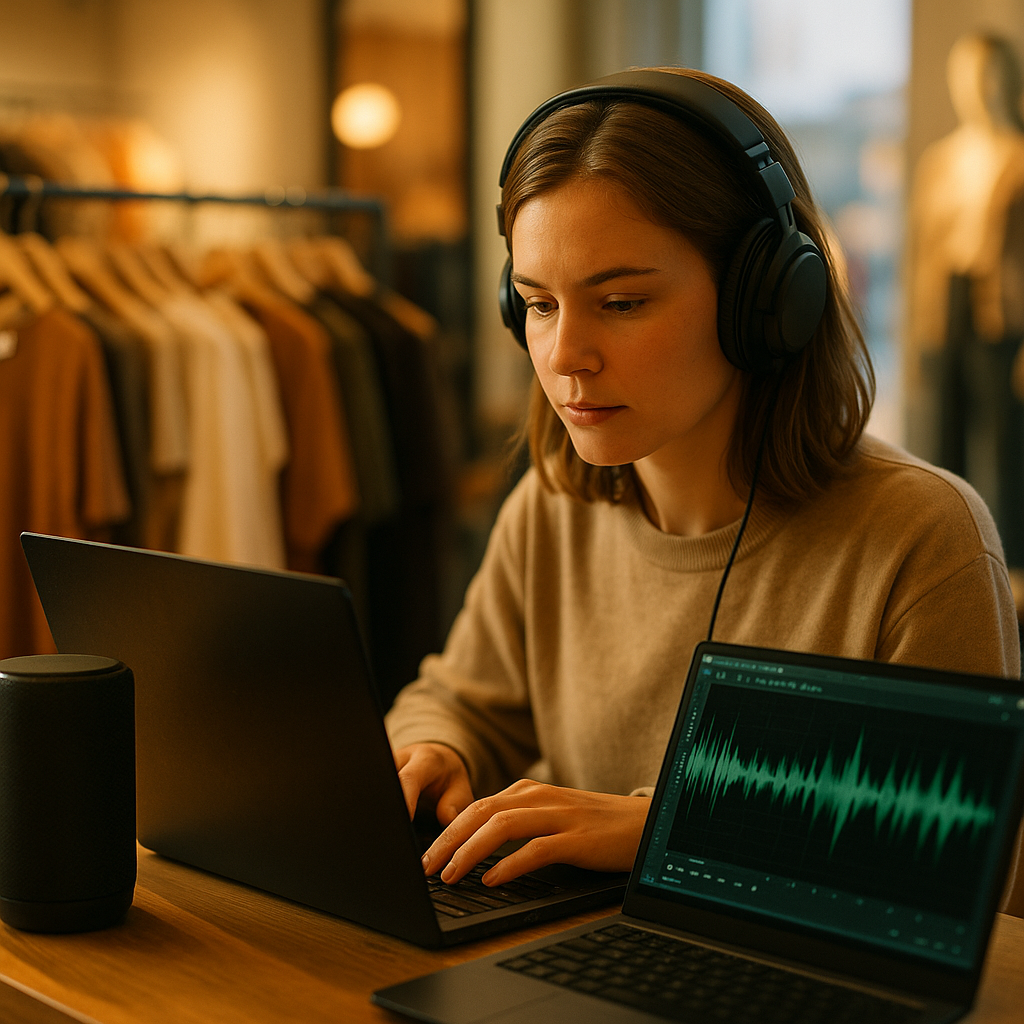
In 2025, retailers compete on more than product and price; they compete on atmosphere. Using AI to Generate Hyper Niche Soundscapes for Branded Retail gives marketers a precise way to shape mood, pace, and perception at scale without relying on generic playlists. When every store format and customer segment demands a distinct feel, AI audio becomes a strategic lever—so how do you build it responsibly and measurably?
AI soundscapes for retail: why audio is now a brand asset
Retail audio used to mean background music selected by taste or trend. Today, it functions like lighting and layout: a controllable layer of brand communication. AI soundscapes for retail take this further by generating audio that matches a brand’s identity and a specific shopping context—down to store zone, time of day, product category, and customer mission.
For branded retail, “hyper niche” does not mean obscure. It means precise: sound designed for a particular retail promise (e.g., clinical cleanliness, premium craftsmanship, playful discovery) and a particular customer intent (browse, compare, replenish, treat). A luxury skincare bar needs different sonic cues than a streetwear drop corner, even within the same flagship.
AI enables that precision with three advantages that matter to operators:
- Scale: Create many variations for store formats, regions, and campaigns without starting from scratch.
- Consistency: Maintain brand coherence while still adapting to micro-context (weekday mornings vs. weekend peaks).
- Speed: Iterate quickly based on performance data, not just subjective feedback.
Retail leaders often ask: “Is this just a trend?” The more useful question is: “Can we treat sound as a managed channel with governance, KPIs, and brand standards?” AI makes that operationally realistic.
Branded retail audio identity: mapping sound to customer intent
Before generating anything, define a branded retail audio identity that is as disciplined as your visual guidelines. AI performs best when it has clear constraints and a clear goal. Start with a practical framework that links brand attributes to audio parameters and shopper outcomes.
1) Translate brand values into sonic traits
- Premium: richer textures, more space (reverb), slower harmonic movement, controlled dynamics.
- Energetic: higher tempo range, brighter timbres, tighter rhythmic patterns, forward presence.
- Natural/organic: acoustic elements, subtle environmental layers, warmer EQ, less quantized rhythm.
2) Define missions and moments
Retailers typically have multiple “missions” happening at once. Use zoning to avoid one-size-fits-all audio:
- Threshold zone: quick brand recognition; reduce sonic clutter; create a welcoming cue.
- Discovery zone: support browsing; moderate tempo; low distraction; intermittent motifs that signal brand.
- Consultation zone: lower volume, reduced rhythmic complexity to protect conversation and trust.
- Queue/checkout: manage perceived wait time; slightly higher brightness; consistent groove without fatigue.
3) Set measurable intent
Sound should serve a measurable outcome, such as dwell time in a category, conversion in a service area, reduced queue abandonment, or higher satisfaction scores. If you cannot define the behavior you want to influence, you cannot evaluate whether the soundscape is working.
Follow-up question: “Do we need original music to be branded?” Not always. Many brands win by creating a distinctive sound environment—a signature palette and pacing—rather than a recognizable melody. The key is consistency and fit.
Generative music and ambient design: building hyper niche soundscapes
Generative music and ambient design for retail works best when you treat AI as a co-producer, not a vending machine. The goal is not “AI music” as a novelty; the goal is context-aware audio that is safe for commercial use, aligned to brand, and pleasant over long listening periods.
Core building blocks of a hyper niche soundscape
- Bed layer: a continuous ambient foundation that sets emotional tone and masks HVAC noise without becoming tiring.
- Motif layer: subtle repeating signature gestures (a texture, interval, or sonic logo variant) that reinforce identity.
- Event layer: occasional transitions, swells, or rhythmic pulses to prevent listener fatigue and support traffic waves.
How to use AI effectively
- Prompt with constraints: specify tempo range, tonal density, instrumentation, dynamic range, and “no-go” elements (e.g., avoid prominent vocals to reduce distraction).
- Use reference descriptors, not copies: describe feelings, materials, and environments (e.g., “polished wood, soft light, minimal movement”), rather than naming copyrighted tracks.
- Generate variations: produce multiple stems or versions per zone and rotate them to reduce repetition.
- Human finishing: mastering, loudness normalization, and continuity editing matter. Retail audio fails most often on level management and fatigue, not composition.
Design for the real store, not headphones
Retail acoustics are messy: reflective surfaces, open ceilings, refrigeration hum, and inconsistent speaker placement. Aim for midrange clarity and controlled low end. Plan for accessibility by avoiding harsh high frequencies and overly complex transient activity that can irritate sensitive listeners.
Follow-up question: “Will staff hate it?” Staff listen longer than customers, so staff feedback is a primary success metric. Build staff-safe rotations, include quiet hours, and schedule changeovers between shifts to reduce fatigue and resistance.
Retail customer experience personalization: dynamic playback and context triggers
Retail customer experience personalization becomes possible when the soundscape adapts to context in a controlled way. The objective is not to “track individuals,” but to respond to store conditions—ethically and transparently—so the environment stays aligned to the moment.
Common context signals for adaptive sound
- Time and day: calmer mornings, higher energy late afternoon, softer evenings for premium or wellness categories.
- Traffic density: adjust intensity and rhythmic drive as occupancy rises to maintain comfort and perceived control.
- Queue length: subtle tempo and brightness changes can reduce perceived waiting strain.
- Campaign calendars: limited-time launches get distinct motifs without breaking brand continuity.
How dynamic systems typically work
A practical approach is “rules + curated generation.” You generate approved sound assets (beds, motifs, transitions) and then use a playback engine that selects and mixes them based on predefined rules. This reduces the risk of unpredictable outputs while still creating a living sound environment.
Privacy and ethics in personalization
Many retailers ask whether they should use camera analytics or device signals to drive audio. If you do, keep it privacy-first: use aggregated, anonymized signals focused on operational context (like occupancy), and document it clearly. Avoid sensitive inference. The safest path is to personalize by store state, not by individual identity.
Follow-up question: “Can audio differ by region without diluting the brand?” Yes, if you treat regional variation like localized design: keep the same sonic palette and rules, and allow a limited set of culturally resonant instruments or rhythms that pass brand review.
Audio branding compliance: rights, safety, and governance in 2025
Hyper niche soundscapes only help if they are legally usable, operationally safe, and brand-approved. Audio branding compliance should be designed in from day one, especially when AI tools and third-party platforms are involved.
Rights and licensing essentials
- Clarify commercial usage: confirm your AI vendor’s terms allow in-store public performance and multi-location use.
- Document provenance: keep records of tools used, prompts, model terms, and asset versions for auditability.
- Avoid “sound-alike” risk: prohibit prompts that request imitation of identifiable artists, tracks, or protected styles in a way that could be construed as copying.
- Performance rights: even with custom audio, verify whether any collecting society obligations apply in your operating regions.
Brand safety and content controls
- No explicit content: prefer non-lyrical or tightly controlled vocalization to prevent unintended language.
- Volume standards: set maximum SPL targets by zone and time to protect comfort and staff health.
- Accessibility: avoid overly sharp frequencies; provide quiet zones where appropriate; support neurodiversity considerations.
Governance model that works
Assign ownership across three roles:
- Brand: approves identity, palettes, and do/don’t rules.
- Operations: controls schedules, zoning, and incident response.
- Audio lead (internal or partner): manages generation, QA, mastering, and versioning.
Follow-up question: “What does QA look like for AI audio?” QA should include loudness checks, frequency balance testing on in-store speakers, fatigue testing (30–60 minutes continuous play), and a review for unintended associations (holiday cues, cultural references, or genre signals that conflict with brand).
In-store audio analytics: measuring impact and proving ROI
Audio is often treated as “unmeasurable.” That is usually a process problem. In-store audio analytics can link soundscape changes to store performance without pretending audio is the only driver. The goal is directional clarity: what works, where, and under what conditions.
Metrics that retailers can actually use
- Dwell time by zone: compare periods with different soundscape profiles, controlling for staffing and promotions.
- Conversion rate: especially in consultative categories (beauty, electronics, luxury).
- Basket mix: track whether higher-margin categories see uplift when audio supports considered browsing.
- Queue abandonment and complaints: audio that reduces stress should show up in operational signals.
- Staff sentiment: regular pulse surveys; staff fatigue is an early warning for customer fatigue.
Testing methods that hold up
- A/B by matched stores: choose similar locations and run controlled schedules for several weeks.
- Zone testing: pilot one department before scaling chain-wide.
- Time-sliced experiments: rotate approved variants at set times to isolate effects.
Practical ROI framing
Instead of promising unrealistic revenue lifts, build an ROI case around: reduced churn in high-service areas, improved conversion during peak times, fewer negative feedback events, and stronger brand recall scores. Soundscapes are a compounding asset: once the system and library exist, iteration costs drop while performance improves.
FAQs about AI-generated soundscapes for branded retail
What is a hyper niche retail soundscape?
A hyper niche retail soundscape is a deliberately designed audio environment tailored to a specific brand, store zone, and shopper mission. It uses controlled pacing, textures, and transitions to support the intended experience rather than playing generic music.
Do AI-generated soundscapes replace curated playlists?
They can, but many retailers use a hybrid approach: AI-generated ambient beds and branded motifs combined with curated tracks for specific moments. Hybrids often deliver better brand control while keeping a familiar “music” feel where appropriate.
How do we avoid the sound becoming repetitive?
Generate modular stems, rotate multiple approved variants, and schedule transitions based on traffic patterns. Also design “low-event” periods for staff comfort, and refresh a portion of the library monthly rather than changing everything at once.
Is it legal to use AI music in stores?
It can be legal if your vendor terms permit commercial public performance and you document usage rights. You also need to ensure you are not generating sound-alike content that could trigger infringement claims, and you must confirm whether any regional performance-rights obligations apply.
What equipment do we need to implement adaptive soundscapes?
At minimum: reliable zone-capable amplification, consistent speaker coverage, and a playback system that supports scheduling and rules-based selection. For adaptive playback, you may add sensors for occupancy or queue estimation, ideally using aggregated signals with privacy safeguards.
How long does it take to deploy an AI soundscape program?
A focused pilot can be deployed in weeks if you already have zoning and playback infrastructure. Chain-wide rollouts take longer because you need acoustic tuning, staff onboarding, governance, and a controlled testing plan.
AI-generated hyper niche soundscapes let branded retailers treat audio as a governed, measurable experience layer rather than an afterthought. Define a clear sonic identity, generate modular assets with strong compliance controls, and deploy them through zone-based, context-aware playback. Measure impact with practical in-store analytics and staff feedback. The takeaway: when sound is managed like any other channel, it strengthens brand consistency and improves shopping comfort.