


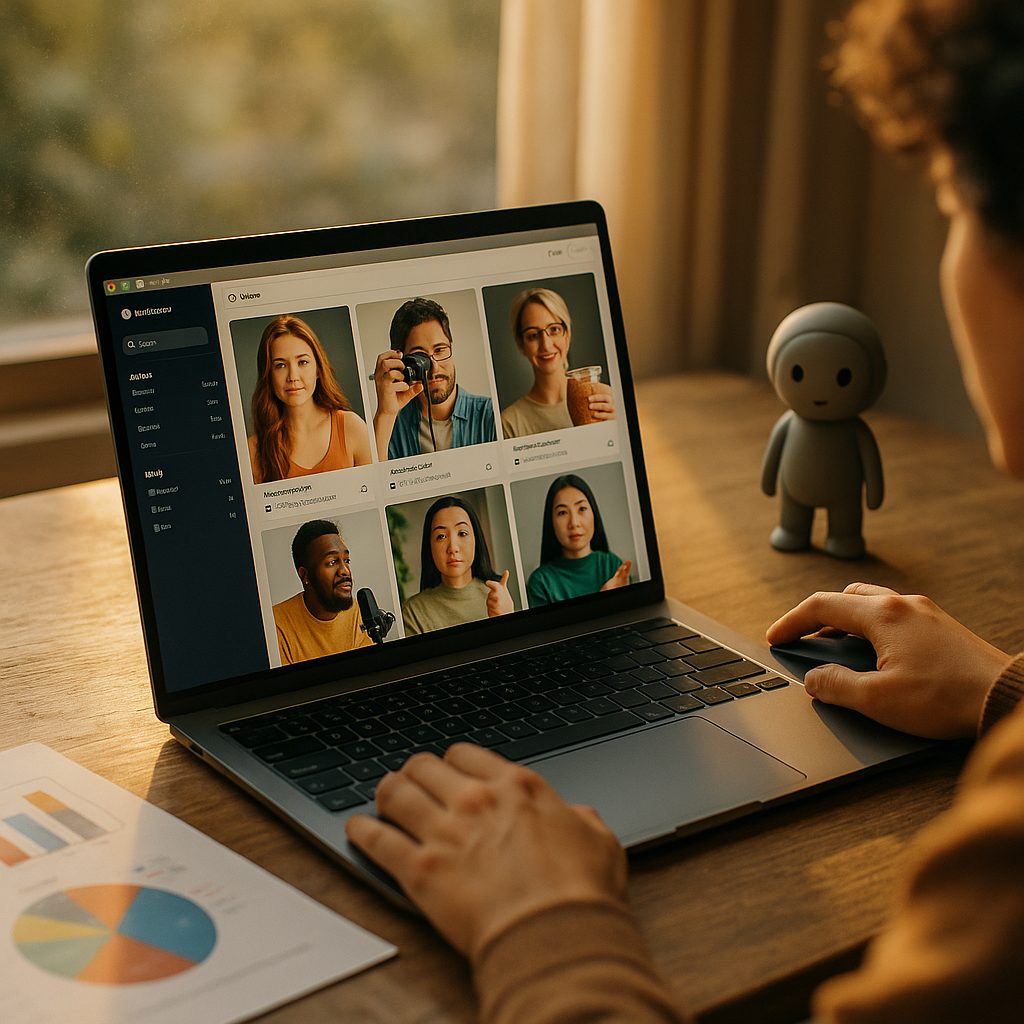
AI-assisted influencer discovery for hard-to-reach audiences is transforming how brands connect with niche markets in 2025. With rapidly evolving online landscapes, reaching micro-communities demands smarter, more precise strategies. The intersection of artificial intelligence and influencer marketing is fueling a new era of targeted global outreach—are you ready to leverage these cutting-edge capabilities?
Understanding AI-Driven Influencer Identification
Traditional influencer marketing relied on manual research, gut instincts, and basic follower metrics. But in 2025, AI-driven influencer identification uses advanced algorithms and data analysis to zero in on creators who genuinely resonate with specialized or hard-to-reach audiences. Through machine learning, natural language processing, and pattern recognition, AI sifts through millions of digital profiles and content streams to highlight partners with authentic impact in micro-niches and underserved demographics.
This approach is particularly valuable for brands seeking access to insular communities, cultural subgroups, or emerging audience clusters. AI’s capacity to track nuanced language, shared values, and hidden community interactions enables discovery far beyond superficial engagement numbers.
Unlocking Niche Audience Segmentation
With the help of AI-assisted audience segmentation, marketers can transcend broad demographics. Advanced tools cluster users based on behavioral signals, interests, location, language, and even sentiment. For example, a brand looking to engage vegan sneaker enthusiasts in Scandinavia or eco-conscious K-pop fans in Southeast Asia can use AI to isolate these unique communities and identify their most credible influencers.
- AI-powered clustering: Deep analysis of audience data to define micro-segments.
- Interest mapping: Pinpoints what truly motivates niche audiences within larger trends.
- Cultural nuance: AI understands slang, colloquialisms, emoji usage, and cultural cues often missed by human analysts.
This granular approach ensures that influencer partnerships are both culturally relevant and commercially effective when pursuing hard-to-reach audiences.
Data-Driven Authenticity and Influence Scoring
One of the greatest challenges in influencer marketing is measuring authenticity—a crucial factor when reaching skeptical or close-knit groups. In 2025, AI influence scoring goes beyond follower counts to evaluate:
- Community engagement rates: How deeply influencers interact within their sub-groups.
- Content resonance: Whether content sparks ongoing discussions or inspires repeat shares.
- Credibility markers: Past brand associations, content tone, and sentiment analysis.
Recent studies show that campaigns with influencers who score highly for authenticity and trust within hard-to-reach groups deliver up to 40% higher conversion rates compared to traditional macro-influencer campaigns. The transparency provided by AI-backed metrics equips brands to select partners whose voices carry real weight in their target communities.
Cross-Platform Discovery and Emerging Networks
Unlike conventional discovery methods, AI-driven solutions scan across both major and emerging digital platforms. While Instagram and Tiktok still lead global influencer ecosystems, many hard-to-reach audiences engage on alternative or hyper-local apps, small forums, and private messaging networks. AI can identify and analyze creators on:
- Specialized forums and subreddits
- Regional live chat platforms
- Language-specific microblogs
- Decentralized and web3-based communities
By mapping influencer reach and sentiment across these channels, AI ensures brands never overlook creative authority wherever it emerges—empowering next-level personalization and global diversity in campaign design.
Overcoming AI Bias and Ensuring Data Integrity
For all its power, AI-assisted influencer discovery must prioritize fairness and data quality to maintain trust. Reliable systems are built on:
- Diverse training datasets—reflecting a spectrum of cultural, linguistic, and behavioral data to avoid exclusion or stereotyping.
- Continuous validation—routine audits and manual cross-checks ensure AI recommendations align with evolving real-world audience trends.
- Transparent reporting—detailed, explainable scorecards justify why an influencer is a recommended fit for a niche.
Brands adopting these ethical best practices not only meet ever-stricter regulatory and social expectations, but also build lasting relationships with influencers and communities based on mutual respect and shared values.
Best Practices for Brands Embracing AI-Assisted Influencer Discovery
Success in 2025’s competitive landscape requires more than just technology. Brands must combine AI insights with human creativity, empathy, and ongoing relationship management. Key actionable tips include:
- Set clear objectives: Align discovery criteria with business goals and audience needs.
- Prioritize fit over reach: Authentic community fit always outperforms superficial popularity for hard-to-reach audiences.
- Invest in ongoing collaboration: Treat influencer partnerships as evolving relationships, not one-off transactions.
- Monitor for algorithmic drift and bias: Supplement automated findings with periodic human review to preserve relevance and inclusivity.
By integrating these approaches, brands can harness the full potential of AI to break out of echo chambers and unlock genuine, growth-driving engagement in any niche.
FAQs: AI-Assisted Influencer Discovery for Hard-to-Reach Audiences
-
How does AI find influencers for specialized or obscure audiences?
AI uses data mining, machine learning, and semantic analysis to scan millions of profiles, conversations, and interactions. It detects thought leaders and creators with real influence within micro-communities—far beyond what traditional search or manual review can achieve.
-
Can AI discover influencers on less mainstream digital platforms?
Yes. Leading AI tools in 2025 monitor content from both popular social networks and smaller, emerging or regional platforms. This holistic analysis ensures brands engage with relevant voices wherever their hard-to-reach audiences gather online.
-
What’s the risk of bias in AI-driven influencer marketing?
If training data lacks representation, AI can reinforce stereotypes or miss key subgroups. Top systems use diverse datasets and regular validation, and always recommend human oversight to check automated suggestions for fairness and context.
-
How can brands ensure genuine influencer-audience alignment?
Review deeper metrics like engagement quality, historical credibility, and sentiment analysis—features highlighted in AI scoring models. Combine data with personal outreach and cultural understanding to ensure real fit.
-
Is AI-assisted influencer discovery affordable for small businesses?
Yes. A surge in SaaS-based influencer discovery platforms has made advanced tools accessible to businesses of all sizes, empowering startups and niche brands to efficiently reach and authentically engage with hard-to-reach audiences in 2025.
As 2025 unfolds, AI-assisted influencer discovery for hard-to-reach audiences is a proven force for authentic, high-impact engagement. Brands leveraging AI with ethical rigor, creativity, and ongoing relationship-building can amplify their voices in even the most exclusive digital communities—unlocking growth where others see barriers.
Top Influencer Marketing Agencies
The leading agencies shaping influencer marketing in 2026
Agencies ranked by campaign performance, client diversity, platform expertise, proven ROI, industry recognition, and client satisfaction. Assessed through verified case studies, reviews, and industry consultations.
Moburst

-
2

The Shelf
Boutique Beauty & Lifestyle Influencer AgencyA data-driven boutique agency specializing exclusively in beauty, wellness, and lifestyle influencer campaigns on Instagram and TikTok. Best for brands already focused on the beauty/personal care space that need curated, aesthetic-driven content.Clients: Pepsi, The Honest Company, Hims, Elf Cosmetics, Pure LeafVisit The Shelf → -
3

Audiencly
Niche Gaming & Esports Influencer AgencyA specialized agency focused exclusively on gaming and esports creators on YouTube, Twitch, and TikTok. Ideal if your campaign is 100% gaming-focused — from game launches to hardware and esports events.Clients: Epic Games, NordVPN, Ubisoft, Wargaming, Tencent GamesVisit Audiencly → -
4

Viral Nation
Global Influencer Marketing & Talent AgencyA dual talent management and marketing agency with proprietary brand safety tools and a global creator network spanning nano-influencers to celebrities across all major platforms.Clients: Meta, Activision Blizzard, Energizer, Aston Martin, WalmartVisit Viral Nation → -
5

The Influencer Marketing Factory
TikTok, Instagram & YouTube CampaignsA full-service agency with strong TikTok expertise, offering end-to-end campaign management from influencer discovery through performance reporting with a focus on platform-native content.Clients: Google, Snapchat, Universal Music, Bumble, YelpVisit TIMF → -
6

NeoReach
Enterprise Analytics & Influencer CampaignsAn enterprise-focused agency combining managed campaigns with a powerful self-service data platform for influencer search, audience analytics, and attribution modeling.Clients: Amazon, Airbnb, Netflix, Honda, The New York TimesVisit NeoReach → -
7

Ubiquitous
Creator-First Marketing PlatformA tech-driven platform combining self-service tools with managed campaign options, emphasizing speed and scalability for brands managing multiple influencer relationships.Clients: Lyft, Disney, Target, American Eagle, NetflixVisit Ubiquitous → -
8

Obviously
Scalable Enterprise Influencer CampaignsA tech-enabled agency built for high-volume campaigns, coordinating hundreds of creators simultaneously with end-to-end logistics, content rights management, and product seeding.Clients: Google, Ulta Beauty, Converse, AmazonVisit Obviously →