


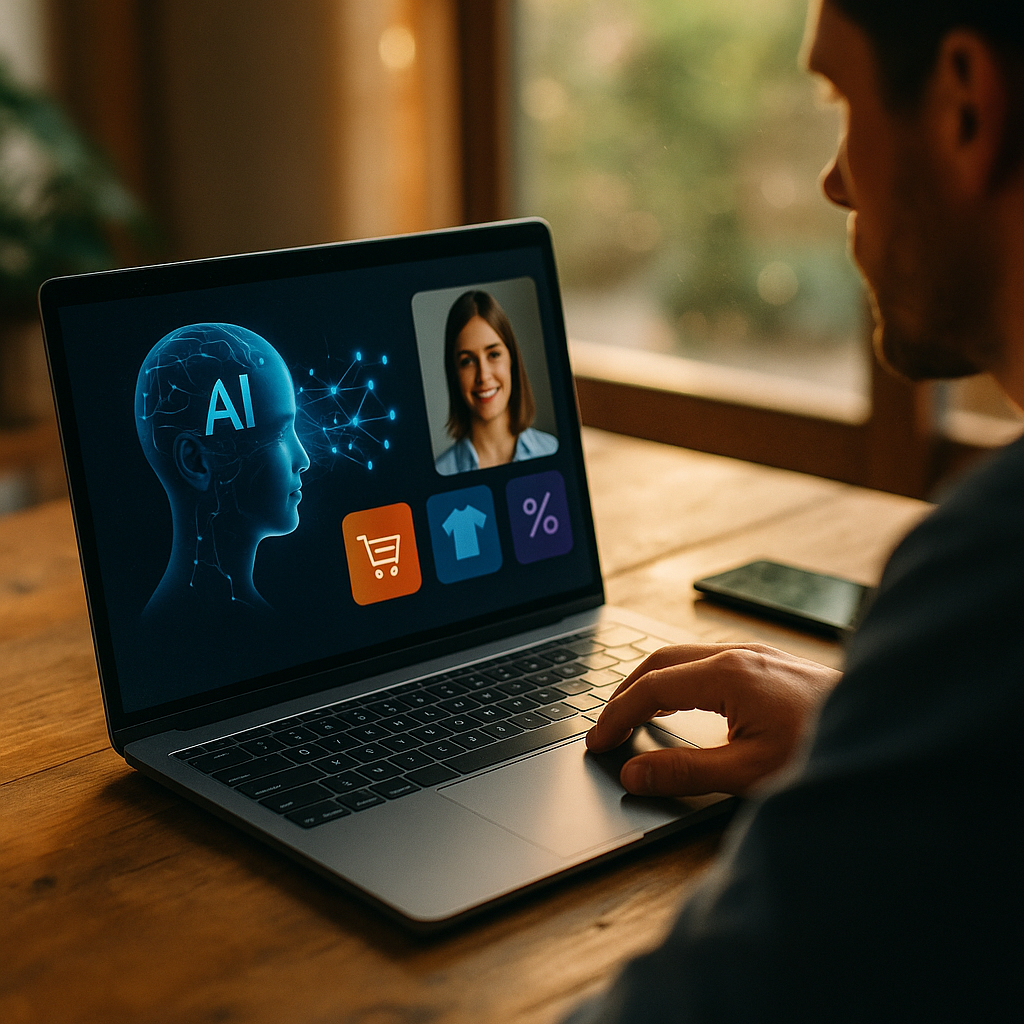
The future of personalization hinges on using AI to predict customer needs, revolutionizing how businesses engage with their audiences. By leveraging advanced machine learning, brands can anticipate preferences and offer tailored experiences like never before. In 2025, this transformation isn’t a trend—it’s a necessity. What does this AI-driven personalization mean for companies and consumers alike?
The Evolution of Predictive Personalization in Customer Experience
Predictive personalization has evolved rapidly due to breakthroughs in artificial intelligence. Rather than relying on static demographic data, brands now utilize real-time behavioral analytics and contextual signals to fine-tune offers and recommendations. According to McKinsey, companies fully embracing AI-driven personalization see revenue increases of up to 25%. Businesses with integrated AI can now:
- Deliver product or content suggestions based on an individual’s browsing and purchase history
- Optimize pricing dynamically for higher conversion rates
- Engage customers through personalized communications at ideal moments in their journey
This shift empowers brands to meet expectations before customers even articulate them—making customer interactions feel more intuitive and efficient. The ability to predict and address individual needs sets new standards for satisfaction and loyalty.
AI Algorithms for Anticipating Customer Behavior
Modern customer behavior prediction relies on robust learning algorithms that analyze vast datasets. By employing machine learning, deep learning, and natural language processing, AI identifies hidden patterns that traditional analytics often miss. For instance, recurrent neural networks (RNNs) are exceptionally effective at predicting purchasing cycles, while recommendation engines leverage collaborative and content-based filtering methods to curate personalized product feeds.
These algorithms empower marketers to:
- Segment audiences dynamically, adapting to shifting preferences
- Predict customer churn and proactively engage at-risk users
- Identify upsell and cross-sell opportunities based on real-time intent signals
Companies like Amazon and Netflix set benchmarks by recommending products and content with uncanny accuracy, powered by AI systems that “learn” from millions of micro-interactions. This level of personalization is now accessible even to mid-sized businesses, thanks to increasingly accessible AI tools in 2025.
Data Collection and Privacy: Striking the Right Balance
The key to predicting customer needs is data—but with increased data collection comes a heightened responsibility to safeguard privacy. Consumers in 2025 are more aware and concerned about data use than ever before. Organizations must therefore:
- Implement transparent data collection practices, clearly communicating how data benefits the customer
- Adopt robust consent management and honor right-to-be-forgotten requests
- Utilize secure data storage solutions that comply with global regulations
Advanced AI models now commonly use first-party and zero-party data—information customers actively provide—instead of relying on third-party cookies. This approach improves personalization accuracy while preserving user trust. Businesses must find the balance between enriching experiences and respecting user autonomy, a core EEAT (Experience, Expertise, Authority, Trustworthiness) tenet.
Personalized Omnichannel Engagement: Meeting Customers Where They Are
AI-powered personalization now extends seamlessly across channels—websites, mobile apps, email, social, and even in-person touchpoints. Omnichannel strategies ensure that each brand interaction reflects an up-to-date understanding of the customer’s journey. For example, if a customer browses items on mobile but purchases via desktop, AI bridges the gap to deliver a unified experience.
Leading brands deploy AI-driven solutions to:
- Send personalized push notifications when a product becomes available in-store
- Adjust website layouts in real time based on a visitor’s historical preferences
- Integrate virtual assistants that guide customers to relevant information or support
This cross-channel coherence reduces friction and strengthens loyalty, as customers receive value at every touchpoint—wherever, whenever they choose to engage.
Challenges and Ethical Considerations in AI Customer Insights
While AI-driven personalization offers immense advantages, it introduces vital challenges and ethical dilemmas. Bias in training data can perpetuate unfair recommendations or stereotypes, potentially alienating segments of your audience. To mitigate these risks, responsible organizations in 2025:
- Regularly audit AI models to identify and remedy biases or inaccuracies
- Foster diverse development teams for well-rounded algorithm training
- Create clear escalation paths for customers to dispute or adjust preferences
Ethics in AI is not just technical—it’s about maintaining customer trust. When handled with transparency and accountability, AI systems can augment experiences without compromising integrity. Including customers in the feedback loop drives more ethical and effective personalization.
Measuring Business Impact of Predictive Personalization Strategies
Assessing the impact of AI-driven personalization requires a mix of qualitative and quantitative metrics. Brands that lead in personalized customer experiences closely monitor:
- Customer Lifetime Value (CLV) enhancements after personalization initiatives
- Churn rate reductions and increased retention rates
- Improvements in Net Promoter Scores (NPS) and direct customer feedback
- Lift in conversion rates across digital and physical channels
With predictive AI, marketers are moving from reactive to proactive engagement, capturing incremental value at every interaction. Continual A/B testing helps refine algorithms, ensuring ongoing relevance and higher ROI on personalization investments.
FAQs: The Future of Personalization with AI
-
How does AI enhance personalization for customers?
AI uses advanced data analysis to anticipate preferences, automating real-time recommendations and communications based on actual behavior. This ensures customers receive offers that match their unique needs and context, rather than one-size-fits-all marketing.
-
What types of data do AI systems need for predictive personalization?
AI primarily relies on first-party and zero-party data—details customers share through interactions, preferences, and purchase history—to personalize experiences accurately while safeguarding privacy and consent.
-
Are there risks to using AI-driven personalization?
Potential risks include privacy concerns, data breaches, and algorithmic bias. Responsible organizations prioritize transparent practices, ethical AI monitoring, and customer control over their information.
-
Can smaller businesses benefit from AI-powered personalization?
Absolutely. Advances in AI platforms have made predictive personalization accessible and affordable, enabling even small and mid-sized companies to deliver tailored customer experiences and compete with enterprise brands.
-
How can companies ensure privacy while using AI for personalization?
Brands must provide clear data policies, obtain active consent, allow customers to manage preferences, and adhere to modern security and compliance standards to build and maintain trust.
AI is radically reshaping the future of personalization, empowering brands to predict customer needs with increasing precision. Companies that responsibly harness predictive AI deliver memorable, loyalty-building experiences—while staying agile in a dynamic digital landscape. For long-term success, blend empathy, ethics, and innovation into every customer interaction.
Top Influencer Marketing Agencies
The leading agencies shaping influencer marketing in 2026
Agencies ranked by campaign performance, client diversity, platform expertise, proven ROI, industry recognition, and client satisfaction. Assessed through verified case studies, reviews, and industry consultations.
Moburst

-
2

The Shelf
Boutique Beauty & Lifestyle Influencer AgencyA data-driven boutique agency specializing exclusively in beauty, wellness, and lifestyle influencer campaigns on Instagram and TikTok. Best for brands already focused on the beauty/personal care space that need curated, aesthetic-driven content.Clients: Pepsi, The Honest Company, Hims, Elf Cosmetics, Pure LeafVisit The Shelf → -
3

Audiencly
Niche Gaming & Esports Influencer AgencyA specialized agency focused exclusively on gaming and esports creators on YouTube, Twitch, and TikTok. Ideal if your campaign is 100% gaming-focused — from game launches to hardware and esports events.Clients: Epic Games, NordVPN, Ubisoft, Wargaming, Tencent GamesVisit Audiencly → -
4

Viral Nation
Global Influencer Marketing & Talent AgencyA dual talent management and marketing agency with proprietary brand safety tools and a global creator network spanning nano-influencers to celebrities across all major platforms.Clients: Meta, Activision Blizzard, Energizer, Aston Martin, WalmartVisit Viral Nation → -
5

The Influencer Marketing Factory
TikTok, Instagram & YouTube CampaignsA full-service agency with strong TikTok expertise, offering end-to-end campaign management from influencer discovery through performance reporting with a focus on platform-native content.Clients: Google, Snapchat, Universal Music, Bumble, YelpVisit TIMF → -
6

NeoReach
Enterprise Analytics & Influencer CampaignsAn enterprise-focused agency combining managed campaigns with a powerful self-service data platform for influencer search, audience analytics, and attribution modeling.Clients: Amazon, Airbnb, Netflix, Honda, The New York TimesVisit NeoReach → -
7

Ubiquitous
Creator-First Marketing PlatformA tech-driven platform combining self-service tools with managed campaign options, emphasizing speed and scalability for brands managing multiple influencer relationships.Clients: Lyft, Disney, Target, American Eagle, NetflixVisit Ubiquitous → -
8

Obviously
Scalable Enterprise Influencer CampaignsA tech-enabled agency built for high-volume campaigns, coordinating hundreds of creators simultaneously with end-to-end logistics, content rights management, and product seeding.Clients: Google, Ulta Beauty, Converse, AmazonVisit Obviously →