


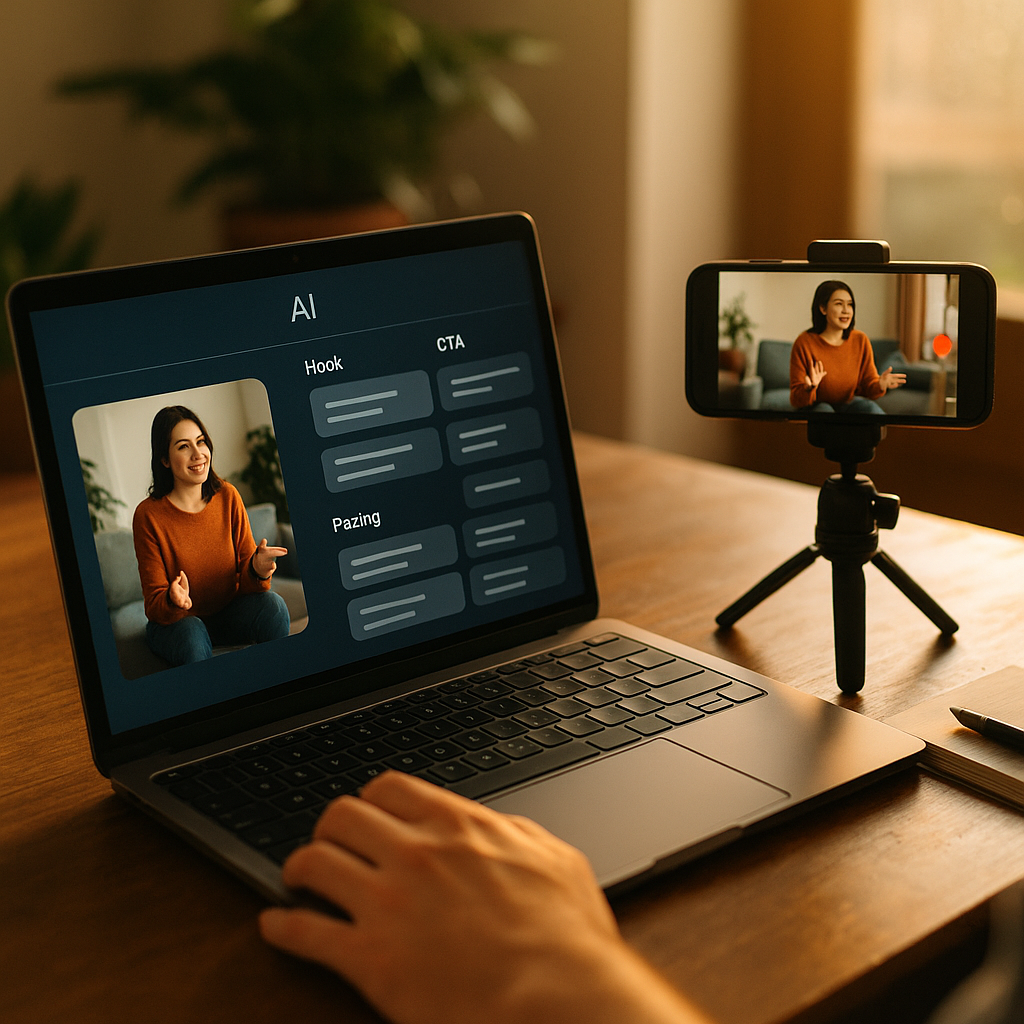
Most UGC programs are still manually bottlenecked at the wrong stage. Brands spend 80% of their creative budget producing content and less than 20% testing it — which is exactly backwards. The AI-driven UGC pipeline flips that ratio, automating variant production so teams can focus on what actually drives performance: structured creative testing at scale.
The Real Bottleneck Isn’t Volume — It’s Upstream Creative Thinking
Ask any performance marketing team where they lose time, and they’ll say the same thing: waiting on creative. Waiting for the brief to get approved. Waiting for the creator to deliver. Waiting for edits. By the time a batch of UGC is live on Meta or TikTok, the audience signal window has already shifted. You’re optimizing yesterday’s content against today’s algorithm.
The instinct is to throw more creators at the problem. More volume, faster turnaround. But that’s treating a systems problem like a staffing problem. The actual constraint isn’t the number of assets — it’s the number of meaningfully differentiated assets. Ten videos with the same hook, the same pacing, and the same CTA aren’t ten test cells. They’re one piece of content with ten render fees.
This is where AI-driven UGC pipeline design changes the operating model entirely. Not by replacing creators, but by systematically multiplying the strategic surface area of every creator deliverable.
What an AI-Driven UGC Pipeline Actually Looks Like
A properly structured pipeline separates creative production into modular components: the hook (first 3 seconds), the body narrative, the CTA, and the pacing/edit rhythm. Each of these can be varied independently, and each variation maps to a distinct hypothesis about your audience.
In practice, this means a single creator shoot generates not one deliverable but a library of combinatorial variants. A creator records 3 hook openings, 2 body treatments, and 3 CTA closes. With minimal post-production automation (tools like Kling AI, Opus Clip, or custom workflows built on Runway’s API), a brand team can assemble 18 structurally distinct test assets from that one session. The creator’s time stays flat. The test surface area multiplies sixfold.
The creative bottleneck for most brands is not production capacity — it’s the inability to turn one creator session into a structured test matrix. AI-driven modular assembly solves that directly.
Pacing is often the most underrated variable. A 30-second UGC asset edited at 1.2x speed with jump cuts every 2 seconds performs differently across audiences than the same script delivered at a conversational pace. AI creative production timelines have compressed enough that these pacing variants no longer require a full editor — they require a clear brief template and a defined export spec.
Building the Hook Variant System
Hooks deserve their own infrastructure. A hook failure in the first 2-3 seconds is a full asset failure — the rest of the video never gets evaluated by the algorithm or the audience. Yet most brand teams test a single hook per creative concept and treat performance data as a verdict on the concept itself, when it’s really a verdict on the hook.
A functioning hook variant system starts with categorizing hook types: problem-agitation (“Tired of spending $200 on skincare that doesn’t work?”), curiosity gap (“I tested this for 30 days and the results surprised me”), social proof lead (“Over 40,000 people switched to this last month”), and direct benefit lead (“This cleared my skin in 10 days”). Each category appeals to a different decision-making trigger, and different audience segments respond to different triggers at different funnel stages.
AI copy generation tools — GPT-4o, Claude 3.7, or Jasper configured with your brand voice — can produce 20-30 hook variants per concept in minutes. The filter question isn’t “which one sounds best?” but “which ones represent structurally different hypotheses we haven’t tested?” Your first-party data signals should inform which hook categories are most likely to resonate with specific audience segments before you ever run a single impression.
Record 3-5 hook variants per creator session. Keep body and CTA consistent in the first test wave. You’ll know within 48 hours of media spend which hook category is working, and then you can iterate on body and CTA variables in wave two.
CTA Architecture: Beyond “Shop Now”
CTA optimization is consistently underinvested relative to its impact. HubSpot’s conversion research has consistently shown that personalized CTAs outperform generic ones by significant margins, and that holds in video as much as it does in email. Yet “Shop Now” and “Learn More” remain the dominant CTA treatments in most UGC programs because they’re the path of least creative resistance.
In an AI-driven pipeline, CTA variants should be systematically mapped to funnel stage and audience temperature. Cold audiences respond better to curiosity or low-commitment CTAs (“See why dermatologists recommend this”). Warm retargeting audiences tolerate urgency and direct offer CTAs (“Only 3 days left at this price”). Existing customers respond to loyalty and community framing (“Join 50,000 people who switched”).
The mechanism for this in a UGC pipeline is simple: creator records a neutral close for the video body, then records 3-4 CTA audio tags separately. Post-production automation swaps the CTA tag based on which ad set the asset is assigned to. The creator spends an extra 10 minutes per session. The media team gets audience-matched CTAs without producing entirely separate assets. This is the efficiency gain that AI-driven UGC pipeline design actually delivers.
Pacing Variants and Platform-Specific Assembly
TikTok, Instagram Reels, and YouTube Shorts don’t just have different aspect ratios — they have different native pacing expectations that directly affect watch-through rate and algorithm amplification. A video paced for TikTok’s fast-cut culture often underperforms on YouTube Shorts, where slightly longer retention moments are rewarded. Feeding the same edit to all three platforms is a missed optimization.
AI-assisted editing tools can now produce platform-specific pacing variants from a single source file. Define your cut rules per platform in your creative spec (e.g., TikTok: max 2.5 seconds per cut; YouTube Shorts: allow up to 5-second narrative holds), then run the source footage through an automated assembly workflow. AI-programmatic content distribution infrastructure is already handling some of this routing logic, but the pacing specification still needs to originate from a human creative strategist who understands platform behavior.
The output is not “more content” in a commoditized sense. It’s a structured test matrix where each variant carries a specific hypothesis: hook category X + CTA type Y + pacing profile Z = performance outcome for audience segment W. That structure is what allows your media team to attribute engagement signals accurately back to creative decisions rather than treating results as a black box.
When every asset in your UGC library maps to a specific creative hypothesis, performance data stops being a campaign report and starts being a strategic input for the next production cycle.
Governance, Compliance, and the Brand Safety Layer
Scaling variant production without a governance layer is how brands end up with off-message assets running at volume. As you automate hook and CTA generation, you need a corresponding AI content governance framework that defines what each component variant is and is not allowed to claim, how it interacts with FTC disclosure requirements, and how it aligns with any active regulatory or legal constraints on your category (pharmaceutical, financial, alcohol, etc.).
This isn’t a creative concern — it’s a compliance infrastructure concern. The AI generates variants fast. A human compliance reviewer cannot scale at the same rate manually. The solution is to build constraint rules into the prompt architecture itself: train your AI copy tools on approved claim sets, flag any generated hook or CTA that contains a superlative or a specific efficacy claim, and require legal sign-off on the constraint templates rather than on individual assets. Sign off on the rules once; the system applies them at every variant.
Brand safety at scale requires systematic thinking. AI creative standards for mixed-asset campaigns are becoming a baseline operational requirement for mid-market brands running creator content programmatically, not just an enterprise concern.
Shifting Strategy from Production to Testing Intelligence
Once the pipeline is running, the strategic conversation changes. You’re no longer asking “can we produce enough content?” You’re asking “are we learning fast enough?” The test matrix you’ve built has real diagnostic value only if your analytics layer is configured to read it correctly.
Set up your ad accounts with a consistent naming convention that encodes the variant parameters: campaign-audience-hooktype-CTAtype-pacing. Run test waves with controlled budgets — enough to reach statistical significance on thumb-stop and early click metrics within 72 hours, but not so much that a losing variant burns significant spend before you can rotate it out. TikTok Ads Manager and Meta Advantage+ both support dynamic creative testing frameworks, but neither platform will tell you why a creative won. That’s your team’s job, reading the variant data against the hypothesis log.
The brands that will compound creative performance fastest are not those with the largest creator rosters or the biggest production budgets. They’re the ones that have turned UGC production into a learning system — where every asset answers a question and every answer informs the next creative sprint. Build the pipeline for that outcome, not for volume alone.
Start by auditing your last three UGC campaigns and counting how many structurally distinct hook-CTA-pacing combinations you actually tested. If the answer is fewer than five per campaign, you have a pipeline design problem, not a creative talent problem — and that’s exactly what AI-driven modular production is built to fix.
Frequently Asked Questions
What is an AI-driven UGC pipeline?
An AI-driven UGC pipeline is a production and testing system that uses AI tools to generate modular variants of creator content — including different hooks, CTAs, and pacing edits — from a single creator session. Rather than producing one final asset per shoot, the pipeline assembles multiple structurally distinct versions that can be tested simultaneously against different audience segments.
How many UGC variants should a brand test per campaign?
A practical minimum for a meaningful test is 6-9 variants per audience segment, combining at least 3 hook types with 2-3 CTA treatments. This gives you enough combinatorial data to identify which creative elements are driving performance and which are neutral or negative, without overwhelming your media budget or analytics capacity.
Do AI-generated hooks replace creator-recorded content?
No. AI tools generate the copy and structural variation for hooks, but the hook still needs to be recorded by a real creator for authenticity and platform trust signals. The AI accelerates ideation and ensures hooks represent diverse psychological triggers, while the creator delivers the on-camera performance. These are complementary, not competitive, roles.
What tools are used in an AI-driven UGC pipeline?
Common tools include AI copy generators like GPT-4o or Claude for hook and CTA variant ideation, video editing automation tools like Opus Clip or Runway for pacing and assembly, and ad platform creative testing frameworks like TikTok’s Smart Performance Campaigns or Meta’s Dynamic Creative. Brands with more complex needs often build custom workflows using API integrations across these tools.
How does a UGC pipeline handle FTC compliance at scale?
Compliance at scale requires embedding constraint rules into the AI prompt architecture itself rather than reviewing each asset individually. Legal and compliance teams approve the ruleset — approved claim categories, prohibited superlatives, required disclosure language — and those rules govern every variant the AI generates. This shifts the compliance review from per-asset to per-template, which is the only approach that scales with automated variant production.
How is performance data from UGC variant testing used strategically?
Each variant in a well-structured pipeline maps to a specific creative hypothesis. Performance data — thumb-stop rate, early click rate, watch-through, conversion — can then be read against the hypothesis log to identify which hook categories, CTA types, and pacing profiles drive outcomes for which audience segments. This turns campaign reporting into a strategic input that directly informs the creative brief for the next production cycle.
Top Influencer Marketing Agencies
The leading agencies shaping influencer marketing in 2026
Agencies ranked by campaign performance, client diversity, platform expertise, proven ROI, industry recognition, and client satisfaction. Assessed through verified case studies, reviews, and industry consultations.
Moburst

-
2

The Shelf
Boutique Beauty & Lifestyle Influencer AgencyA data-driven boutique agency specializing exclusively in beauty, wellness, and lifestyle influencer campaigns on Instagram and TikTok. Best for brands already focused on the beauty/personal care space that need curated, aesthetic-driven content.Clients: Pepsi, The Honest Company, Hims, Elf Cosmetics, Pure LeafVisit The Shelf → -
3

Audiencly
Niche Gaming & Esports Influencer AgencyA specialized agency focused exclusively on gaming and esports creators on YouTube, Twitch, and TikTok. Ideal if your campaign is 100% gaming-focused — from game launches to hardware and esports events.Clients: Epic Games, NordVPN, Ubisoft, Wargaming, Tencent GamesVisit Audiencly → -
4

Viral Nation
Global Influencer Marketing & Talent AgencyA dual talent management and marketing agency with proprietary brand safety tools and a global creator network spanning nano-influencers to celebrities across all major platforms.Clients: Meta, Activision Blizzard, Energizer, Aston Martin, WalmartVisit Viral Nation → -
5

The Influencer Marketing Factory
TikTok, Instagram & YouTube CampaignsA full-service agency with strong TikTok expertise, offering end-to-end campaign management from influencer discovery through performance reporting with a focus on platform-native content.Clients: Google, Snapchat, Universal Music, Bumble, YelpVisit TIMF → -
6

NeoReach
Enterprise Analytics & Influencer CampaignsAn enterprise-focused agency combining managed campaigns with a powerful self-service data platform for influencer search, audience analytics, and attribution modeling.Clients: Amazon, Airbnb, Netflix, Honda, The New York TimesVisit NeoReach → -
7

Ubiquitous
Creator-First Marketing PlatformA tech-driven platform combining self-service tools with managed campaign options, emphasizing speed and scalability for brands managing multiple influencer relationships.Clients: Lyft, Disney, Target, American Eagle, NetflixVisit Ubiquitous → -
8

Obviously
Scalable Enterprise Influencer CampaignsA tech-enabled agency built for high-volume campaigns, coordinating hundreds of creators simultaneously with end-to-end logistics, content rights management, and product seeding.Clients: Google, Ulta Beauty, Converse, AmazonVisit Obviously →