


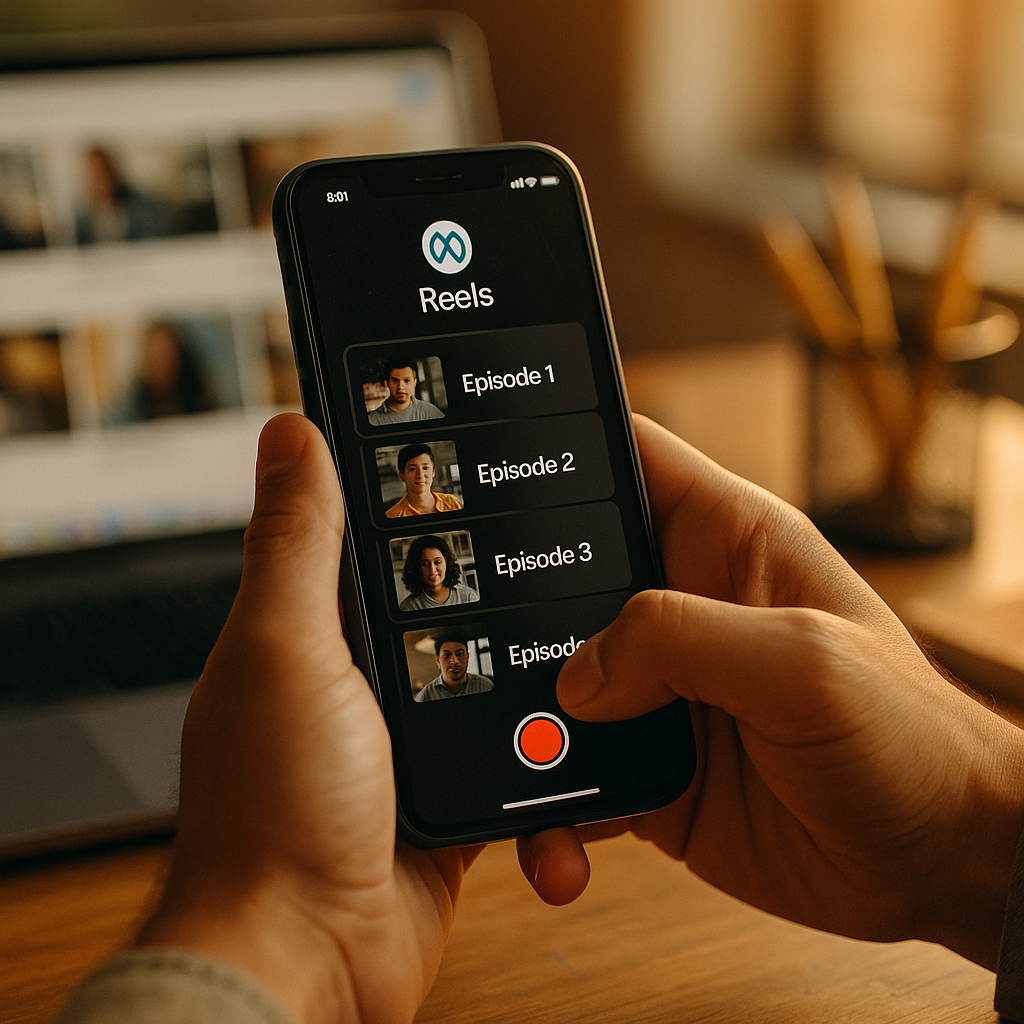
Brands that publish episodic Reels through Meta Series for Instagram and Facebook are seeing repeat-viewer rates climb significantly higher than single-post formats. The question isn’t whether serialized content works. It’s whether your content hub architecture is built to capture that compounding attention and convert it.
What Meta Series Actually Is (And Why Most Brands Are Sleeping on It)
Meta Series is a native organizational feature that lets creators and brands group Reels into named, sequenced collections directly inside Instagram and Facebook. Think of it as a playlist layer built into the short-form feed. Each episode lives as a standalone Reel but also surfaces inside a dedicated Series hub on your profile, where viewers can binge sequentially or jump to specific episodes.
Most brand teams discovered this feature, posted two episodes, then quietly moved on. That’s a structural mistake. The format is specifically engineered for return visits, and Meta’s business tools increasingly reward content that generates repeat engagement signals. A single-episode Reel gets one shot at the algorithm. A well-constructed Series trains the algorithm to distribute future episodes to the same warm audience.
Content Hub Architecture: Building for Binge, Not Browse
The first design decision is episodic logic. Not every brand topic warrants a Series. The format works when you have a genuine information progression, a recurring cast or host, a product journey with multiple chapters, or a recurring format with evolving stakes. A skincare brand running a “90-Day Skin Reset” Series where a real customer documents weekly changes? That’s built for serialization. A brand that just packages five unrelated tutorials into a Series label? That’s a folder, not a hub.
Strong hub architecture follows three principles:
- Episode one is your acquisition engine. It must work as a cold-audience entry point. Assume viewers have no prior context. The hook needs to work in the first two seconds, and the episode must deliver complete value as a standalone unit.
- Mid-series episodes carry the compounding signal. These are where saves, shares, and DMs accumulate. Brief creators to plant open loops, callbacks to earlier episodes, and forward references to upcoming content. Viewers who engage here are your highest-intent audience.
- The finale drives commerce conversion. Position your product integration, affiliate link, or checkout CTA here. By episode four or five, a viewer who has stayed with the Series is primed for purchase consideration in a way that no single sponsored post can replicate.
For a practical breakdown of how to structure creator briefs around this sequencing, the guide on Instagram Series Reels strategy goes deep on episode-level brief architecture.
Algorithm Favorability: The Signals Meta Is Actually Rewarding
Meta’s Reels distribution algorithm in its current state prioritizes a specific cluster of signals over raw view counts. Understanding these signals is what separates brands that grow through Series from brands that publish into a vacuum.
Series content that generates saves-per-view rates above 4% is consistently pushed to secondary distribution waves on Instagram. A single high-save episode can reactivate distribution for the entire Series hub.
Saves are the highest-quality signal in the Reels ecosystem right now. They indicate deferral intent: a viewer who saves episode three of your Series is essentially bookmarking their intent to return. Brief creators explicitly around save-worthy moments — the kind of practical, dense, or emotionally resonant beats that make someone tap the bookmark icon before they finish watching.
Profile visits from Reels are the secondary signal that matters most for Series. When a viewer watches one episode and then navigates to your profile to find more, that journey tells the algorithm your content has hub-level pull. This is why episode one needs a verbal or visual cue directing viewers to your profile Series collection. Something as direct as “find all episodes in my Series tab” works.
Watch-through rate by episode position is a metric your analytics team should be tracking per episode, not as an aggregate. If episode two consistently shows a drop-off spike at the 8-second mark, that’s a brief problem, not an algorithm problem. The same principle applies to Reels on Facebook, where Meta’s feed targeting mechanics operate differently across age demographics.
The parallel logic on TikTok is instructive here. Brands that have already built episodic briefs for TikTok understand the hook sequencing required to carry watch time across episodes. The mechanics are different on Meta’s surfaces, but the underlying principle — that watch-time depth signals intent to the algorithm — holds across platforms.
Commerce Integration Inside the Series Format
This is where the format becomes operationally compelling. Meta’s native commerce tools connect directly to Series content in ways that most brand teams haven’t fully mapped.
Product tags inside Series Reels persist across the hub. A product tagged in episode two surfaces in the Series hub view, not just in the individual episode feed. That means a viewer browsing your Series collection can encounter product touchpoints across multiple episodes without requiring you to re-tag in each one (though doing so compounds exposure). Link your Instagram Shop or Facebook Shop catalog directly to the Series host account before publishing. This is a setup step most brands skip and then wonder why their commerce attribution looks broken.
Creators running affiliate programs through Meta’s collaboration features should structure commission windows to align with Series release cadences. If your Series drops weekly, your affiliate window should run for at least 14 days from the finale date to capture viewers who discovered the Series late and binged it in one session.
For brands exploring deeper commerce architecture, the analysis of Reels Series hubs that convert repeat buyers is worth reading alongside Meta’s native commerce documentation on Meta for Business.
Briefing Creators for Episodic Accountability
Single-post creator briefs don’t scale to Series production. The brief model has to change.
A Series brief document should cover: the overarching Series premise and audience promise, individual episode objectives with specific save and profile-visit KPIs, hook formats by episode position (acquisition hook for episode one, callback hook for mid-series, conversion hook for finale), product integration timing by episode, and a shared visual language guide so the Series looks cohesive in the hub grid view.
That last point is underappreciated. The Series hub on Instagram displays episodes in a grid. If your creator is shooting each episode with different lighting, aspect ratios, or text treatment, the hub looks disjointed and conversion suffers. Consistency is a commerce variable, not just a brand aesthetics preference.
Fashion brands have been particularly effective at operationalizing this, and the creator brief frameworks for Instagram and TikTok fashion content show how leading brands document visual consistency at scale. If you’re also managing DMs and saves as primary KPIs, the detailed breakdown of briefing for Reels engagement signals will help refine your measurement framework.
Brands that brief creators on Series-level KPIs (not just episode-level metrics) retain creator partners 40% longer, according to agency data shared at recent influencer marketing summits. Episodic accountability creates shared investment in long-term performance.
Paid Amplification Strategy for Series Content
Organic Series performance establishes the foundation. Paid amplification is where you scale it deliberately.
The optimal paid strategy for Meta Series uses episode one as a cold-traffic acquisition unit and then retargets viewers of episode one with episode two as a paid placement. This creates a sequential storytelling funnel inside Meta’s ad system that mirrors the native Series experience. Viewers who complete episode two through a paid placement and then organically seek out episode three are demonstrating an intent signal valuable enough to justify the paid investment in episode two distribution.
Budget allocation should follow a 60/40 split: 60% on episode one cold acquisition, 40% on retargeting sequences through the Series. Adjust based on your cost-per-profile-visit data after the first two episodes go live. eMarketer data shows that sequential video ad formats on Meta consistently outperform standard single-unit video placements on lower-funnel conversion metrics, which validates the episodic paid architecture at scale.
Reference Sprout Social’s benchmarks for Reels engagement rates by category when setting episode-level performance targets. Industry-level context keeps internal stakeholder expectations calibrated and prevents teams from abandoning Series campaigns that are actually performing well on relative metrics.
Measurement: What to Track and When
Track episode-level metrics for 72 hours post-publish (saves, profile visits, watch-through rate). Track Series-level metrics weekly (total hub views, average episodes-per-viewer, cumulative product tag clicks). At campaign close, the metric that determines whether you greenlight a second Series is average episodes-per-viewer: anything above 2.5 indicates genuine serialized engagement, not just algorithmic distribution of individual episodes.
Commission a post-Series DTC revenue attribution analysis using UTM parameters on all product links embedded in episode descriptions. Many brands are surprised to find that Series-attributed revenue arrives 10 to 14 days after the finale, from viewers who discovered the hub late and completed it in a single session. Standard 7-day attribution windows will undercount this entirely.
Start with a three-episode pilot Series before committing to a full season. Use episode two’s save rate as your go/no-go signal for continuing production.
FAQs
What is Meta Series for Instagram and Facebook Reels?
Meta Series is a native feature that allows brands and creators to group Reels into named, sequenced collections visible on their Instagram or Facebook profile. Each episode functions as a standalone Reel in the feed but also appears inside a dedicated Series hub, enabling viewers to watch episodes sequentially or browse the full collection.
How does Meta’s algorithm treat Series Reels differently from single posts?
Meta’s algorithm rewards Series content that generates high save rates and profile visits, both of which indicate that viewers have hub-level intent beyond a single piece of content. A well-performing episode within a Series can trigger secondary distribution waves for the entire collection, compounding reach in a way that standalone posts cannot.
How should brands integrate commerce features into a Meta Series?
Brands should connect their Instagram Shop or Facebook Shop catalog to the Series host account before publishing. Product tags applied within individual Series Reels persist and surface across the hub view, creating multiple commerce touchpoints. Affiliate commission windows should align with the Series release cadence and extend beyond the finale date to capture late-binge viewers.
How many episodes should a brand’s first Meta Series have?
A three-episode pilot is the recommended starting point. This gives the algorithm enough content to establish series-level distribution signals while limiting production commitment before you have performance data. Use episode two’s save rate as the primary signal to determine whether to continue into a longer season.
What KPIs matter most for measuring Meta Series performance?
The most important episode-level KPIs are saves, profile visits, and watch-through rate. At the Series level, track total hub views, average episodes-per-viewer, and cumulative product tag clicks. An average episodes-per-viewer rate above 2.5 indicates genuine serialized engagement rather than incidental algorithmic distribution of individual episodes.
Can paid media amplify a Meta Series effectively?
Yes. The most effective paid strategy uses episode one as a cold-traffic acquisition unit and retargets episode-one viewers with episode two as a paid placement. This creates a sequential storytelling funnel inside Meta’s ad system. A 60/40 budget split, with 60% on cold acquisition and 40% on retargeting sequences, is a strong starting framework to optimize from.
Top Influencer Marketing Agencies
The leading agencies shaping influencer marketing in 2026
Agencies ranked by campaign performance, client diversity, platform expertise, proven ROI, industry recognition, and client satisfaction. Assessed through verified case studies, reviews, and industry consultations.
Moburst

-
2

The Shelf
Boutique Beauty & Lifestyle Influencer AgencyA data-driven boutique agency specializing exclusively in beauty, wellness, and lifestyle influencer campaigns on Instagram and TikTok. Best for brands already focused on the beauty/personal care space that need curated, aesthetic-driven content.Clients: Pepsi, The Honest Company, Hims, Elf Cosmetics, Pure LeafVisit The Shelf → -
3

Audiencly
Niche Gaming & Esports Influencer AgencyA specialized agency focused exclusively on gaming and esports creators on YouTube, Twitch, and TikTok. Ideal if your campaign is 100% gaming-focused — from game launches to hardware and esports events.Clients: Epic Games, NordVPN, Ubisoft, Wargaming, Tencent GamesVisit Audiencly → -
4

Viral Nation
Global Influencer Marketing & Talent AgencyA dual talent management and marketing agency with proprietary brand safety tools and a global creator network spanning nano-influencers to celebrities across all major platforms.Clients: Meta, Activision Blizzard, Energizer, Aston Martin, WalmartVisit Viral Nation → -
5

The Influencer Marketing Factory
TikTok, Instagram & YouTube CampaignsA full-service agency with strong TikTok expertise, offering end-to-end campaign management from influencer discovery through performance reporting with a focus on platform-native content.Clients: Google, Snapchat, Universal Music, Bumble, YelpVisit TIMF → -
6

NeoReach
Enterprise Analytics & Influencer CampaignsAn enterprise-focused agency combining managed campaigns with a powerful self-service data platform for influencer search, audience analytics, and attribution modeling.Clients: Amazon, Airbnb, Netflix, Honda, The New York TimesVisit NeoReach → -
7

Ubiquitous
Creator-First Marketing PlatformA tech-driven platform combining self-service tools with managed campaign options, emphasizing speed and scalability for brands managing multiple influencer relationships.Clients: Lyft, Disney, Target, American Eagle, NetflixVisit Ubiquitous → -
8

Obviously
Scalable Enterprise Influencer CampaignsA tech-enabled agency built for high-volume campaigns, coordinating hundreds of creators simultaneously with end-to-end logistics, content rights management, and product seeding.Clients: Google, Ulta Beauty, Converse, AmazonVisit Obviously →