


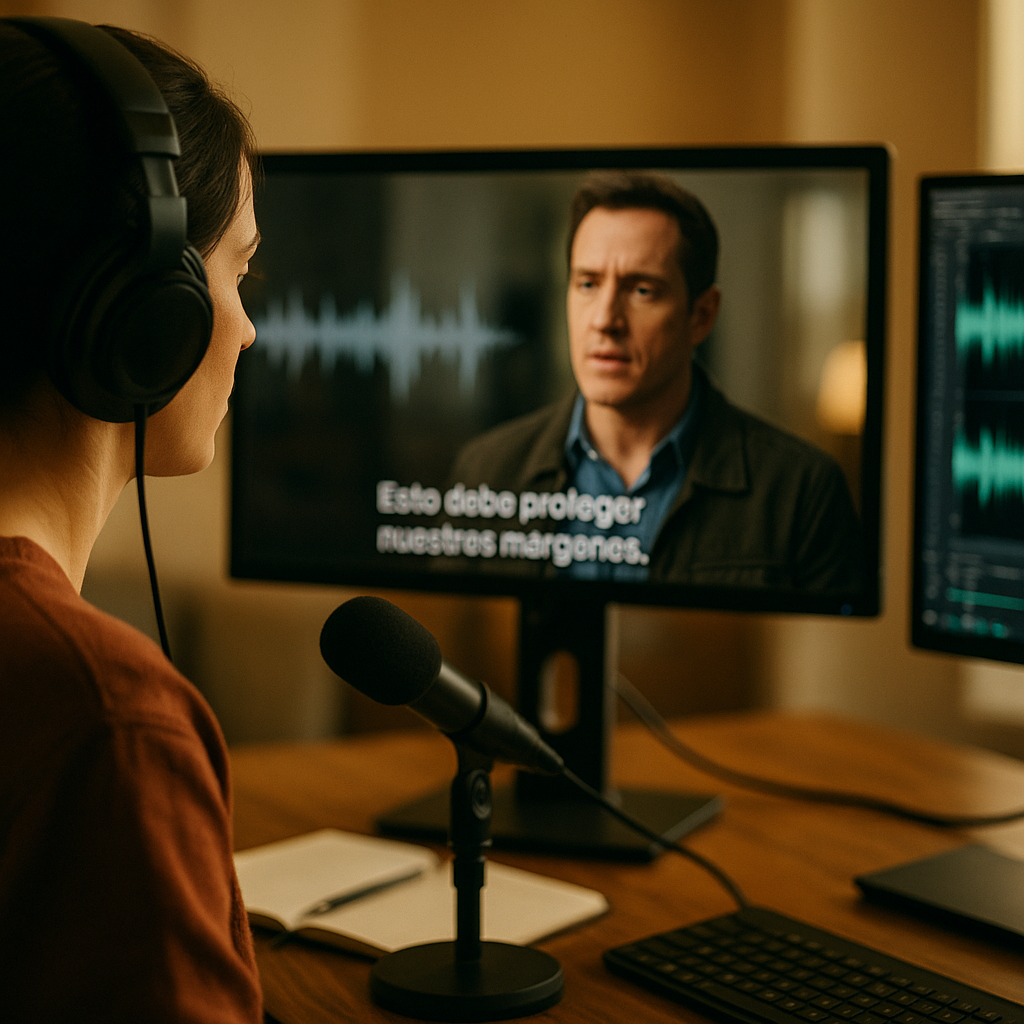
Can a single creator video actually convert in fifteen languages without a single reshoot? That’s the pitch behind AI dubbing, and it’s stopped being a novelty. Global brands are swapping subtitle-only localization for synced voice dubbing that matches tone, pacing, and lip movement across markets. If your localization budget still assumes a reshoot per region, you’re burning money you don’t need to spend.
Why Subtitles Alone Are Leaving Money on the Table
Subtitles were the default localization fix for a decade because they were cheap and fast. But they cap engagement. Viewers scanning text lose eye contact with the product demo, the facial cues, the emotional beat that made the original creator video convert in the first place. Research from eMarketer has repeatedly shown that sound-on video outperforms silent, text-reliant formats on completion and recall, particularly on mobile where attention spans are already thin.
Dubbing closes that gap. A well-executed AI dub keeps the original creator’s face, expressions, and product interaction intact while replacing the audio track with a localized voice that sounds native, not translated. That distinction matters. Viewers can tell the difference between “translated at” them and content that feels made for them.
Localization that only translates words but not tone still reads as foreign. Dubbing succeeds or fails on emotional fidelity, not literal accuracy.
How AI Dubbing Actually Works, Format by Format
Not all AI dubbing is the same product wearing a different label. Understanding the underlying formats helps you brief correctly and avoid paying for capability you don’t need.
- Voice-only dubbing: The original video stays untouched, but the audio track is fully replaced with a synthetic voice speaking the target language. Cheapest option, works well for voiceover-heavy formats like tutorials or reviews.
- Lip-synced dubbing: The AI adjusts mouth movement frame by frame to match the new language’s phonetics. This is the premium tier, best for close-up talking-head content where mismatched lips break immersion.
- Hybrid subtitle-plus-voice: Dubbed audio paired with burned-in captions for accessibility and sound-off viewing. Increasingly the default for feed placements where autoplay starts muted.
- Neutral-accent dubbing: A single “international” voice track used across multiple markets sharing a language (Spanish for Spain and Latin America, for instance), trading nuance for speed.
Each format has a cost and authenticity tradeoff. Voice-only is fast and forgiving. Lip-synced dubbing takes longer to render and QA but converts better on high-attention formats like close-up product demos where mismatched mouth movement is jarring.
Matching the Format to the Campaign, Not the Other Way Around
The mistake most brands make is picking a dubbing vendor first and forcing every asset through the same pipeline. Format selection should follow the media plan.
Running paid social where the video autoplays muted in-feed? Hybrid subtitle-plus-voice covers both viewing modes. Running a YouTube integration or long-form review where sound-on viewing is assumed? Full lip-sync dubbing protects the credibility of the endorsement. Rolling out a rapid multi-market test across a dozen small language variants? Voice-only dubbing at scale, paired with the kind of script-once micro asset approach that treats localization as a production system rather than a one-off task, keeps unit costs manageable.
This is also where campaign teams underestimate turnaround. A same-day global rollout is only realistic if your dubbing format matches your infrastructure. Lip-sync rendering across twelve languages does not happen in an afternoon, no matter what the vendor deck promises.
Where AI Dubbing Quietly Breaks Trust
Dubbing done badly is worse than subtitles done well. Robotic cadence, mistranslated idioms, or a voice that doesn’t match the creator’s on-screen energy reads as inauthentic fast, and audiences notice. This is the same trust erosion risk flagged in coverage of synthetic influencer content at scale: volume without quality control damages brand credibility faster than it builds reach.
There’s a compliance layer too. Regulators in multiple markets are actively examining synthetic media disclosure. The FTC has signaled that undisclosed AI-generated or AI-altered endorsement content can run afoul of existing endorsement guidelines, and the UK’s ICO has published guidance touching on synthetic voice and likeness data handling. If your dubbed creator video swaps a real human voice for a cloned one, disclosure isn’t optional in most serious jurisdictions, it’s a legal safeguard.
A cloned voice that sounds native but isn’t disclosed as AI-altered is a compliance liability wearing a conversion-rate improvement.
Practical fix: build disclosure language directly into the creator brief, the same way you’d handle any paid partnership disclosure. Keep it consistent across markets, and don’t leave it to the dubbing vendor to decide what counts as “sufficient.”
What Belongs in an AI Dubbing Brief
Treat the dubbing brief like any other creative brief, not an afterthought bolted onto the localization workflow. A tight brief prevents the most common failure mode: technically accurate dubs that still feel off.
- Source audio quality standards. Clean, unclipped audio with minimal background noise is non-negotiable. Garbage in, garbage out applies doubly to voice cloning.
- Tone and pacing notes. Specify whether the target voice should mirror the original creator’s energy or adapt to local delivery norms (some markets favor faster, punchier pacing; others prefer measured delivery).
- Terminology glossary. Product names, brand terms, and claims language should be locked before dubbing starts, not fixed in a second pass.
- Disclosure requirements per market. Build this in from the start, referencing local regulatory guidance rather than a single global template.
- Native-speaker QA step. Automated dubbing still needs a human fluent in the target language reviewing for tone-deaf phrasing or mistranslated idiom before publish.
This same discipline applies to related localized formats, including personalized video variants generated from a single shoot. The brief is what scales quality, not the tool.
If you’re also managing synthetic on-screen talent alongside dubbed audio, keep visual and vocal briefs aligned using the same structure outlined in avatar creative brief guidance, so tone of voice and tone of visual performance don’t drift apart across markets.
Measuring Whether Dubbing Is Actually Working
Don’t just track view counts. Completion rate by language variant tells you whether the dub is holding attention as well as the original. Comment sentiment in the target language flags tonal misses fast, native speakers will call out a stiff or unnatural voice in the comments before your analytics dashboard shows a drop. Compare conversion rate on dubbed assets against a subtitle-only control group for at least one campaign cycle before committing budget at scale. According to data referenced by Statista, video consumption patterns vary significantly by region, so a format that lifts performance in one market may underperform in another purely due to viewing habits, not dub quality.
Platforms are also building native support for this shift. Meta and TikTok’s ad platform have both expanded language-targeting and localized creative tools, which means the infrastructure to distribute dubbed variants efficiently already exists. The bottleneck now is production quality and brief discipline, not distribution.
Next step: before your next global campaign, run one creator video through voice-only dubbing and one through full lip-sync dubbing in the same target market, then compare completion and conversion against a subtitle-only control. Let that data, not vendor claims, decide which format earns your production budget going forward.
FAQs
What is AI dubbing for creator videos?
AI dubbing replaces or adds a localized voice track to existing creator content, sometimes with synced lip movement, so the video plays naturally in a target language without reshooting.
Is AI dubbing better than subtitles for global campaigns?
Dubbing generally outperforms subtitles on completion rate and emotional engagement because viewers stay focused on the visual content instead of reading text, though hybrid subtitle-plus-voice approaches often work best for sound-off feed placements.
Do I need to disclose AI-dubbed voice content?
In most cases, yes. Regulators including the FTC have signaled that synthetic or AI-altered voice in endorsement content should be disclosed, so brands should build clear disclosure language into every localized asset.
How much does AI dubbing cost compared to reshoots?
Costs vary by vendor and format, but AI dubbing is typically a fraction of the cost of reshooting content per market, since it reuses the original footage and only replaces or adds audio.
Which format should I choose: voice-only or lip-synced dubbing?
Choose voice-only for tutorial or voiceover-driven content where lip movement is secondary, and reserve lip-synced dubbing for close-up, talking-head formats where mismatched mouth movement would undermine credibility.
Top Influencer Marketing Agencies
The leading agencies shaping influencer marketing in 2026
Agencies ranked by campaign performance, client diversity, platform expertise, proven ROI, industry recognition, and client satisfaction. Assessed through verified case studies, reviews, and industry consultations.
Moburst

-
2

The Shelf
Boutique Beauty & Lifestyle Influencer AgencyA data-driven boutique agency specializing exclusively in beauty, wellness, and lifestyle influencer campaigns on Instagram and TikTok. Best for brands already focused on the beauty/personal care space that need curated, aesthetic-driven content.Clients: Pepsi, The Honest Company, Hims, Elf Cosmetics, Pure LeafVisit The Shelf → -
3

Audiencly
Niche Gaming & Esports Influencer AgencyA specialized agency focused exclusively on gaming and esports creators on YouTube, Twitch, and TikTok. Ideal if your campaign is 100% gaming-focused — from game launches to hardware and esports events.Clients: Epic Games, NordVPN, Ubisoft, Wargaming, Tencent GamesVisit Audiencly → -
4

Viral Nation
Global Influencer Marketing & Talent AgencyA dual talent management and marketing agency with proprietary brand safety tools and a global creator network spanning nano-influencers to celebrities across all major platforms.Clients: Meta, Activision Blizzard, Energizer, Aston Martin, WalmartVisit Viral Nation → -
5

The Influencer Marketing Factory
TikTok, Instagram & YouTube CampaignsA full-service agency with strong TikTok expertise, offering end-to-end campaign management from influencer discovery through performance reporting with a focus on platform-native content.Clients: Google, Snapchat, Universal Music, Bumble, YelpVisit TIMF → -
6

NeoReach
Enterprise Analytics & Influencer CampaignsAn enterprise-focused agency combining managed campaigns with a powerful self-service data platform for influencer search, audience analytics, and attribution modeling.Clients: Amazon, Airbnb, Netflix, Honda, The New York TimesVisit NeoReach → -
7

Ubiquitous
Creator-First Marketing PlatformA tech-driven platform combining self-service tools with managed campaign options, emphasizing speed and scalability for brands managing multiple influencer relationships.Clients: Lyft, Disney, Target, American Eagle, NetflixVisit Ubiquitous → -
8

Obviously
Scalable Enterprise Influencer CampaignsA tech-enabled agency built for high-volume campaigns, coordinating hundreds of creators simultaneously with end-to-end logistics, content rights management, and product seeding.Clients: Google, Ulta Beauty, Converse, AmazonVisit Obviously →