


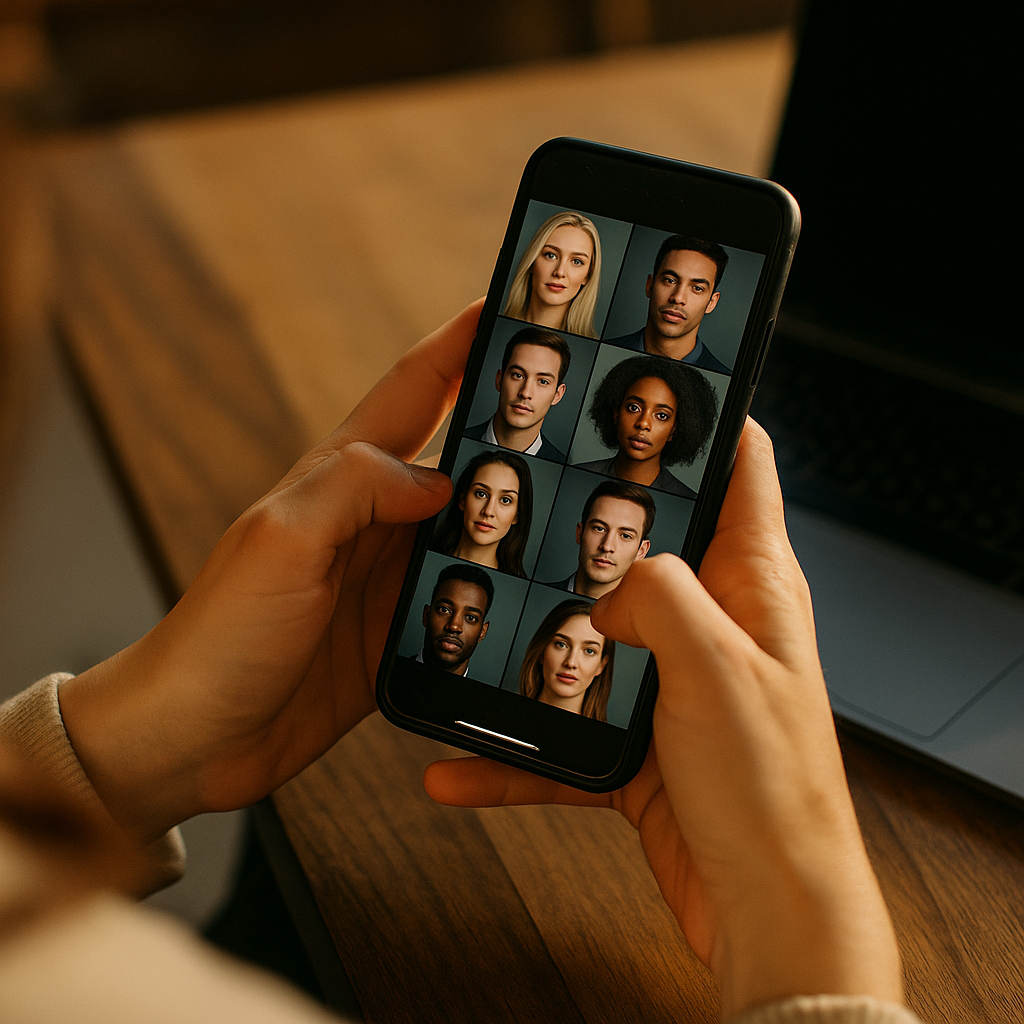
Sixty one percent of consumers say they’d stop trusting a brand that used AI generated content without disclosing it, according to recent emarketer research on synthetic media adoption. Yet marketing teams are shipping more AI avatar video than ever, because the math is irresistible: one script, fifty localized cuts, zero flight delays. So when do synthetic avatars for high volume content actually earn their keep, and when do they torch the credibility you spent years building?
The Trust Math Behind Synthetic Avatars
Here’s the uncomfortable truth nobody wants on a slide deck: volume and trust pull in opposite directions. The more content you push through an avatar pipeline, the more chances you create for a viewer to spot the seams, the flat cadence, the slightly-off blink rate, the mouth movements that don’t quite land on the consonants. Tools like Synthesia, HeyGen, and Colossyan have gotten remarkably good at closing that gap. But “good enough to fool a scroll” is not the same as “good enough to sustain a relationship.”
Brands that treat avatars as a pure cost-per-video calculation miss the second variable: cost per trust event lost. A skeptical comment, a screenshot on a forum calling out “AI slop,” a journalist writing about disclosure gaps. Those costs don’t show up in your production budget, but they show up in your brand tracker three quarters later.
Volume without disclosure isn’t efficiency, it’s a liability you’re deferring until someone notices.
Where Synthetic Avatars Genuinely Earn Their Keep
Not every use case carries equal risk. The categories below are where avatars have proven themselves without much backlash, because the content itself is low-stakes, transactional, or expected to be system generated.
- Product spec walkthroughs and how-to content. Nobody expects a human to personally narrate a router’s firmware update process. Utility content, not emotional content, is the sweet spot.
- Localization at scale. An avatar that delivers the same message in fourteen languages, lip synced and regionally toned, solves a real operational bottleneck. This is where script once, publish global workflows genuinely shine, and where teams running a same day global rollout can cut weeks off a campaign timeline.
- Internal and B2B enablement. Sales enablement videos, onboarding modules, compliance training. Audiences here already know they’re watching a system-generated asset, so the trust bar is lower.
- Personalized variants at scale. Dynamic name insertion, region-specific offers, account-based video for enterprise buyers. Pairing avatars with personalized video variants lets one shoot generate dozens of relevant cuts without reshoots.
Notice the pattern: these are all contexts where the viewer’s expectation of “a real person talking to me personally” is already low. That’s the operative variable, not the technology itself.
Where It Breaks: The Emotional and Testimonial Trap
Now flip it. Where do synthetic avatars consistently backfire? Anywhere a viewer expects lived experience behind the words.
Skincare transformations, health claims, financial advice, anything resembling a testimonial: these categories depend on the implicit promise that a real human tried the thing and is telling you the truth about it. Swap that human for an avatar without clear labeling, and you’re not just risking a bad comment section. You’re risking an FTC enforcement action. The FTC’s endorsement guidelines already require clear disclosure when content isn’t what it appears to be, and regulators have signaled AI generated endorsers fall squarely under that umbrella.
If your team is already navigating this line in adjacent formats, the playbook from before and after skincare compliance content translates directly: disclose early, disclose plainly, and don’t bury the label in a description box nobody reads.
If the content format implies “this happened to a real person,” an undisclosed avatar isn’t a shortcut, it’s a compliance risk wearing a productivity costume.
The Disclosure Line: Simple, But Often Skipped
Disclosure sounds easy in theory. In practice, teams skip it because it feels like it undercuts the polish they just paid for. Resist that instinct. A small on-screen label (“AI generated presenter”) or a spoken disclaimer in the first three seconds costs almost nothing and removes nearly all of the downside risk. Sprout Social’s ongoing consumer trust research consistently finds that transparency about AI use has a smaller negative effect on engagement than marketers assume, especially when the content itself delivers value.
The teams getting burned aren’t the ones disclosing. They’re the ones hoping nobody asks.
Building a Program That Scales Without Backlash
Assuming you’ve picked the right use cases and you’re disclosing properly, the next question is operational: how do you keep hundreds of avatar-driven assets consistent, on-brand, and legally sound without a full creative review on every single cut?
- Lock the brief before you scale output. Voice, tone, permitted claims, and visual identity need to be codified once, not re-litigated per asset. This is exactly the discipline behind avatar creative briefs that keep synthetic presenters consistent across markets and campaigns.
- Separate “system” content from “relationship” content. Route avatars toward the low-trust-risk categories above. Keep real creators and real testimonials for anything emotionally loaded.
- Build a disclosure checklist into the publishing workflow. Make it a required field, not an optional courtesy, in whatever DAM or approval tool your team uses.
- Sample-audit output monthly. Someone with fresh eyes should watch a random batch and flag anything that reads as uncanny, off-tone, or borderline in its claims.
Consider how quickly avatar output can spiral without this structure. A team producing twenty videos a week can become a team producing two hundred within a quarter, once stakeholders see the cost savings. Without a locked brief and a disclosure gate, that growth curve is exactly when quality control quietly collapses.
Measuring Trust, Not Just Output
Most avatar programs get evaluated on production metrics: videos shipped, cost per asset, turnaround time. Those numbers will always look fantastic. They tell you nothing about whether your audience still believes you.
Track sentiment in comments specifically on avatar-led content versus human-led content. Watch for a widening gap in completion rate or share rate, an early signal that audiences are quietly tuning out. And if you run brand lift studies, add a specific trust or authenticity metric rather than relying on generic favorability scores. HubSpot’s marketing benchmarking resources are a reasonable starting point if your team hasn’t built this kind of tracking yet.
None of this means avoid avatars. It means treat trust as a metric you manage, not an assumption you make.
FAQs
Frequently Asked Questions
When should a brand avoid synthetic avatars entirely?
Avoid avatars for testimonial-style content, health or financial claims, and any format where the audience assumes a real person’s lived experience is being shared. These are the highest-risk categories for both consumer backlash and regulatory scrutiny.
Do synthetic avatars need to be disclosed by law?
In many jurisdictions, yes, particularly when content resembles an endorsement or testimonial. The FTC’s endorsement guidelines require clear disclosure when content isn’t what it appears to be, and this extends to AI generated presenters.
What kind of content works best with avatars?
Utility content, such as product walkthroughs, localization at scale, internal training, and personalized enterprise video, works well because audiences already expect a system-generated experience rather than a personal one.
How do I disclose avatar use without hurting engagement?
A brief on-screen label or spoken line in the first few seconds is usually enough. Research shows transparency about AI use has a smaller impact on engagement than most marketers assume, especially when the content itself delivers clear value.
How do I know if my avatar program is scaling responsibly?
Track completion rate, share rate, and comment sentiment on avatar content separately from human-led content. A widening gap over time is an early signal that trust is eroding faster than output is growing.
Start by auditing your current avatar output against one question: would you be comfortable if every viewer knew it was AI generated? If the answer is no, that’s your cue to either add disclosure or move that content back to a human presenter before volume outpaces your credibility.
Top Influencer Marketing Agencies
The leading agencies shaping influencer marketing in 2026
Agencies ranked by campaign performance, client diversity, platform expertise, proven ROI, industry recognition, and client satisfaction. Assessed through verified case studies, reviews, and industry consultations.
Moburst

-
2

The Shelf
Boutique Beauty & Lifestyle Influencer AgencyA data-driven boutique agency specializing exclusively in beauty, wellness, and lifestyle influencer campaigns on Instagram and TikTok. Best for brands already focused on the beauty/personal care space that need curated, aesthetic-driven content.Clients: Pepsi, The Honest Company, Hims, Elf Cosmetics, Pure LeafVisit The Shelf → -
3

Audiencly
Niche Gaming & Esports Influencer AgencyA specialized agency focused exclusively on gaming and esports creators on YouTube, Twitch, and TikTok. Ideal if your campaign is 100% gaming-focused — from game launches to hardware and esports events.Clients: Epic Games, NordVPN, Ubisoft, Wargaming, Tencent GamesVisit Audiencly → -
4

Viral Nation
Global Influencer Marketing & Talent AgencyA dual talent management and marketing agency with proprietary brand safety tools and a global creator network spanning nano-influencers to celebrities across all major platforms.Clients: Meta, Activision Blizzard, Energizer, Aston Martin, WalmartVisit Viral Nation → -
5

The Influencer Marketing Factory
TikTok, Instagram & YouTube CampaignsA full-service agency with strong TikTok expertise, offering end-to-end campaign management from influencer discovery through performance reporting with a focus on platform-native content.Clients: Google, Snapchat, Universal Music, Bumble, YelpVisit TIMF → -
6

NeoReach
Enterprise Analytics & Influencer CampaignsAn enterprise-focused agency combining managed campaigns with a powerful self-service data platform for influencer search, audience analytics, and attribution modeling.Clients: Amazon, Airbnb, Netflix, Honda, The New York TimesVisit NeoReach → -
7

Ubiquitous
Creator-First Marketing PlatformA tech-driven platform combining self-service tools with managed campaign options, emphasizing speed and scalability for brands managing multiple influencer relationships.Clients: Lyft, Disney, Target, American Eagle, NetflixVisit Ubiquitous → -
8

Obviously
Scalable Enterprise Influencer CampaignsA tech-enabled agency built for high-volume campaigns, coordinating hundreds of creators simultaneously with end-to-end logistics, content rights management, and product seeding.Clients: Google, Ulta Beauty, Converse, AmazonVisit Obviously →