


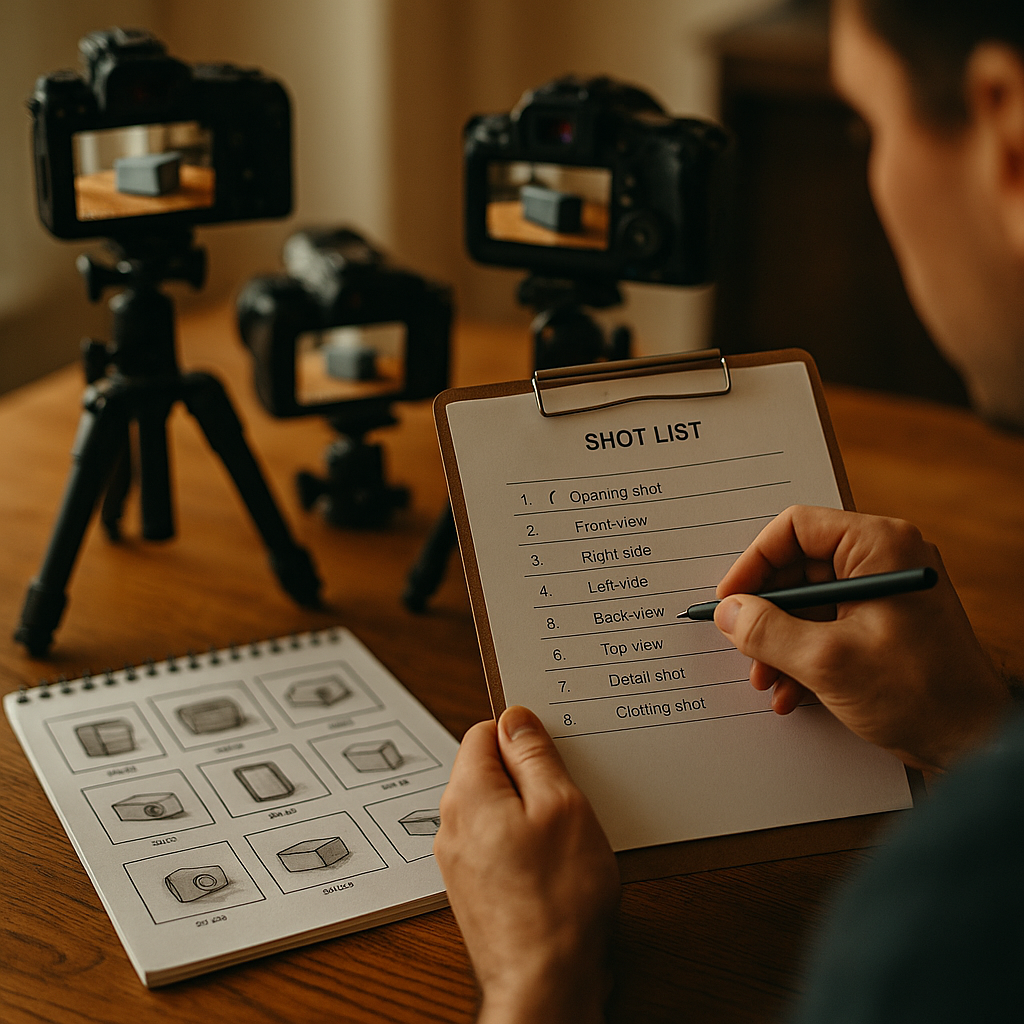
Only 22% of shoppers trust a single product photo enough to buy a big-ticket item without more proof, according to Statista research on online purchase behavior. For anything over $150, a hero shot and a bullet list won’t cut it anymore. Multi angle product demo reels exist to close that trust gap, and for brands selling furniture, electronics, appliances, or premium beauty devices, they’re quickly becoming the format that separates a converting listing from an abandoned cart.
Why One Angle Isn’t Enough for a $400 Decision
High consideration purchases carry perceived risk. The buyer isn’t just spending money, they’re spending trust, time, and the social cost of a bad decision. A single 15-second clip showing a product from the front doesn’t answer the questions that actually stall a purchase: does the hinge feel sturdy, does the fabric pill after washing, does the device fit on a cluttered counter?
Multi angle demo reels solve this by treating the product like a physical showroom experience compressed into vertical video. You show the top, the underside, the mechanism, the texture close-up, and the in-use moment, often stitched together with quick cuts that mimic how a shopper would actually inspect the item in a store.
The goal isn’t more footage. It’s answering the three or four silent objections that keep a cursor hovering over “add to cart” instead of clicking it.
This format overlaps conceptually with multi angle unboxing tags, but the intent differs. Unboxing sells the anticipation and reveal. Demo reels sell functional confidence. Both matter, but for considered purchases, functional confidence usually wins the sale.
The Shot List That Actually Reduces Returns
Most brands treat the shot list as a creative afterthought. That’s backwards. For high consideration categories, the shot list should be built from your top five return reasons and your top five pre-purchase support questions. Pull that data from your customer service tickets before you brief a single creator.
- The scale shot: product next to a hand, a common household object, or a body for apparel and wearables. Sizing confusion drives a huge share of returns in categories like furniture and tech accessories.
- The mechanism shot: zoom-focused on the part that moves, folds, locks, or activates. This is where skepticism about durability lives.
- The texture or material shot: extreme close-up, often paired with light audio cues rather than narration. This is where ASMR product demos techniques borrow well, using sound to convey quality that visuals alone can’t.
- The in-context shot: product in the environment it will actually live in, not a white studio backdrop.
- The comparison or before-after angle: especially useful when the product replaces an inferior alternative the viewer already owns.
Five angles, five objections, one reel. That’s the formula. Anything beyond that starts to dilute attention rather than build it.
Rigging and Production Logistics, the Part Nobody Budgets For
Here’s what surprises brands moving into this format for the first time: multi angle reels cost more in planning time than in equipment. You don’t need a cinema rig. A turntable, a phone mount, a ring light, and a second handheld camera for the human-interaction shots will cover 90% of use cases.
What you do need is a shot-by-shot rig plan before the creator arrives on set. Switching between a static top-down angle and a handheld in-use angle mid-shoot wastes time and breaks continuity if it isn’t sequenced properly. Most experienced creator teams block the static, controlled shots first (scale, mechanism, texture) and save the human-interaction and lifestyle shots for last, when lighting and energy are more forgiving of imperfection.
If your product also runs as a CTV or streaming placement, plan the multi angle capture session to double as raw footage for a companion cutdown library. One well-planned shoot day can feed a 30-second hero ad, four to six vertical demo reels, and a handful of static product images. That’s the efficiency argument finance teams actually respond to.
Where This Format Sits in the Funnel
Multi angle demo reels aren’t top-of-funnel awareness content. They’re mid-to-bottom funnel proof assets. Someone watching a 30-second demo reel with five product angles has already shown intent, they clicked through from an ad, searched the product name, or landed on a product page from a comparison search.
That changes how you should measure success. Watch-through rate matters less here than add-to-cart rate and time-on-page after the video plays. If you’re running these on paid social, Meta’s ad platform and TikTok’s advertising tools both let you segment conversion data by creative variant, so you can isolate whether the four-angle version outperforms the two-angle version for your specific SKU.
For categories where buyers actively compare products before purchasing, pairing a multi angle demo with a versus format script or a product comparison duet tends to lift conversion further, since the demo answers “does it work” while the comparison answers “why this one.”
Common Mistakes That Quietly Kill Performance
A few patterns show up repeatedly when brands underperform with this format:
- Too many angles, no narrative logic. Eight angles crammed into 20 seconds reads as chaotic, not thorough. Sequence angles in the order a buyer would naturally inspect the product.
- Skipping subtitle planning. Most demo reels are watched muted on autoplay feeds. If your key claims live only in voiceover, you’re losing the majority of viewers before the message lands. Borrow the discipline from silent-first editing practices and caption every functional claim on screen.
- Ignoring return-reason data. Creative teams often default to “pretty” angles instead of “objection-killing” angles. Pull actual support tickets before scripting.
- One version for every platform. A five-angle sequence built for TikTok’s fast-cut culture will feel rushed on a product detail page, where shoppers expect a slower, more deliberate walkthrough.
If your demo reel could be watched at 2x speed without losing meaning, it wasn’t built for a high consideration buyer in the first place.
Do These Reels Actually Move the Needle on ROI?
The honest answer is: it depends on category, but the directional evidence is strong. eMarketer data on video commerce consistently shows that product pages with multiple video angles see meaningfully lower bounce rates than pages with static imagery alone, particularly in electronics, home goods, and beauty devices where tactile qualities are hard to convey in a photo.
For agencies pitching this format to skeptical clients, the ROI argument is best framed around return rate, not just conversion rate. A reel that sets accurate expectations about size, texture, or function reduces the “it wasn’t what I expected” return category, which is often the largest and most avoidable return bucket in ecommerce. This is the same logic behind formats like AR try-on filters and try-on haul optimization: showing more, earlier, costs less than processing a return later.
Track it. Run a controlled test with a matched set of SKUs, half getting a multi angle demo reel on the product page and half staying with static imagery, then compare thirty-day return rates alongside conversion. That comparison will get you more budget than any watch-through metric ever will.
Next Step
Pull your top five return reasons for one high consideration SKU this week, build a five-shot rig plan around those objections, and test the reel against your current product page imagery for thirty days before scaling it across the catalog.
FAQs
What counts as a high consideration purchase for this format?
Generally, anything above roughly $100 to $150 where the buyer researches before purchasing: furniture, electronics, appliances, premium beauty tools, and higher-end apparel or accessories all qualify.
How many angles should a multi angle demo reel include?
Four to six is the practical range. Build the sequence around your actual top return reasons and support questions rather than an arbitrary number.
Where should these reels live: paid social, product pages, or both?
Both, but expect to edit pacing differently. Paid social versions need faster cuts for feed attention spans, while product page versions can move slower since the viewer already has purchase intent.
Do multi angle demo reels replace static product photography?
No. They complement it. Static images still serve quick-scan browsing and search thumbnails, while the reel handles deeper consideration once a shopper has stopped to look closer.
How do I measure whether this format is working?
Track add-to-cart rate, thirty-day return rate, and time-on-page for the SKUs using the format against a matched control group still using static-only listings.
Top Influencer Marketing Agencies
The leading agencies shaping influencer marketing in 2026
Agencies ranked by campaign performance, client diversity, platform expertise, proven ROI, industry recognition, and client satisfaction. Assessed through verified case studies, reviews, and industry consultations.
Moburst

-
2

The Shelf
Boutique Beauty & Lifestyle Influencer AgencyA data-driven boutique agency specializing exclusively in beauty, wellness, and lifestyle influencer campaigns on Instagram and TikTok. Best for brands already focused on the beauty/personal care space that need curated, aesthetic-driven content.Clients: Pepsi, The Honest Company, Hims, Elf Cosmetics, Pure LeafVisit The Shelf → -
3

Audiencly
Niche Gaming & Esports Influencer AgencyA specialized agency focused exclusively on gaming and esports creators on YouTube, Twitch, and TikTok. Ideal if your campaign is 100% gaming-focused — from game launches to hardware and esports events.Clients: Epic Games, NordVPN, Ubisoft, Wargaming, Tencent GamesVisit Audiencly → -
4

Viral Nation
Global Influencer Marketing & Talent AgencyA dual talent management and marketing agency with proprietary brand safety tools and a global creator network spanning nano-influencers to celebrities across all major platforms.Clients: Meta, Activision Blizzard, Energizer, Aston Martin, WalmartVisit Viral Nation → -
5

The Influencer Marketing Factory
TikTok, Instagram & YouTube CampaignsA full-service agency with strong TikTok expertise, offering end-to-end campaign management from influencer discovery through performance reporting with a focus on platform-native content.Clients: Google, Snapchat, Universal Music, Bumble, YelpVisit TIMF → -
6

NeoReach
Enterprise Analytics & Influencer CampaignsAn enterprise-focused agency combining managed campaigns with a powerful self-service data platform for influencer search, audience analytics, and attribution modeling.Clients: Amazon, Airbnb, Netflix, Honda, The New York TimesVisit NeoReach → -
7

Ubiquitous
Creator-First Marketing PlatformA tech-driven platform combining self-service tools with managed campaign options, emphasizing speed and scalability for brands managing multiple influencer relationships.Clients: Lyft, Disney, Target, American Eagle, NetflixVisit Ubiquitous → -
8

Obviously
Scalable Enterprise Influencer CampaignsA tech-enabled agency built for high-volume campaigns, coordinating hundreds of creators simultaneously with end-to-end logistics, content rights management, and product seeding.Clients: Google, Ulta Beauty, Converse, AmazonVisit Obviously →