


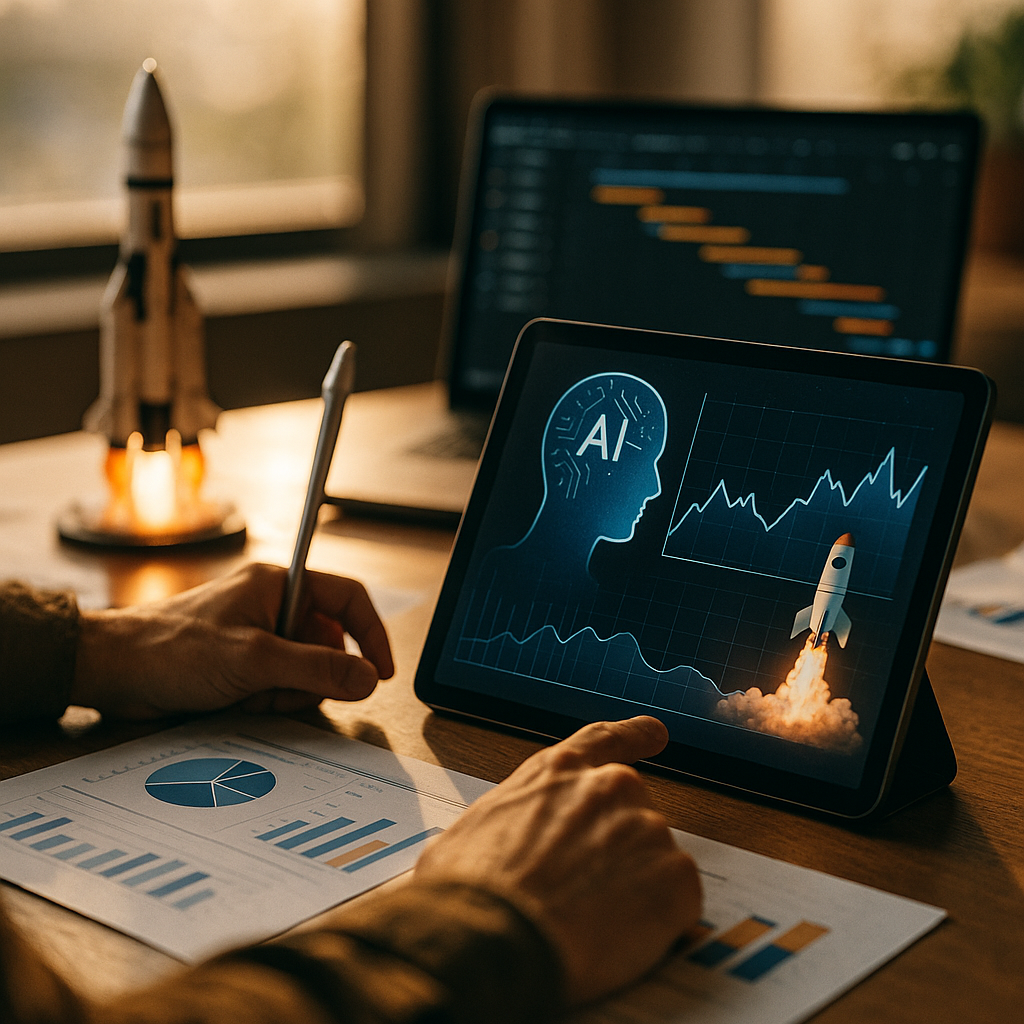
Using AI to analyze and predict the best time to launch a new product gives companies a sharper competitive edge in today’s fast-moving market. By uncovering patterns in consumer behavior and external factors, artificial intelligence offers a data-powered approach to launching with maximum impact. Read on to discover how AI transforms launch timing decisions in 2025’s marketplace.
Leveraging Predictive Analytics for Launch Timing Insights
Harnessing the power of predictive analytics is foundational when determining the optimal time to introduce a new product. These sophisticated AI-driven models scrutinize a wealth of historical and real-time data—spanning consumer purchase trends, seasonality, social media sentiment, competitor activity, and even macroeconomic indicators.
For example, AI algorithms can identify hidden cycles in shopping trends or recognize shifts in buyer motivation following global events or market disruptions. Brands like Apple and Nike have successfully used such insights to launch products with precise timing—often coinciding with periods of heightened demand and increased media buzz.
By feeding machine learning models with recent purchase history, online engagement data, and sales reports, organizations gain a robust forecast of when their target market is most receptive. In 2025, having an AI-powered launch timing strategy isn’t just innovative—it’s essential for outpacing competitors and capturing early market share.
Using Machine Learning to Decode Consumer Behavior Patterns
Understanding consumer behavior is crucial to successful timing. AI and machine learning models excel at identifying nuanced behavior patterns, such as micro-trends or emergent interests on digital channels. These insights come from analyzing browsing histories, search trends, wishlist activity, and even sentiment expressed in product reviews or social posts.
For instance, a company planning to launch a new smartwatch may use AI to analyze which months see spikes in related product searches or wearable technology discussions. This real-time feedback allows marketers to spot emerging windows of opportunity. In 2025, brands are increasingly leveraging natural language processing (NLP) to extract actionable intelligence from vast amounts of unstructured data—unearthing launching windows that would otherwise go unnoticed.
Machine learning also factors in regional differences. What works in North America may not hold true for Asia or Europe. With AI, localization of launch plans becomes agile and precise, making campaigns more culturally relevant and effective worldwide.
Integrating External Data Sources for Enhanced Predictions
Relying solely on internal sales data can limit the accuracy of launch timing predictions. In response, leading organizations are integrating diverse external datasets into their AI models. These may include economic indicators, weather patterns, influencer activity, news cycles, and even logistics and supply chain disruptions.
For instance, AI can correlate rising inflation or changing consumer confidence indices with shifting purchasing power, helping businesses pace launches for favorable economic climates. Similarly, tracking global news or viral social events allows companies to align product releases with moments of peak attention.
Using this multidimensional data approach in 2025 ensures that product launches are not only data-backed but also contextually aware. This sophistication helps brands anticipate potential risks—such as launching during a supply shortage—and seize moments when their audience is most engaged.
Optimizing Marketing and Inventory with AI-Powered Launch Timing
Accurate timing impacts not only sales but also marketing efficiency and inventory optimization. AI models enable businesses to align advertising spend, email campaigns, and retail stock availability with periods of highest demand. By predicting spikes, brands avoid marketing “dead zones” where consumer interest is low.
- Marketing synchronization: Launching when consumer intent is strong maximizes ad ROI and conversion rates.
- Inventory management: AI can forecast the right stock levels for each region and channel, reducing overstock or missed sales.
- Omnichannel coordination: Brands can unify online and offline rollout strategies by leveraging AI insights for holistic customer reach.
This optimization creates a seamless experience for customers, enhances brand reputation, and boosts overall profitability. In 2025, the smartest companies are those adapting quickly with real-time, AI-guided adjustments to launch execution.
Ensuring Data Accuracy and Human Oversight in AI Product Launch Decisions
While artificial intelligence delivers data-driven precision, human expertise remains vital for context and verification. Ensuring EEAT (Experience, Expertise, Authoritativeness, and Trustworthiness) means:
- Accuracy validation: Experts routinely audit AI models for accuracy and relevance, fine-tuning algorithms as new data emerges.
- Transparent methodology: Teams disclose the types of data and modeling techniques used, building stakeholder trust.
- Ethical oversight: Launch decisions consider customer privacy, consent, and potential societal impacts as per current AI governance standards.
Human judgment is especially critical in novel situations not yet captured by data, such as unprecedented global events or abrupt market shifts. In 2025, the optimal approach to predicting launch timing blends AI-powered analytics with experienced human intuition and clear communication.
Case Studies: Real-World Success with AI in Launch Timing
Consider recent examples where AI has transformed launch outcomes. A leading beauty tech brand used AI-driven social listening to gauge rising consumer interest in eco-friendly skincare. By pinpointing when the conversation peaked, they timed product announcements for maximal impact, resulting in a 35% sales uplift within the first quarter.
Elsewhere, an online retailer employed machine learning to predict shopping demand ahead of holiday seasons, enabling them to stagger launches and avoid customer fatigue. Their data-led approach reduced unsold stock by 22% in 2025, reinforcing AI’s effectiveness for launch optimization.
These successes underscore how AI’s granular analysis converts uncertainty into clear, actionable timing strategies that deliver real business results.
FAQs: Using AI to Analyze and Predict the Best Time to Launch a New Product
-
How does AI analyze launch timing?
AI gathers and analyzes vast amounts of historical and real-time data—like purchase behaviors, search trends, competitor activities, and external factors—to identify optimal launch windows. Machine learning algorithms detect subtle patterns unseeable to manual analysis. -
Can AI factor in sudden market changes?
Yes. By ingesting real-time external data such as news, economic updates, and social media trends, AI rapidly adjusts predictions to account for sudden market shifts or events. -
Is human oversight still important?
Absolutely. Experts validate AI outputs, provide context, and ensure decisions align with ethical and strategic goals, especially when dealing with new or unpredictable scenarios. -
How can smaller brands benefit from AI-driven launch timing?
AI solutions are increasingly accessible and scalable. Even smaller brands can use cloud-based or third-party AI tools to analyze market data and improve launch timing with minimal investment. -
What’s the biggest advantage of using AI for launch prediction?
AI’s greatest strength is its ability to process diverse, complex data sets instantly—delivering precise and dynamic timing advice that maximizes both sales and marketing efficiency.
In summary, using AI to analyze and predict the best time to launch a new product allows businesses to maximize impact, reduce risk, and adapt swiftly to market changes. Combining AI’s data-driven power with human expertise ensures launches are timely, relevant, and designed to succeed in the competitive landscape of 2025.
Top Influencer Marketing Agencies
The leading agencies shaping influencer marketing in 2026
Agencies ranked by campaign performance, client diversity, platform expertise, proven ROI, industry recognition, and client satisfaction. Assessed through verified case studies, reviews, and industry consultations.
Moburst

-
2

The Shelf
Boutique Beauty & Lifestyle Influencer AgencyA data-driven boutique agency specializing exclusively in beauty, wellness, and lifestyle influencer campaigns on Instagram and TikTok. Best for brands already focused on the beauty/personal care space that need curated, aesthetic-driven content.Clients: Pepsi, The Honest Company, Hims, Elf Cosmetics, Pure LeafVisit The Shelf → -
3

Audiencly
Niche Gaming & Esports Influencer AgencyA specialized agency focused exclusively on gaming and esports creators on YouTube, Twitch, and TikTok. Ideal if your campaign is 100% gaming-focused — from game launches to hardware and esports events.Clients: Epic Games, NordVPN, Ubisoft, Wargaming, Tencent GamesVisit Audiencly → -
4

Viral Nation
Global Influencer Marketing & Talent AgencyA dual talent management and marketing agency with proprietary brand safety tools and a global creator network spanning nano-influencers to celebrities across all major platforms.Clients: Meta, Activision Blizzard, Energizer, Aston Martin, WalmartVisit Viral Nation → -
5

The Influencer Marketing Factory
TikTok, Instagram & YouTube CampaignsA full-service agency with strong TikTok expertise, offering end-to-end campaign management from influencer discovery through performance reporting with a focus on platform-native content.Clients: Google, Snapchat, Universal Music, Bumble, YelpVisit TIMF → -
6

NeoReach
Enterprise Analytics & Influencer CampaignsAn enterprise-focused agency combining managed campaigns with a powerful self-service data platform for influencer search, audience analytics, and attribution modeling.Clients: Amazon, Airbnb, Netflix, Honda, The New York TimesVisit NeoReach → -
7

Ubiquitous
Creator-First Marketing PlatformA tech-driven platform combining self-service tools with managed campaign options, emphasizing speed and scalability for brands managing multiple influencer relationships.Clients: Lyft, Disney, Target, American Eagle, NetflixVisit Ubiquitous → -
8

Obviously
Scalable Enterprise Influencer CampaignsA tech-enabled agency built for high-volume campaigns, coordinating hundreds of creators simultaneously with end-to-end logistics, content rights management, and product seeding.Clients: Google, Ulta Beauty, Converse, AmazonVisit Obviously →