


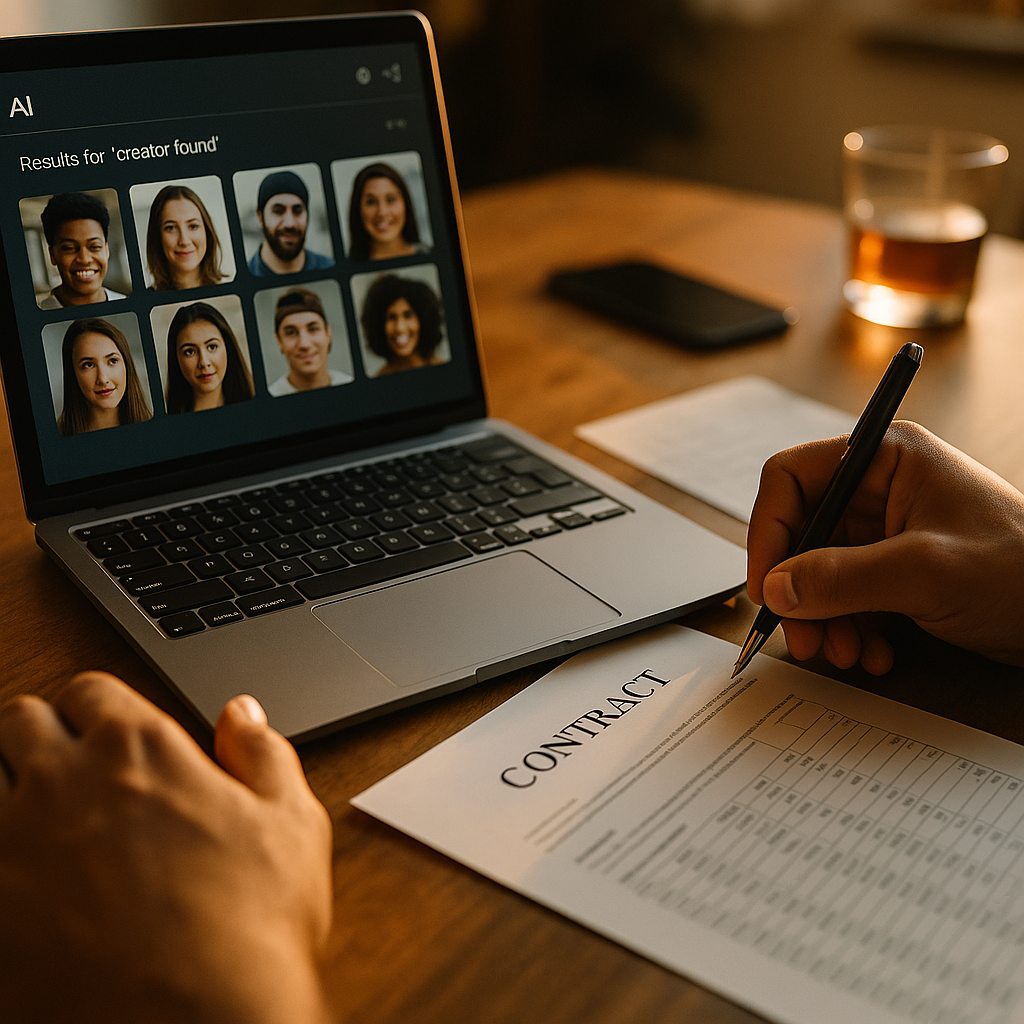
Creator discovery AI adoption has climbed to 37 percent among marketing teams, according to recent industry surveys, yet the rest of the campaign workflow still runs on spreadsheets and Slack threads. Finding the right creator got faster. Everything after that got stuck.
That gap is not a rounding error. It is a structural problem that is quietly draining budget, slowing launches, and creating compliance risk for brands that assumed “AI adoption” meant the whole funnel was automated. It did not.
The Discovery Gap: Where AI Is Actually Winning
Ask any brand marketer where AI has made the biggest dent in their influencer workflow, and discovery wins almost every time. Platforms now parse audience demographics, engagement authenticity, brand safety flags, and content style in seconds, work that used to take a coordinator an entire afternoon of manual profile scrolling.
That 37 percent figure represents real operational change. Teams are using AI matching tools to screen thousands of creator profiles against brand fit criteria, filter out bot-inflated accounts, and surface micro and nano creators who would never show up in a basic hashtag search. It is the single highest-leverage use case for AI in the current creator stack, and it is the one most vendors built first because it is the easiest problem to solve with pattern matching.
Discovery is a search problem. Search problems are exactly what machine learning is good at. The rest of a campaign, negotiation, legal review, briefing, payment reconciliation, performance attribution, is not a search problem. It is a coordination problem, and coordination problems are messier.
Why Later Stage Tasks Resist Automation
Here is the uncomfortable truth: finding a creator is the easy 20 percent of the job. Contracting, briefing, content approval, payment, and reporting are the hard 80 percent, and adoption numbers in those categories sit well below the discovery figure, often in the teens or low twenties depending on the task.
Why the lag? A few reasons stack up.
- Contracts still require human judgment. Usage rights, exclusivity windows, and disclosure language vary by platform, region, and client risk tolerance. Legal teams are not ready to hand that over to a model.
- Payment workflows touch finance systems. Reconciling creator invoices against deliverables and campaign codes means integrating with accounting software that was never built with influencer marketing in mind.
- Reporting requires attribution clarity that most brands still lack. You cannot automate a report when the underlying data pipeline is broken. As covered in attribution models missing influencer sales, most brands are still guessing at true campaign impact, which makes automated reporting a garbage-in problem.
In other words, the later stages of a campaign depend on messy, fragmented systems that AI vendors have not fully cracked yet. Discovery tools can plug into social platform APIs and public engagement data. Payment and legal workflows have to plug into a brand’s internal finance stack, procurement rules, and regional compliance requirements. That is a much harder integration problem.
AI adoption in creator marketing is not one number. It is a staircase, and most brands are standing on the bottom step while believing they have reached the top.
The Cost of a Half Automated Workflow
A half automated funnel creates a specific kind of operational drag: speed at the top, bottlenecks at the bottom. Teams can now identify and shortlist 50 relevant creators in an afternoon. Great. Then they spend three weeks chasing contract signatures, waiting on legal redlines, and manually tracking which creators actually posted on time.
This mirrors a pattern seen across the broader marketing budget conversation. As noted in influencer budgets grew 171 percent, measurement did not, spend has scaled faster than the systems built to track it. The same imbalance is now showing up in workflow automation: tooling investment is front-loaded into discovery, while the operational plumbing that turns a shortlist into a shipped campaign gets ignored.
The irony is that later stage friction is often more expensive than discovery friction. A missed usage rights clause can trigger a legal dispute. A late payment can sour a creator relationship permanently. A broken reporting pipeline means a CMO cannot prove ROI to the CFO, which puts next quarter’s budget at risk. Discovery delays cost you time. Later stage failures cost you money, relationships, and credibility.
What’s Actually Working Right Now
Some brands have figured out how to close the gap, not by waiting for a single all-in-one platform, but by stitching together purpose-built tools at each stage.
On the discovery side, platforms like those tracked by eMarketer and Sprout Social have documented rapid growth in AI-assisted creator matching tools. These platforms score creators against brand safety parameters, audience overlap, and historical performance data, which is exactly the kind of structured pattern recognition AI handles well.
Further down the funnel, the more mature operators are treating contracting and payment as a systems problem rather than an AI problem. That means standardized contract templates with pre-approved legal language, automated invoice triggers tied to deliverable confirmation, and retainer-based creator rosters that reduce the need to renegotiate terms for every single campaign. The shift toward retainer rosters replacing one off deals is partly a response to this exact friction: fewer one-off negotiations means fewer manual contract cycles per quarter.
Always-on creator programs are showing similar benefits. When a brand runs continuous creator relationships instead of one-off campaign bursts, as detailed in always on creator engines replacing campaign spikes, the briefing and legal overhead gets amortized across a longer relationship instead of resetting every time. That structural fix matters more than any single piece of software.
Building the Full Stack, Not Just the Front Door
If you are a brand marketer evaluating where to invest next, resist the temptation to buy another discovery tool just because it has a slicker UI or a bigger creator database. You likely already have enough discovery capability. The ROI now sits in the stages everyone skipped.
A few practical moves:
- Audit your contract turnaround time. If it takes longer than 48 hours to get a standard creator agreement signed, that is your bottleneck, not creator sourcing.
- Standardize briefing templates. Inconsistent briefs create review cycles that eat weeks. A reusable template with disclosure requirements baked in, aligned with FTC endorsement guidance, cuts legal back-and-forth significantly.
- Tie payment to deliverable confirmation automatically. Manual invoice approval is one of the most common complaints from creators themselves, and slow pay damages brand reputation in creator circles fast.
- Push reporting upstream. Build attribution tracking into the brief, not as an afterthought. HubSpot’s campaign tracking resources offer a useful starting framework for brands building this muscle internally.
There is also a talent dimension to this. As covered in CMO hiring surge demands AI fluency, marketing leaders are increasingly expected to understand not just which AI tools exist, but where they genuinely add value versus where they create a false sense of progress. Buying an AI discovery tool and calling your workflow “automated” is the marketing equivalent of installing a smart doorbell and calling your house secure.
Europe offers a useful case study here. Brands there have made faster progress on the operational side specifically because regulatory pressure forced contract standardization earlier. As explored in contracts, not dashboards, closing Europe’s ROI gap, the fix was not more software. It was cleaner legal infrastructure that removed friction before AI ever entered the picture. That is a lesson worth importing regardless of region.
The brands winning right now are not the ones with the smartest discovery algorithm. They are the ones who fixed contracting, payment, and reporting before chasing another layer of automation.
FAQs
Frequently Asked Questions
What does the 37 percent creator discovery AI adoption figure actually measure?
It reflects the share of marketing teams using AI-powered tools to identify, screen, and shortlist creators based on audience data, engagement quality, and brand fit, rather than manual profile research.
Why hasn’t AI adoption spread evenly across the whole campaign workflow?
Discovery is a data pattern-matching problem that AI handles well. Later stages like contracting, payment, and reporting depend on integrating with internal finance, legal, and attribution systems that vary by brand and are harder to standardize.
Which later stage tasks are brands struggling to automate most?
Contract negotiation, usage rights management, payment reconciliation, and performance reporting consistently show the lowest automation adoption rates compared to creator discovery.
What’s the business risk of leaving later stage tasks manual?
Slow contracting delays campaign launches, manual payment processes damage creator relationships, and weak reporting pipelines make it difficult to prove ROI to finance leadership, putting future budget at risk.
What should brands prioritize if they can only fix one stage next?
Standardizing contract templates and tying payment to deliverable confirmation typically delivers the fastest operational relief, since these are the stages most often cited as bottlenecks after creator selection.
Bottom line: fix the plumbing before you buy another discovery tool. The next competitive edge in creator marketing won’t come from finding creators faster, it will come from shipping campaigns faster after you’ve found them.
Top Influencer Marketing Agencies
The leading agencies shaping influencer marketing in 2026
Agencies ranked by campaign performance, client diversity, platform expertise, proven ROI, industry recognition, and client satisfaction. Assessed through verified case studies, reviews, and industry consultations.
Moburst

-
2

The Shelf
Boutique Beauty & Lifestyle Influencer AgencyA data-driven boutique agency specializing exclusively in beauty, wellness, and lifestyle influencer campaigns on Instagram and TikTok. Best for brands already focused on the beauty/personal care space that need curated, aesthetic-driven content.Clients: Pepsi, The Honest Company, Hims, Elf Cosmetics, Pure LeafVisit The Shelf → -
3

Audiencly
Niche Gaming & Esports Influencer AgencyA specialized agency focused exclusively on gaming and esports creators on YouTube, Twitch, and TikTok. Ideal if your campaign is 100% gaming-focused — from game launches to hardware and esports events.Clients: Epic Games, NordVPN, Ubisoft, Wargaming, Tencent GamesVisit Audiencly → -
4

Viral Nation
Global Influencer Marketing & Talent AgencyA dual talent management and marketing agency with proprietary brand safety tools and a global creator network spanning nano-influencers to celebrities across all major platforms.Clients: Meta, Activision Blizzard, Energizer, Aston Martin, WalmartVisit Viral Nation → -
5

The Influencer Marketing Factory
TikTok, Instagram & YouTube CampaignsA full-service agency with strong TikTok expertise, offering end-to-end campaign management from influencer discovery through performance reporting with a focus on platform-native content.Clients: Google, Snapchat, Universal Music, Bumble, YelpVisit TIMF → -
6

NeoReach
Enterprise Analytics & Influencer CampaignsAn enterprise-focused agency combining managed campaigns with a powerful self-service data platform for influencer search, audience analytics, and attribution modeling.Clients: Amazon, Airbnb, Netflix, Honda, The New York TimesVisit NeoReach → -
7

Ubiquitous
Creator-First Marketing PlatformA tech-driven platform combining self-service tools with managed campaign options, emphasizing speed and scalability for brands managing multiple influencer relationships.Clients: Lyft, Disney, Target, American Eagle, NetflixVisit Ubiquitous → -
8

Obviously
Scalable Enterprise Influencer CampaignsA tech-enabled agency built for high-volume campaigns, coordinating hundreds of creators simultaneously with end-to-end logistics, content rights management, and product seeding.Clients: Google, Ulta Beauty, Converse, AmazonVisit Obviously →