


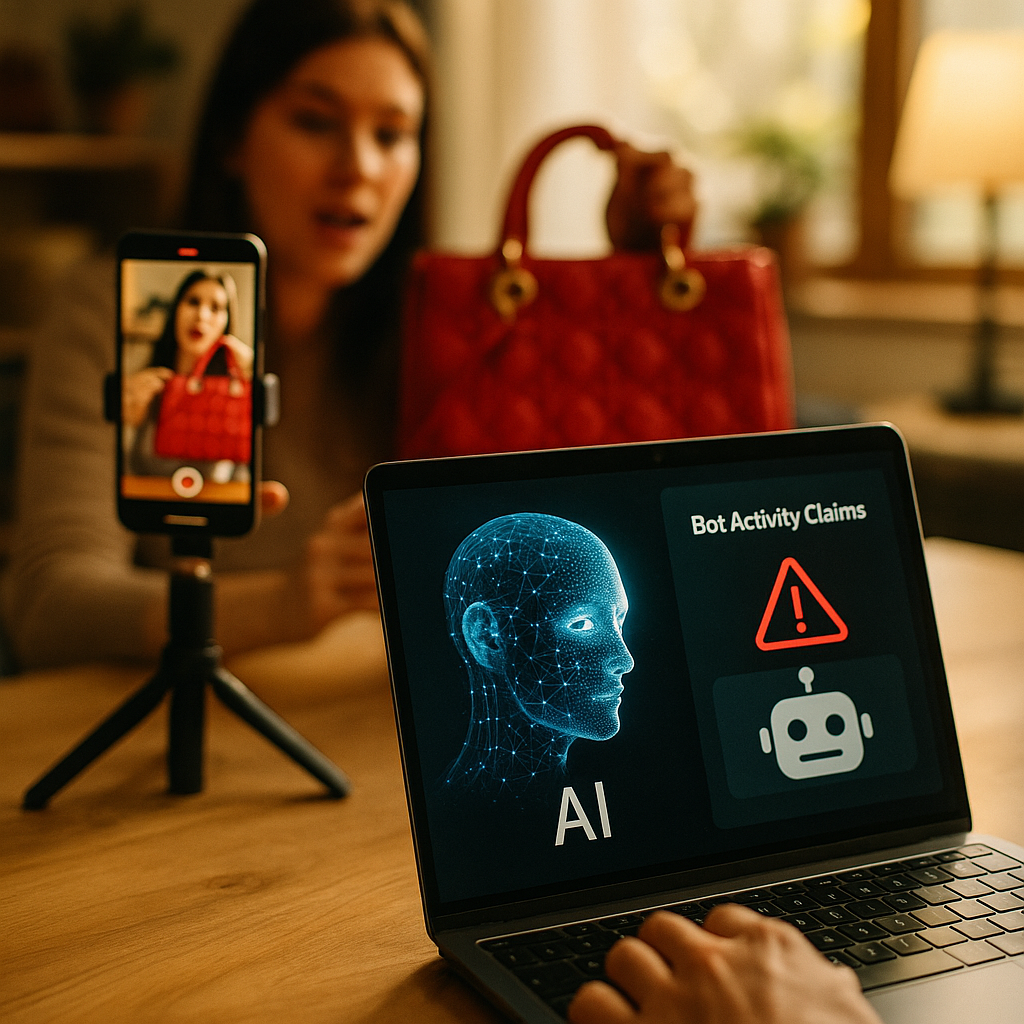
One in five live shopping viewers on major platforms isn’t human. At least that’s the working estimate from fraud analysts tracking bot traffic across livestream commerce, and it’s probably conservative. AI powered fraud detection for live shopping streams has gone from a nice-to-have to a budget line item in roughly eighteen months, because the alternative is paying creators and platforms for engagement that never converts. If you’re running or buying into live shopping programs and haven’t audited your fraud exposure, you’re flying blind on a channel that’s supposed to be your most “authentic” one.
The Fraud Problem Hiding Inside Your GMV Numbers
Live shopping promised something TV shopping never could: real-time, trackable, attributable sales. That promise is exactly why it attracts fraud. Every inflated viewer count, every bot-driven comment flood, every fake “sold out” alert exists to manipulate the metrics brands actually pay against.
The mechanics are familiar to anyone who’s dealt with ad fraud, just ported into a new format. Click farms generate fake viewership. Scripted bots spam “add to cart” reactions to trigger platform algorithms that reward engagement velocity. Some bad actors go further, using cheap automation to simulate purchase intent signals that never convert into actual revenue, inflating a creator’s GMV (gross merchandise value) reports to brands who pay commission on reported, not verified, sales.
If your fraud detection stack can’t distinguish a real purchase intent signal from a scripted one in under two seconds, you’re paying livestream rates for TV-era blind spots.
This isn’t theoretical. Marketplaces in Southeast Asia and China, where live shopping commerce is most mature, have documented organized “brushing” operations that fake orders to boost seller rankings, a problem that regulators and platforms are still chasing. Western markets are catching up fast as TikTok Shop and Amazon Live scale, which means the fraud economy is scaling right alongside them.
What AI Fraud Detection Actually Catches
Vendors throw around “AI powered” like it’s self-explanatory. It isn’t. Here’s what a genuinely useful detection layer should be doing during a live shopping stream, not after the fact:
- Viewer authenticity scoring: behavioral fingerprinting that flags accounts with non-human watch patterns, mouse/scroll inactivity, or device clustering consistent with bot farms.
- Engagement velocity anomalies: sudden, unnatural spikes in likes, shares, or comments that don’t correlate with actual content moments (a product reveal, a discount drop).
- Transaction pattern analysis: flagging orders placed and refunded within minutes, a classic signature of GMV-padding schemes.
- Deepfake and synthetic host detection: increasingly relevant as AI-generated hosts and voice clones enter livestream commerce, sometimes without disclosure.
- Affiliate link abuse: cookie stuffing or click injection designed to steal attribution credit from the creator who actually drove the sale.
Good tools score risk in real time, during the stream, not in a report three days later when the budget’s already spent. That distinction matters more than any vendor’s feature list.
Bot Traffic Is the Easy Part
Catching obvious click farms is table stakes now; most mid-tier platforms handle it. The harder problem is “gray zone” fraud: real humans, paid small amounts to sit in streams and engage on cue. These look human because they are, technically, which is why behavioral and network-level analysis (not just device fingerprinting) has become the differentiator between legacy bot detection and actual AI-driven fraud detection.
Vetting Vendors: Questions That Separate Real Detection from Dashboard Theater
Every vendor demo looks clean. Ask these questions before you sign:
- What’s your false positive rate on legitimate international viewers? Overly aggressive bot filtering can misclassify VPN users or non-native engagement patterns as fraud, costing you real reach data. This is the same traceability problem flagged in AI content detection vetting, and it applies just as much to livestream viewer scoring as it does to content authenticity checks.
- Does detection happen pre-stream, during, or post-stream? Post-stream reporting is forensic accounting, useful for clawbacks, but useless for stopping budget waste in real time.
- Can it integrate with your existing attribution stack? Fraud scores sitting in a siloed dashboard don’t help if your GMV and CAC dashboards never see the data.
- How does it handle platform-native data access? TikTok Shop, Amazon Live, and Whatnot don’t expose the same raw telemetry. A vendor’s accuracy on one platform tells you little about another, a point worth cross-checking against platform-specific research like the lag issues documented in TikTok livestream GMV reporting.
- What’s the chargeback and refund correlation model? The best fraud signal is still financial: orders that get refunded or disputed at abnormal rates tied to specific streams or creators.
Pricing Models Nobody Explains Upfront
Fraud detection vendors price in three ways, and the differences matter for budget planning. Per-stream flat fees work for brands running occasional livestream events. Percentage-of-GMV pricing scales with your program but can get expensive fast once you’re running daily or weekly streams across multiple creators. Tiered SaaS pricing based on stream volume or viewer count tends to be the most predictable, but watch for overage charges during high-traffic moments like flash sales, which is exactly when fraud risk (and detection load) peaks.
This is the same tech stack sprawl problem showing up across the influencer tooling world. Before adding a standalone fraud layer, check whether your existing platform already offers it as a module. The guidance in tech stack consolidation applies directly here: a bolted-on point solution that doesn’t talk to your CRM or attribution layer creates more reconciliation work than it saves.
Compliance Is the Part Most Brands Ignore
Fraud detection isn’t just a revenue protection play. It’s increasingly a regulatory one. The FTC has made clear that fake engagement and undisclosed AI-generated endorsers fall under the same deceptive practices rules as any other misleading advertising. If an AI-generated host in your livestream isn’t disclosed as synthetic, or if boosted engagement misrepresents a product’s popularity to consumers, that’s not just a fraud problem, it’s a liability problem.
Brands running live shopping across the UK and EU should also be watching guidance from the ICO on data practices tied to behavioral tracking used in fraud detection itself; ironically, the tools built to catch bad actors often collect the same granular behavioral data that triggers its own compliance questions.
Fraud detection and disclosure compliance are converging. The tools that catch fake viewers are the same tools regulators will eventually ask you to prove you used.
This is also where identity resolution gets messy. If your fraud detection vendor and your CRM are scoring the same viewer differently, you’ve got a phantom conversion problem layered on top of a fraud problem. Worth reviewing against the framework in identity resolution auditing before you trust either number.
A Short Buyer’s Checklist
Before signing any contract, confirm the vendor can answer these without hedging:
- Real-time scoring during live streams, not just post-event reports.
- Platform-specific accuracy benchmarks for TikTok Shop, Amazon Live, Instagram, and Whatnot (whichever you actually use).
- Clear false positive rate disclosure, ideally third-party audited.
- Integration path with your existing CRM or GMV dashboards, not a standalone silo.
- A documented approach to synthetic/AI host disclosure flagging.
- Transparent pricing that scales predictably with stream volume and doesn’t penalize high-traffic events.
Industry data from eMarketer continues to show livestream commerce as one of the fastest-growing retail formats globally, which means fraud economics will keep scaling alongside it. The brands that win here aren’t the ones spending the most on detection. They’re the ones who vetted vendors against real platform data instead of a polished demo deck, a discipline that applies equally to SKU-level matching tools, covered in seeding waste vetting, and to the GMV-based ROI claims in TikTok Shop creator ROI.
Frequently Asked Questions
What is AI powered fraud detection for live shopping streams?
It’s a layer of machine learning based tools that analyze viewer behavior, engagement patterns, and transaction data in real time during livestream commerce events to identify bots, fake engagement, and GMV-inflating fraud before budgets are wasted on it.
How much fraud actually happens in live shopping streams?
Estimates vary by platform and region, but fraud analysts tracking livestream commerce report bot viewership and engagement manipulation affecting a meaningful share of streams, particularly during high-incentive events like flash sales and creator-exclusive drops.
Can fraud detection tools slow down my livestream performance?
Real-time scoring adds minor processing overhead, but reputable vendors run detection asynchronously so it doesn’t affect stream latency or viewer experience. If a vendor can’t explain their latency impact, treat that as a red flag.
Do I need a separate fraud detection tool or does my platform already have one?
Many livestream commerce platforms include basic bot filtering natively, but it’s often limited to obvious click farm detection. Brands running significant GMV through livestream need to verify whether native tools catch gray-zone fraud like paid human engagement rings, which usually requires a dedicated layer.
How does fraud detection relate to FTC disclosure requirements?
Fraud detection tools increasingly flag undisclosed AI-generated or synthetic hosts, which ties directly into FTC rules on deceptive endorsement practices. Brands should treat fraud detection and disclosure compliance as connected, not separate, line items.
Audit one live shopping vendor contract this quarter against the checklist above. If they can’t explain their false positive rate or show platform-specific accuracy data, that’s your answer.
Top Influencer Marketing Agencies
The leading agencies shaping influencer marketing in 2026
Agencies ranked by campaign performance, client diversity, platform expertise, proven ROI, industry recognition, and client satisfaction. Assessed through verified case studies, reviews, and industry consultations.
Moburst

-
2

The Shelf
Boutique Beauty & Lifestyle Influencer AgencyA data-driven boutique agency specializing exclusively in beauty, wellness, and lifestyle influencer campaigns on Instagram and TikTok. Best for brands already focused on the beauty/personal care space that need curated, aesthetic-driven content.Clients: Pepsi, The Honest Company, Hims, Elf Cosmetics, Pure LeafVisit The Shelf → -
3

Audiencly
Niche Gaming & Esports Influencer AgencyA specialized agency focused exclusively on gaming and esports creators on YouTube, Twitch, and TikTok. Ideal if your campaign is 100% gaming-focused — from game launches to hardware and esports events.Clients: Epic Games, NordVPN, Ubisoft, Wargaming, Tencent GamesVisit Audiencly → -
4

Viral Nation
Global Influencer Marketing & Talent AgencyA dual talent management and marketing agency with proprietary brand safety tools and a global creator network spanning nano-influencers to celebrities across all major platforms.Clients: Meta, Activision Blizzard, Energizer, Aston Martin, WalmartVisit Viral Nation → -
5

The Influencer Marketing Factory
TikTok, Instagram & YouTube CampaignsA full-service agency with strong TikTok expertise, offering end-to-end campaign management from influencer discovery through performance reporting with a focus on platform-native content.Clients: Google, Snapchat, Universal Music, Bumble, YelpVisit TIMF → -
6

NeoReach
Enterprise Analytics & Influencer CampaignsAn enterprise-focused agency combining managed campaigns with a powerful self-service data platform for influencer search, audience analytics, and attribution modeling.Clients: Amazon, Airbnb, Netflix, Honda, The New York TimesVisit NeoReach → -
7

Ubiquitous
Creator-First Marketing PlatformA tech-driven platform combining self-service tools with managed campaign options, emphasizing speed and scalability for brands managing multiple influencer relationships.Clients: Lyft, Disney, Target, American Eagle, NetflixVisit Ubiquitous → -
8

Obviously
Scalable Enterprise Influencer CampaignsA tech-enabled agency built for high-volume campaigns, coordinating hundreds of creators simultaneously with end-to-end logistics, content rights management, and product seeding.Clients: Google, Ulta Beauty, Converse, AmazonVisit Obviously →