


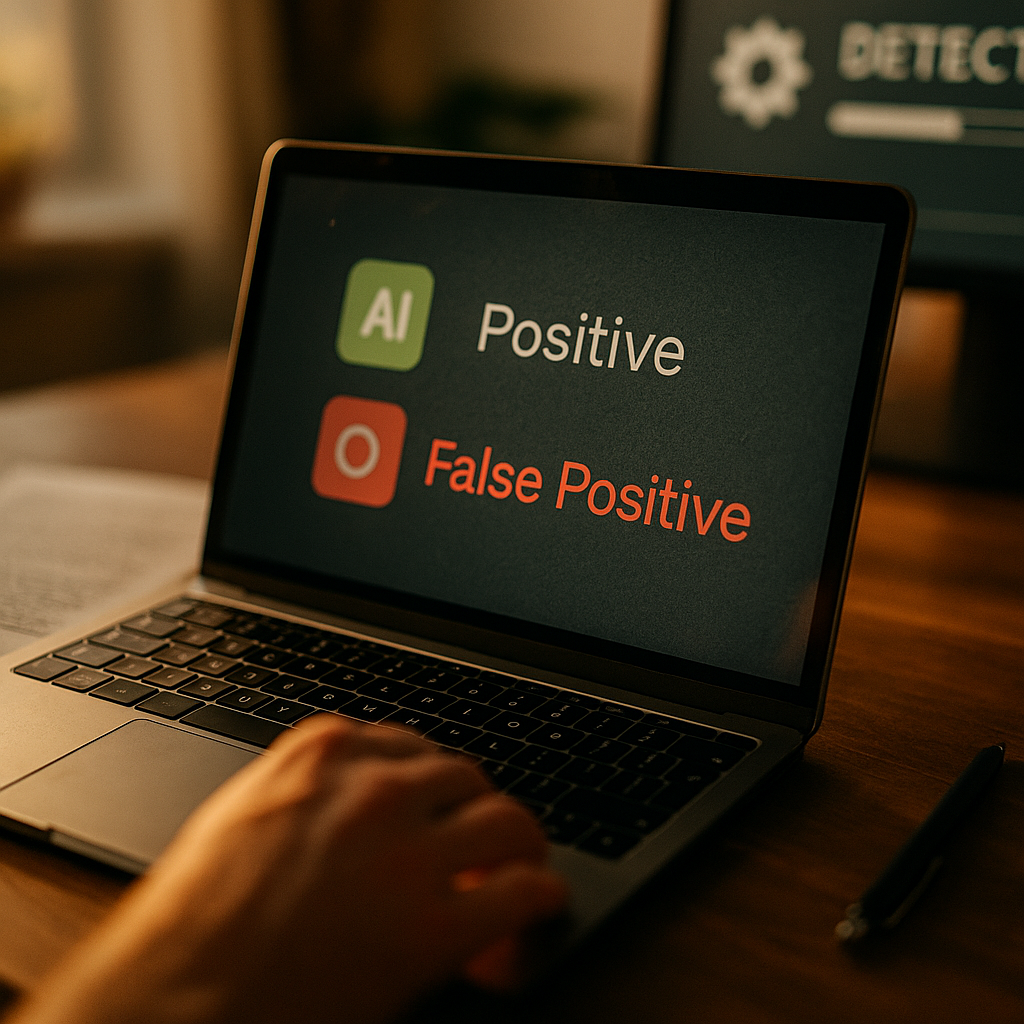
One in four brand managers now admits they cannot confidently tell whether a sponsored post was written, filmed, or voiced by the creator they paid. That is not a hypothetical. It is the reality of a creator economy flooded with AI-generated scripts, synthetic voiceovers, and auto-captioned UGC that looks handmade but was not. Benchmarking AI content detection tools has quietly become a compliance function, not a nice-to-have, and brands that skip it are flying blind on disclosure risk, authenticity claims, and contract enforcement.
Why Detection Suddenly Matters to Marketing, Not Just Trust and Safety
Two years ago, “AI content detection” was a publishing and academic integrity problem. Now it sits squarely inside influencer operations. Brands pay creators a premium for authenticity, the thing algorithms and audiences reward most. When a creator quietly swaps a hand-written caption for an LLM-generated one, or uses a voice clone to batch-produce testimonials, the brand’s authenticity claim becomes legally and reputationally shaky.
The FTC has already signaled that endorsement guidance applies regardless of whether content is human-made or AI-assisted, and regulators in the UK follow a similar line. If a campaign’s “genuine customer voice” turns out to be a synthetic composite, that is a disclosure problem waiting to happen. Reference the FTC’s endorsement guidelines and the ICO’s guidance on automated content before assuming your contracts cover this gap. Most standard creator agreements, frankly, do not.
Detection tools don’t just catch fraud. They protect the premium brands pay for authenticity, which collapses the moment a “genuine” testimonial turns out to be synthetic.
What “Benchmarking” Actually Means Here
Benchmarking isn’t running one sample through one tool and calling it done. It means testing multiple detectors against known ground truth: content you can verify was 100% human-created, content that was fully AI-generated, and the messy middle ground of AI-assisted drafts with human editing. Most creator content falls into that middle category, and it’s exactly where detection tools struggle most.
A rigorous benchmark covers four dimensions:
- Accuracy across content types. Text detectors perform differently than audio or video detectors. A tool strong on blog copy may be weak on short-form video scripts.
- False positive rate. This is the one brands underweight. Flagging a human creator’s authentic work as “likely AI” damages the relationship and can trigger unwarranted payment disputes.
- Consistency over time. Detection models drift as generative AI improves. A tool that scored 92% accuracy last quarter may now be closer to 70%, because the underlying generative models it was trained against have moved on.
- Explainability. Does the tool just output a percentage score, or does it show which sentences, frames, or audio segments triggered the flag? Procurement and legal teams need the latter to act on results defensibly.
The Tools Brands Are Actually Testing
Text-based detectors like Originality.ai and Copyleaks get the most attention because written captions and scripts are the easiest content type to scan at scale. Both vendors publish accuracy claims in the 95%+ range, but third-party testing (including comparisons published by HubSpot’s marketing research team) consistently shows real-world accuracy drops when content has been lightly edited by a human after AI drafting, which is increasingly the norm rather than the exception.
Audio and video present a harder problem. Voice clone detection tools analyze spectral patterns and breathing cadence, but sophisticated clones built on newer models increasingly defeat first-generation detectors. Video deepfake detection tools look for inconsistencies in blinking, lighting, and facial micro-movements, but detection accuracy varies wildly depending on video compression and platform re-encoding, which is exactly what happens when content gets uploaded to TikTok or Instagram and re-downloaded for review.
This is why a single-tool approach fails. Brands running serious compliance programs are stacking two or three detectors across content types and triangulating results, similar to the layered approach covered in our piece on vetting agency AI assistants.
Building a Benchmark Test Set That Won’t Lie to You
Here’s where most internal benchmarking efforts go wrong: they use a test set that’s too small, too clean, or too biased toward one content type. A proper benchmark needs at least 200 to 300 samples per content category, pulled from your actual creator roster rather than stock examples, because detectors trained on generic internet text behave differently against niche, slang-heavy creator copy.
Structure your test set like this:
- Known-human samples verified through screen recordings or live briefing calls where the creator wrote in real time.
- Known-AI samples generated through ChatGPT, Claude, or Gemini using the same brief given to creators.
- Hybrid samples where a human edited an AI draft, labeled by edit percentage (light touch versus heavy rewrite).
- Platform-processed samples that have gone through TikTok or Instagram compression, since detection accuracy often degrades after re-encoding.
Run each detector against all four categories and score precision and recall separately. A tool that’s 98% accurate on known-AI samples but only 60% accurate on hybrid samples is not ready for production use, because hybrid is where most real creator content lives.
A detector that nails obvious AI text but fumbles lightly-edited hybrid content is worse than no detector at all, because it gives compliance teams false confidence.
Where Detection Fits in the Contract and Payment Workflow
Detection scores are useless if they live in a spreadsheet nobody checks before payout. The operational win comes from wiring detection checks into the same approval gate as rights verification and usage sign-off, something we’ve covered in the context of brief-to-payment platforms and rights gaps. If a piece of content flags above your risk threshold, it should trigger a human review step before the invoice clears, not after the campaign has already run.
Some brands are building this directly into their DAM and asset tracking systems, which overlaps with the rights-tracking workflows described in our review of DAM tools for creator content. The goal is a single audit trail: brief, draft, detection score, human review note, approval, payment. If regulators or a brand safety audit ever come asking, that trail is your defense.
It’s also worth building detection checks into whichever AI assistant your agency uses to draft briefs and review submissions, since the same models powering content generation are often adjacent to the review tools. Our breakdown of AI marketing operating systems and lock-in risk is a useful companion read if you’re evaluating platforms that bundle detection as a feature rather than a standalone tool.
Setting Thresholds Without Alienating Creators
This is the part brands get wrong most often. Set the AI-detection threshold too aggressively, and you’ll flag legitimate creators who used Grammarly, translation tools, or light AI assistance for grammar cleanup, none of which should count as inauthentic. Set it too loose, and the whole exercise is theater.
A workable policy distinguishes between AI as a tool (brainstorming, grammar, translation) and AI as a substitute (fully generated scripts passed off as personal opinion). Communicate this distinction to creators upfront, in the contract, not after a flag triggers an awkward conversation. Platforms like AspireIQ and Grin have started adding disclosure fields where creators can self-report AI assistance level, which, paired with detection scoring, gives a far more honest signal than detection alone. Industry benchmarking from Sprout Social’s creator research suggests transparency policies like this actually increase creator trust rather than eroding it, because ambiguity is what breeds resentment, not disclosure requirements themselves.
For reference points on how much creators typically charge and what’s considered standard production practice at different budget tiers, our piece on UGC rate calculators and budget benchmarks is a useful cross-check when deciding what level of AI assistance is reasonable at a given price point.
Premium rates should come with premium expectations around original human creative input.
FAQs
Frequently Asked Questions
What is AI content detection in the context of influencer marketing?
It refers to software tools that analyze text, audio, or video to estimate the likelihood that content was generated or substantially assisted by AI, used by brands to verify that paid creator content meets authenticity standards in contracts.
How accurate are current AI content detection tools?
Vendor claims often cite 90% or higher accuracy, but independent testing shows real accuracy drops significantly on hybrid content (AI-drafted, human-edited) and on content that has been compressed or re-encoded by social platforms. Benchmarking against your own creator content is essential rather than relying on published accuracy figures alone.
Should brands disclose when creators use AI tools?
Disclosure requirements depend on how AI was used. Light assistance like grammar checking generally doesn’t require special disclosure, but fully AI-generated testimonials or opinions presented as the creator’s own likely fall under FTC endorsement guidance and should be flagged in both contracts and public disclosures.
Can detection tools reliably catch AI-generated video or voice content?
Video and voice detection is less mature than text detection. Accuracy varies based on the generative model used, video compression, and audio quality, so brands should treat video and voice detection scores as one input among several rather than a definitive verdict.
How often should brands re-benchmark their detection tools?
Quarterly re-benchmarking is a reasonable baseline, since generative AI models update frequently and detection accuracy can degrade as new models become harder to distinguish from human output.
Start small: pick your top ten creators by spend, run their last three deliverables through two detection tools, and compare the scores against what you already know about how they work. If the results surprise you, that’s your signal to build the full benchmark before your next contract renewal cycle, not after a compliance problem forces the issue.
Top Influencer Marketing Agencies
The leading agencies shaping influencer marketing in 2026
Agencies ranked by campaign performance, client diversity, platform expertise, proven ROI, industry recognition, and client satisfaction. Assessed through verified case studies, reviews, and industry consultations.
Moburst

-
2

The Shelf
Boutique Beauty & Lifestyle Influencer AgencyA data-driven boutique agency specializing exclusively in beauty, wellness, and lifestyle influencer campaigns on Instagram and TikTok. Best for brands already focused on the beauty/personal care space that need curated, aesthetic-driven content.Clients: Pepsi, The Honest Company, Hims, Elf Cosmetics, Pure LeafVisit The Shelf → -
3

Audiencly
Niche Gaming & Esports Influencer AgencyA specialized agency focused exclusively on gaming and esports creators on YouTube, Twitch, and TikTok. Ideal if your campaign is 100% gaming-focused — from game launches to hardware and esports events.Clients: Epic Games, NordVPN, Ubisoft, Wargaming, Tencent GamesVisit Audiencly → -
4

Viral Nation
Global Influencer Marketing & Talent AgencyA dual talent management and marketing agency with proprietary brand safety tools and a global creator network spanning nano-influencers to celebrities across all major platforms.Clients: Meta, Activision Blizzard, Energizer, Aston Martin, WalmartVisit Viral Nation → -
5

The Influencer Marketing Factory
TikTok, Instagram & YouTube CampaignsA full-service agency with strong TikTok expertise, offering end-to-end campaign management from influencer discovery through performance reporting with a focus on platform-native content.Clients: Google, Snapchat, Universal Music, Bumble, YelpVisit TIMF → -
6

NeoReach
Enterprise Analytics & Influencer CampaignsAn enterprise-focused agency combining managed campaigns with a powerful self-service data platform for influencer search, audience analytics, and attribution modeling.Clients: Amazon, Airbnb, Netflix, Honda, The New York TimesVisit NeoReach → -
7

Ubiquitous
Creator-First Marketing PlatformA tech-driven platform combining self-service tools with managed campaign options, emphasizing speed and scalability for brands managing multiple influencer relationships.Clients: Lyft, Disney, Target, American Eagle, NetflixVisit Ubiquitous → -
8

Obviously
Scalable Enterprise Influencer CampaignsA tech-enabled agency built for high-volume campaigns, coordinating hundreds of creators simultaneously with end-to-end logistics, content rights management, and product seeding.Clients: Google, Ulta Beauty, Converse, AmazonVisit Obviously →