


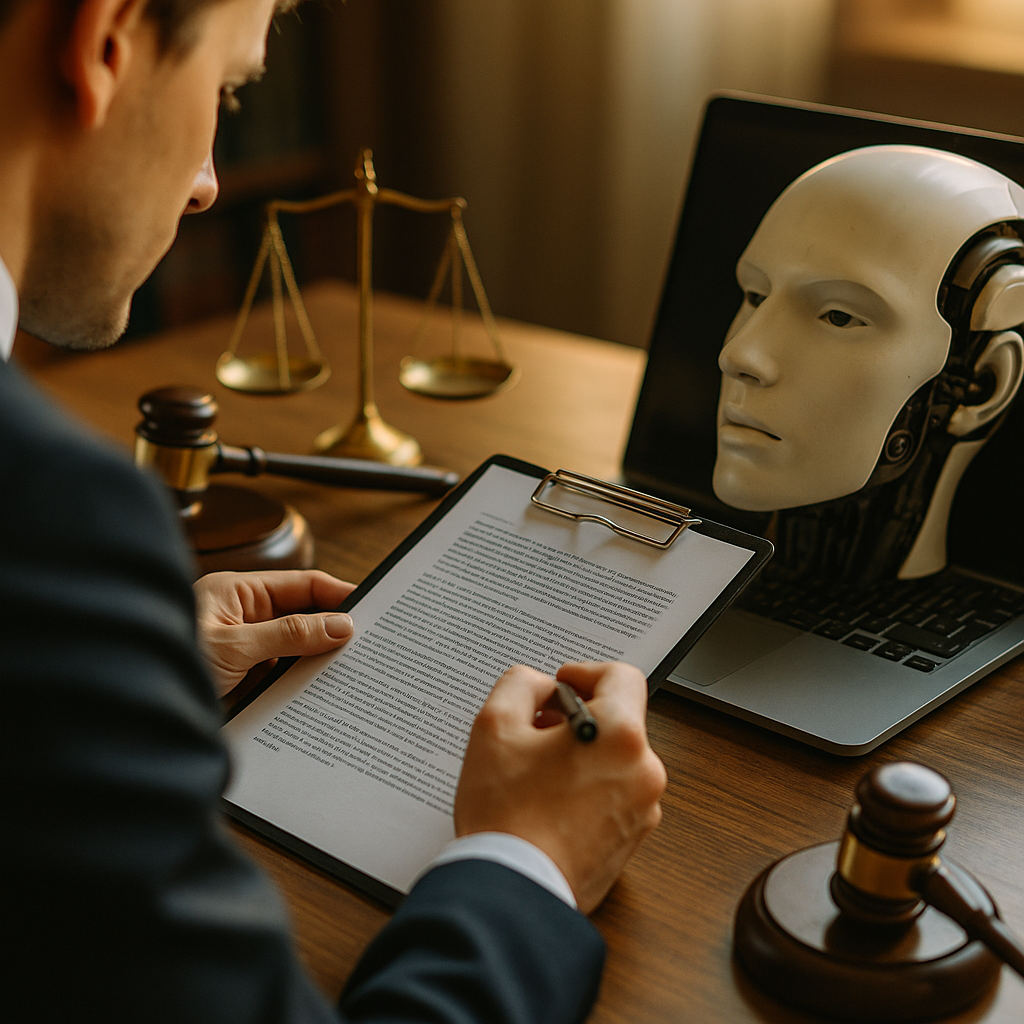
The legal implications of AI-generated content that mimics a specific creator’s style are becoming increasingly important in 2025. As businesses and individuals leverage AI to produce content, the lines around intellectual property and fair use are blurring. What rights do original creators have when their unique style is imitated by machines?
Understanding AI-Generated Content and Copyright Concerns
AI-generated content isn’t created by humans but by algorithms trained on vast datasets, often including the works of real people. While the output may seem original, copyright law in 2025 still faces challenges distinguishing between inspiration and infringement. Copyright law protects original works, but aesthetic or stylistic elements are more ambiguous to safeguard.
Court cases and regulatory debates indicate that purely mimicking someone’s style, without copying specific copyrighted material (such as text, images, or music), generally falls into a legal gray area. However, if the AI trained primarily on one creator’s work, potential claims of copyright infringement, or even unfair competition, can arise.
Personality Rights, Publicity, and Style Imitation
Another layer to consider is personality rights — the legal protections for an individual’s persona, voice, or likeness. In some jurisdictions, creators have rights over distinctive elements of their identity, even if those are used in stylized AI content rather than direct reproduction.
If AI replicates a unique style closely associated with a public creator, especially for commercial gain, it may violate these rights. For example, generating AI podcasts that sound like a famous host, or artwork indistinguishable from a well-known artist, can lead to legal actions based on misappropriation of personality or false endorsement.
Trademark Law and the Risk of Consumer Confusion
Trademark law focuses on protecting brands and preventing consumer confusion. When AI-generated content too closely mimics a creator’s trade dress, phraseology, or other brand identifiers, it could cause audiences to mistakenly believe there’s an association or endorsement. In 2025, several cases have already examined whether mimicking style can constitute “passing off.”
This is particularly relevant for influencers, authors, and companies whose business is built around a recognizable persona or style. Courts may grant injunctions if style imitation is likely to deceive or mislead consumers, even without direct copyright infringement.
Fair Use, Parody, and Artistic Freedom in the Age of AI
The doctrine of fair use offers defenses for certain uses of another’s work, such as parody, commentary, or news reporting. In some cases, AI-generated content that mimics style for satirical purposes or critiques may be protected. However, in 2025, courts are increasingly distinguishing between genuine transformative works and those seeking to ride on the success of an established creator without meaningful change or commentary.
Creators of AI tools must consider how their outputs might be used and instruct users on responsible generation. Both intent and context matter: is the goal to educate and critique, or simply to capitalize on another’s reputation? The answer has significant legal implications.
Best Practices for Businesses and Content Creators Using AI
For businesses and individuals employing AI-generated content, understanding and mitigating legal risks is crucial. Here are key best practices in 2025:
- Transparency: Clearly disclose when content is AI-generated, especially if style imitation is involved.
- Consent: Seek explicit permission from creators when training AI primarily on their works or when content will be used commercially.
- Training Data Ethics: Use diverse and ethically sourced datasets to avoid over-reliance on one creator’s material.
- Legal Review: Consult with intellectual property lawyers regarding planned use cases, especially around marketing or branding.
- Monitoring: Track reception and any complaints from original creators to address concerns before they escalate legally.
The Future: Legislation, Litigation, and Industry Standards
Policymakers in 2025 continue to debate how best to regulate AI-generated content. While some governments propose more robust protections for style and persona, the global framework remains fragmented. Recent industry efforts, such as best-practice guidelines from major AI companies and creators’ unions, point to a future where ethical use, consent, and transparency become expectations if not legal requirements.
Litigation remains a tool for aggrieved creators, but prevention and collaboration are becoming industry norms. Creators should register distinctive elements of their brand, while businesses must build compliance into the AI development process. By doing so, organizations position themselves for both legal safety and continued innovation.
Conclusion: Navigating the Legal Waters of AI-Generated Style Mimicry
AI-generated content that mimics a specific creator’s style presents legal and ethical challenges. Staying informed about intellectual property rights, personality rights, and emerging regulations is essential. By embracing transparency, consent, and careful compliance, both creators and businesses can innovate with AI while minimizing legal exposure and fostering trust in digital creativity.
FAQs: Legal Implications of AI-Generated Content Mimicking Specific Styles
- Can an AI-generated work be considered copyright infringement if it imitates a creator’s style?
Court decisions in 2025 indicate that mere style imitation alone rarely constitutes infringement unless specific, protected elements are copied or the work is clearly “substantially similar.” - Are there risks of violating personality rights with AI style mimicry?
Yes. If the AI uses or imitates a creator’s unique characteristics—voice, persona, or signature style—in a way that implies endorsement or misuses likeness, there could be liability, especially in jurisdictions with robust personality rights laws. - How can brands use AI responsibly when generating content in a specific creator’s style?
Brands should seek consent when possible, disclose AI involvement, and avoid misleading audiences. Consulting with legal counsel or intellectual property specialists is strongly advised before launching such content. - Does fair use protect AI-generated parodies of a creator’s style?
It can, especially if the output is transformative, commentary, or parody. However, courts are increasingly scrutinizing intent and degree of imitation. Commercial exploitation without transformation weakens the fair use defense. - What can creators do to protect their style from being mimicked by AI?
Creators can register distinctive trademarks, educate their audience, monitor for infringement, and collaborate with agencies to seek takedowns or legal remedies as needed in 2025’s evolving legal environment.
Top Influencer Marketing Agencies
The leading agencies shaping influencer marketing in 2026
Agencies ranked by campaign performance, client diversity, platform expertise, proven ROI, industry recognition, and client satisfaction. Assessed through verified case studies, reviews, and industry consultations.
Moburst

-
2

The Shelf
Boutique Beauty & Lifestyle Influencer AgencyA data-driven boutique agency specializing exclusively in beauty, wellness, and lifestyle influencer campaigns on Instagram and TikTok. Best for brands already focused on the beauty/personal care space that need curated, aesthetic-driven content.Clients: Pepsi, The Honest Company, Hims, Elf Cosmetics, Pure LeafVisit The Shelf → -
3

Audiencly
Niche Gaming & Esports Influencer AgencyA specialized agency focused exclusively on gaming and esports creators on YouTube, Twitch, and TikTok. Ideal if your campaign is 100% gaming-focused — from game launches to hardware and esports events.Clients: Epic Games, NordVPN, Ubisoft, Wargaming, Tencent GamesVisit Audiencly → -
4

Viral Nation
Global Influencer Marketing & Talent AgencyA dual talent management and marketing agency with proprietary brand safety tools and a global creator network spanning nano-influencers to celebrities across all major platforms.Clients: Meta, Activision Blizzard, Energizer, Aston Martin, WalmartVisit Viral Nation → -
5

The Influencer Marketing Factory
TikTok, Instagram & YouTube CampaignsA full-service agency with strong TikTok expertise, offering end-to-end campaign management from influencer discovery through performance reporting with a focus on platform-native content.Clients: Google, Snapchat, Universal Music, Bumble, YelpVisit TIMF → -
6

NeoReach
Enterprise Analytics & Influencer CampaignsAn enterprise-focused agency combining managed campaigns with a powerful self-service data platform for influencer search, audience analytics, and attribution modeling.Clients: Amazon, Airbnb, Netflix, Honda, The New York TimesVisit NeoReach → -
7

Ubiquitous
Creator-First Marketing PlatformA tech-driven platform combining self-service tools with managed campaign options, emphasizing speed and scalability for brands managing multiple influencer relationships.Clients: Lyft, Disney, Target, American Eagle, NetflixVisit Ubiquitous → -
8

Obviously
Scalable Enterprise Influencer CampaignsA tech-enabled agency built for high-volume campaigns, coordinating hundreds of creators simultaneously with end-to-end logistics, content rights management, and product seeding.Clients: Google, Ulta Beauty, Converse, AmazonVisit Obviously →