


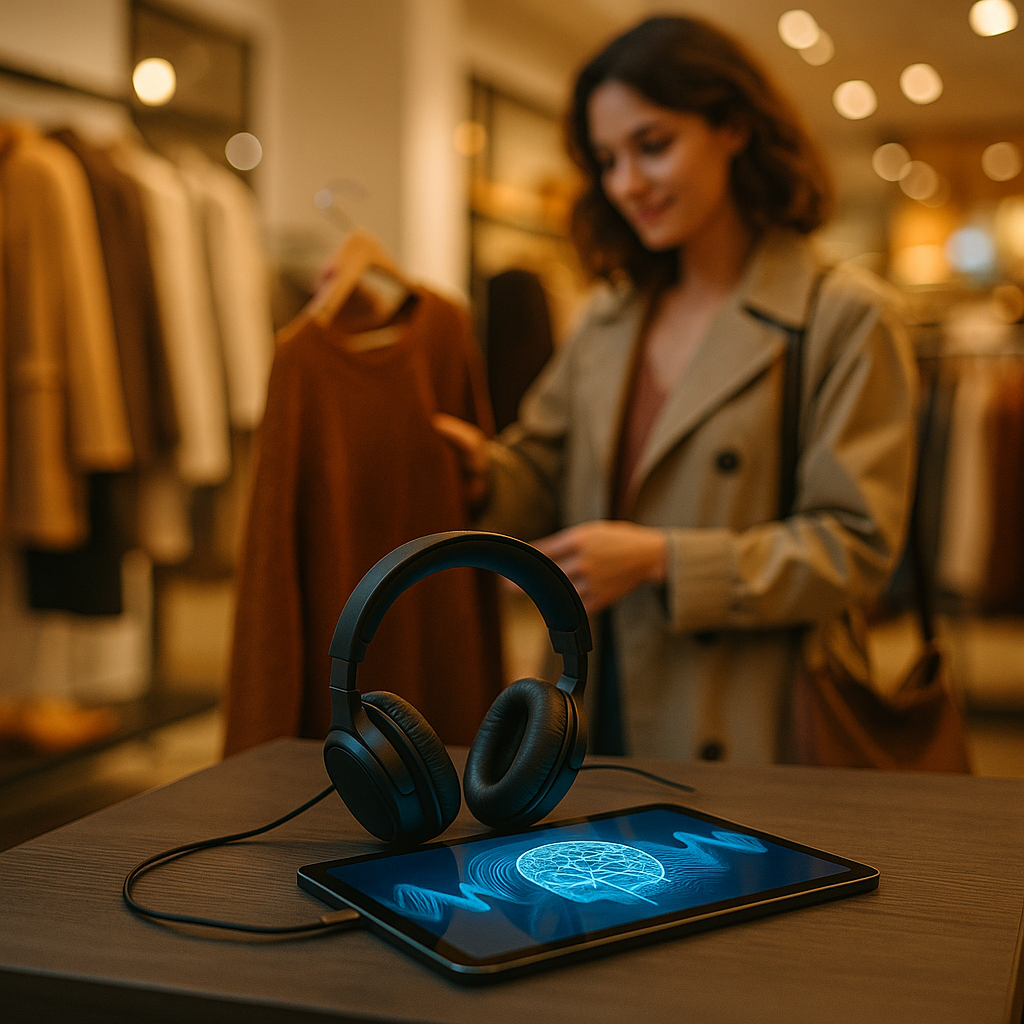
In 2025, retailers compete on experience as much as product, and audio is one of the fastest ways to shape perception. Using AI to Generate Hyper Niche Soundscapes for Branded Retail helps teams design store audio that matches micro-audiences, dayparts, and locations without losing brand consistency. Done well, it lifts dwell time, reinforces identity, and reduces creative bottlenecks—so what does “done well” actually look like?
AI-generated retail soundscapes: what they are and why they work
AI-generated soundscapes are custom, adaptive audio environments built from musical elements, textures, and ambient layers designed to support a specific retail goal. Unlike a standard playlist, a soundscape can be composed to fit a brand’s signature tone (premium, playful, calm, energetic) while remaining flexible enough to shift for store context.
They work because shoppers respond to audio as a subconscious cue. Tempo, brightness, harmonic density, and even the amount of silence can influence perceived pace, comfort, and attention. A hyper-niche soundscape goes beyond “lofi for cafés” or “house for fashion” and targets precise situations, such as:
- Product-zone alignment: calm textures for skincare, brighter rhythmic motifs for activewear, minimal ambient layers for luxury accessories.
- Daypart tuning: morning clarity for replenishment and browsing, afternoon lift for conversion, evening warmth for lingering.
- Micro-location consistency: the same brand sonic DNA, adjusted for a flagship versus a small-format store.
Most retail teams ask the same follow-up: “Is this just background music?” Not if you treat it like experience design. Soundscapes are meant to support brand goals—traffic flow, dwell time, staff energy, perceived quality—not to entertain like a streaming playlist.
Brand sonic identity and hyper-niche personalization
Hyper-niche audio starts with a clear brand sonic identity: a set of musical and acoustic rules that make your audio recognizable across stores and channels. Think of it as a brand style guide for sound. Without it, AI will produce variety, but not coherence.
A practical sonic identity framework typically includes:
- Core attributes: 3–5 descriptors that match your brand (for example, “clean,” “optimistic,” “crafted,” “modern”).
- Musical parameters: tempo range, rhythm density, harmonic complexity, instrumentation families, and “do-not-use” items.
- Acoustic profile: dryness vs. reverb, brightness vs. warmth, dynamic range targets for comfort.
- Cultural boundaries: what’s authentic for your audience and what feels like appropriation or mismatch.
Once this is defined, personalization becomes safe and strategic. Instead of generating random tracks, you generate within a boundary: the brand stays recognizable while the sound shifts to match context.
Common personalization layers retailers implement in 2025 include:
- Audience clusters: commuter-heavy locations vs. destination shopping, tourist corridors vs. neighborhood stores.
- Weather-aware adjustments: more warmth and slower pacing on rainy days; brighter motifs during high footfall seasons.
- Event-based sound packs: product drops, collaborations, in-store demos, or VIP evenings—without having to rebuild the entire audio program.
Teams often worry that personalization will fragment the brand. The solution is to keep a “signature layer” constant—recurring motifs, a consistent tonal palette, or a recognizable rhythmic feel—while letting secondary layers adapt by store type or time of day.
Generative music workflows for retail teams (from brief to deployment)
Retail audio succeeds when marketing, operations, and store staff can actually run it. A workable generative music workflow needs clear ownership, approvals, and a deployment plan that doesn’t rely on one specialist.
Here is a proven end-to-end workflow many brands adopt:
- 1) Experience brief: define the target behavior (browse longer, move faster, feel premium), the customer mindset, and any operational constraints (announcements, noise levels, store acoustics).
- 2) Sonic identity spec: lock the brand parameters and compliance rules (explicit content bans, cultural sensitivity, volume limits).
- 3) Prototype sound packs: generate 3–5 short “scenes” per zone/daypart (for example, 10–15 minutes each), then test in a single store.
- 4) Human review and editing: a music supervisor or trained reviewer checks transitions, fatigue risk, and brand fit; remove distracting elements.
- 5) Field test: run A/B tests by time block; collect store feedback and performance metrics.
- 6) Deployment and governance: publish approved packs to the in-store audio system, with version control and change logs.
Two follow-up questions come up immediately: “How long should loops be?” and “Will customers notice repetition?” In practice, retailers use longer evolving scenes rather than short loops. Aim for low repetition density by varying motifs subtly over time and rotating scene sets across the week.
Another question: “Do we need lyrics?” For most branded retail environments, lyric-free or minimal-vocal audio reduces distraction and helps avoid language and content issues. If you use vocals, treat them as a brand decision with stricter review criteria.
In-store audio analytics and measurement that prove ROI
Sound can feel subjective, but you can measure outcomes with the right in-store audio analytics. The key is to tie audio changes to specific business goals and avoid “vanity listening” metrics.
Helpful measurement approaches include:
- Sales and conversion: compare conversion rate and average transaction value across matched time blocks with different soundscapes.
- Dwell time: use footfall counters or privacy-safe occupancy sensors to track average time spent in-store and in key zones.
- Traffic flow: evaluate how quickly customers move from entrance to focal displays; identify bottlenecks.
- Staff feedback: collect structured input on fatigue, clarity, and customer reactions; staff experience affects customer experience.
- Brand lift signals: short post-visit surveys focused on perceived quality, calmness, or “fits the brand” recognition.
To keep the data credible, use controlled comparisons:
- Hold variables steady: staffing levels, promotions, and merchandising should match where possible.
- Use time-based randomization: rotate soundscapes across the same dayparts to reduce bias.
- Run tests long enough: capture both weekday and weekend behavior before deciding.
Retailers also ask: “Can audio respond in real time?” Yes, but start with guardrails. Real-time adaptation (for example, shifting energy when occupancy spikes) should be gradual and capped to avoid noticeable “mood swings” that feel manipulative or unsettling.
Audio branding compliance: licensing, safety, and customer trust
When you generate audio with AI, you take on new responsibilities around audio branding compliance. This is where EEAT matters: document your process, use reputable tools and partners, and create a transparent governance model.
Key compliance considerations in 2025 include:
- Rights and licensing: confirm commercial usage rights for generated outputs and any training data claims by vendors. If your system uses samples, ensure they are cleared for retail playback.
- Content safety: enforce rules that prevent explicit material, offensive motifs, or culturally insensitive references—especially if you operate globally.
- Volume and hearing comfort: set target loudness levels and maximum caps. Retail audio should support conversation and accessibility, not compete with it.
- Operational reliability: offline playback modes, automatic failover, and central monitoring prevent awkward silence or inconsistent experiences.
- Data privacy: if adapting sound based on sensors, use aggregated, privacy-safe signals and disclose practices where required.
A practical way to build trust is to keep an “audio audit trail”: the brief, generation prompts or parameters, review notes, and approval records. If a customer complains or a market has stricter requirements, you can show exactly how and why a soundscape was produced.
Another frequent concern: “Will AI replace our music curator?” In strong programs, AI speeds up production and iteration, while humans remain responsible for taste, ethics, and brand alignment. This human-in-the-loop approach is also easier to defend internally and externally.
Adaptive sound design for omnichannel retail experiences
Retail brands rarely live only in-store. Adaptive sound design works best when it connects physical locations to digital touchpoints without becoming repetitive. The goal is a shared sonic language, not the same track everywhere.
Ways to extend soundscapes across channels:
- Short-form motifs: derive 2–4 second brand stingers from in-store textures for app interactions, checkout confirmation sounds, or video bumpers.
- Campaign cohesion: when a collection launches, align in-store audio “scenes” with social content and product pages using shared tonal palettes.
- Geographic adaptation: keep the core identity while adjusting timbre and rhythm to match regional listening norms.
- Accessibility options: in quieter concept stores, offer low-stimulation hours with gentler dynamics and reduced high-frequency content.
Brands also ask: “How do we avoid audio fatigue for frequent visitors?” Build seasonal refresh cycles and keep a controlled library of approved scene sets. AI makes refreshing easier, but governance keeps it consistent.
FAQs
What is a hyper-niche soundscape in retail?
A hyper-niche soundscape is a custom-designed audio environment tailored to a specific store context—such as a product zone, neighborhood demographic, or time of day—while still following a brand’s sonic identity guidelines.
Do AI-generated soundscapes require special in-store hardware?
Not always. Many programs run through existing commercial audio players and speaker systems. However, better zoning control, loudness management, and reliable scheduling usually improve results, especially in larger formats.
How do we ensure AI music is legally safe for commercial playback?
Use vendors that provide clear commercial usage terms for outputs, avoid unlicensed samples, and keep documentation for each deployed sound pack. If in doubt, get a rights review from a music licensing professional familiar with retail environments.
Will customers notice that the music is AI-generated?
Most customers notice the feel, not the tool. If the soundscape is coherent, comfortable, and brand-aligned, it typically reads as intentional design. Problems arise when audio is repetitive, distracting, or inconsistent across zones.
How long does it take to launch an AI soundscape program?
A focused pilot can launch in weeks if the brand sonic identity is defined and approvals are streamlined. Scaling across locations takes longer because it involves governance, staff training, and measurement cycles.
How do we measure whether soundscapes improve sales?
Run time-block A/B tests, compare conversion rate and average transaction value, and pair results with dwell time and staff feedback. Keep other variables (promotions, staffing) as consistent as possible to make the findings credible.
AI-enabled soundscapes give retailers a practical way to shape emotion and behavior with precision, as long as the program is governed like any other brand asset. Define a sonic identity, generate within clear rules, test in real stores, and document rights and approvals. The takeaway: treat sound as experience design, not a playlist, and you’ll earn consistency, agility, and measurable impact.