


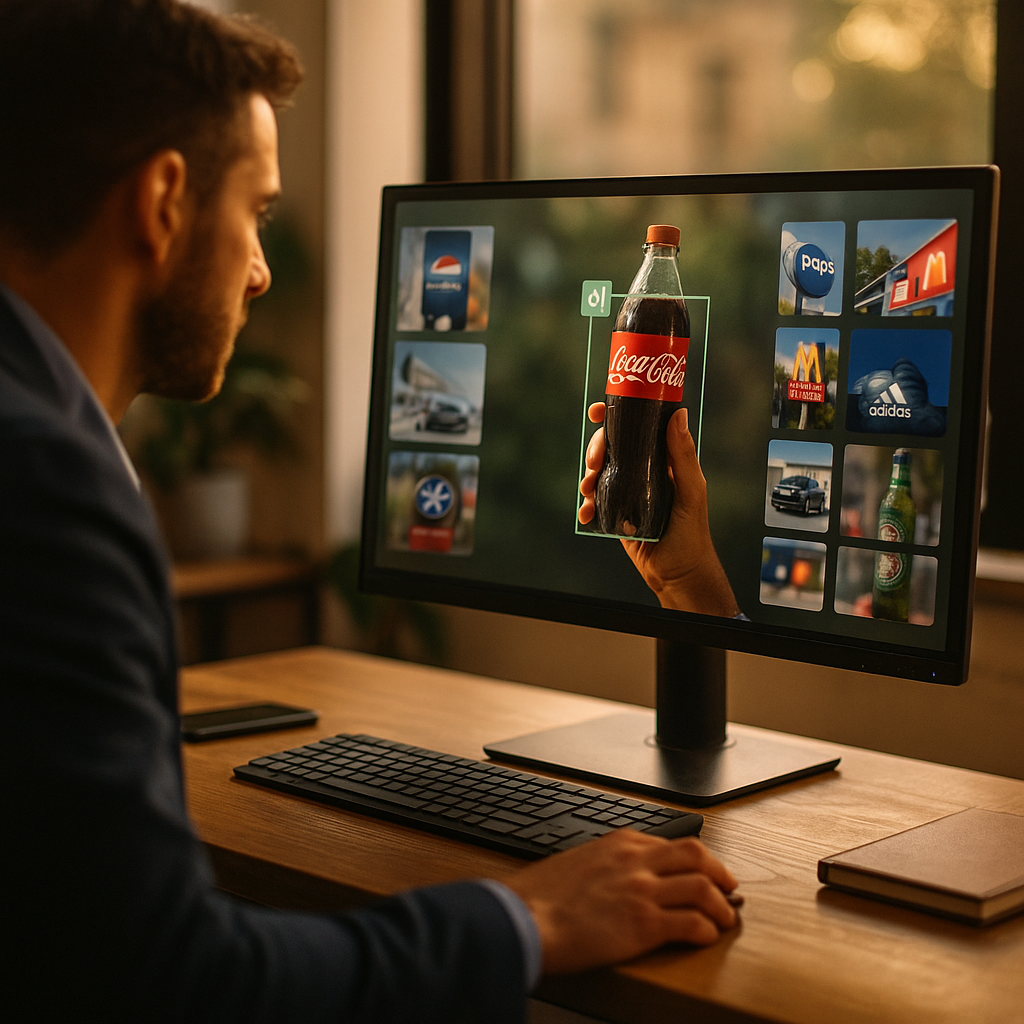
AI-powered image recognition for tracking un-tagged brand mentions is transforming the way companies monitor their visual presence online. As traditional keyword-based monitoring misses a huge portion of brand exposure, these intelligent systems are filling the gap. How does image recognition spot your brand even when you’re not tagged? The answer is reshaping digital marketing in 2025.
Expanding Brand Monitoring Beyond Text Using Visual Intelligence
For years, brands relied on keyword trackers and social listening tools to catch un-tagged mentions. Yet, in a world where over 70% of online content now includes images or videos, much of the conversation eludes text-based tools. Image recognition technology leverages AI to scan, analyze, and understand visual content at scale. It detects logos, products, packaging, or even unique color schemes associated with a brand—no hashtags or mentions needed.
According to recent Visual Capitalist data, consumers share billions of images daily across social media and the web. Brands like Nike and Coca-Cola saw up to a 250% increase in detected brand engagements in 2024 when shifting to AI-driven image tracking. The credible power of this technology means brands can now gain a true, complete picture of their market exposure.
How AI-Powered Image Recognition Works for Un-tagged Mentions
Modern AI image recognition tools are trained on massive image sets, using deep learning to develop a nuanced understanding of logos, shapes, and brand contexts. Here’s the typical flow:
- Image Ingestion: The AI system continuously crawls real-time feeds from social networks, forums, and news platforms, gathering millions of images daily.
- Detection and Analysis: Neural networks identify brand-specific visual elements—logos, product appearances, or even distinctive environments (like Starbucks cups in user selfies).
- Contextual Understanding: New-gen models can even read the sentiment or context of the image post, discerning between positive, neutral, or negative brand showcases.
- Real-Time Reporting: Detected mentions are logged, flagged for the marketing team, and often accompanied by analytics dashboards showing reach, engagement, and potential impact.
This level of automation captures un-tagged brand mentions that would have otherwise slipped through the cracks. No human team could match the scale or speed these tools provide, creating new levels of brand intelligence.
The Business Value of Tracking Un-tagged Brand Mentions
AI-powered image recognition delivers more than just vanity metrics. Its business value now extends across multiple departments:
- Marketing: Detect viral user-generated content and maximize positive brand associations even when your brand isn’t mentioned by name.
- Customer Service: Address product misuse, complaints, or service issues quickly by spotting visual signals in real-time—enabling proactive crisis management.
- Brand Protection: Surface unauthorized uses of logos or products across the web, helping identify counterfeiting or intellectual property abuse before it becomes widespread.
- Competitor Benchmarking: Benchmark your brand’s visual share-of-voice versus competitors—essential for strategy alignment in 2025’s crowded digital space.
With 84% of marketers investing in AI analytics tools this year, failure to monitor your un-tagged mentions can put a brand at a disadvantage while competitors uncover hidden advocacy or looming PR threats.
Overcoming Challenges in Visual Brand Monitoring
While the technology is impressive, deploying AI-powered image recognition isn’t without hurdles. Key challenges include:
- False Positives/Negatives: Some systems still misidentify brands, especially with obscure or altered logos. The most accurate platforms continuously retrain models with brand-specific data.
- Privacy and Ethical Use: In 2025, privacy regulations require clear consent and responsible data handling. Reputable tools anonymize data and adhere to GDPR and CCPA standards, protecting both users and brands.
- Integration with Existing Workflows: The value of image insights depends on seamless integration with existing CRMs, marketing dashboards, and alert systems for fast, actionable use.
Best-in-class vendors address these challenges with human-in-the-loop verification, privacy-first architecture, and open APIs, making the leap to visual monitoring both feasible and effective.
The Future of Brand Tracking: Moving Toward Multimodal AI
The latest trend in AI-powered image recognition for brand monitoring is the rise of multimodal AI. These advanced systems not only process images, but analyze accompanying text, video, and audio, providing richer, context-aware insights. For example, a TikTok showing a product (image), with speech mentioning features (audio), and no text mention would still be detected and properly attributed.
This multimodal approach is becoming vital as consumer-generated content grows more diverse. Experts predict that by the end of 2025, over 90% of leading consumer brands will integrate multimodal tracking. Brands must prepare by working with reputable technology partners known for model transparency, data protection, and integration support.
Implementing AI Image Recognition: Steps and Best Practices
Ready to add AI-powered image recognition to your brand monitoring strategy? Here’s a step-by-step approach based on industry best practices:
- Evaluate Mature Vendors: Look for companies with proven expertise, strong data privacy records, and successful enterprise deployments.
- Define Monitoring Goals: Decide which visual brand elements are vital to track—logos, products, unique packaging, and relevant competitor assets.
- Pilot and Benchmark: Start with a proof-of-concept using historical brand campaigns, comparing results to existing social listening metrics.
- Integrate Into Workflows: Connect image data streams to your analytics dashboards, marketing automation, and incident response tools.
- Continuously Refine: Collect feedback from marketing, PR, and legal, re-tuning model accuracy and monitoring parameters as your visual brand evolves.
Also, consider combining image recognition with influencer tracking and UGC curation for a holistic, future-proof approach to brand management.
Conclusion
AI-powered image recognition for tracking un-tagged brand mentions gives a true, actionable view of your visual brand equity online. Adopting these tools not only uncovers invisible opportunities and risks—it empowers proactive, data-driven brand management for 2025 and beyond.
FAQs: AI-Powered Image Recognition for Tracking Un-tagged Brand Mentions
-
How accurate are AI image recognition tools in detecting un-tagged brand mentions?
Industry-leading image recognition solutions regularly achieve 90-96% accuracy on clear, unedited visuals and improve further with model refinement and human verification for edge cases.
-
What types of content can AI image recognition monitor?
The technology can track images, videos (by analyzing key frames), and often visual components embedded in live streams and short-form content across major social and news platforms.
-
Does this technology comply with data privacy laws?
Yes. Leading solutions adhere to GDPR, CCPA, and global standards by anonymizing data, gaining required platform permissions, and providing robust audit trails for all monitoring activity.
-
Can AI image recognition help identify counterfeit products?
Absolutely. Brands use these tools to spot unauthorized use of logos or products in marketplace listings, social posts, and even news coverage—flagging counterfeiting early for rapid response.
-
How fast can AI-powered tools detect and report un-tagged brand mentions?
Most enterprise-grade platforms provide near-instant alerts, with image processing delays measured in seconds to minutes, enabling real-time brand protection and engagement response.
Top Influencer Marketing Agencies
The leading agencies shaping influencer marketing in 2026
Agencies ranked by campaign performance, client diversity, platform expertise, proven ROI, industry recognition, and client satisfaction. Assessed through verified case studies, reviews, and industry consultations.
Moburst

-
2

The Shelf
Boutique Beauty & Lifestyle Influencer AgencyA data-driven boutique agency specializing exclusively in beauty, wellness, and lifestyle influencer campaigns on Instagram and TikTok. Best for brands already focused on the beauty/personal care space that need curated, aesthetic-driven content.Clients: Pepsi, The Honest Company, Hims, Elf Cosmetics, Pure LeafVisit The Shelf → -
3

Audiencly
Niche Gaming & Esports Influencer AgencyA specialized agency focused exclusively on gaming and esports creators on YouTube, Twitch, and TikTok. Ideal if your campaign is 100% gaming-focused — from game launches to hardware and esports events.Clients: Epic Games, NordVPN, Ubisoft, Wargaming, Tencent GamesVisit Audiencly → -
4

Viral Nation
Global Influencer Marketing & Talent AgencyA dual talent management and marketing agency with proprietary brand safety tools and a global creator network spanning nano-influencers to celebrities across all major platforms.Clients: Meta, Activision Blizzard, Energizer, Aston Martin, WalmartVisit Viral Nation → -
5

The Influencer Marketing Factory
TikTok, Instagram & YouTube CampaignsA full-service agency with strong TikTok expertise, offering end-to-end campaign management from influencer discovery through performance reporting with a focus on platform-native content.Clients: Google, Snapchat, Universal Music, Bumble, YelpVisit TIMF → -
6

NeoReach
Enterprise Analytics & Influencer CampaignsAn enterprise-focused agency combining managed campaigns with a powerful self-service data platform for influencer search, audience analytics, and attribution modeling.Clients: Amazon, Airbnb, Netflix, Honda, The New York TimesVisit NeoReach → -
7

Ubiquitous
Creator-First Marketing PlatformA tech-driven platform combining self-service tools with managed campaign options, emphasizing speed and scalability for brands managing multiple influencer relationships.Clients: Lyft, Disney, Target, American Eagle, NetflixVisit Ubiquitous → -
8

Obviously
Scalable Enterprise Influencer CampaignsA tech-enabled agency built for high-volume campaigns, coordinating hundreds of creators simultaneously with end-to-end logistics, content rights management, and product seeding.Clients: Google, Ulta Beauty, Converse, AmazonVisit Obviously →