


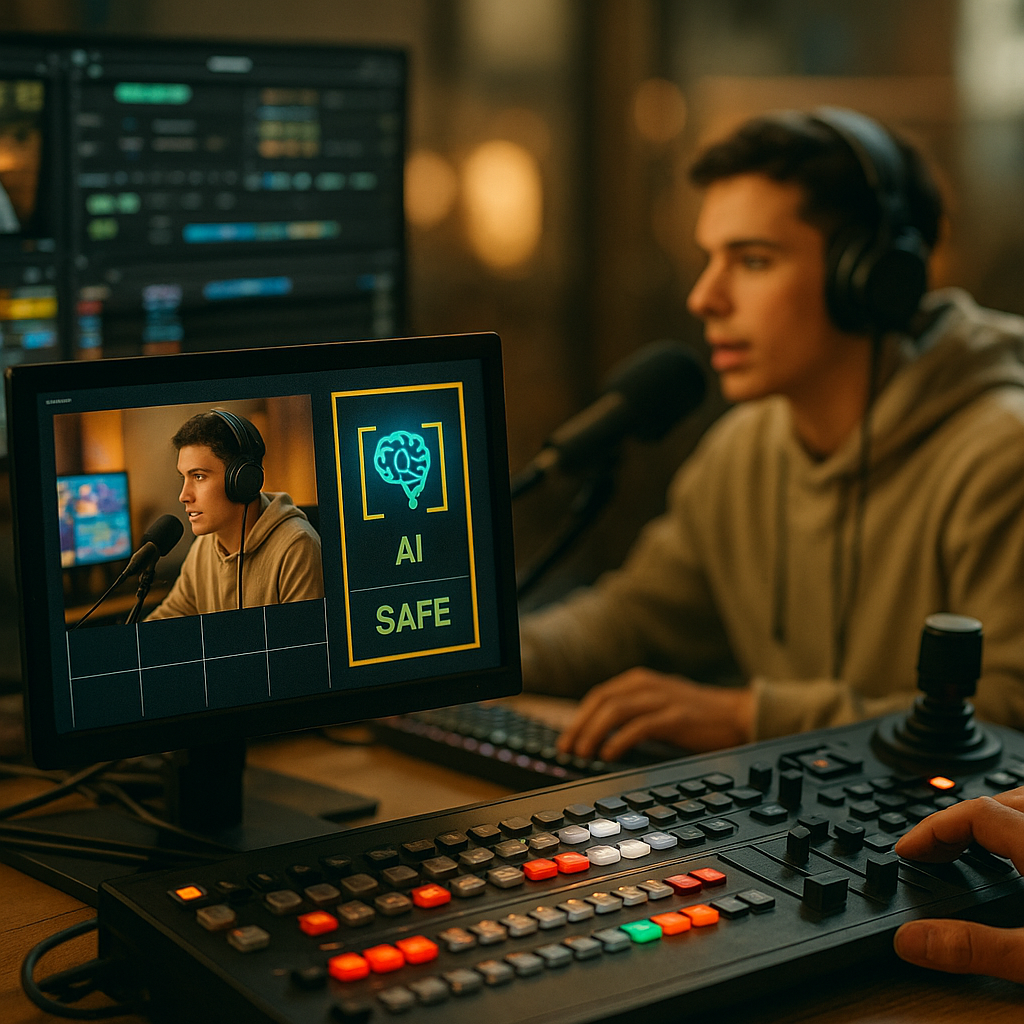
Using AI To Detect Brand Safety Risks In Real-Time Livestream Comments has become essential as livestreams turn into always-on community spaces. A single toxic thread can derail audience trust, trigger advertiser concerns, and force moderators into reactive cleanup. In 2025, AI can flag and reduce risk while preserving authentic conversation. The real advantage is speed—but only if you deploy it correctly. So what does “correctly” look like?
Real-time brand safety monitoring: what counts as a risk in livestream comments
Brand safety in livestream comments is not just about profanity. It is about content that can harm trust, violate platform policies, or associate your brand with harmful narratives. Because livestreams move fast, the most damaging moments often occur in brief bursts: a coordinated raid, a controversial news event, or a creator’s offhand remark that attracts hostile replies.
Common livestream comment risks include:
- Hate and harassment: slurs, dehumanizing language, targeted abuse, dog whistles, and coded hate.
- Sexual content and grooming cues: explicit language, sexual harassment, or comments that indicate exploitation risk.
- Extremism and violence: praise for violence, recruitment rhetoric, or threats.
- Misinformation with brand impact: false health claims, election misinformation, or fabricated allegations tied to a brand or sponsor.
- Self-harm content: encouragement, method-sharing, or crisis signals requiring escalation.
- Fraud and scams: impersonation, fake giveaways, phishing links, crypto scams.
- Defamation and legal exposure: unverified accusations about individuals or companies.
- Contextual adjacency: comments that become unsafe due to the stream topic (tragedies, conflict, sensitive events) even without explicit slurs.
In practice, “risk” is a combination of severity (how harmful), likelihood (how credible or persistent), and exposure (how many people see it before action). AI is most useful when it scores all three and routes actions accordingly.
AI comment moderation models: how real-time detection works
Real-time detection is a pipeline, not a single model. The goal is to analyze each incoming message in milliseconds, assign a risk score, decide an action, and record an audit trail. In 2025, teams typically combine lightweight classifiers for speed with stronger models for nuanced judgment.
A practical detection stack looks like this:
- Ingestion and normalization: deduplicate spam, expand leetspeak, handle emoji, normalize repeated characters, and preserve the original text for audit.
- Language and locale detection: route to the right models and policy sets. This matters because “safe” and “unsafe” differ across regions and legal regimes.
- Fast filters: keyword/regex lists for known slurs, doxxing patterns (phone/email), and malicious URLs. These are not sufficient alone but reduce obvious risk quickly.
- ML classification: multi-label classifiers that can tag harassment, hate, sexual content, violence, scams, and toxicity at the same time rather than forcing one category.
- Context modeling: incorporate recent chat history, user behavior, and the stream’s topic. Context helps distinguish “reclaiming” language, quoting, sarcasm, or benign discussion of sensitive subjects.
- Action orchestration: decide whether to allow, delay for review, hide from public view, block, time-out, or escalate to a human moderator.
- Logging and replay: store decisions, scores, model versions, and moderator overrides for compliance, training, and incident review.
Latency is a design constraint. If the system takes too long, harmful comments appear on screen and spread through screenshots. Many organizations use a two-pass approach: a fast model makes an initial decision, and a more accurate model re-checks content within seconds to confirm or adjust actions (for example, converting a “soft hide” into a permanent removal).
Accuracy depends on policy alignment. A model trained on generic “toxicity” may not match your brand’s tolerance. For example, a sports brand may accept mild profanity but not political slurs; a family brand may avoid both. The AI must map to your specific brand safety policy, sponsor agreements, and platform rules.
Contextual toxicity detection: reducing false positives without missing threats
Livestream comments are messy: slang, inside jokes, rapid back-and-forth, and sarcasm. Over-blocking frustrates legitimate viewers and can spark accusations of censorship. Under-blocking damages trust and sponsor relationships. Contextual toxicity detection is how you balance both.
What “context” should the system use?
- Conversation context: the last N messages in the thread and whether the comment is a reply.
- Creator and stream context: the stream title, category, on-screen content tags, and any announced rules (for example, “no spoilers”).
- User context: account age, prior timeouts, repeat offenses, and sudden spikes in posting frequency.
- Community context: known raid patterns, bot signatures, and coordinated copy-paste phrases.
Techniques that materially reduce false positives:
- Multi-label scoring with thresholds by category: set different cutoffs for hate vs. mild profanity. This prevents “one-size” moderation.
- Uncertainty handling: when confidence is low, use “hold for review” or “hide from public but visible to author” rather than a hard ban.
- Semantic similarity for evasion: detect paraphrases and obfuscation, not only exact matches. This helps against leetspeak and spacing tricks.
- Event-based tuning: during sensitive news cycles or high-risk streams, temporarily tighten thresholds and add faster human oversight.
Answering a common operational question: should you display comments with a delay? For many brands, a short delay (even a few seconds) gives AI and moderators time to intercept the worst content before it appears on screen. The trade-off is reduced immediacy. Many teams use delay only for high-profile sponsored streams, children’s content, or launches.
Human-in-the-loop moderation: governance, audits, and accountability
AI should not be the final authority on speech. For brand safety, the most defensible approach is human-in-the-loop moderation: AI handles volume and speed; trained moderators handle edge cases, appeals, and policy interpretation. This is also where EEAT principles matter most: you need clear processes that can be explained, audited, and improved.
Governance elements that keep the system trustworthy:
- Written brand safety policy: define categories, examples, and escalation rules. Align with sponsor requirements and platform policies.
- Decision playbooks: specify actions per risk level (allow, warn, hide, timeout, ban, escalate to safety team).
- Moderator training and calibration: run regular sessions where moderators label the same samples and compare consistency.
- Appeals and user communication: provide a clear reason when feasible (for example, “harassment” or “spam link”), and allow review for bans.
- Audit trails: log the comment, model score, action taken, and who overrode it. This helps with legal review and sponsor reporting.
Operational reality: moderators cannot read everything. AI should prioritize what they see. Queue design matters: show the highest-severity items first, cluster related comments (raid detection), and include context (prior messages, user history) so reviewers do not guess.
Risk you should plan for: AI can reflect bias present in training data and may disproportionately flag dialects or reclaimed terms. Mitigation requires diverse evaluation sets, routine bias checks, and the ability to override or tune categories per community norms while staying within policy boundaries.
Brand safety automation tools: integration with livestream platforms and workflows
Detection is only valuable if it connects cleanly to your livestream workflow. In 2025, most organizations run moderation across multiple platforms and need consistent policy enforcement, reporting, and sponsor assurances.
Key integration points to design for:
- Platform APIs and webhooks: ingest chat events, user metadata, and moderation actions; push back hides, timeouts, and bans.
- Creator controls: let creators set stricter rules during a stream while keeping sponsor-required baselines locked.
- Pre-stream risk setup: choose the policy profile (family-safe, mature, product launch, crisis-sensitive), enable delay if needed, and preload blocklists for known scam phrases.
- On-screen overlays: ensure the comment display respects “hidden” states so unsafe content does not appear in the broadcast layer.
- Cross-platform identity resolution: link repeat offenders when allowed and when consistent with privacy policies, so a ban on one channel can inform risk on another.
Workflow answer brands often need: how do you support sponsors in real time? Provide a live brand safety dashboard showing volume, risk categories, actions taken, and time-to-action. Sponsors care less about perfect zero-risk (which is unrealistic) and more about fast containment and transparent reporting.
Data minimization matters. Store only what you need for safety and compliance, retain it for a defined period, and protect it with strict access controls. If you capture personal data (for example, doxxing attempts), ensure the incident response process is documented and limited to trained staff.
Measuring brand safety KPIs: precision, recall, and business impact
To prove value and keep the system reliable, you need measurement tied to outcomes. “We removed a lot of comments” is not a useful success metric. The goal is to reduce harmful exposure while preserving healthy engagement.
Core model and moderation KPIs:
- Precision by category: of comments flagged as hate/harassment/scams, how many were truly violations. Low precision indicates over-blocking.
- Recall by category: of true violations, how many were caught. Low recall indicates brand safety gaps.
- Time-to-action: median seconds from comment arrival to hide/remove/timeout. This directly affects exposure.
- Exposure rate: percentage of violating comments visible to the public and for how long.
- Moderator override rate: how often humans reverse AI decisions, segmented by category and language.
- Appeal rate and upheld appeals: a proxy for user harm and policy clarity.
Business impact metrics that leadership understands:
- Sponsored stream incident rate: number of high-severity incidents per campaign and resolution time.
- Brand sentiment and trust signals: post-stream surveys, comment sentiment trends, and churn among subscribers or followers.
- Creator retention: whether creators feel protected and supported, especially during raids.
How to evaluate correctly: build a labeled dataset that reflects your actual chat mix: multiple languages, slang, and your niche topics. Regularly sample “allowed” comments too, not just flagged ones, so you can estimate missed violations. Track performance after major model updates and when new evasion patterns appear.
FAQs about AI livestream comment moderation
Can AI moderate livestream comments without human moderators?
AI can handle high-volume triage and automatically block clear violations, but human moderation remains necessary for edge cases, appeals, and policy interpretation. A hybrid setup is the most defensible and reliable approach for brand safety.
How fast does AI need to be for real-time brand safety?
Fast enough that harmful comments are stopped before they spread. Many teams aim for sub-second decisions for high-severity categories, with a second-pass review within a few seconds for nuanced cases. If the stream is sponsored or high-risk, adding a short chat delay can further reduce exposure.
What types of comments are hardest for AI to classify?
Sarcasm, coded hate, context-dependent slang, and comments that quote offensive terms for discussion are difficult. Using conversation context, user behavior signals, and uncertainty-based routing to human review reduces errors.
How do you prevent over-moderation that harms engagement?
Use category-specific thresholds, allow “soft actions” (hide pending review), and continuously measure precision and upheld appeal rates. Make the rules visible and consistent so viewers understand boundaries.
How do brands handle multilingual livestream chats?
Detect language per comment, route to locale-appropriate models and policies, and evaluate performance separately by language. Include multilingual moderators or escalation partners for high-risk streams.
What should sponsors ask for in a brand safety report?
Severity counts by category, time-to-action, exposure rate, examples of contained incidents, and a clear description of the policy profile used for the stream. Audit logs and moderator override statistics add credibility.
AI-driven brand safety is most effective when it works as a real-time system: fast detection, context-aware scoring, and decisive actions backed by human judgment. In 2025, brands that treat moderation as governance—not just a filter—protect sponsors, creators, and viewers while keeping chat authentic. Build clear policies, measure exposure and speed, and continuously tune models to your community’s reality. The takeaway: prioritize containment, transparency, and accountability.