


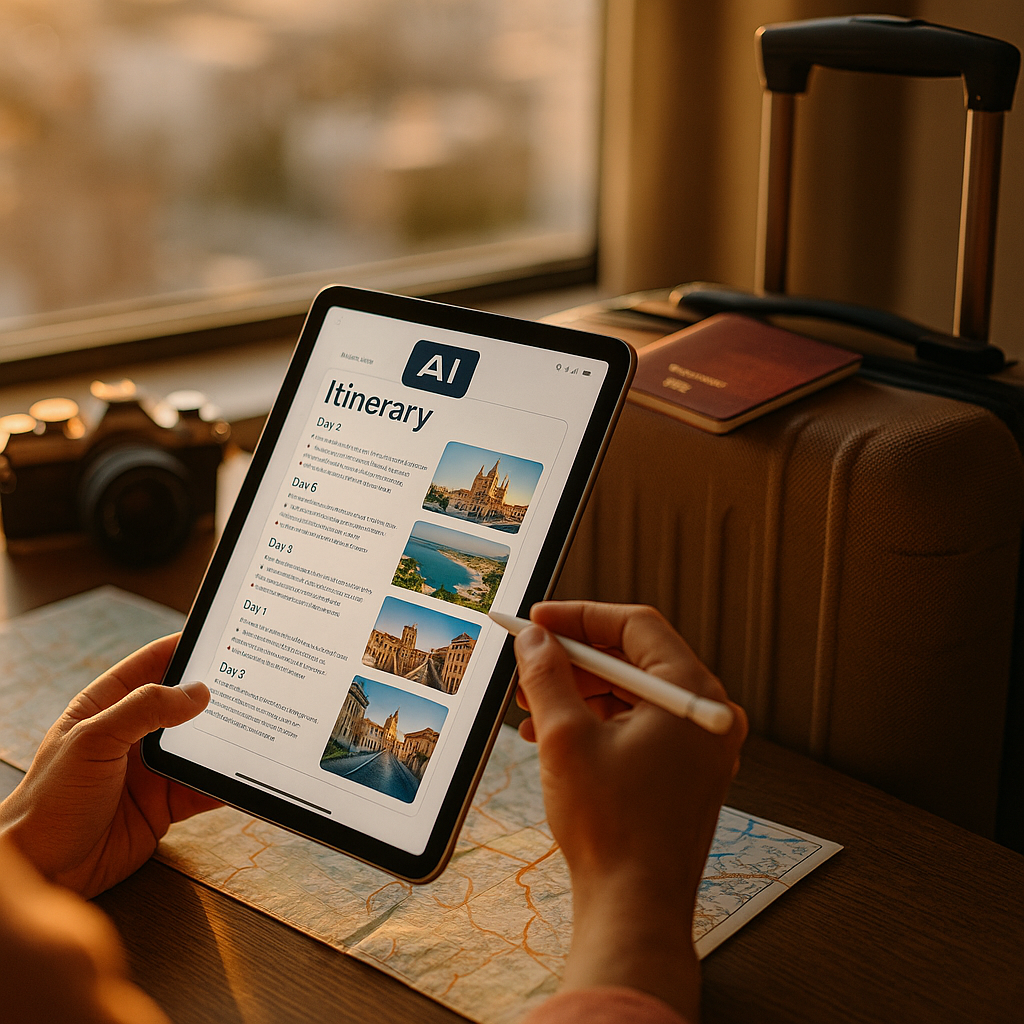
In 2025, travel marketers face rising acquisition costs and shorter attention spans, yet customers still want tailored planning help. This case study shows how a travel brand used AI itinerary lead magnets to scale by turning trip inspiration into high-intent leads and automated nurture paths. You’ll see the exact funnel, guardrails, and metrics that mattered most—plus what to copy and what to avoid.
AI itinerary lead magnets: the scaling problem and the breakthrough
The brand in this case study—an established online travel company selling curated trips and local experiences—hit a familiar ceiling: paid social and search were generating traffic, but email sign-ups were plateauing and leads were low-quality. People clicked for “best places to visit,” skimmed, and bounced. When leads did come through, many were early-stage browsers with no timeline or budget.
The team reframed the goal from “get more emails” to “capture intent.” They asked a direct question: what would make a traveler willingly share preferences and contact details? The answer was obvious to customers and overlooked by marketers: a personalized itinerary they could use immediately.
They launched an AI-generated itinerary builder as a lead magnet. Instead of offering a generic PDF, the brand offered a custom plan in seconds—built from real inventory constraints (availability, seasonality, and product fit) and designed to feel like a concierge draft, not a chatbot transcript.
Core insight: personalization is not the benefit; speed-to-confidence is. Travelers want to feel their trip is “figured out” quickly, then refine details later. The lead magnet created that first moment of confidence while capturing the data needed for marketing and sales follow-up.
Travel marketing funnel optimization: offer design, flow, and conversion triggers
The itinerary lead magnet sat at the center of a redesigned funnel, replacing several underperforming content upgrades. The team kept the flow simple, mobile-first, and built around micro-commitments.
Funnel structure:
- Entry points: destination guides, “weekend getaway” pages, paid social ads, and partner referrals.
- Quiz-style inputs: destination (or “not sure”), trip length, travel month, departure city, group type, activity preferences, and rough budget band.
- Email capture: placed after 3–4 questions, once the user felt invested but before the itinerary generated.
- Instant delivery: on-page preview + full itinerary sent by email (and optionally SMS).
- Next best action: “Save to account,” “swap activities,” “see live pricing,” or “talk to a trip planner.”
Conversion triggers that worked:
- Specificity beats hype: “Get a 5-day Rome itinerary with museum slots and neighborhood food stops” converted better than “Get a personalized itinerary.”
- Transparent inputs: the form explained why each question mattered (e.g., “Month helps avoid closures and heat”). This reduced abandonment.
- Preview before upsell: users saw a partial day-by-day outline immediately, with deeper details (maps, booking links, alternates) in the emailed version.
- Control toggles: “More relaxed / More packed” and “Add kid-friendly options” increased completion because users felt agency.
What readers usually ask next: “Did this replace human planners?” No. It reduced low-value back-and-forth and gave humans better context. The AI draft became the starting point, not the final product.
Personalized travel itineraries: data inputs, guardrails, and brand trust
Great lead magnets can still fail if the output feels generic or inaccurate. The brand treated the itinerary like a product, not a content asset, and built guardrails to protect trust.
Data strategy:
- First-party preference data: collected through the quiz (pace, interests, budget band, accessibility needs).
- Inventory-aware recommendations: the AI could only suggest experiences and hotels aligned with real offerings or vetted partners. This prevented “phantom” suggestions that can’t be booked.
- Destination rule sets: seasonal closures, local transit logic, realistic travel times, and minimum viable time blocks (e.g., not scheduling a museum and a day trip back-to-back).
Quality and safety guardrails:
- Human-reviewed templates: each destination had a baseline structure created by travel editors (neighborhood clusters, pacing defaults, and iconic highlights).
- Confidence labels: the itinerary marked items as “high confidence” (core attractions) vs. “suggested” (optional alternates), which reduced overpromising.
- Local sensitivity checks: prompts and rules avoided unsafe or culturally inappropriate suggestions, and excluded activities in restricted areas.
- Clear disclaimers without undermining value: the email noted that availability and pricing can change and encouraged confirming opening hours.
EEAT in action: itineraries cited the brand’s editorial sources and destination team involvement in plain language. For example, the footer included a short note: “Built from our destination editors’ neighborhood plans and updated partner availability.” This increased perceived expertise and reduced skepticism around AI-generated content.
Lead generation for travel brands: results, measurement, and attribution
The team avoided vanity metrics and measured the lead magnet like a revenue-driving product. They set up event tracking from first click to booked trip, with cohort comparisons against the old PDF lead magnets and newsletter pop-ups.
What they tracked (and why):
- Itinerary completion rate: indicates whether the value proposition and flow work.
- Email capture rate: indicates whether the “value exchange” is strong enough.
- Qualified lead rate: % of leads with a travel month within 6 months and a budget band above the brand’s minimum.
- Meeting/request rate: how many itinerary recipients asked for human help.
- Assisted revenue: bookings influenced by itinerary emails, not just last-click conversions.
Reported outcomes (internal benchmarks):
- Email capture rate: increased from 2.1% on destination content pages to 6.8% with the itinerary builder placement.
- Qualified lead rate: improved by 41% because the form captured timing and budget upfront.
- Sales cycle compression: trip-planner chats began with context (pace, interests, dates), reducing average back-and-forth before quote by 1–2 exchanges.
- Paid efficiency: retargeting audiences built from “itinerary completed” events outperformed generic site-visitor audiences, lowering cost per qualified lead.
Attribution decision that mattered: they treated itinerary generation as a mid-funnel conversion and optimized campaigns toward it—not just email sign-ups. That shifted spend toward audiences who actually planned trips, not just consumed travel content.
Likely follow-up: “Does this work for smaller brands without large analytics teams?” Yes, if you track the basics: completion, capture, and downstream booking events. You can start with simple UTM tracking and a lightweight event tool, then expand.
AI travel planning tools: tech stack, prompt design, and operational workflow
The brand built a practical system that balanced speed, cost, and control. They avoided a fully open-ended chatbot and instead used structured generation with templates and constraints.
Stack overview:
- Front-end: a fast quiz interface embedded on high-traffic pages and landing pages.
- Generation layer: a model that produced structured itinerary JSON (days, time blocks, activities, transit notes, alternates).
- Knowledge sources: vetted destination briefs, partner inventory feeds, editorial “do/don’t” rules, and internal FAQs.
- CRM + marketing automation: captured preferences as contact properties and triggered segmented sequences.
- Human escalation: if a user selected “complex needs” (multi-city, mobility considerations, large groups), the system offered a planner consult immediately.
Prompt and template choices that improved output:
- Constraint-first instructions: “Do not propose attractions outside the inventory list; if uncertain, offer alternatives from the list.”
- Voice guide: concise, confident, and helpful; no filler. The brand ensured the output matched the tone of their human editors.
- Local pacing rules: time windows and neighborhood clustering reduced unrealistic schedules.
- Personalization slots: each day included one “signature match” to the user’s preference (e.g., street food crawl, modern art focus, kid-friendly park loop).
Operational workflow:
- Monthly destination audits: editors reviewed top destinations and updated rules based on seasonality and partner changes.
- Feedback loop: users could rate each day and request swaps; low-rated modules flagged content for review.
- Cost controls: caching common itineraries (e.g., “3 days in Paris, moderate pace”) reduced generation costs while preserving personalization through small modular swaps.
Answering the risk question: “What about hallucinations?” The brand minimized them by generating only from allowed modules, then validating outputs against rule checks (time conflicts, closed days, distance thresholds). When the system couldn’t meet constraints, it said so and offered the closest viable plan.
Email nurture sequences for travel: segmentation, personalization, and bookings
The itinerary email was not the end of the funnel; it was the start of a targeted nurture path. Because the lead magnet captured high-quality first-party data, the brand moved away from generic newsletters and built sequences that matched trip intent.
Segmentation rules:
- Time-to-travel: within 30 days, 31–90 days, or 91+ days.
- Trip type: couples, family, solo, friends, or business add-on.
- Interest cluster: food, outdoors, culture, nightlife, wellness, or “balanced.”
- Budget band: used to control which offers, hotels, and add-ons appeared.
Nurture sequence structure (example):
- Email 1 (immediate): the itinerary, with “swap options” buttons to gather more preference data.
- Email 2 (24–48 hours): a short “how to book this plan” guide plus 2–3 curated packages aligned with the itinerary.
- Email 3 (day 4–6): social proof that matches the destination (reviews, traveler photos, and “what we’d do differently for your month”).
- Email 4 (day 7–10): urgency based on real constraints (e.g., limited availability windows), not artificial countdowns.
- Email 5 (day 14): planner consult invitation or “build a second version” for another neighborhood/city.
What improved bookings: the brand linked every recommendation back to the itinerary context (“This fits your moderate pace and your museum preference”) and used clear CTAs (“Hold dates,” “Check availability,” “Talk to a planner”). That alignment reduced decision fatigue.
Compliance and trust: preference-based personalization stayed within user expectations. The brand explained why it asked for data, offered easy unsubscribe, and allowed users to edit their trip preferences at any time.
FAQs about AI itinerary lead magnets
What is an AI itinerary lead magnet?
An AI itinerary lead magnet is a free, personalized trip plan generated after a visitor shares key preferences (often including an email). It trades immediate planning value for contact information and intent data, then routes the lead into tailored follow-up.
Do AI itineraries replace human travel advisors?
No. In this case study, AI handled the first draft and structured options, while human advisors focused on complex trips, confirmations, and high-value customization. The system improved advisor efficiency by collecting preferences upfront.
How do you keep AI itinerary outputs accurate and bookable?
Use inventory-aware recommendations, destination rule sets, and validation checks (time conflicts, travel time, closures). Restrict the model to approved modules and add clear escalation paths when constraints can’t be met.
Where should you place the itinerary builder on your website?
Start on high-intent pages: destination guides, package pages, and blog posts that answer “how many days” or “what to do” queries. Add dedicated landing pages for paid campaigns and partner traffic.
What metrics matter most for measuring success?
Track itinerary completion rate, email capture rate, qualified lead rate (timeline and budget), planner consult requests, and assisted revenue. Optimize ads and content toward itinerary completions, not just clicks.
Is this approach viable for small travel businesses?
Yes. Begin with a single destination or niche itinerary, use a structured template, and capture only the data you will actually use. Even a lightweight setup can outperform generic PDFs if the output feels genuinely usable.
AI itinerary lead magnets helped this travel brand scale in 2025 by converting passive readers into intent-rich leads, then using that data to personalize nurture, offers, and human support. The winning formula was simple: fast value, strict quality controls, and measurement tied to bookings. If you want more qualified leads without inflating ad spend, build an itinerary experience travelers will keep.