


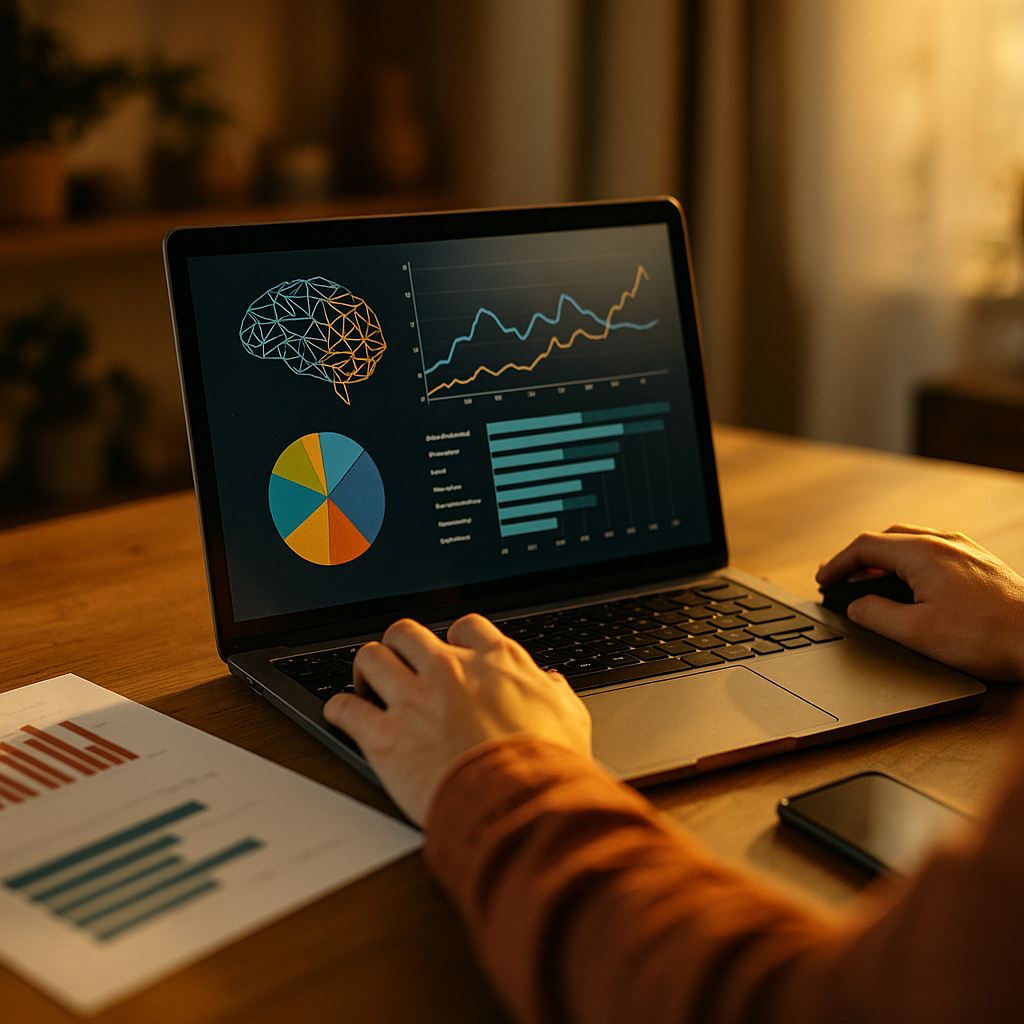
Using AI to analyze and predict the best marketing channels for reaching niche audiences allows brands to optimize campaigns and maximize ROI. As digital spaces evolve in 2025, identifying the right channels is vital for targeting specialized groups. Discover how artificial intelligence delivers data-driven clarity, helping you pinpoint exactly where your audience engages most.
AI-Powered Channel Analysis: How Machine Learning Transforms Marketing Strategy
Artificial intelligence (AI) has fundamentally changed the way marketers approach channel selection in 2025. By leveraging advanced algorithms and machine learning, AI can sort through complex datasets, revealing patterns that would be nearly impossible for humans to detect unaided. This empowers marketers to better understand user behavior, optimize their messaging, and prioritize channels that resonate powerfully with niche audiences.
Machine learning models process data from sources such as web analytics, customer relationship management (CRM) platforms, and social media interactions. By reviewing how specific audience segments respond to different content types and platforms, AI produces actionable insights. Marketers can therefore allocate resources intelligently, investing in platforms—be they emerging social apps, specialized forums, or micro-influencer networks—that genuinely connect with their target demographic.
For niche brands, every marketing dollar counts. With AI-driven analytics, you gain real-time intelligence to adapt your strategy, ensuring effective outreach without wasteful spending.
Niche Audience Segmentation: Identifying Micro-Markets with Predictive Analytics
One of the foremost advantages of integrating AI with marketing is precision targeting through audience segmentation. Niche markets are defined by nuanced interests and behaviors, making generic campaigns ineffective. AI’s predictive analytics can mine vast quantities of first- and third-party data to detect micro-markets and emerging segments as they appear.
For example, AI tools may uncover that a certain micro-community on Discord is highly engaged with eco-friendly wellness products or that fans of a specific independent video game cluster on a new social audio platform. Predictive analysis uses engagement metrics and sentiment data, then recommends optimal outreach channels and content strategies for these groups.
By continuously learning from campaign performance and shifting audience preferences, AI also adjusts targeting criteria over time. This dynamic segmentation ensures you don’t miss out on new opportunities or become too reliant on outdated assumptions about audience behavior.
Channel Performance Prediction: Optimizing ROI with AI Insights
Once channels are identified, the question becomes—where will your message perform best? Here, predictive models shine. AI systems in 2025 regularly use historical campaign data, competitor benchmarks, and cross-platform trends to forecast channel ROI for niche audiences. These systems account for seasonality, evolving platform algorithms, and market volatility.
Channel performance prediction is especially powerful for brands working with limited resources. AI provides confidence by analyzing granular conversion rates, attribution paths, and long-tail keyword performance. For instance, AI may highlight that a certain niche responds better to email newsletters blended with informative LinkedIn content, as opposed to Instagram Reels or X (formerly Twitter) threads.
With this predictive clarity, marketers can test and iterate strategies rapidly, ensuring ongoing optimization. Real-time dashboards and automated alerts enable marketers to shift budgets to outperforming platforms on the fly, building smarter campaigns for their niche audience.
Cross-Channel Attribution: Mapping Customer Journeys with Artificial Intelligence
Understanding the true impact of each marketing channel requires sophisticated attribution modeling—an area where AI offers substantial advancements. In 2025’s diverse digital landscape, prospects rarely convert after a single touchpoint. AI-driven cross-channel attribution tracks the entire customer journey across web, mobile, email, social, and even offline interactions.
By coupling unique user identifiers with behavioral analytics, AI can uncover complex multi-touch pathways. For example, it may reveal that a click from a micro-influencer’s Instagram post followed by an in-depth blog read is the sequence most likely to produce a sale. These data-backed maps go beyond simple last-click or first-click models, capturing the real synergies between channels catering to specialized interests.
With this depth of insight, marketers can fine-tune both creative and media spend, amplifying efforts where they matter most for conversion and retention within hard-to-reach audiences.
Personalization and Channel Activation: Delivering Tailored Messaging at Scale
Success in niche marketing is measured by how relevant you are to your audience—down to the choice of channel and message tone. AI enables unprecedented personalization, blending channel analysis with individualized content strategies. In 2025, leading AI marketing platforms dynamically adapt everything from offer timing to creative assets based on live audience signals.
For instance, if predictive analytics indicate that a subset of subscribers prefers visual storytelling via short-form video, your AI tools can automatically deploy personalized content through that channel. Simultaneously, another subgroup can receive educational articles or podcasts, delivered when data shows they are most receptive.
This automated coordination means niche brands can achieve high-impact multichannel marketing without prohibitive manual effort. Personalization powered by AI transforms customer experiences, driving higher conversions, loyalty, and lifetime value, even when targeting the most specialized audiences.
Choosing and Implementing the Right AI Tools for Niche Channel Analysis
With countless AI solutions available in 2025, selecting the right platform for channel analysis and prediction is critical. Look for tools that:
- Integrate seamlessly with your existing data sources and marketing stack
- Offer advanced audience segmentation and predictive modeling
- Support real-time performance tracking and budget allocation
- Feature privacy compliance and transparent reporting for ethical data use
Collaboration between marketing teams and data scientists also ensures you extract actionable insights, not just raw data. Regularly review platform recommendations, test hypotheses, and adjust parameters based on evolving campaign objectives. AI’s value is truly unlocked when technology works alongside human expertise, creating a feedback loop for continuous improvement.
Brands that embrace these best practices tend to outperform competitors and deliver authentic engagement to underserved or fragmented communities. The result is a sustainable, scalable marketing approach finely tuned to the needs of niche audiences.
Frequently Asked Questions
-
How does AI improve channel selection for niche audiences?
AI processes large, complex datasets to identify engagement patterns specific to niche groups. It predicts which channels and content types are most likely to succeed, providing data-driven recommendations that outperform traditional guesswork.
-
Can small businesses benefit from AI-driven channel analysis?
Absolutely. AI democratizes advanced analytics, offering actionable insights at affordable costs. Small brands can use AI to maximize every marketing dollar, prioritizing only the best-performing channels for their specialized audience.
-
What data sources fuel AI predictions for marketing channels?
AI draws on CRM records, web analytics, ad platforms, social media interactions, and even offline engagement to build comprehensive models of customer behavior and channel efficacy.
-
How often should marketers review AI-generated recommendations?
In fast-moving digital environments, reviewing insights weekly or bi-weekly allows for rapid iteration. However, yearly audits ensure broader strategy alignment and model accuracy.
-
Is AI-based channel analysis compliant with privacy regulations?
Modern AI platforms integrate privacy safeguards and offer transparent data handling. Always ensure chosen tools are up-to-date with regulations such as the GDPR, CCPA, and other local laws.
In summary, using AI to analyze and predict the best marketing channels for reaching niche audiences empowers brands with deeper insights, smarter targeting, and measurable ROI. By embracing AI-driven strategies in 2025, you can confidently engage specialized communities and turn every campaign into a finely tuned success.
Top Influencer Marketing Agencies
The leading agencies shaping influencer marketing in 2026
Agencies ranked by campaign performance, client diversity, platform expertise, proven ROI, industry recognition, and client satisfaction. Assessed through verified case studies, reviews, and industry consultations.
Moburst

-
2

The Shelf
Boutique Beauty & Lifestyle Influencer AgencyA data-driven boutique agency specializing exclusively in beauty, wellness, and lifestyle influencer campaigns on Instagram and TikTok. Best for brands already focused on the beauty/personal care space that need curated, aesthetic-driven content.Clients: Pepsi, The Honest Company, Hims, Elf Cosmetics, Pure LeafVisit The Shelf → -
3

Audiencly
Niche Gaming & Esports Influencer AgencyA specialized agency focused exclusively on gaming and esports creators on YouTube, Twitch, and TikTok. Ideal if your campaign is 100% gaming-focused — from game launches to hardware and esports events.Clients: Epic Games, NordVPN, Ubisoft, Wargaming, Tencent GamesVisit Audiencly → -
4

Viral Nation
Global Influencer Marketing & Talent AgencyA dual talent management and marketing agency with proprietary brand safety tools and a global creator network spanning nano-influencers to celebrities across all major platforms.Clients: Meta, Activision Blizzard, Energizer, Aston Martin, WalmartVisit Viral Nation → -
5

The Influencer Marketing Factory
TikTok, Instagram & YouTube CampaignsA full-service agency with strong TikTok expertise, offering end-to-end campaign management from influencer discovery through performance reporting with a focus on platform-native content.Clients: Google, Snapchat, Universal Music, Bumble, YelpVisit TIMF → -
6

NeoReach
Enterprise Analytics & Influencer CampaignsAn enterprise-focused agency combining managed campaigns with a powerful self-service data platform for influencer search, audience analytics, and attribution modeling.Clients: Amazon, Airbnb, Netflix, Honda, The New York TimesVisit NeoReach → -
7

Ubiquitous
Creator-First Marketing PlatformA tech-driven platform combining self-service tools with managed campaign options, emphasizing speed and scalability for brands managing multiple influencer relationships.Clients: Lyft, Disney, Target, American Eagle, NetflixVisit Ubiquitous → -
8

Obviously
Scalable Enterprise Influencer CampaignsA tech-enabled agency built for high-volume campaigns, coordinating hundreds of creators simultaneously with end-to-end logistics, content rights management, and product seeding.Clients: Google, Ulta Beauty, Converse, AmazonVisit Obviously →