


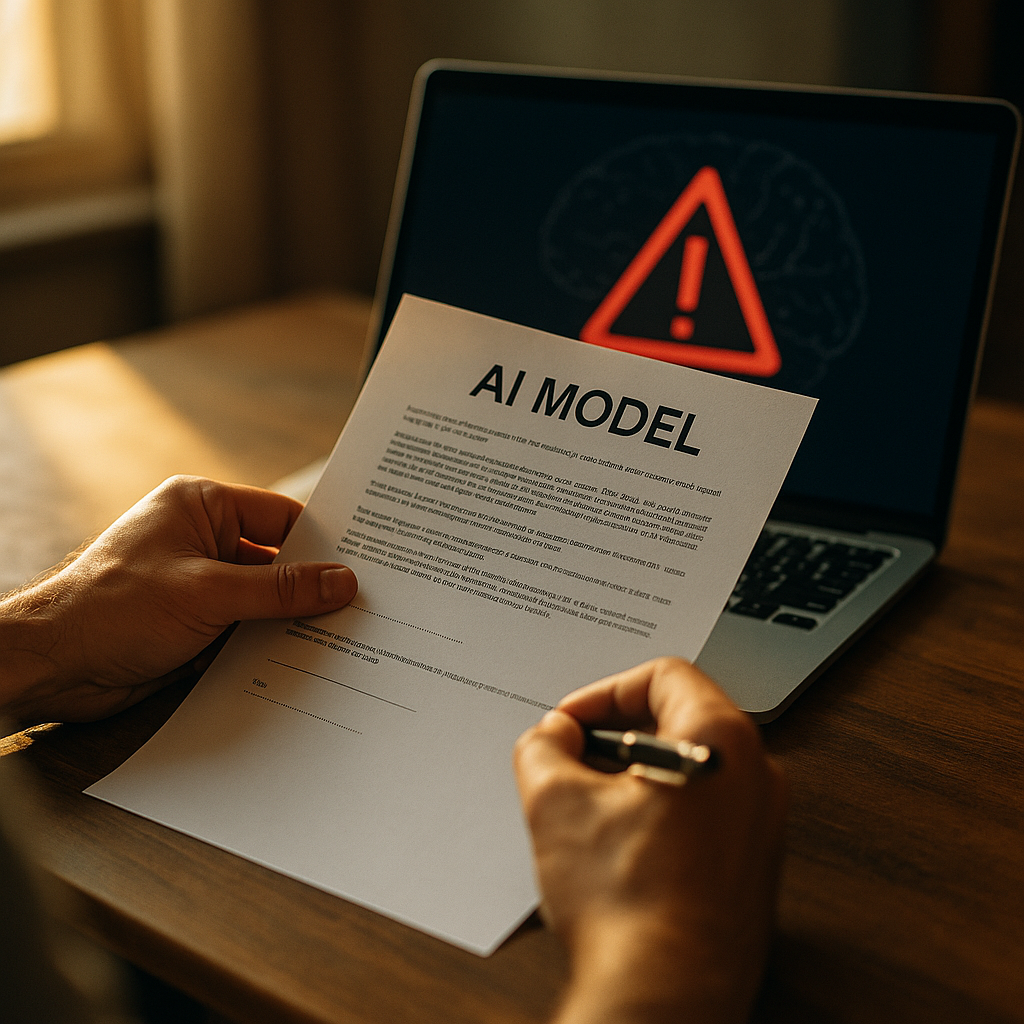
OpenAI has deprecated more than a dozen model versions since 2023. Anthropic, Google, and Meta all ship new checkpoints on cycles measured in months, not years. Yet most influencer marketing platforms still sell “AI-powered” campaign tools on contracts that never mention what happens when the underlying model disappears. An AI model deprecation clause is no longer a legal nicety. It’s the difference between a campaign that survives a vendor’s model swap and one that quietly breaks mid-flight.
Ask yourself: if your creator-matching algorithm, brand-safety filter, or content-generation tool got retrained overnight, would you even know before your CMO did?
The Problem Nobody Priced Into the Vendor Contract
Most martech procurement teams still negotiate SaaS agreements like it’s 2019 — uptime SLAs, data portability, termination-for-convenience clauses. Useful stuff, but none of it addresses the actual failure mode brands are hitting now: a vendor’s foundation model gets swapped, deprecated, or fine-tuned differently, and the tool’s behavior shifts under a live campaign without anyone flagging it.
This isn’t hypothetical. Creator-matching platforms built on GPT-family embeddings have seen recommendation quality shift after a model version update. Brand-safety classifiers retrained on new data have started flagging previously-approved content categories. Content-generation tools have changed tone and output structure after a silent backend swap. None of these are bugs. They’re the normal lifecycle of an LLM-dependent product — and almost none of them are disclosed in real time.
The vendor’s model roadmap is now part of your campaign risk profile, whether or not it’s written into your contract.
The core issue is asymmetry. Vendors know when they’re planning a model migration. Brands almost never do, because “AI model version” isn’t a line item anyone thought to ask about during procurement. That’s changing, but slowly — and the brands getting burned are usually the ones running always-on influencer programs where a subtle shift in matching or moderation logic compounds over weeks before anyone notices the drop in performance or a spike in flagged content.
What a Deprecation Clause Actually Covers
A proper AI model deprecation clause isn’t just “tell us if you change vendors.” It needs to address five specific scenarios, each with different operational consequences:
- Model retirement — the vendor’s underlying LLM provider (OpenAI, Anthropic, Google, etc.) sunsets a model version the vendor has been using in production.
- Silent retraining — the vendor fine-tunes or updates the model without a version bump, changing behavior without a formal “deprecation” event.
- Provider-side pricing or access changes — the underlying model becomes cost-prohibitive or rate-limited, forcing the vendor to downgrade to a cheaper model tier.
- Behavioral drift — outputs change gradually due to upstream fine-tuning, without any single identifiable “event.”
- Full model-family migration — the vendor switches providers entirely (say, from GPT to a Llama-based open-weight model) for cost or control reasons.
Each scenario demands a different contractual response. Retirement and migration are usually announced in advance by the LLM provider, giving vendors — and by extension, brands — a notice window. Silent retraining and drift are harder to catch and require monitoring commitments, not just notice clauses.
Notice Periods: The Clause Everyone Underwrites Too Loosely
Here’s the standard boilerplate most vendors offer when pushed: “We will provide commercially reasonable notice of material changes to our AI systems.” That sentence is almost worthless. What’s “material”? What’s “reasonable”? Thirty days? Same-day?
Push for specificity. A defensible clause states a minimum notice period (30-60 days is reasonable for planned deprecations), defines what counts as a “material change” (any swap of the underlying model, any retraining that alters output distribution by a measurable threshold, any provider-side deprecation announcement), and specifies the notification channel — not a changelog buried on a status page, but a direct account-manager escalation.
Compare this to how cloud infrastructure vendors handle API versioning. AWS and Google Cloud typically give 12+ months notice on major API deprecations, with migration guides and parallel-run periods. Foundation model providers move faster and disclose less. Google’s own developer support documentation shows how even infrastructure-grade products carry deprecation timelines — your influencer marketing vendor’s LLM dependency should be held to a comparable standard, not a looser one just because “AI moves fast.”
If your vendor can’t commit to a specific notice period for model changes, that silence is itself the risk disclosure.
Performance Baselines: You Can’t Protect What You Haven’t Measured
Notice periods only matter if you know what “normal” performance looks like before a model change hits. This is where most brands are unprepared. Ask a typical brand marketing team what their creator-matching tool’s baseline precision or recall rate is, and you’ll get a blank stare.
Before signing or renewing any AI-dependent vendor contract, establish documented performance baselines: matching accuracy, brand-safety false-positive/negative rates, content-generation approval rates, response latency. These become your evidence when a model swap degrades performance. Without them, you’re arguing “it feels different” against a vendor insisting nothing changed. This is the same discipline behind maintaining an AI model registry — you can’t manage what you haven’t inventoried, and you can’t dispute drift you haven’t baselined.
Some brands are now building lightweight internal monitoring to catch this drift independently, rather than relying on vendor self-reporting. It’s the same instinct behind internal monitoring dashboards for generative search visibility — don’t outsource your only visibility into a system you depend on.
Contract Language That Actually Protects Live Campaigns
Legal teams love vague protective language. Operations teams need specifics. Here’s what belongs in the actual contract, not just the sales deck:
- Rollback rights. If a model change degrades a defined performance metric by more than an agreed threshold (say, 10-15%), the brand can require rollback to the prior model version for the remainder of the campaign flight.
- Parallel-run guarantees. For planned migrations, the vendor runs both old and new models in parallel for a defined window, letting the brand validate output parity before cutover.
- Mid-flight change freeze. No model changes during active, high-stakes campaign windows (product launches, holiday flights) without explicit brand sign-off — a “code freeze” borrowed straight from software release management.
- Financial remediation. Defined credits or make-goods if an undisclosed model change is found to have caused measurable campaign underperformance.
- Audit rights. The right to request documentation on which model version powered outputs during any specific campaign period, for compliance and dispute purposes.
None of this is exotic. It mirrors what procurement teams already demand from ad-tech vendors on algorithm transparency, or what compliance teams require under evolving FTC guidance on endorsement and disclosure rules. AI model dependency deserves the same rigor, arguably more, because the failure mode is quieter.
Where This Intersects With Vendor Lock-In
Deprecation risk and lock-in risk are the same coin. A vendor deeply dependent on a single model provider has less flexibility to protect you when that provider makes changes — but a vendor that’s model-agnostic introduces its own consistency risks, since switching between model families changes behavior more dramatically than a version bump. This tension is central to the broader debate covered in efficiency versus lock-in tradeoffs in AI marketing operating systems generally. The practical takeaway: ask vendors directly which model provider(s) they depend on, whether that’s single-sourced or multi-sourced, and what their internal policy is for evaluating new model versions before production deployment. A vendor with a documented internal model-evaluation process is a fundamentally lower-risk partner than one that pushes updates straight to production.
Budget and Governance Guardrails
Deprecation clauses work best paired with operational guardrails on the brand side. If you’re running autonomous or semi-autonomous creator campaigns — programmatic seeding, AI-driven content approval, automated bidding on influencer content — you need circuit breakers that catch anomalous behavior regardless of cause. The same logic behind spend cap governance for AI agents applies here: a sudden shift in matching quality or content output after a silent model change should trip the same alarms as runaway spend. Build the monitoring once, and it catches both problems.
This also connects to data pipeline hygiene. A lot of “the AI got worse” complaints trace back not to the model itself but to upstream data quality issues that a model change merely exposed. Before escalating a vendor dispute, rule out the possibility that your own data pipeline is the actual culprit. Vendors will make this argument regardless; make sure you’ve checked it yourself first, so you’re negotiating from evidence rather than assumption.
What to Ask in the Next Vendor Renewal Conversation
Renewal season is the leverage point. Most vendors won’t volunteer deprecation terms unless asked directly, because it’s not a feature they’re incentivized to advertise. Bring a short, specific list:
- Which foundation model(s) power this product today, and what’s your internal policy for evaluating new versions before production rollout?
- What’s your committed minimum notice period for planned model deprecations or migrations?
- Do you offer parallel-run validation before cutting over to a new model version?
- What performance metrics do you track internally that would flag behavioral drift from retraining?
- What contractual remedy exists if an undisclosed model change measurably degrades a live campaign?
If a vendor hesitates or can’t answer these plainly, that’s diagnostic information in itself. According to eMarketer research on marketing technology adoption, AI-dependent tools are now embedded across the majority of influencer and creator workflows — which means this isn’t a niche procurement detail anymore. It’s baseline vendor due diligence, same tier as data security and SLA terms.
The Takeaway
Treat AI model deprecation clauses the way you already treat data breach notification terms: non-negotiable, specific, and tested before you need them. Audit your current vendor contracts this quarter, flag the ones silent on model versioning, and push renewals to include notice periods, rollback rights, and performance baselines before the next campaign flight, not after it breaks.
Frequently Asked Questions
What is an AI model deprecation clause?
It’s a contract provision requiring a vendor to disclose, with defined notice, when the underlying AI model powering their product is retired, retrained, or replaced — and specifying remedies if that change affects campaign performance.
Why do influencer marketing vendors rarely disclose model changes?
Most vendor contracts predate widespread LLM dependency and were written around uptime and data terms, not model versioning. Vendors also aren’t incentivized to advertise instability in a product they’re marketing as “AI-powered.”
How can a brand detect a silent model change without vendor disclosure?
By establishing documented performance baselines (matching accuracy, brand-safety error rates, output quality) before signing, then monitoring for statistically meaningful deviations. An internal model registry helps track which tools and versions touch which campaigns.
What notice period should brands require for planned model deprecations?
Thirty to sixty days is a reasonable minimum for planned migrations, with parallel-run validation where feasible. Emergency provider-side deprecations may compress that window, which is why rollback rights matter as a backstop.
Does model deprecation risk affect brand-safety and compliance tools differently than creative tools?
Yes. Brand-safety classifiers that drift after retraining can create compliance exposure (missed disclosure violations, wrongly flagged content) with regulatory implications, while creative tool drift mostly affects output quality and tone consistency — lower risk but still costly at scale.
Should this clause apply to in-house AI tools too, or only third-party vendors?
Both. In-house tools built on third-party foundation models (via API) carry the same upstream deprecation risk. Internal governance should mirror vendor contract standards: documented baselines, monitored drift, and a rollback plan.
Frequently Asked Questions
What is an AI model deprecation clause?
It’s a contract provision requiring a vendor to disclose, with defined notice, when the underlying AI model powering their product is retired, retrained, or replaced — and specifying remedies if that change affects campaign performance.
Why do influencer marketing vendors rarely disclose model changes?
Most vendor contracts predate widespread LLM dependency and were written around uptime and data terms, not model versioning. Vendors also aren’t incentivized to advertise instability in a product they’re marketing as “AI-powered.”
How can a brand detect a silent model change without vendor disclosure?
By establishing documented performance baselines (matching accuracy, brand-safety error rates, output quality) before signing, then monitoring for statistically meaningful deviations. An internal model registry helps track which tools and versions touch which campaigns.
What notice period should brands require for planned model deprecations?
Thirty to sixty days is a reasonable minimum for planned migrations, with parallel-run validation where feasible. Emergency provider-side deprecations may compress that window, which is why rollback rights matter as a backstop.
Does model deprecation risk affect brand-safety and compliance tools differently than creative tools?
Yes. Brand-safety classifiers that drift after retraining can create compliance exposure (missed disclosure violations, wrongly flagged content) with regulatory implications, while creative tool drift mostly affects output quality and tone consistency — lower risk but still costly at scale.
Should this clause apply to in-house AI tools too, or only third-party vendors?
Both. In-house tools built on third-party foundation models (via API) carry the same upstream deprecation risk. Internal governance should mirror vendor contract standards: documented baselines, monitored drift, and a rollback plan.
Top Influencer Marketing Agencies
The leading agencies shaping influencer marketing in 2026
Agencies ranked by campaign performance, client diversity, platform expertise, proven ROI, industry recognition, and client satisfaction. Assessed through verified case studies, reviews, and industry consultations.
Moburst

-
2

The Shelf
Boutique Beauty & Lifestyle Influencer AgencyA data-driven boutique agency specializing exclusively in beauty, wellness, and lifestyle influencer campaigns on Instagram and TikTok. Best for brands already focused on the beauty/personal care space that need curated, aesthetic-driven content.Clients: Pepsi, The Honest Company, Hims, Elf Cosmetics, Pure LeafVisit The Shelf → -
3

Audiencly
Niche Gaming & Esports Influencer AgencyA specialized agency focused exclusively on gaming and esports creators on YouTube, Twitch, and TikTok. Ideal if your campaign is 100% gaming-focused — from game launches to hardware and esports events.Clients: Epic Games, NordVPN, Ubisoft, Wargaming, Tencent GamesVisit Audiencly → -
4

Viral Nation
Global Influencer Marketing & Talent AgencyA dual talent management and marketing agency with proprietary brand safety tools and a global creator network spanning nano-influencers to celebrities across all major platforms.Clients: Meta, Activision Blizzard, Energizer, Aston Martin, WalmartVisit Viral Nation → -
5

The Influencer Marketing Factory
TikTok, Instagram & YouTube CampaignsA full-service agency with strong TikTok expertise, offering end-to-end campaign management from influencer discovery through performance reporting with a focus on platform-native content.Clients: Google, Snapchat, Universal Music, Bumble, YelpVisit TIMF → -
6

NeoReach
Enterprise Analytics & Influencer CampaignsAn enterprise-focused agency combining managed campaigns with a powerful self-service data platform for influencer search, audience analytics, and attribution modeling.Clients: Amazon, Airbnb, Netflix, Honda, The New York TimesVisit NeoReach → -
7

Ubiquitous
Creator-First Marketing PlatformA tech-driven platform combining self-service tools with managed campaign options, emphasizing speed and scalability for brands managing multiple influencer relationships.Clients: Lyft, Disney, Target, American Eagle, NetflixVisit Ubiquitous → -
8

Obviously
Scalable Enterprise Influencer CampaignsA tech-enabled agency built for high-volume campaigns, coordinating hundreds of creators simultaneously with end-to-end logistics, content rights management, and product seeding.Clients: Google, Ulta Beauty, Converse, AmazonVisit Obviously →