


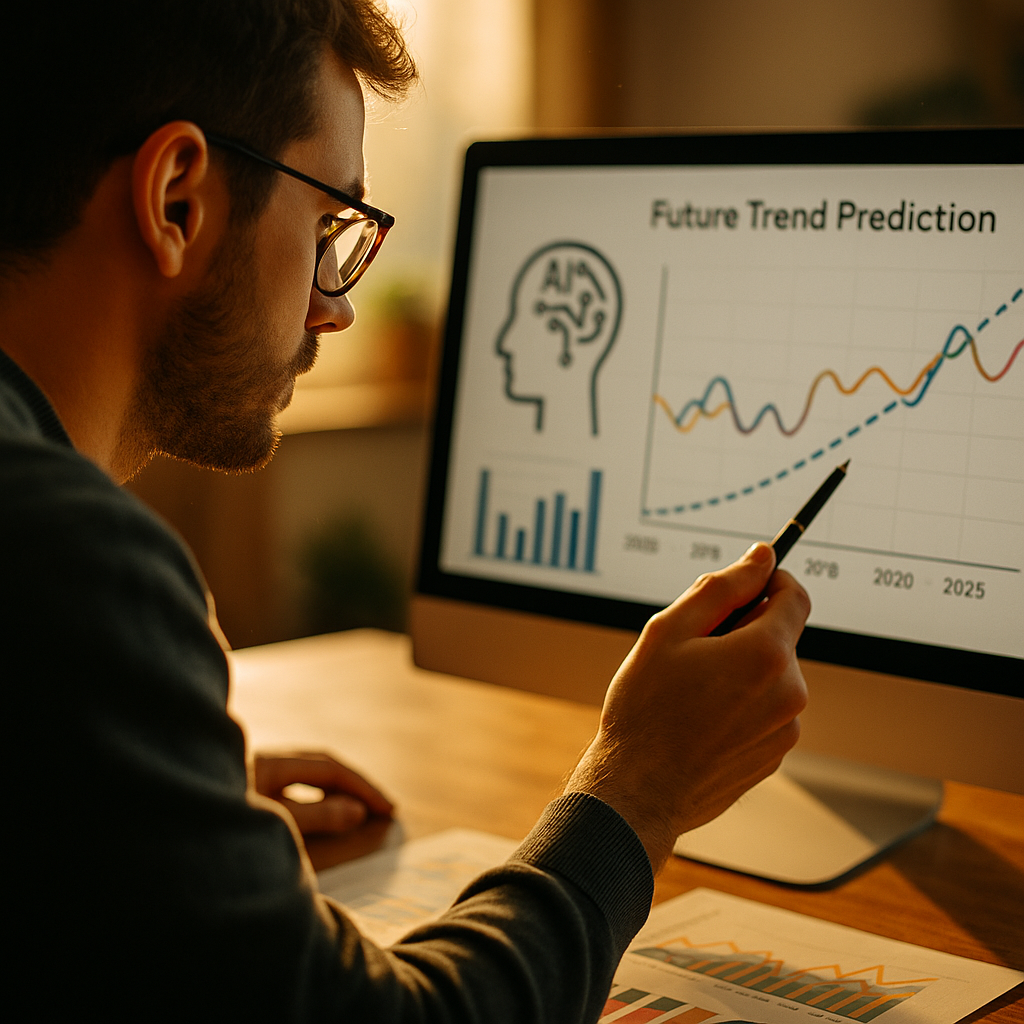
Using AI to predict cultural trends has shifted from novelty to necessity in 2025. Algorithms now map early signals across social platforms, search behavior, streaming, and commerce to spot what’s about to break out. But the winners aren’t the loudest memes—they’re patterns that persist and spread across communities. How do you turn messy culture into actionable foresight without guessing?
AI trend forecasting: how models spot early cultural signals
AI trend forecasting works when it treats culture as a living network rather than a list of viral posts. The goal isn’t to “predict the future” in a mystical sense; it’s to measure leading indicators that reliably show up before something becomes mainstream.
Most effective systems combine several capabilities:
- Signal detection at scale: Models scan text, images, audio metadata, hashtags, product reviews, and creator captions to identify repeated motifs and emerging vocabulary.
- Topic and cluster discovery: Unsupervised methods group related conversations (for example, a style aesthetic, a new hobby, or a niche food concept) even when people use different terms.
- Trend velocity and persistence scoring: A real breakout shows sustained growth and recurring participation, not just a one-day spike.
- Diffusion mapping: Graph analysis tracks how an idea moves from early adopters to adjacent communities, then to broader audiences.
- Multimodal understanding: Culture often spreads through visuals and sound. Image and video understanding helps detect new silhouettes, design cues, choreography patterns, or editing styles.
In practice, you should expect outputs like: “This cluster is growing 18% week-over-week among three adjacent communities and is starting to appear in search queries and retail carts.” That’s not prophecy—it’s evidence-based prioritization.
What readers often ask next is: How do we avoid confusing virality with durability? You answer it by measuring cross-channel reinforcement. If a trend appears in social posts but not in search, long-form content, or product interactions, it may be entertainment rather than a cultural shift.
Predicting mainstream trends with data: what to track in 2025
Predicting mainstream trends improves when you use diversified, permissioned data sources and treat each channel as a different lens. In 2025, mainstream adoption typically shows a recognizable sequence: niche communities experiment, creators translate the idea, audiences search and shop, and established brands normalize it.
High-value data categories include:
- Social conversation signals: Public posts, comments, saves, shares, and “stitch/duet/remix” style derivatives. Saves and rewatches often correlate with intent and learning, not just amusement.
- Search demand: Rising queries, related query expansion, and “how to” searches indicate people want to participate, not just watch.
- Streaming and listening patterns: Playlist adds, completion rates, and genre crossovers can foreshadow lifestyle shifts and aesthetics.
- Commerce and product signals: Add-to-cart rates, wishlist growth, preorders, marketplace searches, and review language reveal what people actually buy and why.
- Event and location signals: Ticketing interest, check-ins, community meetups, and local scene growth often precede broader media coverage.
- Media and creator ecosystem indicators: Growth in micro-influencers posting similar formats; adoption by mid-tier creators often marks the bridge to mainstream.
A useful approach is to set up a “trend stack” where each trend candidate is scored across channels: social growth, search lift, commerce lift, creator adoption, and sentiment stability. A trend becomes a strong mainstream candidate when it performs well in multiple layers, not when it merely spikes in one.
Another likely follow-up: What if we don’t have access to large proprietary datasets? You can still build reliable forecasting with public signals (search interest trends, open web content, public social metrics) and your own first-party data (CRM, site search, email engagement, customer service tags). The key is consistency and triangulation.
Cultural trend analysis tools: the AI methods that work best
Cultural trend analysis requires tools that can handle ambiguity and context. Slang changes quickly, visuals mutate, and meanings differ across communities. The best systems mix quantitative rigor with qualitative interpretation.
Core AI methods commonly used:
- Natural language processing (NLP): Topic modeling, embeddings, and entity extraction to identify new concepts, co-occurring terms, and shifting definitions.
- Sentiment and stance detection: Not just “positive/negative,” but whether people endorse, mock, critique, or gatekeep the trend.
- Time-series modeling: Forecasting growth curves, identifying seasonality, and detecting structural breaks (when a trend changes phase).
- Graph learning: Mapping creator networks and community overlap to see where diffusion is likely next.
- Computer vision: Recognizing recurring visual elements (colors, silhouettes, settings, packaging, typography, camera angles) that signal an aesthetic.
- Anomaly detection: Finding “small but strange” pockets of growth that may be early adopter behavior.
However, tools alone don’t produce good predictions. You need a disciplined workflow:
- Define what “mainstream” means for you: National awareness, category sales impact, broad creator adoption, or mass media coverage are different endpoints.
- Create a taxonomy: Categorize trends (aesthetic, behavior, product, value, language) to reduce noise and make comparisons fair.
- Use human review for meaning: Analysts validate whether the cluster is genuinely coherent and culturally consistent across communities.
- Document assumptions and confidence: A forecast should include what evidence supports it and what could invalidate it.
If you’re choosing vendors or building in-house, prioritize transparency. Ask: Which sources are used? How is bias managed? Can we see the top drivers behind a trend score? Explainability matters when business decisions depend on the output.
Social media trend prediction: separating hype from adoption
Social media trend prediction is where many teams go wrong, because the internet rewards novelty, not longevity. AI can help, but only if you look beyond views and likes.
To separate hype from adoption, focus on signals that indicate participation and translation:
- Derivative creation: The number of people making their own version is a stronger indicator than the reach of the original post.
- Cross-format migration: Trends that move from short clips to long-form explainers, newsletters, podcasts, and community forums tend to have legs.
- Instructional content growth: When “how do I do this?” content rises, the trend is becoming a behavior.
- Language stabilization: Early slang is chaotic; mainstreaming often standardizes terms and makes them searchable.
- Brand-to-community response: If communities accept participation (rather than rejecting it as inauthentic), diffusion accelerates.
AI models can quantify these patterns by scoring “creator remix rates,” “format diversity,” and “search accompaniment.” A practical rule: a trend that grows while sentiment stays stable and derivatives increase is more investable than a trend that spikes with polarized reactions and low participation.
Follow-up question: Do we need to be first? Not always. Being early matters most when the trend aligns with your brand’s existing credibility. If you can’t show expertise or genuine community ties, a slightly later entry with higher quality and better fit often performs better and avoids backlash.
Consumer behavior analytics: turning cultural signals into business decisions
Consumer behavior analytics is the bridge between cultural insight and measurable impact. Once AI identifies a trend candidate, you still need to answer: What should we do, for whom, and when?
Use a decision framework that connects trend signals to strategy:
- Audience fit: Which segments already show affinity? Validate with first-party data: site searches, repeat purchase patterns, and customer feedback themes.
- Use-case clarity: Can you explain the trend as a concrete benefit or experience, not just an aesthetic?
- Product or content readiness: Do you have the supply chain, partnerships, creators, or editorial capabilities to deliver?
- Risk assessment: Is the trend tied to sensitive identities, contested politics, health claims, or minors? If so, set stricter review standards.
- Test design: Run small experiments first: limited drops, pilot content series, geo tests, or A/B tested landing pages.
Quantify success with leading and lagging indicators:
- Leading: Engagement quality (saves, shares, completion), brand search lift, waitlist signups, add-to-cart, and email click-through on trend-related messages.
- Lagging: Conversion rate, repeat purchase, customer lifetime value shifts, return rates, and sentiment in reviews.
EEAT matters here. If you’re making claims about wellness, sustainability, finance, or health-adjacent behaviors, publish clear sourcing, avoid overstated promises, and use qualified reviewers where appropriate. Cultural trends can touch real lives; accuracy and restraint build long-term trust.
Ethical AI in trend forecasting: bias, privacy, and credibility
Ethical AI in trend forecasting isn’t optional in 2025. Cultural prediction can amplify bias, misread marginalized communities, and encourage extractive behavior if handled carelessly. Responsible practice protects both people and your brand.
Key risks and how to manage them:
- Sampling bias: Platforms skew by age, geography, and access. Mitigate by using multiple sources and weighting to avoid over-indexing on one network.
- Context collapse: A term or symbol can mean different things across communities. Add human cultural review, especially for sensitive topics.
- Privacy and consent: Prefer aggregated, anonymized signals. Respect platform terms, avoid scraping private spaces, and document data governance.
- Attribution and extraction: If a trend originates in a specific community, credit origins when appropriate and avoid packaging it without respect or benefit-sharing.
- Feedback loops: Forecasts can influence what you promote, which can “manufacture” a trend. Track your own impact and avoid presenting promoted outcomes as organic discovery.
Credibility comes from transparent operations: define data sources, disclose limitations, and show how you validate predictions. Build a lightweight review board (analytics, brand, legal, community or DEI stakeholders) for high-risk trends. That governance is part of EEAT: it demonstrates experience, expertise, authoritativeness, and trustworthiness through process, not slogans.
FAQs
Can AI really predict which cultural trends will go mainstream?
AI can’t guarantee outcomes, but it can identify high-probability candidates by measuring early adoption, growth velocity, cross-community diffusion, and cross-channel reinforcement (social, search, commerce, media). The best results come from combining models with human cultural interpretation and ongoing validation.
What’s the difference between a viral moment and a cultural trend?
A viral moment spikes quickly and fades, often driven by novelty. A cultural trend persists, spreads across communities, and becomes a repeatable behavior or recognizable aesthetic. AI can help by tracking persistence, derivative creation, and migration into search queries, how-to content, and purchasing signals.
Which data sources are most useful for cultural trend forecasting?
Use a mix: public social signals, search behavior, streaming/listening patterns, marketplace and ecommerce signals, and your first-party analytics (site search, CRM engagement, support tickets, reviews). Triangulation reduces bias and improves confidence.
How far ahead can AI forecast mainstream adoption?
It depends on category speed. Fast-moving aesthetics may shift in weeks, while lifestyle behaviors and product categories can take months. A practical approach is to forecast in time horizons (near-term, mid-term) and update scores weekly as new evidence appears.
How do brands use predictions without looking inauthentic?
Start with fit and credibility. Enter trends where you can add value through expertise, partnerships, or community support. Test small, listen actively, and avoid claiming ownership. If a trend is identity-linked or sensitive, prioritize respectful context and careful review.
Is trend forecasting with AI risky from a privacy standpoint?
It can be if done poorly. Reduce risk by using aggregated and anonymized data, respecting platform policies, avoiding private community surveillance, and documenting governance. Ethical sourcing and transparent limitations protect trust.
AI-driven cultural forecasting works best when you treat predictions as hypotheses you can test. In 2025, the winning approach blends cross-channel data, transparent models, and human cultural judgment to separate durable movements from short-lived hype. Build a repeatable workflow, validate continuously, and act with respect for the communities shaping culture. The takeaway: use AI to prioritize evidence, then earn relevance through execution.