


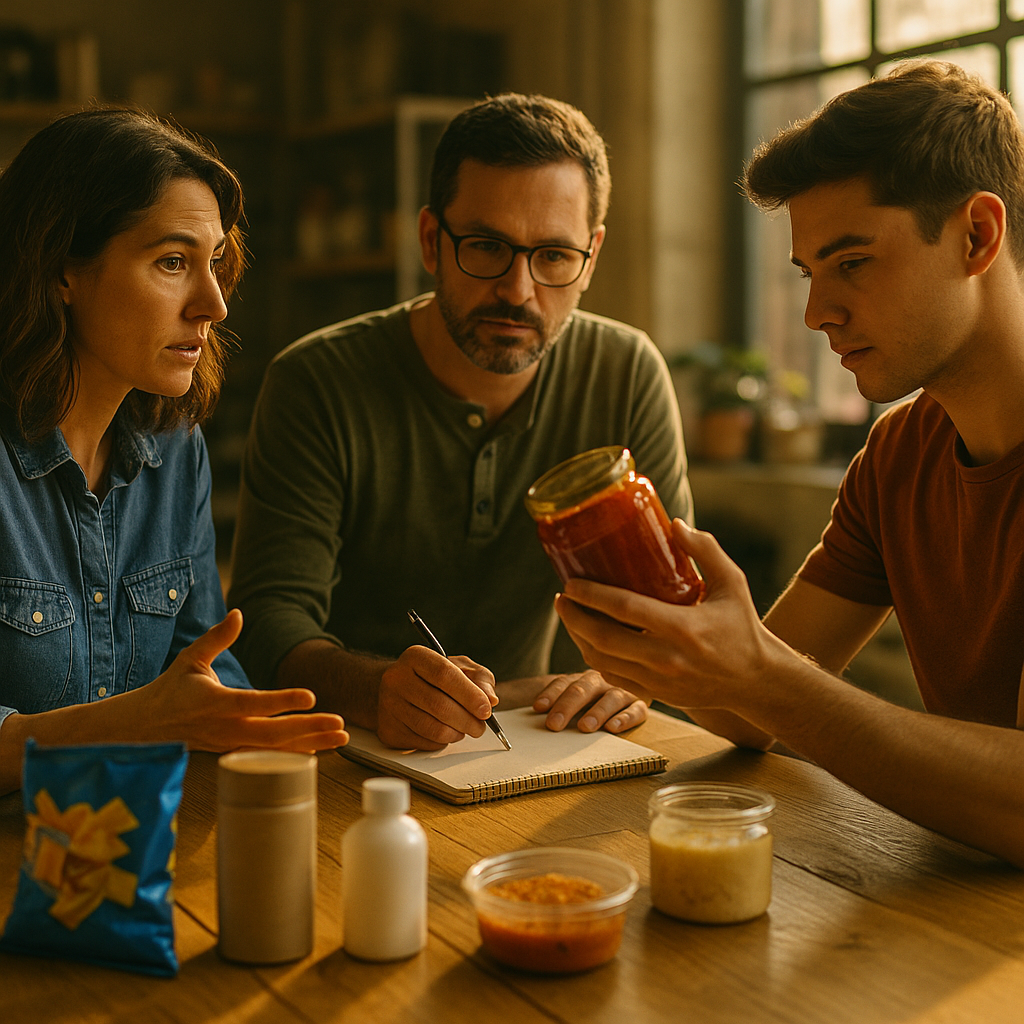
In 2025, premium brands are rethinking how they innovate, communicate, and earn loyalty. The shift toward co-creation communities in high-end CPG markets is redefining product development from a closed, brand-led process to a shared, member-driven practice. When consumers become collaborators, luxury cues change—exclusivity comes from access, influence, and recognition. What does this look like in practice?
Why Co-Creation Communities Are Reshaping Premium CPG
High-end consumer packaged goods (CPG)—beauty, fragrance, wellness, gourmet food, and premium home care—have always relied on a tight loop of aspiration, storytelling, and perceived quality. Co-creation communities add a new lever: participation. Instead of treating customers as endpoints in a funnel, premium brands are treating select customers as inputs to innovation and brand meaning.
This shift is happening for practical reasons:
- Shorter relevance cycles: Even premium categories face faster trend turnover, ingredient scrutiny, and social-led discovery. Community feedback reduces the risk of launching “beautiful but irrelevant” products.
- Rising acquisition costs: Paid media is less efficient. Brands that convert customers into contributors benefit from higher retention and more credible word-of-mouth.
- Trust and transparency demands: Premium buyers want proof—sourcing, formulation intent, and performance. A community can validate claims through real use and structured testing.
- Desire for influence: Many affluent consumers value impact over discounts. Co-creation offers status through involvement, not price cuts.
Co-creation does not mean surrendering brand control. It means designing a system where brand standards remain non-negotiable, while community insight guides what to build, how to position it, and which experiences feel worth paying for.
Luxury Consumer Engagement: From Audience to Members
Luxury consumer engagement shifts when brands treat participation as a product. In high-end CPG, the strongest communities feel like private clubs: curated, purposeful, and respectful of members’ time. The goal is not volume. It is signal quality.
Premium community models typically include:
- Tiered access: Open followership is separate from invitation-based labs, testing panels, or founder circles. This preserves exclusivity while allowing broader brand reach.
- Clear roles: Members know whether they are ideators, testers, reviewers, educators, or ambassadors. Each role has different expectations and rewards.
- Reciprocity: Members contribute insight; brands respond with transparency, early access, recognition, and meaningful influence on outcomes.
To keep engagement premium, brands should avoid making the community feel like unpaid labor. The value exchange must be explicit: access to product roadmaps, behind-the-scenes decision rationale, limited runs tied to member votes, and personal acknowledgement of contributions.
Follow-up question readers often have: Does co-creation dilute luxury? Not if the brand curates participation, applies rigorous quality standards, and uses community input to sharpen differentiation. The luxury signal becomes “I helped shape this,” not “Everyone has it.”
Premium Product Development: How Co-Creation Actually Works
Premium product development benefits from co-creation when brands structure input into stages, with decision gates that protect margins and brand equity. High-end CPG cannot iterate like a cheap commodity; it must prototype intelligently and validate rigorously.
A practical co-creation workflow looks like this:
- Stage 1: Insight framing — The brand defines the problem: unmet need, usage moment, sensory target, sustainability constraint, or price architecture.
- Stage 2: Concept co-design — Members evaluate concepts using structured prompts, forced trade-offs, and comparative ranking. This is more reliable than open-ended “What do you want?” questions.
- Stage 3: Prototype testing — Small-batch samples go to vetted members with clear usage protocols. Feedback includes sensory notes, performance outcomes, and situational context (skin type, climate, lifestyle), improving interpretation.
- Stage 4: Claim validation — Brands pressure-test language. Members flag confusing or overreaching claims early, reducing regulatory and reputational risk.
- Stage 5: Launch and learning loop — Post-launch, the community helps diagnose returns, complaints, and repeat purchase drivers, guiding reformulations or line extensions.
In premium categories, sensory quality is as important as efficacy. Communities are especially valuable in capturing the “why” behind preference: texture, dry-down, aftertaste, packaging tactility, and ritual fit. This is hard to get from standard surveys.
Answering another likely question: How do you avoid designing by committee? Use the community to improve options, not to replace creative direction. The brand supplies the point of view; the community supplies real-world constraint checks and sharper prioritization.
Brand Loyalty Strategy: Building Retention Through Shared Ownership
A modern brand loyalty strategy in high-end CPG depends on more than points and perks. Co-creation increases loyalty through identity: members stay because leaving means losing influence, access, and social belonging.
Effective loyalty mechanics in co-creation communities include:
- Influence rewards: Voting rights on limited editions, scent directions, ingredient exclusions, or packaging formats.
- Status signals: Visible contributor badges, invite-only live sessions with formulators, or early purchase windows without discounting.
- Recognition and attribution: Thank-you notes, community credits on landing pages, or “member-tested” marks that are truthful and specific.
- Ritualized touchpoints: Seasonal community briefings, tasting sessions, or sensory workshops that make participation feel intentional and premium.
Co-creation also strengthens loyalty by reducing post-purchase uncertainty. When members see how decisions were made—what was tested, what failed, what trade-offs were chosen—they trust the brand more. Transparency becomes a differentiator, especially in categories where claims can feel inflated.
To keep loyalty profitable, brands should measure outcomes beyond engagement. Track repeat rate, cohort value, return rate, referral quality, and time-to-second-purchase among community members versus non-members. If the community only creates noise, it is not a community—it is a content channel.
Omnichannel Community Building: Platforms, Governance, and Experience Design
Omnichannel community building matters in premium CPG because the experience spans digital and physical: social discovery, DTC purchases, specialty retail, sampling, events, and customer care. The community should feel consistent wherever members meet the brand.
Key design choices:
- Choose the right home: A dedicated community hub (owned platform) protects data, continuity, and member experience. Social platforms remain useful for discovery, but they are not reliable for long-term governance.
- Set participation rules: Publish guidelines on respectful feedback, disclosure of gifted products, and how brand decisions will be made. Clarity prevents disappointment and builds trust.
- Integrate with CRM responsibly: Connect community actions to customer profiles to personalize access and sampling, while honoring consent and privacy expectations.
- Create concierge-level moderation: High-end communities need fast, human responses. Members should not feel like they are writing into a void.
- Design for international realities: Ingredients, claims, and shipping differ by market. Segment feedback by region to avoid misleading conclusions.
Governance is a hidden success factor. Brands should define what the community can influence (scent family, shade range, format, rituals, packaging ergonomics) and what it cannot (safety thresholds, regulatory compliance, core brand codes). When the boundary is explicit, members respect it more.
Also consider the operational load. Product sampling logistics, feedback analysis, and quality assurance require staffing. A premium community without operational excellence becomes frustrating, which damages the very trust it aims to build.
CPG Innovation Trends: Risks, Metrics, and Ethical Guardrails
Among the most important CPG innovation trends in 2025 is the move from “listening” to “building with.” But co-creation introduces risks that premium brands must manage carefully.
Core risks and how to mitigate them:
- Bias and unrepresentative input: Affluent communities can skew toward heavy users or enthusiasts. Mitigate with segmented panels, rotating cohorts, and validation with broader customer data.
- IP and confidentiality leakage: Use clear terms, staged disclosure, and avoid sharing sensitive formula specifics before filing protections where relevant.
- Regulatory and claim issues: Co-created claims must remain compliant. Keep legal and regulatory teams involved early, especially in beauty, wellness, and ingestibles.
- Greenwashing pressure: Communities will challenge sustainability claims. Provide verifiable evidence, define what “sustainable” means for the product, and acknowledge trade-offs honestly.
- Tokenism: If members never see outcomes tied to their input, participation drops and skepticism rises. Close the loop publicly and frequently.
What to measure for a high-end co-creation program:
- Innovation efficiency: Concept-to-prototype time, prototype-to-launch cycle time, and reduction in reformulations post-launch.
- Quality signals: Product rating distribution, repeat purchase rate, customer care contact rate, and returns.
- Community health: Active contributor rate, response depth (not just likes), and retention of high-signal members.
- Financial outcomes: Incremental revenue from member cohorts, lift in AOV via limited editions, and margin impact of improved demand forecasting.
EEAT best practices require brands to ground decisions in credible expertise. That means involving formulators, sensory scientists, supply chain leaders, and regulatory specialists in community sessions—so members hear from the people responsible for quality and safety, not just marketing.
FAQs
-
What is a co-creation community in high-end CPG?
A co-creation community is a structured group of customers and fans who help shape products and experiences through concept feedback, prototype testing, sensory evaluations, and launch learning. In high-end CPG, participation is typically curated, tiered, and designed to feel exclusive and valuable.
-
How is co-creation different from influencer marketing?
Influencer marketing primarily amplifies messages to an audience. Co-creation changes what the brand builds and how it positions it. Influencers can be part of a co-creation community, but the defining feature is decision influence and structured feedback, not reach.
-
Do co-creation communities work for luxury beauty and fragrance?
Yes, especially when brands focus on sensory testing, ritual design, and storytelling alignment. The key is controlling access, protecting IP, and using expert-led frameworks so feedback improves craft without diluting the brand’s signature.
-
How do brands reward members without discounting?
High-end brands can reward with early access, limited editions, invitations to private sessions, personalized sampling, recognition, and voting rights on specific decisions. These rewards reinforce status and influence rather than reducing price integrity.
-
What platforms are best for premium community building?
Owned platforms are best for long-term control, data continuity, and member experience. Social platforms work well for discovery and light engagement but should not be the primary home for sensitive co-creation work.
-
How large should a co-creation community be?
Smaller is often better for high-end CPG. Brands can start with a few hundred high-signal members, then expand with tiering. What matters most is feedback quality, diversity of use cases, and reliable participation—not total headcount.
Co-creation communities are changing premium CPG because they convert buyers into partners and make innovation more precise. In 2025, the strongest programs feel curated, expert-led, and operationally polished—never chaotic. Brands that set clear influence boundaries, reward members with access instead of discounts, and close the feedback loop earn deeper trust and better launches. The takeaway: build with members, but lead with standards.
Top Influencer Marketing Agencies
The leading agencies shaping influencer marketing in 2026
Agencies ranked by campaign performance, client diversity, platform expertise, proven ROI, industry recognition, and client satisfaction. Assessed through verified case studies, reviews, and industry consultations.
Moburst

-
2

The Shelf
Boutique Beauty & Lifestyle Influencer AgencyA data-driven boutique agency specializing exclusively in beauty, wellness, and lifestyle influencer campaigns on Instagram and TikTok. Best for brands already focused on the beauty/personal care space that need curated, aesthetic-driven content.Clients: Pepsi, The Honest Company, Hims, Elf Cosmetics, Pure LeafVisit The Shelf → -
3

Audiencly
Niche Gaming & Esports Influencer AgencyA specialized agency focused exclusively on gaming and esports creators on YouTube, Twitch, and TikTok. Ideal if your campaign is 100% gaming-focused — from game launches to hardware and esports events.Clients: Epic Games, NordVPN, Ubisoft, Wargaming, Tencent GamesVisit Audiencly → -
4

Viral Nation
Global Influencer Marketing & Talent AgencyA dual talent management and marketing agency with proprietary brand safety tools and a global creator network spanning nano-influencers to celebrities across all major platforms.Clients: Meta, Activision Blizzard, Energizer, Aston Martin, WalmartVisit Viral Nation → -
5

The Influencer Marketing Factory
TikTok, Instagram & YouTube CampaignsA full-service agency with strong TikTok expertise, offering end-to-end campaign management from influencer discovery through performance reporting with a focus on platform-native content.Clients: Google, Snapchat, Universal Music, Bumble, YelpVisit TIMF → -
6

NeoReach
Enterprise Analytics & Influencer CampaignsAn enterprise-focused agency combining managed campaigns with a powerful self-service data platform for influencer search, audience analytics, and attribution modeling.Clients: Amazon, Airbnb, Netflix, Honda, The New York TimesVisit NeoReach → -
7

Ubiquitous
Creator-First Marketing PlatformA tech-driven platform combining self-service tools with managed campaign options, emphasizing speed and scalability for brands managing multiple influencer relationships.Clients: Lyft, Disney, Target, American Eagle, NetflixVisit Ubiquitous → -
8

Obviously
Scalable Enterprise Influencer CampaignsA tech-enabled agency built for high-volume campaigns, coordinating hundreds of creators simultaneously with end-to-end logistics, content rights management, and product seeding.Clients: Google, Ulta Beauty, Converse, AmazonVisit Obviously →