


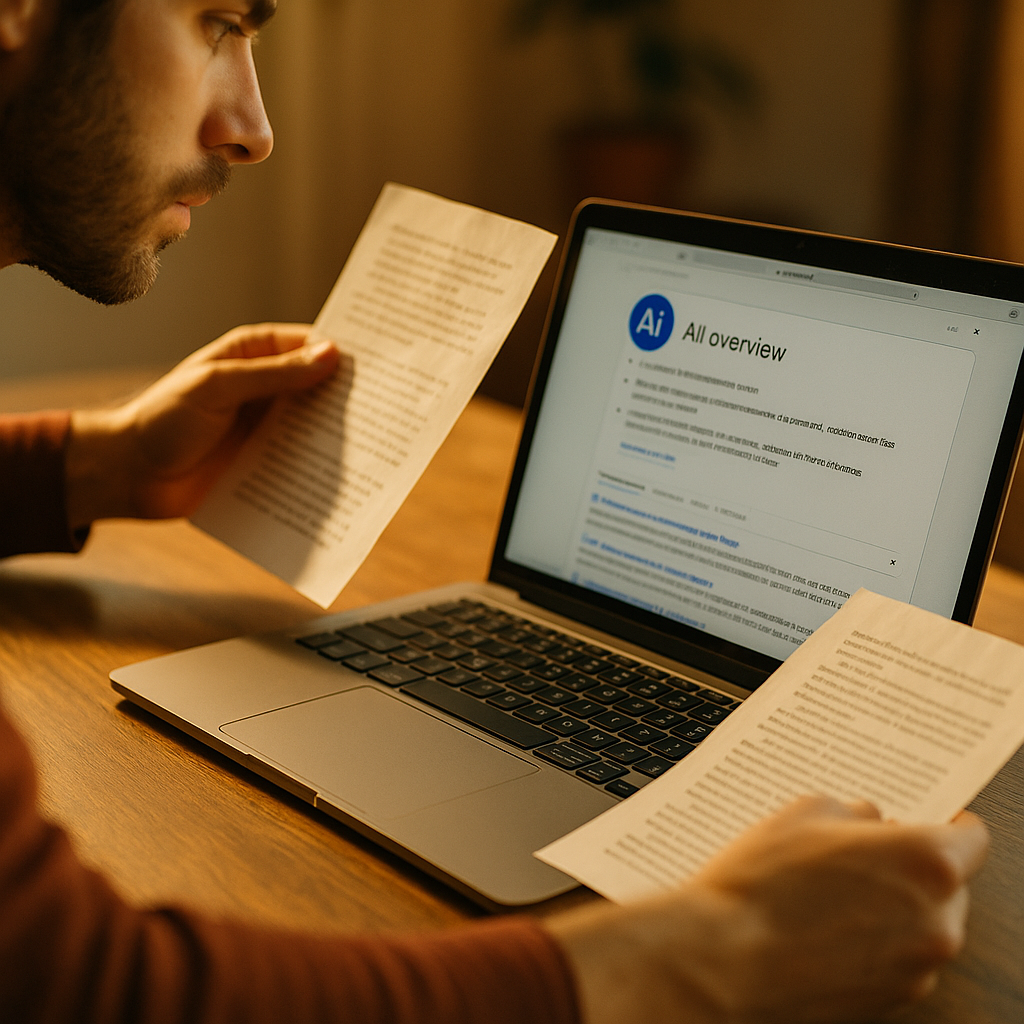
Google now answers most queries before a single blue link loads. Roughly 60 percent of searches end without a click, according to data cited across the SEO industry, and AI Search Overviews are the biggest reason why. For brands that built their discovery strategy on influencer content ranking in traditional search, that’s a problem worth losing sleep over. The content that used to win traffic now has to win a citation instead, and the rules for earning one look nothing like the old SEO playbook.
The Discovery Funnel Just Got a New Gatekeeper
Search used to be a ranking game. You optimized a page, built some links, and climbed the results. AI Overviews flipped that into a selection game. The model reads dozens of sources, synthesizes an answer, and picks a handful to cite. Everyone else disappears, even if their page technically “ranks.”
That shift matters enormously for influencer marketing. A huge share of branded discovery used to happen through creator reviews, tutorials, and comparison posts that ranked organically. Now those same pieces compete for a spot inside a synthesized answer, not a results page. The content format hasn’t changed much. The scoring system underneath it has changed completely.
AI Overviews don’t reward the best-optimized page. They reward the source the model trusts enough to repeat word for word.
Why Creator Content Keeps Winning Citations
Here’s the part that should reshape budget conversations: AI models disproportionately cite earned, third-party content over brand-owned pages. Our own analysis found that 84 percent of ChatGPT citations trace back to earned media, not owned brand assets. Creator reviews, Reddit threads, and independent comparison content carry a credibility signal that branded landing pages simply can’t fake.
That’s not an accident. Large language models are trained to weight independent, first-person testimony more heavily than promotional copy, because that’s what humans trust too. A creator saying “I tried this serum for six weeks and here’s what happened” reads as evidence. A brand’s product page reads as a pitch. The model knows the difference, and it cites accordingly.
What Gets Cited, and What Gets Buried
Not all creator content earns equal treatment in generative search. A few patterns show up consistently across GEO (generative engine optimization) audits:
- Specific, dated claims beat vague praise. “This cut our setup time from 40 minutes to 8” gets cited more than “This product is great.”
- First-person structure signals authenticity. Posts written like lived experience outperform scripted-sounding copy, even when both are technically accurate.
- Thin affiliate content gets filtered out. Our research into why advertorial pages rarely earn AI model citations found models actively down-weight content that reads as paid placement without substance.
- Structured, scannable formatting helps extraction. Clear headers, numbered steps, and direct answers to implied questions make it easier for a model to lift a usable snippet.
The practical takeaway is blunt: polish isn’t the asset it used to be. Specificity is.
Measuring Visibility When There’s No Click to Count
Traditional influencer reporting leans hard on clicks, impressions, and referral traffic. AI Overviews don’t generate a click when they cite your creator’s content inside an answer box. They generate a mention, and most legacy analytics tools can’t see it at all.
This is where GEO tracking has started replacing, or at least supplementing, traditional share-of-voice reporting. Teams are now monitoring how often their brand and creator content gets cited across ChatGPT, Perplexity, and Google’s AI Overviews, treating it as a recurring metric rather than a one-off audit. We’ve covered how GEO share of voice turns AI citations into a monthly KPI that boardrooms are starting to ask about directly, right alongside paid media efficiency.
If your dashboards still stop at click-through rate, you’re measuring last decade’s funnel. Platforms like Sprout Social and reporting from eMarketer have both started tracking AI-driven discovery shifts, and the direction is consistent: visibility inside synthesized answers is becoming its own line item, separate from organic search rank.
Shopping Answers Are Moving Even Faster
It’s not just informational queries. Shopping-intent search is getting absorbed into conversational interfaces too. Our coverage of how Perplexity and Copilot shopping push creators past clicks showed that product recommendations are increasingly surfaced directly inside chat, with creator content feeding the recommendation rather than driving a separate visit to a review page. That compresses the funnel from discovery to purchase intent into a single AI-mediated step, and creator credibility is the input that decides whether a brand even appears in that step.
Building Content That Survives the Synthesis
So what does a brief look like when the goal is citation, not just ranking? A few operational shifts are worth making now rather than waiting for the next algorithm update to force the issue.
- Brief creators for specificity, not polish. Numbers, timeframes, and comparisons beat adjectives every time a model scans for extractable facts.
- Prioritize earned and UGC-style formats. Our breakdown of how earned creator content quietly trains what AI chatbots cite is a useful reference point for briefing teams rethinking format priorities.
- Audit existing content for AI visibility, not just search rank. Tools built for this are maturing fast; our GEO audit checklist tracks brand citations across ChatGPT and other models, which is a good starting template for a quarterly review.
- Keep structured data current. Review Google’s own guidance on Search Central documentation for how structured content interacts with AI-generated results, and make sure product and review schema stays accurate.
None of this replaces good creative. It just means the creative brief needs a second filter: would a language model trust this enough to repeat it?
The Risk Side Nobody’s Talking About Enough
There’s a compliance wrinkle here too. When AI Overviews synthesize and repeat creator claims without attribution context, disclosure gets murkier. If a model cites a sponsored post but strips the #ad disclosure in its summary, who’s accountable for that gap? The FTC’s endorsement guidelines were written for a world of visible posts, not synthesized answers that compress six sources into three sentences.
Brands running larger creator programs should treat this as part of the broader governance conversation, not a side issue. It connects directly to work we’ve covered on creator ops automation and hidden compliance risk, where disclosure tracking already struggles to keep pace with automated distribution. Add AI synthesis into that mix and the audit trail gets harder to defend, not easier.
If an AI Overview can strip your disclosure language while keeping your product claim, your compliance process needs to account for content it never directly published.
What This Means for Budget Allocation
Marketing leaders are starting to ask a fair question: should influencer budget shift toward creators whose content historically earns AI citations, even if their follower count is smaller? Early signals suggest yes. A mid-tier creator with a track record of specific, well-structured reviews may deliver more AI visibility than a mega-influencer producing glossier but vaguer content. That’s a genuine reallocation question for 2026 planning cycles, not a hypothetical. Resources like HubSpot’s marketing research and Statista’s search behavior data are both useful for benchmarking how fast this shift is moving in your category specifically, since AI Overview penetration varies widely by vertical.
The brands treating this as an SEO footnote are going to lose share of voice quietly, in a channel most of them aren’t measuring yet.
Frequently Asked Questions
What exactly are AI Search Overviews?
AI Search Overviews are the synthesized answer summaries that appear at the top of Google search results, generated by AI that pulls from multiple web sources and compresses them into a single response, often eliminating the need for users to click through to a website.
Why do AI Overviews favor creator content over brand websites?
Language models are trained to weight independent, first-person content more heavily than promotional copy because it mirrors how humans evaluate trustworthiness. Creator reviews read as evidence, while brand pages read as marketing, and the models reflect that distinction in what they choose to cite.
How can brands measure visibility inside AI Overviews?
Since AI Overviews don’t always generate clicks, brands need dedicated GEO (generative engine optimization) tracking tools that monitor citation frequency across ChatGPT, Perplexity, Google AI Overviews, and Copilot, rather than relying solely on traditional click-through and referral traffic metrics.
Does this mean traditional SEO for influencer content is dead?
No, but it’s incomplete on its own. Traditional SEO still determines whether content gets indexed and found at all. GEO adds a second layer: optimizing that same content so AI models choose to cite it once they’ve found it.
What compliance risks come with AI-synthesized creator content?
AI Overviews can summarize sponsored content in ways that strip disclosure language while retaining product claims, creating accountability gaps that existing FTC endorsement guidelines weren’t written to address directly.
Next step: run a quick citation audit this quarter. Pull your top ten influencer-driven assets, check whether they appear in AI Overviews or ChatGPT responses for their target queries, and brief your next creator campaign around specificity rather than polish.
Frequently Asked Questions
What exactly are AI Search Overviews?
AI Search Overviews are the synthesized answer summaries that appear at the top of Google search results, generated by AI that pulls from multiple web sources and compresses them into a single response, often eliminating the need for users to click through to a website.
Why do AI Overviews favor creator content over brand websites?
Language models are trained to weight independent, first-person content more heavily than promotional copy because it mirrors how humans evaluate trustworthiness. Creator reviews read as evidence, while brand pages read as marketing, and the models reflect that distinction in what they choose to cite.
How can brands measure visibility inside AI Overviews?
Since AI Overviews don’t always generate clicks, brands need dedicated GEO (generative engine optimization) tracking tools that monitor citation frequency across ChatGPT, Perplexity, Google AI Overviews, and Copilot, rather than relying solely on traditional click-through and referral traffic metrics.
Does this mean traditional SEO for influencer content is dead?
No, but it’s incomplete on its own. Traditional SEO still determines whether content gets indexed and found at all. GEO adds a second layer: optimizing that same content so AI models choose to cite it once they’ve found it.
What compliance risks come with AI-synthesized creator content?
AI Overviews can summarize sponsored content in ways that strip disclosure language while retaining product claims, creating accountability gaps that existing FTC endorsement guidelines weren’t written to address directly.
Top Influencer Marketing Agencies
The leading agencies shaping influencer marketing in 2026
Agencies ranked by campaign performance, client diversity, platform expertise, proven ROI, industry recognition, and client satisfaction. Assessed through verified case studies, reviews, and industry consultations.
Moburst

-
2

The Shelf
Boutique Beauty & Lifestyle Influencer AgencyA data-driven boutique agency specializing exclusively in beauty, wellness, and lifestyle influencer campaigns on Instagram and TikTok. Best for brands already focused on the beauty/personal care space that need curated, aesthetic-driven content.Clients: Pepsi, The Honest Company, Hims, Elf Cosmetics, Pure LeafVisit The Shelf → -
3

Audiencly
Niche Gaming & Esports Influencer AgencyA specialized agency focused exclusively on gaming and esports creators on YouTube, Twitch, and TikTok. Ideal if your campaign is 100% gaming-focused — from game launches to hardware and esports events.Clients: Epic Games, NordVPN, Ubisoft, Wargaming, Tencent GamesVisit Audiencly → -
4

Viral Nation
Global Influencer Marketing & Talent AgencyA dual talent management and marketing agency with proprietary brand safety tools and a global creator network spanning nano-influencers to celebrities across all major platforms.Clients: Meta, Activision Blizzard, Energizer, Aston Martin, WalmartVisit Viral Nation → -
5

The Influencer Marketing Factory
TikTok, Instagram & YouTube CampaignsA full-service agency with strong TikTok expertise, offering end-to-end campaign management from influencer discovery through performance reporting with a focus on platform-native content.Clients: Google, Snapchat, Universal Music, Bumble, YelpVisit TIMF → -
6

NeoReach
Enterprise Analytics & Influencer CampaignsAn enterprise-focused agency combining managed campaigns with a powerful self-service data platform for influencer search, audience analytics, and attribution modeling.Clients: Amazon, Airbnb, Netflix, Honda, The New York TimesVisit NeoReach → -
7

Ubiquitous
Creator-First Marketing PlatformA tech-driven platform combining self-service tools with managed campaign options, emphasizing speed and scalability for brands managing multiple influencer relationships.Clients: Lyft, Disney, Target, American Eagle, NetflixVisit Ubiquitous → -
8

Obviously
Scalable Enterprise Influencer CampaignsA tech-enabled agency built for high-volume campaigns, coordinating hundreds of creators simultaneously with end-to-end logistics, content rights management, and product seeding.Clients: Google, Ulta Beauty, Converse, AmazonVisit Obviously →