


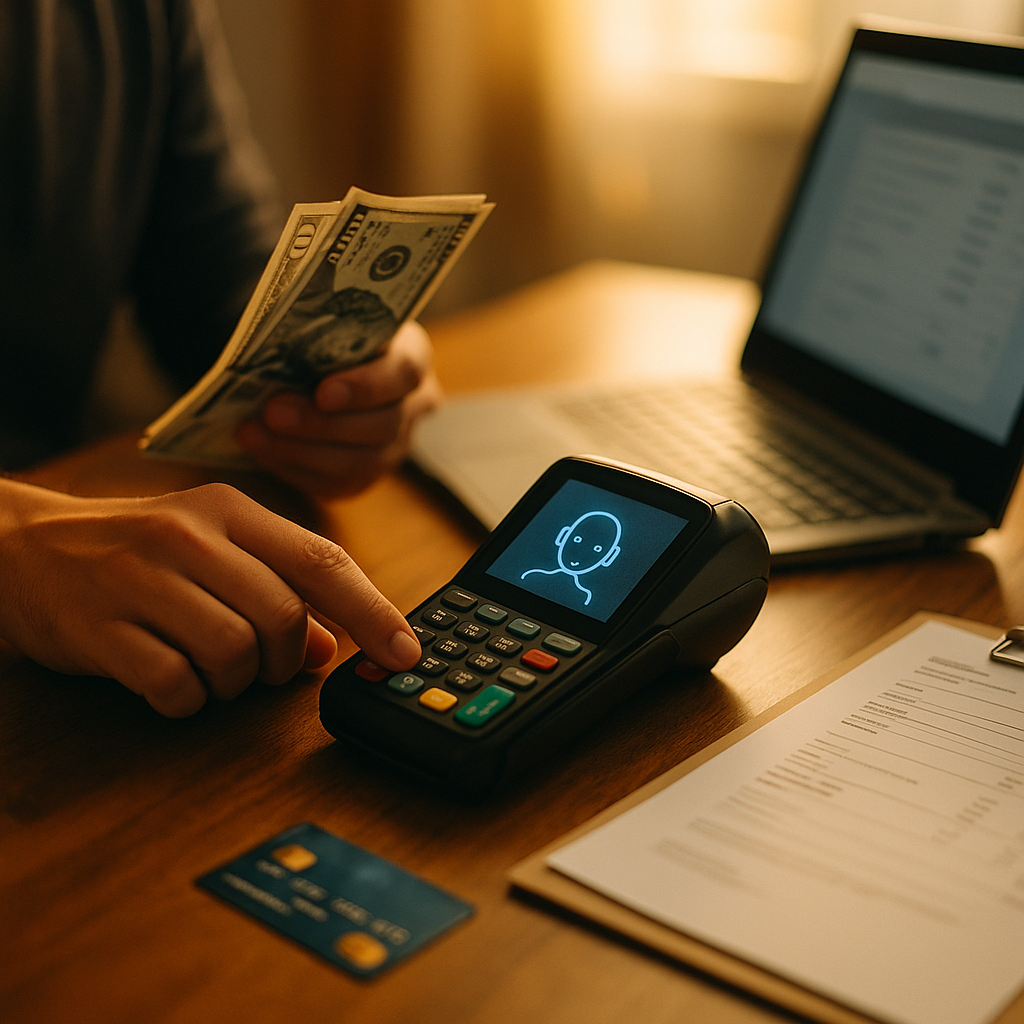
Nearly 60% of brands running global influencer programs say cross-border payments are their single biggest operational headache, according to industry surveys from payment processors serving the creator economy. AI agents for cross-border creator payments promise to fix that, routing funds through the cheapest, fastest rail available and flagging tax and compliance issues before they become five-figure problems. Fluencify opened the door. The question now is who’s actually walking through it.
Why Payment Friction Still Breaks Creator Programs
Paying a creator in Lagos, Manila, and Sao Paulo used to mean three different wire processes, three different fee structures, and three different chances for something to go wrong. Currency conversion alone can eat 3 to 5% of a payout before a bank even applies its wire fee. Add in tax withholding rules that differ by jurisdiction, and finance teams end up building spreadsheets just to track what they owe whom.
That friction isn’t just annoying. It’s a retention risk. Creators talk to each other, and a brand known for slow or shrinking payouts loses access to top talent fast. Agencies running hundreds of creator relationships across a dozen countries can’t afford manual reconciliation anymore. That’s the gap AI payment agents are built to close.
The real cost of cross-border creator payments isn’t the wire fee, it’s the finance headcount spent chasing exceptions manually.
What Fluencify Actually Solved (And What It Didn’t)
Fluencify earned attention by automating payout routing decisions: pick the cheapest rail, batch payments to reduce fees, and auto-generate tax documentation for common jurisdictions like the US, UK, and EU. For a brand running a straightforward ambassador program in a handful of markets, that’s genuinely useful. It cut payout processing time from days to hours for a lot of mid-market teams.
But Fluencify’s coverage thins out fast once you move past major markets. Creators in Southeast Asia, parts of Latin America, and sub-Saharan Africa often still hit manual review, which defeats the purpose of an automated agent. It also treats compliance as a documentation task rather than a decision layer, generating the paperwork but not actually assessing whether a payment structure creates tax exposure for the brand. That distinction matters more than most procurement teams realize until an audit forces the issue.
The Next Wave: What’s Different
A newer cohort of tools is treating payments as one node in a broader agentic workflow rather than a standalone task. Instead of just routing money, these agents pull data from contract terms, content performance, and regional tax rules simultaneously, then make a payout decision that accounts for all three. Think of it less as a payment processor and more as a financial compliance layer that happens to move money.
- Payoneer’s creator-focused rails now integrate directly with several influencer platforms, cutting manual onboarding for new creators to under ten minutes in supported markets.
- Trolley (by Nium) has leaned into automated tax form collection (W-8BEN, W-9 equivalents) tied directly to payout triggers, reducing the lag between content approval and payment release.
- Tipalti brings mass payout automation with built-in OFAC and sanctions screening, a feature that’s becoming table stakes as regulators pay closer attention to influencer marketing spend.
None of these fully replicate Fluencify’s simplicity. What they trade in ease-of-setup, they make up for in depth of compliance handling, which is exactly the tradeoff most mid-to-large programs should be making right now.
Compliance Is the Real Battleground, Not Speed
Every vendor in this space advertises speed. Payments in minutes, not weeks. That’s table stakes now, not a differentiator. The actual differentiator is whether the agent can correctly classify a creator’s tax status, apply the right withholding, and flag when a payment structure might trigger permanent establishment rules in a foreign jurisdiction. Get that wrong and you’re not looking at a delayed payment, you’re looking at a regulatory inquiry.
Regulators haven’t caught up to influencer payment structures uniformly across markets, which means brands are largely self-policing. The FTC has been explicit that disclosure and payment transparency both fall under its purview for influencer marketing, and the ICO has similarly signaled interest in how creator data gets handled during payment processing. If your AI agent can’t produce an audit trail on demand, you’ve automated a liability, not a solution.
This is where the parallel to content compliance tooling is worth drawing. Brands have already learned this lesson the hard way with automated content review, where AI caption tools generate output faster than humans can check it. Payment agents carry the same risk profile: fast, confident, and occasionally wrong in ways that only surface during an audit.
Evaluating Vendors: A Practical Framework
Skip the demo theater. Every vendor will show you a clean payout flow to three countries you already understand. Ask instead about the markets where your creator roster actually lives. If you run programs in the Philippines, Nigeria, or Indonesia, ask specifically how the agent handles local tax ID verification and whether payouts settle in local currency or require creators to hold a USD-denominated account (a real barrier in several emerging markets).
- Coverage depth, not breadth. A vendor claiming “190 countries supported” often means 190 countries where a wire can technically land, not 190 where the compliance layer actually functions.
- Exception handling transparency. Ask what percentage of payments currently require manual review, and get that number in writing, not a sales estimate.
- Audit trail exportability. Can your finance team pull a full compliance record for a specific creator payment in under five minutes, or does it require a support ticket?
- Integration with your existing stack. A payment agent that can’t talk to your CRM or influencer platform just creates another data silo. This is the same orchestration problem brands are already wrestling with across their broader AI agent stack.
- Data handling and prompt security. Payment agents that pull data from multiple sources are exposed to the same manipulation risks as any other AI agent. Vendors should be able to explain their approach to prompt injection defenses in plain language, not just point to a SOC 2 badge.
Build vs. Buy Is Back on the Table
Some larger agencies and brands with enterprise finance stacks are asking whether to build custom payment orchestration rather than adopt an off-the-shelf agent. It’s the same debate playing out across creator tech generally, where teams weigh build versus buy decisions for AI infrastructure. For most brands, buying still wins on cross-border payments specifically, because the regulatory complexity of even one new market rarely justifies in-house development. But if you’re running creator payouts across 40+ countries at scale, the calculus shifts, and a custom layer sitting on top of a payment API like Payoneer or Nium can pay for itself within a couple of program cycles.
Where This Fits in the Broader AI Adoption Curve
Payment automation doesn’t exist in isolation. It’s part of a broader shift where creator marketing operations are stitching together AI agents across content review, performance tracking, and now financial operations. Industry data shows AI adoption in creator marketing stacks climbing steadily, but most brands still can’t connect the dots between tools cleanly. A payment agent that operates as an island, disconnected from your contract management or content approval workflow, just adds another dashboard nobody checks.
The brands getting real ROI here are treating payment agents as one piece of an orchestrated system, not a standalone fix. That means feeding contract terms and content deliverables into the same system that triggers payment, so an agent isn’t just moving money fast, it’s moving money correctly, tied to verified deliverables and accurate tax classification. Firms like eMarketer have flagged this integration gap as one of the bigger blockers to full agentic marketing adoption over the next several quarters.
FAQs
What should brands do next? Run a 90-day pilot with one payment agent limited to your two or three highest-volume non-domestic markets, measure the manual exception rate honestly, and only scale coverage once that number sits below 10%. Anything faster is a rollout, not an evaluation, and rollouts without data are how compliance gaps become expensive lessons.
Frequently Asked Questions
What are AI agents for cross-border creator payments?
They’re automated systems that handle the full payout lifecycle for creators paid outside a brand’s home country, including currency conversion, tax form collection, sanctions screening, and payment routing across the cheapest available rail.
Is Fluencify still worth using for a global creator program?
Fluencify works well for programs concentrated in major markets like the US, UK, and EU, but brands with creators in emerging markets typically hit manual review bottlenecks that undercut the automation benefit.
What’s the biggest compliance risk with AI payment agents?
Misclassifying a creator’s tax status or failing to flag permanent establishment risk in a foreign jurisdiction, both of which can trigger regulatory scrutiny well after the payment has already gone out.
How do these agents differ from a standard payment processor like PayPal?
Standard processors move money. AI payment agents make decisions about how, when, and through which rail to move it, while simultaneously handling tax documentation and compliance checks in the background.
Should agencies build a custom payment solution instead of buying one?
Only if payout volume spans 40 or more countries at meaningful scale. Below that threshold, the regulatory complexity of cross-border payments usually makes buying a specialized platform more cost-effective than building in-house.
Top Influencer Marketing Agencies
The leading agencies shaping influencer marketing in 2026
Agencies ranked by campaign performance, client diversity, platform expertise, proven ROI, industry recognition, and client satisfaction. Assessed through verified case studies, reviews, and industry consultations.
Moburst

-
2

The Shelf
Boutique Beauty & Lifestyle Influencer AgencyA data-driven boutique agency specializing exclusively in beauty, wellness, and lifestyle influencer campaigns on Instagram and TikTok. Best for brands already focused on the beauty/personal care space that need curated, aesthetic-driven content.Clients: Pepsi, The Honest Company, Hims, Elf Cosmetics, Pure LeafVisit The Shelf → -
3

Audiencly
Niche Gaming & Esports Influencer AgencyA specialized agency focused exclusively on gaming and esports creators on YouTube, Twitch, and TikTok. Ideal if your campaign is 100% gaming-focused — from game launches to hardware and esports events.Clients: Epic Games, NordVPN, Ubisoft, Wargaming, Tencent GamesVisit Audiencly → -
4

Viral Nation
Global Influencer Marketing & Talent AgencyA dual talent management and marketing agency with proprietary brand safety tools and a global creator network spanning nano-influencers to celebrities across all major platforms.Clients: Meta, Activision Blizzard, Energizer, Aston Martin, WalmartVisit Viral Nation → -
5

The Influencer Marketing Factory
TikTok, Instagram & YouTube CampaignsA full-service agency with strong TikTok expertise, offering end-to-end campaign management from influencer discovery through performance reporting with a focus on platform-native content.Clients: Google, Snapchat, Universal Music, Bumble, YelpVisit TIMF → -
6

NeoReach
Enterprise Analytics & Influencer CampaignsAn enterprise-focused agency combining managed campaigns with a powerful self-service data platform for influencer search, audience analytics, and attribution modeling.Clients: Amazon, Airbnb, Netflix, Honda, The New York TimesVisit NeoReach → -
7

Ubiquitous
Creator-First Marketing PlatformA tech-driven platform combining self-service tools with managed campaign options, emphasizing speed and scalability for brands managing multiple influencer relationships.Clients: Lyft, Disney, Target, American Eagle, NetflixVisit Ubiquitous → -
8

Obviously
Scalable Enterprise Influencer CampaignsA tech-enabled agency built for high-volume campaigns, coordinating hundreds of creators simultaneously with end-to-end logistics, content rights management, and product seeding.Clients: Google, Ulta Beauty, Converse, AmazonVisit Obviously →