


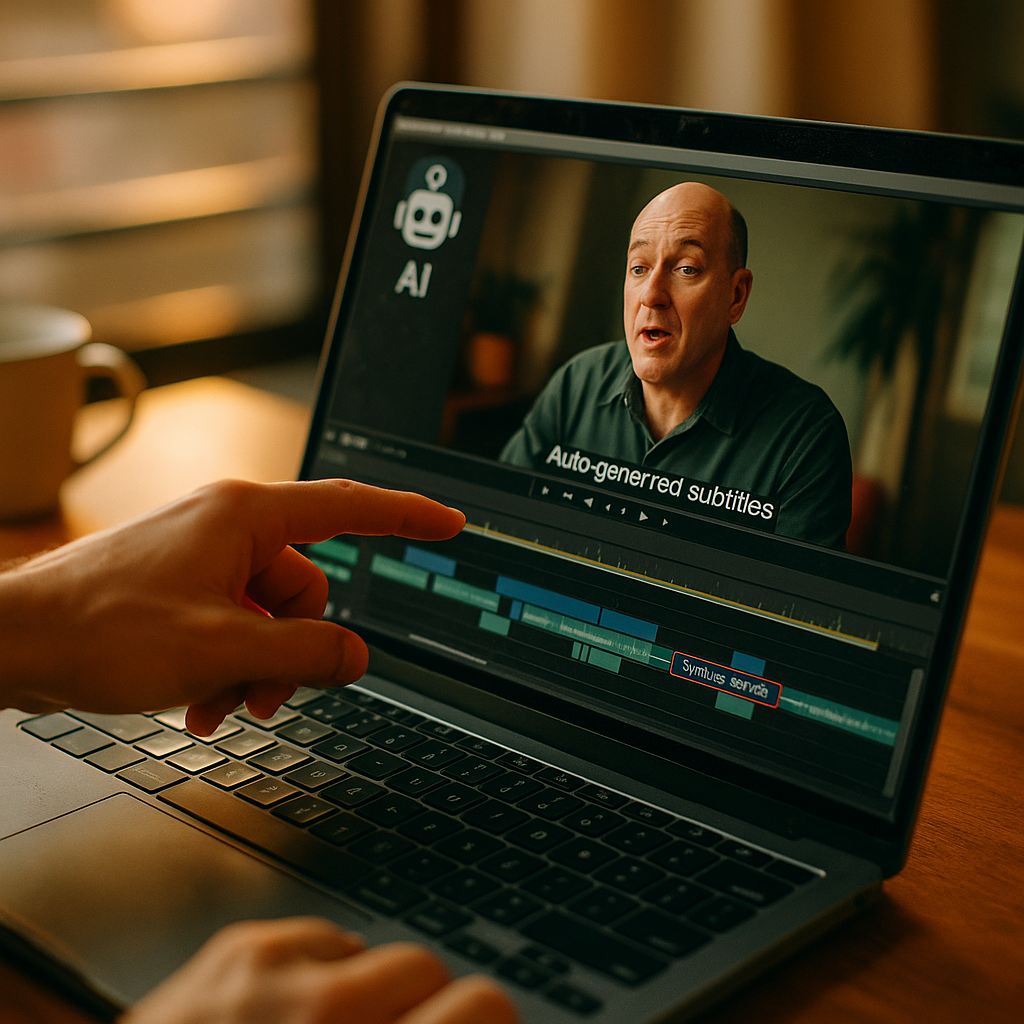
Ninety seconds. That’s roughly how long an AI editing tool needs to turn a raw clip into a publish-ready short form video today. The catch? Speed and quality rarely improve together, and most brands benchmarking AI editing tools for short form video are optimizing for the wrong variable entirely.
Marketing teams are under pressure to publish daily, sometimes hourly, across TikTok, Reels, and Shorts. AI editors like Opus Clip, CapCut’s AI suite, Descript, and Adobe’s Firefly-powered tools promise to compress a four-hour edit into four minutes. But when you benchmark these tools side by side, a pattern emerges fast: the platforms optimized for raw speed often sacrifice framing precision, caption accuracy, and brand consistency. The ones that protect quality tend to introduce friction that slows publishing cadence right back down.
The Tradeoff Nobody Puts in the Deck
Vendor demos rarely show the failure modes. Every AI editing platform will show you a slick before-and-after reel. What they won’t show is the fifteenth clip in a batch where the auto-crop cuts off a product logo, or the caption generator mishears a brand name and spells it wrong across a hundred variants.
This matters because short form video has become the default entry point for brand discovery. According to eMarketer research, short-form platforms now account for the majority of time spent in social apps among users under 35. Speed to publish isn’t optional anymore. But neither is accuracy, especially when a mangled caption or misframed CTA can undercut conversion on the exact clip meant to drive it.
Every ten seconds an AI editor saves on turnaround typically costs you somewhere else, whether that’s a manual QA pass, a re-edit, or a compliance flag caught after the clip already went live.
What a Real Benchmark Actually Measures
Most internal comparisons stop at “how fast does it export.” That’s a shallow metric. A useful benchmark for short form editing tools needs at least four dimensions:
- Turnaround time: from raw footage upload to a shareable draft, not just export speed on an already-cut timeline.
- Frame and crop accuracy: does the tool correctly identify the subject across aspect ratio conversions (16:9 to 9:16), especially in multi-speaker or product-demo footage?
- Caption and transcript fidelity: word error rate on brand names, product SKUs, and industry jargon, not generic dictionary words.
- Post-edit revision load: how many manual touches does a human editor need before the clip is publish-ready?
Run the same fifteen-second product clip through three or four tools and score each dimension on a simple 1 to 5 scale. You’ll find that the tools ranking highest on turnaround time often score lowest on revision load, meaning the “speed win” evaporates once you factor in the cleanup pass.
Where the Fast Tools Actually Win
Speed-first tools like CapCut’s auto-edit and Opus Clip’s long-to-short conversion genuinely excel in specific, narrow use cases. Repurposing a 20-minute podcast into ten short clips? These tools shine, because the source material is dialogue-heavy and forgiving of minor framing imperfections. The audience expects a raw, authentic feel, so a slightly imperfect crop doesn’t tank trust.
Reactive content also favors speed. If a creator or brand account needs to respond to a trending audio or a cultural moment within the hour, waiting for a meticulously polished edit means missing the window entirely. In that scenario, an 80% quality clip published in ten minutes beats a 98% quality clip published in three hours, every time.
Where Quality Tools Earn Their Slower Pace
Paid social and top-of-funnel brand assets are a different story. When a clip is going into a paid TikTok or Reels campaign, framing errors, mismatched brand colors, or a garbled caption aren’t just cosmetic, they’re a compliance and performance risk. Tools like Descript’s Studio Sound and Adobe’s Premiere-integrated AI features take longer per clip but catch issues that speed-first tools miss, particularly around audio leveling and multi-track sync.
This is where the AI adoption conversation inside marketing orgs gets uncomfortable. Teams that lean too hard into speed metrics without a quality gate often end up publishing content that needs to be pulled and re-edited, which costs more time in aggregate than a slower, quality-first workflow would have. The review gaps around AI caption use that CreatorIQ flagged recently apply almost exactly to video editing tools too: high adoption, thin oversight.
Building a Benchmark That Reflects Your Actual Workflow
Generic vendor benchmarks won’t tell you how a tool performs on your footage, your brand guidelines, your product names. Build your own test in three steps.
- Select five representative clips spanning your typical content types (talking head, product demo, UGC repost, event footage, and a multi-speaker interview).
- Run each clip through your shortlist of tools using identical prompts or templates where possible.
- Score each output against your brand’s actual publish checklist, not a generic quality rubric.
This is the same discipline that’s reshaping approval workflows more broadly. AI collaborators speeding up approvals only work when someone has defined what “good enough” actually means for a given asset type. Without that baseline, teams end up benchmarking vibes instead of outcomes.
If your benchmark doesn’t include a failure case, a clip where the tool got something wrong, you’re not benchmarking, you’re just watching a demo.
The Compliance Angle Most Teams Skip
Speed-optimized AI editors love to auto-generate captions and on-screen text. That’s convenient until an auto-caption misstates a product claim, drops a required disclosure, or alters a regulated term in a way that creates FTC exposure. The FTC’s endorsement guidance still applies regardless of whether a human or an AI tool generated the on-screen text. Brands running high volumes of AI-edited short form content need a screening layer before publish, not after.
This is exactly the gap that content screening tools built for pre-publish review are starting to fill, catching caption and claim errors that a pure editing tool has no reason to flag because it isn’t built for compliance, it’s built for cuts.
How Fast Is Fast Enough, Really?
Here’s a practical rule that’s held up across several brand teams we’ve talked to: if a clip is going organic and unpaid, a 90-second turnaround with an 85% quality bar is fine. If it’s going into paid media or a campaign with legal review requirements, budget for at least a 20-30% longer turnaround with a human QA pass. Trying to force paid-tier quality out of a speed-tier tool is where most of the wasted spend happens.
Data from Sprout Social’s industry benchmarks consistently shows that posting frequency alone doesn’t correlate with engagement lift, quality and relevance do. That should reframe how marketing leads think about tool selection: speed is a means to consistency, not a substitute for craft.
The broader AI adoption curve inside creator marketing backs this up. As covered in recent adoption benchmarking across creator marketing stacks, teams that treat AI tools as a full replacement for editorial judgment tend to see quality erosion within a few months, even if early metrics look strong. The fix isn’t rejecting AI editing tools, it’s pairing them with clear quality gates and a benchmarking cadence that gets revisited quarterly as the tools themselves evolve.
Next Step: Run Your Own Two-Week Test
Pick your two leading tool candidates, run them against the same ten clips over two weeks, and score turnaround time against a defined revision checklist rather than gut feel. The tool that wins on your actual workflow, not the demo reel, is the one worth standardizing on.
Frequently Asked Questions
What’s the biggest speed vs quality tradeoff in AI video editing tools?
The clearest tradeoff is between automated framing and caption generation speed versus accuracy on brand-specific details like product names, logos, and required disclosures. Faster tools tend to generalize, which increases errors on niche content.
Which AI editing tools are best for high-volume, low-risk content?
Tools like CapCut’s AI auto-edit and Opus Clip work well for repurposing long-form content into organic short clips where minor imperfections don’t carry compliance or brand risk.
Should paid social clips use different AI editing tools than organic content?
Generally yes. Paid or campaign-tied clips benefit from slower, more precise tools plus a human QA layer, since errors in paid media carry higher financial and compliance exposure.
How do I benchmark AI editing tools without relying on vendor demos?
Run identical raw footage through each tool’s platform, score outputs against your own brand checklist (not a generic rubric), and specifically test failure cases like multi-speaker framing or brand-name captions.
Can AI editing tools introduce compliance risk?
Yes. Auto-generated captions can misstate claims or drop required disclosures. Brands running high-volume AI editing should add a pre-publish screening step separate from the editing tool itself.
Top Influencer Marketing Agencies
The leading agencies shaping influencer marketing in 2026
Agencies ranked by campaign performance, client diversity, platform expertise, proven ROI, industry recognition, and client satisfaction. Assessed through verified case studies, reviews, and industry consultations.
Moburst

-
2

The Shelf
Boutique Beauty & Lifestyle Influencer AgencyA data-driven boutique agency specializing exclusively in beauty, wellness, and lifestyle influencer campaigns on Instagram and TikTok. Best for brands already focused on the beauty/personal care space that need curated, aesthetic-driven content.Clients: Pepsi, The Honest Company, Hims, Elf Cosmetics, Pure LeafVisit The Shelf → -
3

Audiencly
Niche Gaming & Esports Influencer AgencyA specialized agency focused exclusively on gaming and esports creators on YouTube, Twitch, and TikTok. Ideal if your campaign is 100% gaming-focused — from game launches to hardware and esports events.Clients: Epic Games, NordVPN, Ubisoft, Wargaming, Tencent GamesVisit Audiencly → -
4

Viral Nation
Global Influencer Marketing & Talent AgencyA dual talent management and marketing agency with proprietary brand safety tools and a global creator network spanning nano-influencers to celebrities across all major platforms.Clients: Meta, Activision Blizzard, Energizer, Aston Martin, WalmartVisit Viral Nation → -
5

The Influencer Marketing Factory
TikTok, Instagram & YouTube CampaignsA full-service agency with strong TikTok expertise, offering end-to-end campaign management from influencer discovery through performance reporting with a focus on platform-native content.Clients: Google, Snapchat, Universal Music, Bumble, YelpVisit TIMF → -
6

NeoReach
Enterprise Analytics & Influencer CampaignsAn enterprise-focused agency combining managed campaigns with a powerful self-service data platform for influencer search, audience analytics, and attribution modeling.Clients: Amazon, Airbnb, Netflix, Honda, The New York TimesVisit NeoReach → -
7

Ubiquitous
Creator-First Marketing PlatformA tech-driven platform combining self-service tools with managed campaign options, emphasizing speed and scalability for brands managing multiple influencer relationships.Clients: Lyft, Disney, Target, American Eagle, NetflixVisit Ubiquitous → -
8

Obviously
Scalable Enterprise Influencer CampaignsA tech-enabled agency built for high-volume campaigns, coordinating hundreds of creators simultaneously with end-to-end logistics, content rights management, and product seeding.Clients: Google, Ulta Beauty, Converse, AmazonVisit Obviously →