


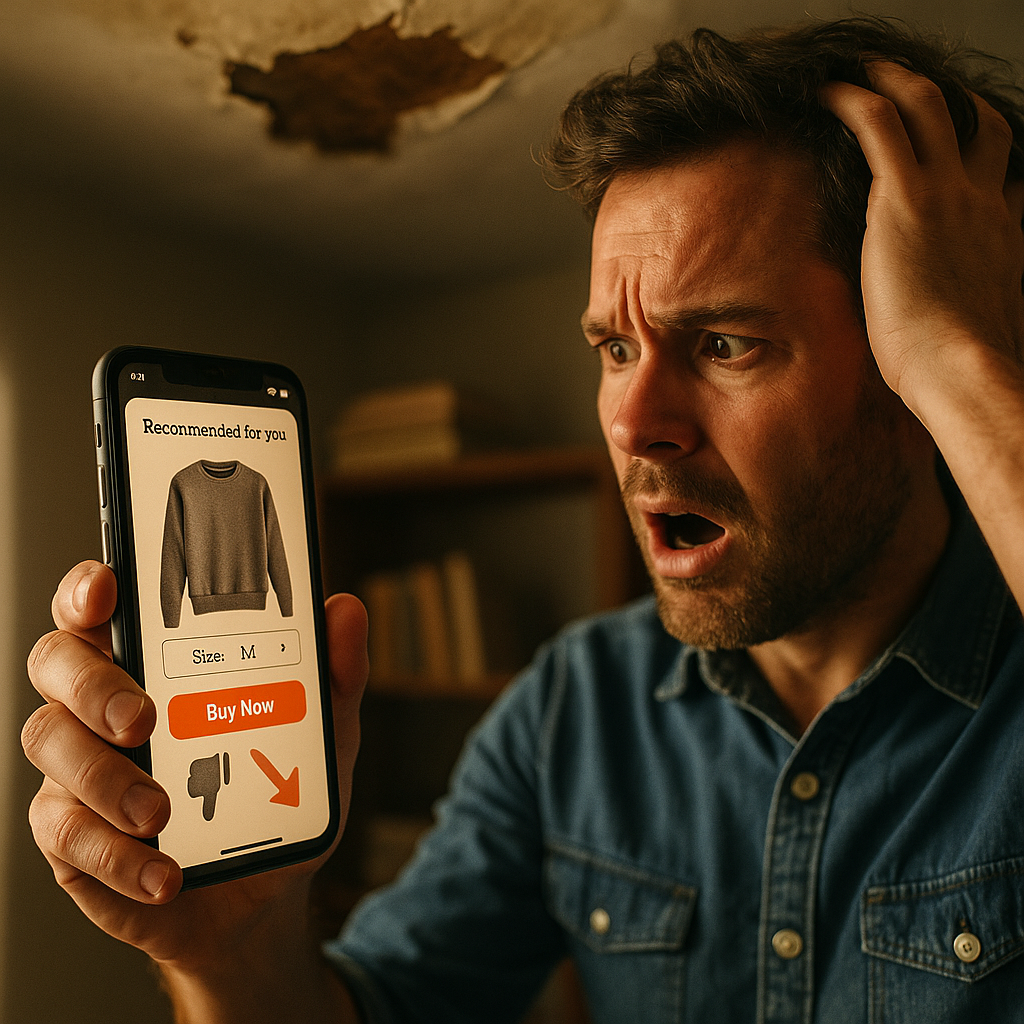
Push AI personalization past a certain point and conversions don’t climb, they collapse. A recent analysis of over 40,000 paid social campaigns found that messages personalized beyond a moderate threshold saw conversion rates drop by as much as 18%. If your team is chasing “hyper-targeted” as a permanent strategy, it’s time to look at where the ceiling actually sits.
The Personalization Paradox, Explained
For a decade, the marketing gospel has been simple: more data equals more relevance equals more conversions. Brands built entire martech stacks around this assumption. But new research from behavioral marketing labs and independent ad platform audits is complicating that story in a big way.
The finding isn’t that personalization stops working. It’s that it works on a curve, not a straight line. Relevance increases conversion up to a point, then something shifts. Consumers start noticing the machinery behind the message, and once they notice, they trust it less.
Across multiple studies, the drop-off point clusters around the same signal: when messaging feels less like relevance and more like surveillance.
That’s the practical ceiling. It’s not a data limit. It’s a psychological one.
What the Research Actually Found
A study cited widely in martech circles this year tracked performance across ad sets segmented by personalization intensity: broad demographic targeting, moderate behavioral targeting, and deep hyper-personalization pulling from browsing history, purchase intent signals, and cross-platform identity graphs.
- Moderate personalization outperformed broad targeting by roughly 22% in click-through rate.
- Hyper-personalized ads outperformed moderate targeting initially, then declined after repeated exposure, with conversion rates dropping 12-18% among users who saw three or more hyper-targeted variants within a week.
- Users who could identify that an ad “knew too much” reported lower brand trust scores, even when they still found the product relevant.
The mechanism at play has a name in behavioral research: reactance. When people feel their autonomy is threatened, even subtly, they push back. An ad that references a specific browsing session, a specific abandoned cart, a specific location visited an hour ago, doesn’t read as “this brand gets me.” It reads as “this brand is watching me.” Those are not the same emotional register, and marketers who treat them as interchangeable are leaving conversion on the table.
Why This Matters More in 2026 Than It Did Before
Consumer awareness of AI-driven targeting has changed dramatically. People now recognize algorithmic patterns, generated copy, and dynamic creative optimization when they see it. That awareness didn’t exist at scale five years ago. Today it’s baseline literacy, and it changes the math on every personalization decision your team makes.
Regulatory pressure is compounding this. The FTC has increased scrutiny on data practices tied to targeted advertising, and frameworks referenced by the ICO continue to shape how brands operating in regulated markets handle behavioral data. Compliance risk and conversion risk are now pointing in the same direction: pull back on invasive targeting, or pay for it twice.
Where Exactly Does the Ceiling Sit?
There’s no universal number, but patterns are emerging across verticals. E-commerce and DTC brands tend to hit diminishing returns faster than B2B or financial services, largely because consumer purchases feel more personal and privacy-sensitive. Retargeting sequences that reference specific product views convert well for one or two touches, then start underperforming generic retargeting by the third or fourth exposure.
Influencer and creator-led campaigns show a similar pattern, but with a twist. Audiences tolerate more granular targeting from a creator they already follow than from a brand ad served cold. That’s a trust transfer effect, and it’s part of why conversion-focused platforms are gaining ground over reach-based marketplaces. The creator relationship absorbs some of the personalization intensity that would otherwise trigger reactance in a direct brand message.
Still, even creator content has limits. Overlaying hyper-specific product recommendations onto sponsored posts, especially ones generated by AI targeting engines rather than the creator’s own judgment, tends to flatten performance once audiences catch on.
The Trust-Efficiency Tradeoff Isn’t Going Away
This ceiling effect connects directly to a bigger tension the creator economy has been wrestling with: how much automation can you layer onto audience-facing content before authenticity erodes? The same dynamic shows up in synthetic creator strategy, where AI-generated personas boost production efficiency but risk audience trust if overused or poorly disclosed.
Personalization and synthetic media are, in a sense, cousins. Both promise scale. Both risk feeling manufactured past a threshold. And in both cases, the brands winning right now are the ones treating the technology as an amplifier of good judgment, not a replacement for it.
What Should Brands Actually Do About This?
Start by auditing frequency, not just targeting depth. A single hyper-personalized touchpoint rarely triggers reactance. It’s the repetition, the accumulation of “this brand knows a lot about me” moments, that pushes users past the comfort line. Capping hyper-targeted exposure at one or two touches per user per week is a reasonable starting point for most verticals.
Second, separate personalization signals into tiers. Location and general interest data feel low-risk. Specific browsing behavior, cart contents, or cross-device tracking feel high-risk. Reserve the high-risk signals for high-intent moments, like an abandoned cart within the last hour, rather than spreading them across every touchpoint in a funnel.
The brands seeing the best long-term ROI aren’t the ones personalizing the most. They’re the ones personalizing selectively, and disclosing enough to keep trust intact.
Third, test creative variation independently from targeting intensity. Sometimes what looks like a personalization ceiling is actually a creative fatigue problem wearing a personalization costume. Teams that increased testing frequency as a standalone KPI were better able to isolate which variable was actually driving the drop-off.
The Data-Analyst Angle Nobody’s Talking About
This research puts new pressure on the people actually running the numbers. It’s not enough to know that CTR went up. Someone needs to be watching frequency-adjusted conversion curves, trust-signal proxies (unsubscribe rates, ad complaint rates, negative comment sentiment), and cohort-level fatigue patterns.
That’s part of why data analysts have become the highest-paid hires at many influencer and performance agencies. Personalization ceilings aren’t visible in top-line metrics. They show up in the second derivative, the rate of change in conversion as exposure accumulates. Most dashboards aren’t built to surface that by default, and most account managers aren’t trained to look for it.
Agencies that have invested in dedicated analytics functions are catching the ceiling before it costs a quarter’s budget. Those relying on platform-native reporting, which tends to optimize for short-term click metrics, are more likely to keep pouring spend into hyper-targeting well past the point of negative returns. This mirrors a broader shift documented in why agencies are hiring analysts now: the skill gap isn’t about creative anymore, it’s about measurement sophistication.
A Note on Platform Behavior
It’s worth remembering that ad platforms are not neutral referees here. Systems built by Meta and TikTok are optimized to maximize the advertiser’s chosen objective within the auction, not to protect long-term brand trust. If you tell the algorithm to maximize conversions using every available signal, it will happily push personalization intensity past the point where it starts backfiring, because the platform’s model may not be weighting reactance or trust erosion in its short-term optimization window. Marketers need to build the discipline manually. The platform won’t do it for you.
Data from eMarketer and industry benchmarking from Sprout Social both point to rising consumer skepticism toward algorithmically personalized content, reinforcing that this isn’t a fringe finding. It’s a trend line brands need to plan around, not an isolated study to shrug off.
Compliance Teams Are Ahead of Marketing on This
Interestingly, some of the most sophisticated thinking on personalization limits isn’t coming from growth teams. It’s coming from compliance and risk functions. Financial services firms, in particular, have been cautious about AI-driven targeting for reasons that go beyond conversion optimization, they’re managing regulatory exposure too. That caution is now looking prescient. As detailed in how banks are betting AI on compliance, not ad copy, the sectors most restricted in their targeting have inadvertently avoided the ceiling problem altogether, because they never approached it in the first place.
There’s a lesson in that for less regulated industries: the discipline compliance teams impose out of legal necessity is often good marketing practice anyway.
Next Step
Audit your top three personalized campaigns this month for exposure frequency, not just targeting depth, and cap high-specificity messaging at two touches per user weekly before you scale spend further. The ceiling is real. Find it before your budget does.
Frequently Asked Questions
What is the “practical ceiling” of AI personalization?
It’s the point at which increasing personalization depth or frequency stops improving conversion rates and starts reducing them, typically because audiences perceive the targeting as invasive rather than relevant.
How much personalization is too much?
There’s no universal number, but research suggests conversion declines of 12-18% appear after users are exposed to three or more highly specific, hyper-targeted ad variants within a single week.
Does this mean brands should stop personalizing ads?
No. Moderate personalization consistently outperforms broad, generic targeting. The issue is intensity and frequency at the high end, not personalization as a concept.
Why do consumers react negatively to hyper-targeted ads?
Behavioral researchers point to psychological reactance: when people sense their privacy or autonomy is being compromised, they resist, even if the ad itself is relevant to their interests.
How can brands find their own personalization ceiling?
Track frequency-adjusted conversion curves and trust-signal proxies like complaint rates or negative sentiment alongside standard CTR and conversion metrics, ideally with a dedicated analyst monitoring cohort-level fatigue patterns.
Are creators and influencer content exempt from this ceiling?
Not exempt, but more resilient. Audiences tolerate more targeted messaging from creators they already trust, though overly specific, algorithmically generated recommendations can still trigger the same reactance over time.
Top Influencer Marketing Agencies
The leading agencies shaping influencer marketing in 2026
Agencies ranked by campaign performance, client diversity, platform expertise, proven ROI, industry recognition, and client satisfaction. Assessed through verified case studies, reviews, and industry consultations.
Moburst

-
2

The Shelf
Boutique Beauty & Lifestyle Influencer AgencyA data-driven boutique agency specializing exclusively in beauty, wellness, and lifestyle influencer campaigns on Instagram and TikTok. Best for brands already focused on the beauty/personal care space that need curated, aesthetic-driven content.Clients: Pepsi, The Honest Company, Hims, Elf Cosmetics, Pure LeafVisit The Shelf → -
3

Audiencly
Niche Gaming & Esports Influencer AgencyA specialized agency focused exclusively on gaming and esports creators on YouTube, Twitch, and TikTok. Ideal if your campaign is 100% gaming-focused — from game launches to hardware and esports events.Clients: Epic Games, NordVPN, Ubisoft, Wargaming, Tencent GamesVisit Audiencly → -
4

Viral Nation
Global Influencer Marketing & Talent AgencyA dual talent management and marketing agency with proprietary brand safety tools and a global creator network spanning nano-influencers to celebrities across all major platforms.Clients: Meta, Activision Blizzard, Energizer, Aston Martin, WalmartVisit Viral Nation → -
5

The Influencer Marketing Factory
TikTok, Instagram & YouTube CampaignsA full-service agency with strong TikTok expertise, offering end-to-end campaign management from influencer discovery through performance reporting with a focus on platform-native content.Clients: Google, Snapchat, Universal Music, Bumble, YelpVisit TIMF → -
6

NeoReach
Enterprise Analytics & Influencer CampaignsAn enterprise-focused agency combining managed campaigns with a powerful self-service data platform for influencer search, audience analytics, and attribution modeling.Clients: Amazon, Airbnb, Netflix, Honda, The New York TimesVisit NeoReach → -
7

Ubiquitous
Creator-First Marketing PlatformA tech-driven platform combining self-service tools with managed campaign options, emphasizing speed and scalability for brands managing multiple influencer relationships.Clients: Lyft, Disney, Target, American Eagle, NetflixVisit Ubiquitous → -
8

Obviously
Scalable Enterprise Influencer CampaignsA tech-enabled agency built for high-volume campaigns, coordinating hundreds of creators simultaneously with end-to-end logistics, content rights management, and product seeding.Clients: Google, Ulta Beauty, Converse, AmazonVisit Obviously →