


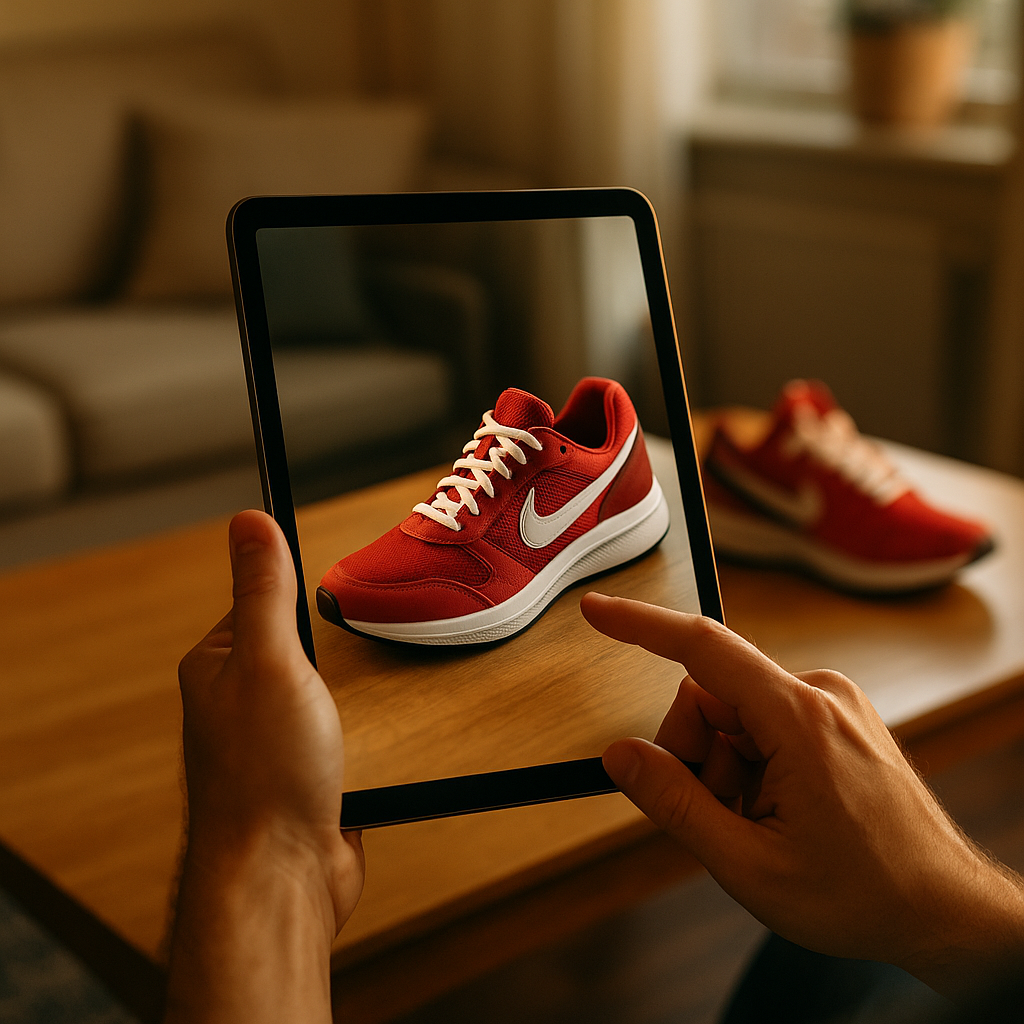
In 2025, buyers expect products to be explored, not just described. Using AI to Design Interactive 3D Product Demos at Scale helps teams create immersive experiences faster, with consistent quality across catalogs, channels, and devices. This article explains practical workflows, governance, and ROI—so you can move from one-off 3D experiments to an industrial-grade pipeline that actually converts. Ready to ship demos buyers can trust?
AI-driven 3D product visualization: what it is and why it works
AI-driven 3D product visualization combines machine learning with 3D authoring to accelerate how product experiences are built, optimized, and delivered. Instead of manually modeling every variant, teams use AI to automate time-consuming steps such as mesh cleanup, UV generation, texture creation, material matching, lighting presets, and LOD (level of detail) production. The result is a scalable pipeline where humans stay in control of brand-critical decisions while AI handles repeatable tasks.
It works because interactive 3D reduces uncertainty. Shoppers can rotate, zoom, explode assemblies, change finishes, and view products in context. For complex products, configurators shorten the gap between curiosity and confidence. For simple products, 3D adds clarity when photos struggle, such as reflective surfaces, tight tolerances, or component fit. When paired with strong product data, 3D demos also reduce support load by answering “Will it fit?” and “How does it work?” before a buyer asks.
To keep this helpful and trustworthy, anchor your visualization to verified sources: CAD from engineering, a validated materials library, and a documented review process. AI speeds output, but it should never invent dimensions, compliance markings, or functional claims.
Automated 3D content creation: turning CAD and photos into web-ready assets
Automated 3D content creation typically starts from one of three inputs: CAD files, existing 3D meshes, or product photography. The most reliable path is CAD-to-web because it preserves real geometry. A practical production pipeline looks like this:
- Ingest and normalize: Import CAD (or source meshes), standardize units, naming, coordinate systems, and part hierarchies.
- Retopology and decimation: Use AI-assisted tools to reduce polygon count while protecting silhouette and functional features.
- UVs and baking: Auto-generate UV unwraps, then bake normals and ambient occlusion from high-res geometry to keep detail with fewer polygons.
- Material and texture synthesis: Create PBR-ready textures from scan data or photo references; map to a controlled material library.
- Variant generation: Automatically swap finishes, colors, trims, labels, and packaging to match SKU rules.
- Export and validate: Output web formats (often glTF/GLB) and run QA checks for triangle count, texture size, compression, and lighting consistency.
Teams often ask whether AI can generate a full 3D model from photos. It can help, but for product demos you should prioritize dimensional accuracy and repeatability. Photogrammetry is strong for organic shapes; for engineered products, CAD-based workflows are more dependable. If you must use photos, build guardrails: a human validates scale, alignment, and materials; your system flags anomalies such as warped edges, missing holes, or inconsistent logos.
Also plan for performance from day one. Web and mobile constraints matter: keep texture budgets consistent, use mesh compression where supported, and generate multiple LODs. AI can automate this, but you define thresholds by device class and channel.
3D configurator at scale: SKU logic, personalization, and data integrity
A 3D configurator at scale is not just a viewer with color swaps. It is a rules-driven system that ties product data, pricing logic, availability, and valid combinations to a real-time 3D experience. Scaling configurators requires treating product content like a data product with governance.
Start with a clean product model:
- Variant rules: Define what can change (finish, size, accessories) and what cannot (structural constraints, compliance requirements).
- Option dependencies: Encode compatibility (e.g., this mount requires that bracket; this cable length only for certain sizes).
- Authoritative data sources: Link every option to a PIM/PLM/ERP identifier so pricing, SKU, and inventory remain accurate.
- Content traceability: Store which inputs and tools generated each asset, plus reviewer sign-off.
Then design for buyer intent. B2B audiences often need exploded views, part labels, and measurement callouts. DTC buyers often want lifestyle context, finish accuracy, and quick comparisons. AI can personalize which camera angles, annotations, and default configurations appear based on referrer, industry, or past behavior, but keep personalization explainable and easy to reset.
A common follow-up question is: “How do we prevent AI from creating invalid configurations?” The answer is to keep AI out of the rules engine. Let AI suggest defaults or highlight popular paths, but enforce configuration validity with deterministic rules tied to master data. This maintains trust and prevents costly order errors.
WebAR and immersive commerce: delivering interactive demos across devices
WebAR and immersive commerce expand 3D demos beyond a browser window. Without requiring an app, shoppers can place a product at true scale in a room, check clearances, and evaluate aesthetics in context. In 2025, this matters because mobile is often the primary research device, and AR reduces hesitation for size-dependent purchases.
To deliver reliably across devices:
- Use web-friendly formats: glTF/GLB is widely used for real-time 3D delivery; keep a disciplined texture and polygon budget.
- Offer progressive loading: Load a lightweight preview first, then stream higher detail as needed.
- Design fallback states: Not every device supports the same AR features; provide a strong 3D viewer and a high-quality image fallback.
- Prioritize accurate scale: AR is only persuasive when dimensions are correct; tie scale to CAD and validate with a QA checklist.
AI improves cross-device delivery by automatically generating LODs, compressing textures, and selecting optimal shader settings per device profile. It can also detect when a model will exceed a performance threshold and suggest a simplified variant. This prevents “cool demo” experiences that stutter, overheat phones, or fail to load on slower connections.
Address accessibility and clarity as part of immersive commerce: include readable labels, high-contrast UI options, and controls that work with touch and keyboard. Interactive 3D should not block the path to purchase; it should remove friction.
Generative AI for 3D workflows: quality control, governance, and brand safety
Generative AI for 3D workflows is powerful, but it introduces new risks: hallucinated details, inconsistent materials, IP leakage, and brand drift. EEAT-aligned teams build governance that is simple, documented, and enforceable.
Implement practical safeguards:
- Verified inputs only: Use approved CAD, scanned materials, and brand assets. Restrict ad-hoc uploads that bypass review.
- Human-in-the-loop approvals: Require sign-off for geometry accuracy, material fidelity, and regulatory markings before publishing.
- Golden material library: Maintain PBR materials with measured parameters and standardized naming. AI can map or suggest materials, but the library remains authoritative.
- Automated QA checks: Validate polygon limits, texture sizes, normals, missing UVs, scale, pivot points, and shader compatibility.
- Audit trails: Record tool versions, prompts (when relevant), source files, and reviewer identity. This supports accountability and faster fixes.
- Security and privacy: Prefer private model deployments or enterprise controls when handling unreleased products and confidential CAD.
Teams often worry about legal exposure. Treat AI-generated textures and assets like any other creative output: document provenance, avoid training on unlicensed data, and ensure vendor contracts clarify data usage. If you sell regulated products, add a compliance review checkpoint so the demo never implies capabilities you cannot substantiate.
Finally, keep brand consistency measurable. Define a style guide for lighting, backgrounds, camera behavior, and UI. AI can enforce these templates automatically, which is one of the most practical ways to scale without sacrificing polish.
ROI of interactive 3D demos: metrics, experimentation, and production planning
Proving the ROI of interactive 3D demos requires metrics that connect experience quality to business outcomes. Track both performance and commerce signals, and run controlled experiments where possible.
Recommended measurement framework:
- Engagement: Interaction rate, time in viewer, feature usage (rotate, zoom, AR launch, configurator changes), repeat views.
- Conversion impact: Add-to-cart rate, lead form completion, quote requests, assisted conversions, and conversion rate by device.
- Returns and support: Return rate for size/fit reasons, pre-sale support contacts, and “how-to” page visits.
- Performance: Load time, crash rate, FPS stability on target devices, and bounce rate on product pages with 3D.
- Production efficiency: Cost per SKU, time from CAD release to publish, rework rates, and QA pass rates.
To answer the next obvious question—“Where do we start if we have hundreds or thousands of SKUs?”—use a tiered rollout:
- Tier 1: Best sellers and high-consideration products where uncertainty is expensive.
- Tier 2: Products with many variants that benefit from configurators.
- Tier 3: Long-tail products where a standardized, lightweight viewer provides adequate value.
AI makes this economically viable by lowering marginal cost per additional product and by reusing components across a family of models. Plan staffing accordingly: you need fewer manual modelers per SKU, but you need strong technical art oversight, data integration skills, and a QA function that understands both rendering and product truth.
FAQs
What file format is best for interactive 3D product demos on the web?
For many web pipelines, glTF/GLB is a practical standard because it is optimized for real-time delivery and supports PBR materials. Your best choice still depends on your viewer stack, need for compression, and how you manage variants and animations.
Can AI generate accurate 3D models without CAD?
AI can accelerate reconstruction from photos or scans, but accuracy varies by product type. For engineered goods where dimensions matter, CAD-backed geometry and measured materials produce more trustworthy demos. If CAD is unavailable, use scanning plus strict QA checks for scale, symmetry, and missing features.
How do we keep materials and colors consistent across thousands of SKUs?
Use a controlled materials library with approved PBR parameters and naming conventions. Let AI map products to these approved materials rather than generating new ones freely. Add calibration references and review steps for high-visibility finishes such as metallics, gloss plastics, and fabrics.
Will interactive 3D slow down our product pages?
Not if you design for performance: use progressive loading, mesh and texture budgets, LODs, and compression. Also provide a fast poster image and load the viewer only when it enters the viewport or when the user requests it.
How do we prevent invalid configurations in a 3D configurator?
Keep configuration validity in a deterministic rules engine tied to PIM/PLM/ERP data. Use AI for suggestions, search, and guidance, but do not let it decide what combinations are allowed.
What team roles do we need to scale AI-assisted 3D demos?
You typically need a technical artist or real-time 3D lead, a product data owner (PIM/PLM), a QA reviewer for geometry and materials, and an engineer to integrate viewers, analytics, and configurator logic. AI reduces repetitive work, but it increases the value of clear standards and review.
AI makes interactive 3D achievable for entire catalogs, not just flagship products. The winning approach combines automation with governance: verified CAD inputs, a controlled material library, deterministic configuration rules, and measurable performance targets. When you align 3D demos with product data and buyer intent, you increase confidence while reducing production time. Build the pipeline, measure outcomes, and scale only what you can validate.