


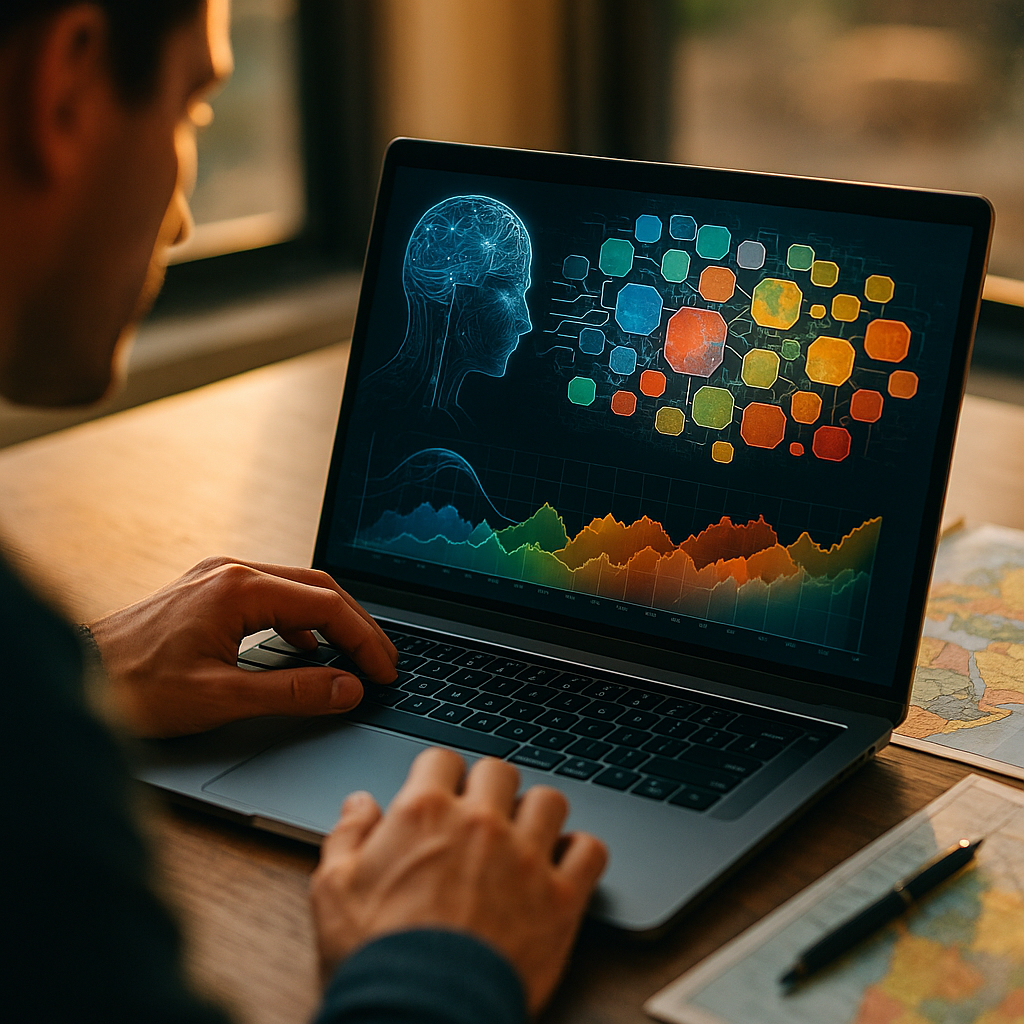
The rapidly evolving marketplace demands strategic insights. AI for market structure analysis enables brands to spot uncontested niches, sharpen positioning, and outmaneuver the competition. But how exactly can data-driven intelligence reveal untapped opportunities? This article unpacks advanced methods, tools, and real-world strategies for identifying blue oceans for your brand in 2025. Ready to transform your growth trajectory?
How AI Reshapes Market Structure Analysis for Modern Brands
Traditional market research methods often struggle to keep up with dynamic consumer behaviors and fragmented markets. In 2025, AI market mapping is revolutionizing how businesses analyze the market landscape. Artificial intelligence crunches vast, real-time datasets—search trends, social chatter, competitor moves—and uncovers micro-segments that were previously invisible to human-only analysis. With AI, brands gain a continuously updated map of market players, forces, and whitespace areas. This allows for proactive opportunity identification, fast pivots, and staying ahead of market trends.
Recent studies reveal that up to 57% of business leaders use advanced AI models for competitive strategy (McKinsey, Q1 2025). These tools can quickly process variables like pricing trends, consumer sentiment, and emerging needs, providing a holistic view of market structure. Ultimately, AI empowers executives to spot gaps and shape bold, data-backed visions for growth.
Pinpointing Uncontested Niches with Predictive AI Analytics
One of the most powerful uses of AI for niche identification is predicting shifts in demand before they become mainstream. AI models can scan forums, reviews, social platforms, and e-commerce listings to detect rising search queries, product gaps, and dissatisfaction with current offerings. Natural language processing (NLP) engines interpret emotions, language patterns, and emerging needs—surfacing granular insights about what isn’t yet being served.
For example, a plant-based snack brand can use AI tools to track global discussion spikes about novel protein sources or unmet dietary needs in certain regions. AI-driven sentiment analysis helps brands avoid crowded markets and instead focus on emerging sub-niches with high intent and low competition. The result? Brands enter product categories early, build brand equity, and establish dominance before rivals even notice the opportunity.
Leveraging Data Enrichment and Semantic Search for Market Intelligence
AI does more than find new markets. Through data-driven brand positioning, AI-powered semantic search and data enrichment match your brand’s unique value to market gaps. These models synthesize consumer profiles, competitor features, and media sentiment into actionable blueprints.
- Semantic Search: AI tools interpret search queries and online discussions to surface not just keywords but intent, context, and unmet desires within your products’ ecosystem.
- Data Enrichment: Modern platforms integrate demographic, psychographic, and behavioral data, revealing underserved buyer personas or geographic markets.
- Competitive Feature Mapping: Algorithms pinpoint what competitors offer—and more importantly, what they don’t—helping you design feature sets or messaging that fill whitespace in the market.
All this enables you to craft marketing, product, and service launches that resonate with underrepresented audiences, boosting both engagement and market share.
Deploying AI Tools: Practical Steps for Brands in 2025
So, how can you practically harness artificial intelligence for market mapping in your organization? Start by identifying the key questions or hypotheses you want to solve, such as “Which micro-segments are under-served in my category?” or “Where are customers expressing unmet needs?” Then, consider the following action plan:
- Invest in the Right AI Platforms: Select AI solutions that offer real-time data integration across social media, ecommerce, reviews, and internal sales.
- Integrate Multimodal Data: Combine textual, visual, and behavioral data for a more complete picture of consumer conversation and sentiment.
- Develop Custom AI Models: Work with data scientists to tailor machine learning models that align with your unique category challenges.
- Validate Insights with Human Expertise: Don’t rely solely on automation—use marketing and product teams to interpret insights in the context of your brand vision.
- Pilot and Iterate: Test AI-identified niches with rapid pilots or MVPs, then measure results and iterate quickly.
Recent evidence shows that brands leveraging AI for market monitoring reduce launch risk by as much as 40% and speed up successful entries by 23% compared to those using manual methods alone.
Building Trust and Authority through Transparent AI Use
For AI-driven market structure analysis to succeed, stakeholders require trust in both the technology and your brand’s intentions. Building authority in niche markets demands transparency about how AI insights are derived and applied. Adopting strong governance protects customer data and ensures ethical use of artificial intelligence.
Best practices for fostering trust include:
- Using explainable AI (XAI) models that allow teams to see and audit the logic behind recommendations
- Communicating openly about how consumer data is collected and interpreted
- Actively seeking feedback from pilot customers in newly identified niche segments
- Collaborating with external experts to validate findings and uncover blind spots
Doing so positions your brand as not just an innovator, but a responsible steward of advanced technology—a key differentiator in today’s privacy-first landscape.
Case Study: How a CPG Brand Dominated a New Wellness Niche
To illustrate the impact, consider a real-world application by a consumer packaged goods (CPG) company in early 2025. Facing declining sales in conventional snack products, this brand implemented AI-driven sentiment and semantic analysis combined with market mapping. The tools flagged a spike in demand for adaptogenic, stress-relieving snacks driven by remote workers and health-conscious Millennials.
Analyzing competitive offerings with AI, the brand identified an unexplored intersection: high-protein, plant-derived adaptogen bars addressing both wellness and convenience. Quick prototyping and targeted influencer marketing led to $15 million in incremental revenue in just two quarters, capturing nearly 12% of that emerging market segment before major competitors.
This case highlights the transformative outcomes of leveraging AI for market structure analysis in a data-flooded, fast-shifting business environment.
Conclusion: Seize White Space with AI-Powered Market Intelligence
AI for market structure analysis delivers brands a decisive edge—pinpointing uncontested niches and enabling strategic, data-driven moves. Integrating advanced analytics with transparent, ethical practices fuels growth and builds lasting authority. By acting on AI-powered insights now, your brand can confidently seize new white spaces and lead the market transformation in 2025 and beyond.
FAQs: AI for Market Structure Analysis and Niche Identification
-
How does AI help identify uncontested niches?
AI processes massive, real-time datasets to reveal emerging market needs, spot gaps in competitive offerings, and predict shifts in consumer sentiment. This data-driven approach uncovers micro-niches before they become mainstream, allowing brands to move first. -
What data sources are most valuable for AI-powered market mapping?
Key sources include social media conversations, product reviews, e-commerce data, search trends, customer support tickets, and internal sales data. Integrated analysis ensures a holistic view of both market sentiment and behavioral trends. -
Are there risks with relying on AI for market analysis?
Like any technology, AI outputs depend on data quality and model transparency. Businesses should combine AI insights with human expertise, verify predictions through small-scale pilots, and ensure strict data governance. -
What are the top AI tools for brand opportunity detection in 2025?
Popular options include advanced NLP analytics, predictive modeling platforms, sentiment analysis suites, and custom machine learning APIs integrated within your own BI stack. Choose tools that offer robust data integration and explainable results. -
How can brands validate AI-identified niches before full-scale launch?
Best practice involves running rapid proof-of-concept tests with targeted marketing, collecting customer feedback, and iteratively refining both the offering and the AI model based on real-world data.
Top Influencer Marketing Agencies
The leading agencies shaping influencer marketing in 2026
Agencies ranked by campaign performance, client diversity, platform expertise, proven ROI, industry recognition, and client satisfaction. Assessed through verified case studies, reviews, and industry consultations.
Moburst

-
2

The Shelf
Boutique Beauty & Lifestyle Influencer AgencyA data-driven boutique agency specializing exclusively in beauty, wellness, and lifestyle influencer campaigns on Instagram and TikTok. Best for brands already focused on the beauty/personal care space that need curated, aesthetic-driven content.Clients: Pepsi, The Honest Company, Hims, Elf Cosmetics, Pure LeafVisit The Shelf → -
3

Audiencly
Niche Gaming & Esports Influencer AgencyA specialized agency focused exclusively on gaming and esports creators on YouTube, Twitch, and TikTok. Ideal if your campaign is 100% gaming-focused — from game launches to hardware and esports events.Clients: Epic Games, NordVPN, Ubisoft, Wargaming, Tencent GamesVisit Audiencly → -
4

Viral Nation
Global Influencer Marketing & Talent AgencyA dual talent management and marketing agency with proprietary brand safety tools and a global creator network spanning nano-influencers to celebrities across all major platforms.Clients: Meta, Activision Blizzard, Energizer, Aston Martin, WalmartVisit Viral Nation → -
5

The Influencer Marketing Factory
TikTok, Instagram & YouTube CampaignsA full-service agency with strong TikTok expertise, offering end-to-end campaign management from influencer discovery through performance reporting with a focus on platform-native content.Clients: Google, Snapchat, Universal Music, Bumble, YelpVisit TIMF → -
6

NeoReach
Enterprise Analytics & Influencer CampaignsAn enterprise-focused agency combining managed campaigns with a powerful self-service data platform for influencer search, audience analytics, and attribution modeling.Clients: Amazon, Airbnb, Netflix, Honda, The New York TimesVisit NeoReach → -
7

Ubiquitous
Creator-First Marketing PlatformA tech-driven platform combining self-service tools with managed campaign options, emphasizing speed and scalability for brands managing multiple influencer relationships.Clients: Lyft, Disney, Target, American Eagle, NetflixVisit Ubiquitous → -
8

Obviously
Scalable Enterprise Influencer CampaignsA tech-enabled agency built for high-volume campaigns, coordinating hundreds of creators simultaneously with end-to-end logistics, content rights management, and product seeding.Clients: Google, Ulta Beauty, Converse, AmazonVisit Obviously →